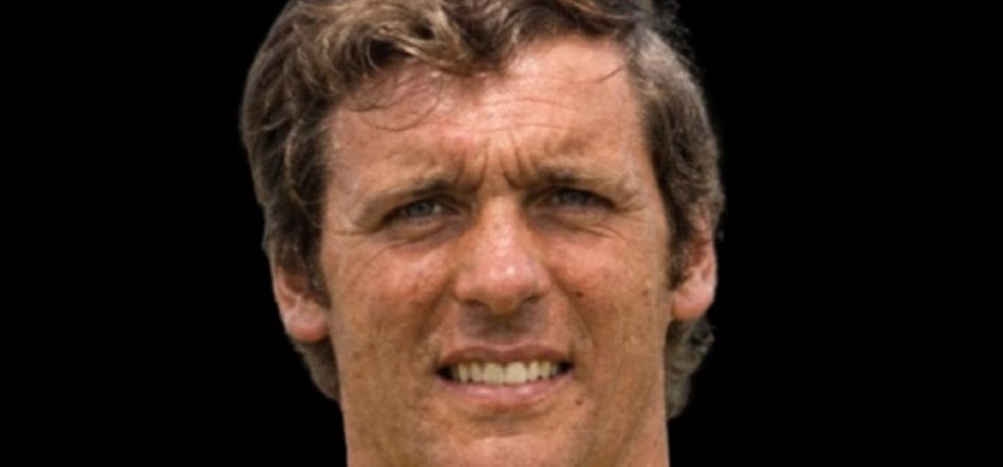
Alan Leslie Jarvis, born 4 August 1943, Wrexham, Wales.
PART ONE
Alan Jarvis was born in Wrexham and educated at Grove Park Grammar School, and Everton recognised his promise while he was still young enough to be considered an amateur apprentice, bringing him to Goodison Park in July 1958 and placing him inside a youth system where standards were high and competition for advancement was relentless. The move quickly appeared justified, because Jarvis was called into Wales youth training squads and won three international youth caps during the 1959–60 campaign, while the selectors’ faith in his temperament was shown more clearly in February 1961, when he captained Wales against Ireland.
Representative honours were not confined to youth football either, for during the 1960–61 season he also appeared twice for the Welsh amateur side, playing against England at Goldstone Ground in November 1960 and then facing Scotland in March 1961, and those selections suggested that a senior opening at Everton might soon follow. By November 1960 there was genuine talk around Goodison Park of Jarvis being ready to challenge for first-team football, but Everton possessed considerable strength and experience, and a promising youngster could remain close to selection for months without ever receiving the one chance needed to force his way in.
Although a senior appearance remained beyond him, Jarvis continued progressing through Everton’s junior and reserve sides, and in April 1961 he lined up in the FA Youth Cup final against Chelsea, whose talented young team proved too strong on the day but whose victory did not diminish the regard in which the Welshman was held at Goodison Park. Everton rewarded his development by giving him professional terms in July 1961, and Jarvis could reasonably believe that regular work with the reserves would lead eventually to a place in the senior side, yet the established players ahead of him continued to block his path and one season slipped into another without the hoped-for breakthrough.
He remained committed, performed consistently for the Juniors and Reserves and waited for circumstances to turn in his favour, but by the time he had reached twenty-one he could see that patience alone was unlikely to carry him into Everton’s first team. The club eventually allowed him to leave on a free transfer, and on 28 May 1964 he signed for Hull City, moving from a First Division club where he had learned his trade without making a senior appearance to a Third Division side where he hoped hard work would finally be rewarded with meaningful football. It was not an easy decision after six formative years with Everton, but it was the necessary one.
Jarvis arrived at Boothferry Park as a right-sided half-back who could also move further forward, and he began positively by scoring regularly for Hull’s reserves in the Central League, although his first season in East Yorkshire did not bring the immediate senior opportunity he wanted because his form became less consistent as the 1964–65 campaign progressed. Cliff Britton had assembled a strong and experienced squad, and places could not be handed out merely because a young player had impressed in reserve football, so Jarvis remained outside the first team and faced another stretch of waiting after already enduring four professional seasons without a senior appearance at Everton.
Yet his position changed when the experienced right-half Gerry Summers left Hull, creating a vacancy that Britton needed to fill, and on 22 October 1965 Jarvis finally made his Football League debut away to Workington, aged twenty-two years and seventy-nine days. The timing could scarcely have been better, because Hull were about to produce one of the greatest seasons in their history, and Jarvis entered a side containing players of strength, imagination and scoring power who were ready to dominate the Third Division. He had waited seven years from joining Everton as an apprentice to playing his first senior league match, but once Britton gave him the shirt he made sure it was not returned easily.
Hull’s 1965–66 team possessed attacking force throughout the side, with Ken Wagstaff and Chris Chilton providing a formidable cutting edge, but its success also depended on men such as Jarvis who supplied balance, supported attacks and performed the less celebrated work that allowed the leading scorers to flourish. He kept his place after the Workington debut and established himself during a campaign in which the Tigers surged towards the Third Division title, and the symmetry of his first senior goal was particularly satisfying because it came against Workington, the same opponents he had faced on his debut, during a 6–0 victory at Boothferry Park in January 1966.
Jarvis made thirty-three league appearances and scored three league goals during that championship season, but the bare figures reveal only part of his contribution, because Hull needed consistency as well as flair while they dealt with the pressure of being expected to win. The Tigers finished as champions, scoring freely and playing with a confidence that drew large crowds to Boothferry Park, while their FA Cup campaign carried them to the quarter-finals and added further excitement to a season already packed with achievement. Jarvis appeared seven times in the cup run as well as playing his part in the league triumph, and after years spent waiting in reserve football, he had gone from an unused Everton prospect to a regular member of a title-winning side in a matter of months.
PART TWO
Promotion into the Second Division raised the standard in 1966–67, but Alan Jarvis did not retreat from the challenge, because the confidence gained during the championship campaign carried into the new season and he remained one of Britton’s first-choice players as Hull established themselves impressively at the higher level. He appeared in thirty-eight league matches and scored four goals, which represented his most productive league return for a single season, and his controlled work on the right side of midfield helped Hull compete against clubs with greater resources and longer experience in the division. International recognition followed at last, six years after his youth and amateur appearances for Wales, when Jarvis won his first senior cap against Scotland on 22 October 1966, exactly a year after making his Hull debut, and further caps came against England in March 1967 and Northern Ireland on 12 April 1967.
Yet the momentum he had built was checked in September 1967, when Jarvis suffered a knee injury against Bristol City and was ruled out for close to six months, a cruel interruption for a man who had already spent so much time trying to secure regular football. A long absence could be particularly dangerous in an era when treatment and rehabilitation methods were less advanced, because the injured player had to recover physically while watching somebody else take his place and perhaps persuade the manager that no change was required when fitness returned.
The Welshman worked his way back and reappeared in March 1968, but his nineteen league outings during 1967–68 reflected the scale of the disruption, and the most important task was simply to prove that the knee could withstand senior football again. He did that during the following campaign, starting thirty league matches and making another four appearances as a substitute in 1968–69, while five goals made it his best scoring season for Hull and demonstrated that the injury had not removed his willingness to move forward. The road back had required patience, but patience was hardly new to Jarvis, and by the end of that campaign he had again become a regular member of the team rather than a player defined by the months he had missed.
The opening part of 1969–70 was less comfortable, because Jarvis found himself used more sparingly and the security he had regained after his injury began to disappear, but a change in the club’s working arrangements offered him another opportunity when Cliff Britton moved upstairs into an executive position and stepped away from direct first-team control. Jarvis returned to the side and made twenty-five league appearances during the season, including two as a substitute, although he did not add to his goal total, and the situation remained uncertain because Hull were entering a period of managerial and tactical change.
Terry Neill took charge for the 1970–71 campaign and brought his own ideas about the players required, and while Jarvis had survived setbacks under Britton by working his way back into the team, he found his opportunities much more restricted under the new manager. He made only ten league appearances that season, half of them from the substitutes’ bench, and his final Hull match came at home to Cardiff City on 27 February 1971. By then the signs were unmistakable, for Jarvis was twenty-seven and needed regular football, while Hull were moving in a different direction, so the time had come to leave Boothferry Park after nearly seven years with the club.
Jarvis’s contribution to Hull should not be reduced to the circumstances of his departure, because he had made 177 senior appearances in all competitions and scored twelve goals, while his league service covered the Third Division championship season, the adjustment to Second Division football and a demanding return from serious injury. His Hull record also displayed the adaptability that had marked him from his early days, because he could perform the disciplined work of a wing-half or operate in a more advanced position, and managers knew they were selecting somebody who understood shape, responsibility and the need to support the players around him.
Mansfield Town recognised that value and paid £10,000 for him in March 1971, a club-record outlay for the Stags at the time, and the fee showed that Jarvis remained highly regarded even though he had slipped out of Hull’s regular eleven. He made his Mansfield debut against Torquay United later that month and was used primarily at inside-right, giving him greater licence to work in advanced areas than he had generally enjoyed at Boothferry Park. Yet goals refused to come, and although he continued contributing through his movement, passing and experience, he never scored for Mansfield during his two seasons at Field Mill.
The move nevertheless gave Jarvis the regular football he had sought, and by the time he left Mansfield in May 1973 he had made ninety senior appearances for the club, including eighty-two in the league, which took his overall Football League total beyond 240 appearances after he had failed to make even one for Everton. That transformation said much about his persistence, because the young professional who had once seemed in danger of disappearing into reserve-team football had built substantial records at two clubs, won a championship medal, appeared in an FA Cup quarter-final run and represented his country.
Still, his departure from Mansfield did not lead to another transfer or a gradual movement into non-League football, because repeated eye injuries had damaged his sight and made continuing too dangerous. Jarvis retired later in 1973 at the age of thirty, and the decision was forced by medical circumstances rather than a lack of offers or willingness to compete, which gave the ending an unavoidable frustration. Football had demanded patience from him at the beginning and resilience in the middle, but eventually it presented a physical problem that determination alone could not overcome, and Jarvis had to accept that the working life he had known since joining Everton as a fifteen-year-old was over.
After leaving football, Jarvis trained as a surveyor and initially remained in Mansfield, applying himself to a new occupation that required accuracy, judgement and steady concentration, qualities that had also been evident in his play. He later returned to North Wales and worked there for many years, settling away from the weekly noise and attention of professional football, although his name remained warmly remembered in Hull because supporters associated him with the great 1965–66 side and the strong Second Division teams that followed it.