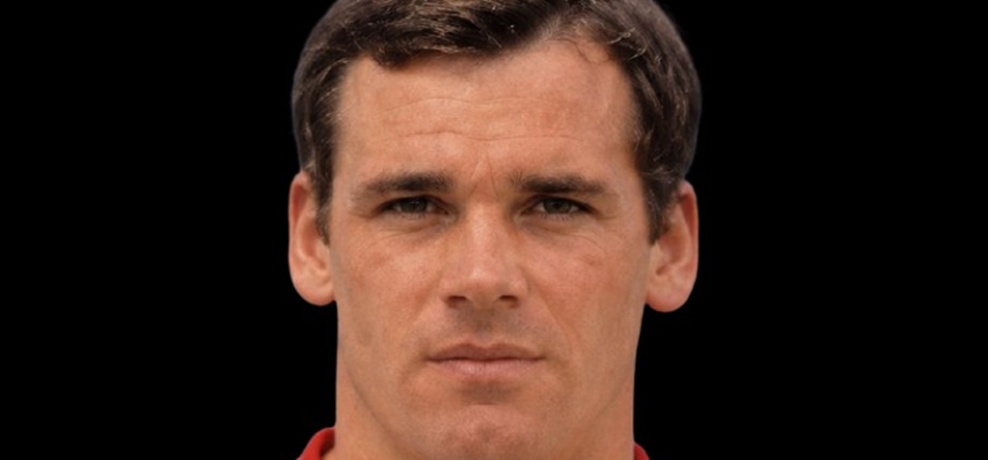
Barry Wagstaff, born 26 November 1945, Wombwell, England.
PART ONE
Barry Wagstaff was born in Wombwell in the Metropolitan Borough of Barnsley in South Yorkshire on 26 November 1945, a year and almost exactly four months behind his older brother Tony, and it was that quirk of birth order, as much as anything either man achieved individually with a football at his feet, that would come to define the way Sheffield United supporters of a certain vintage remember them both. Like so many boys of that district and that era he learned his football on the playing fields of Don and Dearne Schoolboys, and by the time he was old enough to be noticed by the scouts at Bramall Lane he joined the Blades as an apprentice, arriving at the club only shortly before Tony himself made the breakthrough into United’s senior side.
Tony, in fact, got there first, and by some distance too: he turned full-time professional in March 1961 and was thrown into the first team at the tender age of seventeen for the final league fixture of that season, a home game against Middlesbrough on 29 April 1961 that Sheffield United won 4–1 to seal promotion back into the First Division, a heady baptism for any teenager and one that set something of a family precedent for early, unexpected opportunity. By all accounts the elder Wagstaff was a slight, self-conscious young man in those formative years, forever wishing he could add another stone or two to his frame and worrying more than most about his own form, preferences that perhaps explain why he was said to have favoured playing away from Bramall Lane, where the pressure of the home crowd’s expectation weighed on him rather less heavily.
Barry followed his brother’s path with rather more patience, signing professional forms of his own in March 1963 and spending time working on his game in the reserves before Sheffield United handed him his senior debut on 7 October 1964, a baptism of an altogether sterner kind, against Bill Shankly´s Liverpool at Anfield in the First Division. The Yorkshiremen lost the match 3–1 with the young Wagstaff deployed in midfield; notably, that same afternoon also brought a first-team debut for another product of Sheffield United’s own youth system, the winger Alan Woodward, whose own time at the club would go on to considerable distinction at Bramall Lane in the years that followed.
It took Wagstaff a little over a year to establish himself fully in Sheffield United’s first team, but by the 1965–66 season he had become a regular fixture in a side that finished a highly creditable ninth in the First Division under the management of John Harris, a club stalwart whose sides during this period earned a justified reputation for solid, competitive top-flight football without ever quite threatening the game’s true elite. Harris had been a defender of some renown in his own playing days, and it showed in the shape of the teams he sent out, sides built on a settled defensive spine and a midfield willing to do its share of the unglamorous running, precisely the sort of environment in which a disciplined, positionally aware player like Wagstaff could flourish without ever needing to court attention for himself.
It was during that same 1965–66 campaign, on 13 November 1965, that Barry and Tony first appeared together in the same Sheffield United starting eleven, a 2–0 victory over Everton at Bramall Lane that marked the beginning of what would become the most celebrated brotherly partnership in the club’s entire post-war history; over the years that followed the Wagstaffs would line up together no fewer than seventy-one times in United colours, a figure that stands unmatched by any other pair of siblings to have represented the club since the Second World War. Barry remained a fixture in the side the following year as well, contributing to another solid mid-table finish, tenth place in 1966–67, as Harris continued to mould a Sheffield United team built on organisation and graft rather than star quality.
Primarily deployed at left half, a role that modern followers of the game would readily recognise as a defensive midfield position, Wagstaff earned a reputation among Bramall Lane regulars for his tactical discipline and his willingness to do the unglamorous work that so often goes unnoticed on a Saturday afternoon, and his versatility proved a considerable asset to Harris and, later, to his successors, for he was equally capable of shifting across to right half, dropping into an inside-forward role, or even filling in at centre half whenever injury or circumstance demanded it of him. It was precisely that combination of discipline and adaptability that had helped anchor United’s midfield through the competitive middle years of the 1960s, providing a platform of stability from which the club’s more eye-catching forwards, men like Woodward and the young Mick Jones, could go about their business with rather greater freedom than they might otherwise have enjoyed.
Team-mates and coaches alike valued him precisely because he never seemed to need the ball in dangerous positions to justify his place; instead his worth showed itself in interceptions made rather than headlines won, in the runners tracked back and the gaps covered rather than in anything that would ever trouble a newspaper’s front page, the very definition of the honest, reliable pro that every successful club of that era relied upon in equal measure to its more celebrated names. And it was that same reliability, more than any flash of individual brilliance, that had first persuaded Harris to keep faith with him through the increasingly competitive First Division fixtures of the mid-1960s, when a single loose pass in midfield could so easily be punished by opponents of the calibre United regularly faced.
That period of consistency, however, could not last forever, and when Arthur Rowley was appointed manager of Sheffield United in 1968, bringing with him his own ideas about how the team ought to be shaped, Barry Wagstaff found his previously assured place in the side beginning to slip away from him. Rowley, a prolific goal scorer in his own playing days whose managerial approach placed rather greater emphasis on attacking verve than the steady, containing football that had characterised the Harris years, was never quite as persuaded by Wagstaff’s brand of understated defensive discipline as his predecessor had been, and Barry found himself increasingly on the fringes of a side being remodelled around different priorities.
It proved to be the beginning of the end of his Bramall Lane days, and by the time his United days finally drew to a close he had amassed a highly respectable 138 appearances in all competitions for the club, spread across the seasons from 1964 to 1969, scoring five goals along the way, modest figures for a man whose value to the team had always been measured rather more in stability and positional sense than in a regular presence on the scoresheet. In July 1969, in circumstances that only added to the remarkable symmetry of the brothers’ shared story, Barry and Tony left Bramall Lane on exactly the same day, both moving south together to join Reading, a transfer that brought down the curtain on one of the most enduring family associations the club had ever known.
PART TWO
At Reading, Barry Wagstaff settled quickly into the role of a dependable defensive midfielder, providing the kind of stability in the engine room that any club navigating the choppy waters between the Third and Fourth Divisions of English football is only too glad to have at its disposal. It was, in many ways, an ideal fit: Reading in the early 1970s were a club still finding their feet after some lean years, and a battle-hardened professional who had already spent five seasons in the unforgiving environment of the First and Second Divisions offered precisely the sort of calm, experienced presence a young or unsettled dressing room needed.
Life at Elm Park suited Barry rather better in some respects than life at Bramall Lane had ever quite managed to, and it was here, perhaps freed from the shadow of comparison with an elder brother who had once been considered the more naturally gifted of the two, that Wagstaff produced the most consistently productive football of his entire time in the professional game, his goal return alone at Reading dwarfing anything he had managed during five years in Sheffield United’s midfield. His first season at Elm Park, 1969–70, saw Reading finish a solid eighth in the Third Division, a respectable platform from which the club might have hoped to kick on, but the following campaign brought considerably sterner challenges, with Reading enduring a torrid battle against relegation that ultimately ended in a twenty-first-place finish and the drop into the Fourth Division.
It was in the lower tier that Wagstaff’s role gradually evolved into that of the team’s dependable anchor, a senior professional whose experience of higher-division football proved invaluable as Reading set about the task of climbing back up the leagues, finishing sixteenth in 1971–72 before improving steadily to seventh in 1972–73, sixth in 1973–74 and seventh again in 1974–75, a run of results that kept Reading firmly in touch with the promotion picture even though the elusive step back up into the Third Division would not quite come during Wagstaff’s own time at the club. It was, by any measure, a period of gradual, unspectacular improvement rather than dramatic transformation, the sort of steady climb that rarely earns a club much national attention but which matters enormously to the supporters living through it week by week,
Across more than five and a half years on Reading’s books, spanning July 1969 through to March 1975, Wagstaff made an impressive 235 appearances in all competitions and scored twenty-seven goals, figures that speak eloquently of both his durability and his rather greater attacking contribution in the white shirt of Reading than he had ever managed to provide during his time at Bramall Lane, the clearest evidence of a player who had grown in confidence and licence to venture forward the longer he remained a trusted, established fixture within a single settled dressing room. His brother Tony’s own stay at Elm Park proved somewhat shorter, the elder Wagstaff departing for non-league football with Hillingdon Borough in 1974, which meant that for the last year or so of his own time at Reading Barry found himself, for the first time since his teenage years, playing on without his sibling alongside him.
In March 1975, with his longest and most productive spell in the professional game behind him, Wagstaff made the short trip back to his native South Yorkshire, joining Rotherham United from Reading and beginning what would prove to be the final act of a working life in football that had, by this stage, already spanned more than a decade. It was a homecoming of sorts, bringing him back within a few miles of Wombwell and the fields where he and Tony had first learned the game together, though the Rotherham he returned to in the spring of 1975 was a club fighting for its life rather than one in any position to offer a gentle, sentimental finale to a veteran professional’s playing days. Millmoor in the mid-1970s was a tough, unforgiving home ground for visiting sides and an equally demanding environment for any player arriving mid-season into a relegation fight, and it says something for Wagstaff’s professionalism that he was still willing to throw himself into a struggle of that nature so late in his playing days rather than easing gently towards retirement.
He arrived at Millmoor to find a club fighting a losing battle against relegation from the Third Division during the remainder of that 1974–75 season, and despite his own experienced presence in the squad Rotherham finished among the bottom four and duly dropped down into the Fourth Division for the following campaign, a demotion that placed Wagstaff, for the only time in his playing days, in the basement division of the Football League. Over his two full seasons with the Millers, from 1975 to 1977, he made forty-five league appearances and scored a single goal, his opportunities rather more limited than they had been during his prime years at Reading as Rotherham worked through a period of considerable transition, though his consistent defensive midfield style, honed over so many years, continued to offer the squad valuable depth and occasional steadying influence.
It cannot have been the easiest of adjustments for a man who had spent five and a half years as a first-choice regular at Reading suddenly finding himself competing for a place in a struggling Fourth Division squad, and there is little to suggest Wagstaff enjoyed anything like the uninterrupted run of appearances he had grown accustomed to further south, yet he stuck at the task regardless, offering the kind of senior professionalism that a young, transitional squad badly needed even when his own game time was not guaranteed from week to week.
Younger colleagues arriving at Millmoor in those years would have found in Wagstaff a player who had already seen most of what the lower reaches of English football could throw at a man, First Division defeats at Anfield included, and that breadth of experience, even from the fringes of the side, was worth rather more to a struggling club than any raw appearance count alone could ever properly capture. There was, at least, some reward for patience in his final season on Rotherham’s books, as the 1976–77 campaign brought a strong promotion push that saw the Millers finish third in the Fourth Division and secure an immediate return to the Third Division, a modest but satisfying note on which to bring down the curtain on his time at Millmoor.
At the age of thirty-one, and with his role at Rotherham increasingly peripheral, Wagstaff decided the moment had come to step away from the professional game altogether, retiring upon his departure from the club in 1977 after a Football League working life that had begun at Bramall Lane back in October 1964 and had, by its conclusion, taken in three different clubs across the top three divisions of the English game. It had been, in its own quiet way, a thoroughly successful working life in football, one built not on individual glory but on the accumulation, season after season, of solid, dependable performances in whatever role and whatever division circumstance happened to place him, the very definition of a working life built to last rather than to dazzle.