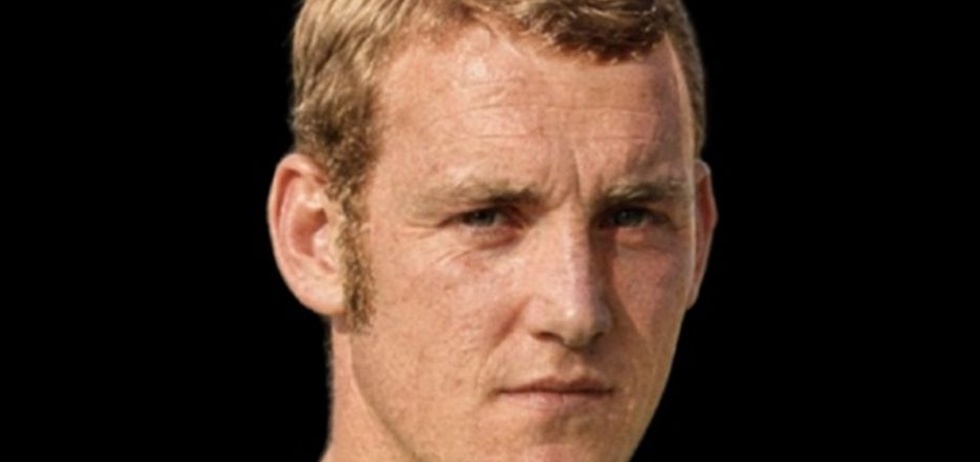
John William March Hope, 30 March 1949, Shildon, England.
PART ONE
John Hope began his goalkeeping days as an apprentice with Fourth Division outfit Darlington, and he did so with a precocity that turned heads around Feethams almost immediately, for he became one of the youngest players ever to appear for the club when he made his senior debut against Brighton & Hove Albion at Goldstone Ground on 26 April 1965, a sixteen-year-old thrown into the deep end of the Football League with barely a moment to prepare for it. He was part of the squad that won promotion in the 1965–66 season, even though the manager kept faith with more senior men and Hope never actually played a game during that particular campaign, watching the achievement unfold from the side-lines rather than contributing to it directly.
Although Hopes early years at Feethams yielded only a modest string of appearances, they were enough to convince a much bigger name in English football that he was worth a gamble. After fourteen league matches for the Quakers, Hope joined First Division Newcastle United in March 1969, the Magpies paying £8,000 for a young goalkeeper still finding his way in the professional game, and on paper it looked every inch the kind of ambitious step up that a talented apprentice dreams of making. In practice, however, it proved to be a frustrating education in patience, for Newcastle already possessed, in Iam McFaul, a goalkeeper both in fine form and in robust health, and consequently Hope found himself confined to the margins of first-team football for the best part of two years.
He did, at least, get his chance, albeit fleetingly: with McFaul away on international duty, he was handed the gloves for a First Division fixture against Manchester City at Maine Road on 5 May 1969, and although Joe Harvey´s boys lost that afternoon by a single goal, the appearance stood as the solitary entry on Hope´s Newcastle record. He came agonisingly close to a second outing the following January, when McFaul fell ill ahead of a Fairs Cup tie, but the senior man recovered his health just in time to reclaim his place, leaving Hope once again on the sidelines. There was, nonetheless, a medal of sorts to show for his time on Tyneside, because as an unused substitute he was part of the Newcastle squad that lifted the 1968–69 Fairs Cup, a genuine European trophy won without him kicking a ball in anger, the sort of quiet consolation that understudies in every sport come to recognise all too well.
Two years of standing in the shadows were enough, and midway through the 1970-71 season John Hope joined Sheffield United and went straight into the Bramall Lane starting eleven. There he replaced Alan Hodgkinson, a popular and long-serving figure who had also won recognition at full England international level, no small shoes to fill for a twenty-one-year-old with only a single top-flight appearance to his name. Hope’s home debut came in a 2–1 victory over Luton Town on 6 February 1971 and he helped Sheffield United push on toward promotion to the First Division at the season’s end, a promotion secured in part through a remarkable run of seven consecutive clean sheets.
On 20 March, Sheffield United demolished Blackburn Rovers 5-0 at Bramall Lane and a week later the Yorkshiremen edged out Bristol City 1–0 at Ashton Gate. That was followed by three successive goalless draws against Norwich City, Leicester City and Sheffield Wednesday on 3, 10 and 12 April respectively, before they returned to winning ways with a 2–0 victory over Millwall on 13 April and a 3–0 defeat of Birmingham City four days later. Seven matches, seven clean sheets, a club record that would stand untouched for more than four decades until Mark Howard finally surpassed it, and Hope was at the heart of every one of them.
PART TWO
In January 1972, John Hope received a late call-up to the England under-23 squad, only to watch Queens Park Rangers shot stopper Phil Parkes take the gloves instead. A difficult end to that same month, in which Sheffield United suffered an embarrassing 5–0 defeat at the hands of Bertie Mee´s Arsenal at Bramall Lane on 29 January, brought with it a run of unfounded rumours about Hope’s lifestyle away from the pitch, the sort of whispered gossip that could unsettle even the most composed of professionals.
Yet he showed the same resilience that had marked his Sheffield United career from the start, retaining his place for the club’s next league fixture, an entertaining and thrilling 3–3 draw with Division One title chasers Manchester City at Bramall Lame on 12 February, and earning a second England under-23 call-up soon afterward. He held on to the starting jersey at Sheffield United for the greater part of that season, a period that represented the peak of his time in the professional game, though thereafter his involvement gradually diminished, the natural ebb that comes to every goalkeeper once form dips or a younger rival emerges.
By January 1975 the writing was plainly on the wall, and Hope was put on the transfer list without a single club coming forward to make an offer for him; although he made clear his willingness to continue in the game even on a part-time basis, it was reported at the time that he was, in truth, preparing to abandon professional football altogether and return to the welding trade he had first set aside as a teenager in Shildon. In total he made 72 appearances in all competitions for the Blades before he eventually moved back to the north east, bringing to a close a spell at Bramall Lane that had begun with him replacing an England international and had, for one glorious spring, delivered a defensive record that outlasted him by generations.
Hope would spend the 1975–76 season with Hartlepool United in the Fourth Division, adding a further twenty-three league appearances to a Football League record that would eventually total 101 across his four clubs, before finally stepping down into non-league football with Whitby Town to bring his playing days to their natural close. Life after the professional game kept Hope close to the sport that had carried him so far from the welding shop of his youth. He turned out for a spell in the Northern League before moving into management himself, taking charge of both Stockton and Willington in that competition, work that drew on the same organisational discipline any goalkeeper learns simply by marshalling a defence for ninety minutes every week.
He also returned, in time, to the club where it had all begun, taking up a coaching role back at Feethams in 1994 during the reign of Alan Murray and Eddie Kyle, a homecoming of sorts for a goalkeeper whose professional football had started there almost three decades earlier. Football ran on through the next generation of the family too, for both of Hope’s sons followed him into the professional game as defenders rather than goalkeepers: Chris went on to make more than 500 Football League appearances, the bulk of them for Scunthorpe United and Gillingham, while Richard passed 350 appearances of his own, the majority accumulated during a long spell at Northampton Town alongside shorter stints at six further clubs.