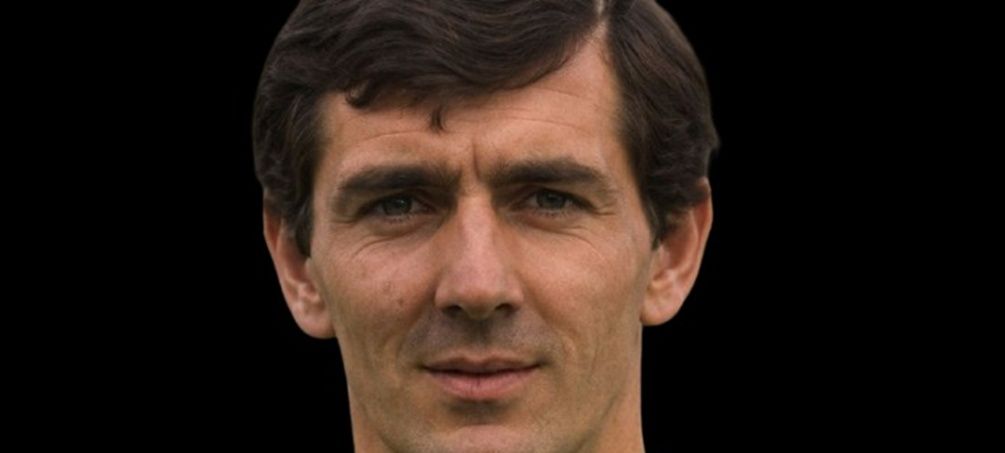
David Best, born 6 September 1943, Wareham, England.
PART ONE
David Best joined Bournemouth and Boscombe Athletic in October 1960 while still only seventeen, at a time when there were no specialist goalkeeping departments, no large coaching staffs and very little patience for a young man learning the hardest position on the pitch. He had to grow quickly, and he did, because the goalkeeper who emerged in the striped green shirt was brave without being reckless, steady rather than showy and prepared to take responsibility when a crowded penalty area became a place of elbows, boots and heavy centre-forwards arriving at speed. Those qualities would carry him from his home county to Lancashire and then into the top division, but the foundation was laid at Dean Court, where a local teenager became a trusted first-team player long before most men of his age had properly settled into adult life.
His first spell with Bournemouth ran from 1960 to 1966 and brought 230 league appearances, a remarkable total for a young goalkeeper whose position allowed little room for rotation, and the timing placed him in a side that repeatedly pushed towards promotion from the Third Division without quite making the final step. Bournemouth finished third in 1961-62, fifth in 1962-63 and fourth in 1963-64, and those near misses mattered because they taught Best how narrow the difference could be between a good season and a successful one, while the long league programme demanded concentration through winter mud, uneven surfaces and matches in which one misjudged bounce could undo ninety minutes of hard work.
The team included dependable servants such as Tony Nelson, Tom Standley, Ray Bumstead, Billy Coxon and John Archer, and Best’s place behind them was not built upon theatrics but upon availability, sound handling and the sort of courage that managers valued because it helped everyone in front of him settle. Bournemouth slipped into the middle and lower reaches of the division in his final two seasons, finishing eleventh in 1964-65 and eighteenth in 1965-66, but his own standing had not fallen, for by then he had completed six years of serious league football and had shown that his early promise was durable. Besides, goalkeepers were often judged as much by how they behaved when a side was under pressure as by their work in easier victories, and Best’s willingness to remain calm when results became harder helped attract Oldham Athletic, who took him north in 1966 and gave him a fresh test in the same division.
Oldham were rebuilding and the move demanded an immediate change of surroundings, accents and expectations, but Best adjusted without fuss and became the regular goalkeeper at Boundary Park, where the wind, cold and exposed terraces made the job feel a long way from the south coast. He played 98 league matches and 107 in all competitions between 1966 and October 1968, which meant that he was almost constantly present, and he also shared in Oldham’s Lancashire Senior Cup success in 1967, a modest honour beside the major domestic prizes but a real trophy for a club searching for momentum.
The Football League story was harder, because the Boundary Park outfit finished tenth in the Third Division standings in the 1966-67 campaign and then fell sharply in the 1967-68 season, ending at the bottom of the table and dropping into the Fourth Division, yet relegation did not conceal Best’s ability from clubs above them. Indeed, playing in a struggling side can provide an unforgiving examination of a goalkeeper, as the work comes in waves and the mistakes are remembered more readily than the saves, but he emerged with his reputation sufficiently strong for recently promoted Ipswich Town to bring him into the First Division in October 1968. By that point he had accumulated more than 300 league appearances before turning twenty-six, and although the move looked a large leap on paper, it was not a gamble on an unknown player; it was a judgement that a goalkeeper hardened by years in the lower divisions possessed the nerve, judgement and physical toughness to cope with the leading forwards in the country.
PART TWO
David Best arrived at Ipswich Town partly into the 1968-69 campaign to challenge Ken Hancock, quickly taking over in goal and making 21 league appearances during the remainder of the season as the Suffolk club finished eighteenth and secured safety. McGarry left for Wolverhampton Wanderers during the campaign and Bobby Robson took charge in January 1969, beginning an association with Ipswich that would eventually produce some of the finest football in the club’s history, although there was little glamour in the early work because Robson first had to keep the team in the division and make it stronger piece by piece.
Best was central to that effort, playing 40 league games in 1969-70 as Ipswich again finished eighteenth, and he worked behind defenders including Mick Mills, Billy Baxter, Allan Hunter and Derek Jefferson while Robson learned which men could carry the club forward. The following season was tighter still, with Ipswich finishing nineteenth in 1970-71, and an injury to Best during a match against West Bromwich Albion even forced forward Trevor Whymark to go into goal, a reminder of how exposed teams could become before substitutes and specialist cover were handled as they are now. Yet Ipswich survived once more, and those campaigns should not be dismissed as mere waiting time, because Robson’s later side was built upon the stubbornness developed when every point mattered and every defensive lapse threatened to pull the club towards the Second Division.
The improvement became clearer in the 1971-72 campaign, when Ipswich rose to thirteenth, and by then Robson had begun to draw together a group containing Mills, Hunter, Colin Harper, Bryan Hamilton, Colin Viljoen, Clive Woods and Whymark, with Best providing experience at the back while younger players grew into their roles. His game suited a team becoming more confident because he did not demand attention for routine work, and he could remain alert through quieter passages before dealing with the sudden shot, high ball or breakaway that separates dependable goalkeepers from men who merely look comfortable.
Then came 1972-73, the season in which Ipswich stopped thinking only about survival and established themselves among the strongest clubs in England, finishing fourth in the First Division behind Liverpool, Arsenal and Leeds United, while Best made a substantial contribution to a defence that gave Robson’s emerging side the platform from which its attacking players could work. The league position earned European qualification, but there was also a trophy to collect in the Texaco Cup, a competition involving clubs from England, Scotland and Ireland which mattered to those taking part and offered Ipswich the chance to prove that their rise had substance. After overcoming East Fife, Heart of Midlothian and Newcastle United, Ipswich met Norwich City in a two-legged final, and the identity of the opposition ensured that nobody in East Anglia treated it as a minor engagement.
The first leg of the Texaco Cup final was played at Portman Road on 4 May 1973, when Ipswich won 2-1 through two goals from Peter Morris, and three days later the teams met again at Carrow Road before a crowd of 35,798, with Best protecting the narrow advantage while Norwich tried to turn the tie around on their own ground. Ipswich won the second leg by the same 2-1 score, Clive Woods and Trevor Whymark scoring the goals, and the 4-2 aggregate victory gave Robson his first trophy as Ipswich manager and rewarded a side whose progress had been carefully earned rather than suddenly found. For Best, who had spent much of the previous decade working through Third Division promotion races, lower-table scraps and a Fourth Division spell with Oldham, it was proof that patience and dependability could carry a player into matches with genuine weight, and it also prepared Ipswich for the larger European examination that followed.
There was no soft opening in the 1973-74 UEFA Cup, because the first-round draw paired Ipswich with Real Madrid, six-time European champions and still one of the grand names of the game, but Robson’s men refused to be overawed, winning the first leg 1-0 at Portman Road on 19 September through a deflected Mick Mills shot. That left the tie balanced on a single goal before the return at the Bernabeu on 3 October, and it placed Best at the centre of an evening on which every cross, shot and loose ball carried the threat of wiping out Ipswich’s advantage.
Real Madrid pressed, as everyone knew they would, but Best and the defence held firm through a goalless draw that sent Ipswich into the second round 1-0 on aggregate, and the clean sheet remains the match most readily attached to his name because it joined technical control with mental strength in one of football’s most famous stadiums. A goalkeeper can make several spectacular saves and still lose, or make his finest contribution through positioning that turns dangerous shots into manageable ones, and Best’s work in Madrid belonged to a complete team performance in which concentration mattered as much as any single moment.
The reward was a meeting with Lazio, and Ipswich produced a crushing 4-0 victory at Portman Road on 24 October as Whymark scored all four goals, yet the return in Rome two weeks later became an ugly, dangerous night rather than a comfortable procession. Lazio won 4-2, Giorgio Chinaglia scoring a hat-trick, while Colin Viljoen converted a penalty and David Johnson struck Ipswich’s other goal, so the English side advanced 6-4 on aggregate, but missiles were thrown, trouble surrounded the pitch and Best was injured amid the disorder as the players tried to leave at the final whistle. Ipswich then beat FC Twente 1-0 at home and 2-1 away, with Whymark scoring late in the first leg before the side completed a 3-1 aggregate success in the Netherlands, and suddenly Robson’s team stood in the UEFA Cup quarter-finals with its goalkeeper having endured not only elite opposition but one of the most hostile evenings imaginable.
The quarter-final against Lokomotive Leipzig was settled by the narrowest margin, with Ipswich winning 1-0 at Portman Road and losing 1-0 in East Germany, and because the aggregate score remained level after extra time, the tie went to penalties, where Lokomotive prevailed 4-3. It was a severe ending to a European run that had carried Ipswich past Real Madrid, Lazio and Twente, but it also showed how far the club had advanced since the desperate relegation struggles at the beginning of Robson’s time, while Best’s two clean sheets against Madrid gave his part in the campaign lasting value.
PART THREE
Ipswich again finished fourth in the First Division in 1973-74, confirming that the previous season had not been a one-off, although Best did not play every league game and competition for the position was increasing, with Laurie Sivell emerging from the club’s own ranks and Paul Cooper arriving as another option. Goalkeeping places can turn quickly because only one man normally plays and there is seldom an easy route back once a manager changes his preference, and although Best had served Ipswich through their difficult early seasons and their rise into Europe, the time had come to move. He left Portman Road in 1974 after 168 league appearances and 199 matches in all competitions, a total that covered six demanding years and placed him firmly among the men who helped Robson change Ipswich from promoted strugglers into a side respected at home and abroad.
Portsmouth offered Best regular football in the Second Division, and he moved to Fratton Park in 1974 with the same straightforward purpose that had taken him from Bournemouth to Oldham and from Oldham to Ipswich: he wanted to play. Pompey were living through a difficult period, short of money and unable to match the stronger sides in the division, but a goalkeeper of Best’s experience could still bring order to a team frequently forced onto the defensive, and he made 53 league appearances during 1974-75 and the opening portion of the following season.
Portsmouth ended seventeenth in 1974-75, safely above the relegation places but far from the promotion contest, and the strain around the club meant that stability could not be taken for granted, yet Best again did what he had done throughout his playing life and accepted the weekly demands without turning his work into a drama. His stay was brief compared with his years at Dean Court and Portman Road, but 53 league matches represented more than a full season of service, and when he left in 1975 he had passed 500 Football League appearances across four clubs.
A return to Bournemouth in 1975 brought the circle almost back to its beginning, though the club was now called AFC Bournemouth and the circumstances were very different from those of the ambitious Third Division side he had joined as a teenager. Best added only two more league appearances in his second spell, taking his Football League total to 551, but his playing days did not end when he stepped away from the professional game, because in February 1976 he joined Dorchester Town as player-manager and brought top-flight knowledge into Dorset non-league football.
David Best amassed 121 appearances for Dorchester and later moved fully into management, having a substantial hand in assembling the side that won the Western League championship in 1979-80, and this part of his footballing life fitted the man because it relied upon practical understanding, local contacts and the ability to organise players without unnecessary noise. He subsequently held leadership roles with Portesham, Poole Town, Cranborne and Parley Sports, remaining involved in the game close to home.