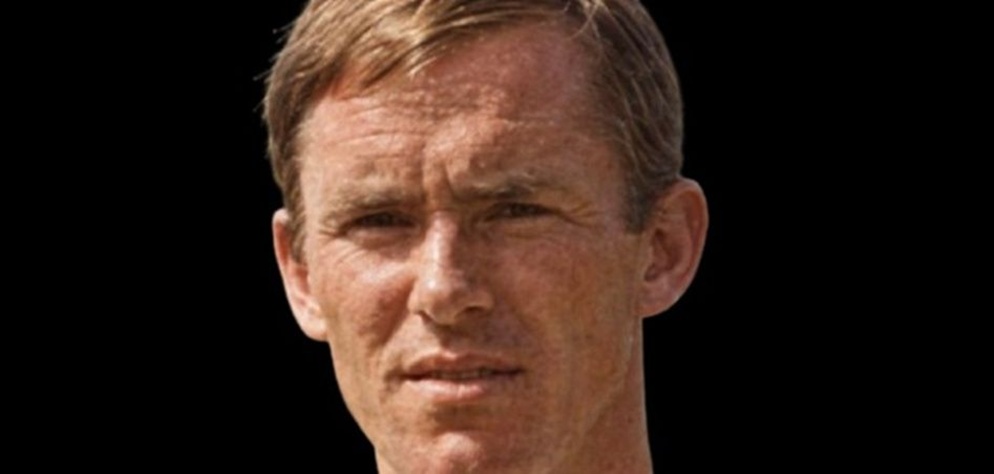
John Thomas Dempsey, born 15 March 1946, London, England.
PART ONE
John Dempsey grew up in north London and entered professional football through Fulham, joining the club as an apprentice in 1962 before signing professional forms on 1 July 1964, and from there he built a playing record that carried him through the First Division, international football with the Republic of Ireland, two major cup triumphs, a productive spell in North America and a final assignment as player-manager with Dundalk. The outline looks impressive, but the strength of the story lies in the difficult stretches as much as the medals, for Dempsey learned his trade in a Fulham team that was repeatedly fighting to stay among England’s leading clubs, then joined a Chelsea side whose bright early-1970s success gave way to injuries, financial problems and relegation, and through every change he remained recognisably the same footballer, honest in his effort and unwilling to step away from a physical contest.
His first-team entrance came on 9 January 1965, when the eighteen-year-old was selected for Fulham in a 3-3 FA Cup third-round draw against Millwall at Craven Cottage, and the occasion placed him immediately in the thick of senior London football, where reputations were tested quickly and young defenders were given little protection. Fulham already possessed experienced names, including England World Cup full-back George Cohen, Jimmy Langley, Bobby Robson and captain Johnny Haynes, while Rodney Marsh brought youthful invention further forward, but Dempsey did not remain a promising reserve for long because his strength, timing and readiness to compete allowed him to replace the experienced Bobby Keetch and make himself a regular.
He was not polished in a delicate sense and did not pretend to be, but he read the flight of the ball well, attacked crosses with conviction and tackled in the manner demanded by the period, when centre-halves were expected to withstand heavy contact and answer it without complaint. An unusual glimpse of his earlier attacking instincts arrived in the League Cup on 13 October 1965, when Fulham beat Northampton Town 5-0 at Craven Cottage and Dempsey, pressed into service as an emergency centre-forward, scored a hat-trick, a feat that sat oddly beside the defensive work for which he became known but made perfect sense to anyone aware that he had played up front as a schoolboy. It was not the start of a permanent positional change, although it showed that he carried composure as well as power when he crossed the halfway line.
Fulham’s league position ensured that most weeks were less comfortable, because the club survived close calls in the First Division before finally falling in 1967-68, and Dempsey’s development therefore took place in a side that often had to defend for long spells against stronger and deeper opponents. He became dependable rather than decorative, completing match after match and learning when to challenge, when to cover and when to clear the ball without taking a needless chance, while his value at set pieces gave Fulham another target when goals were difficult to find.
International recognition arrived during that period, for he qualified for the Republic of Ireland through his parents and made his debut against Spain in Valencia on 7 December 1966, when Ireland lost 2-0 in a European Championship qualifier but gained a centre-half who would be selected regularly over the following six years. He played nineteen times for Ireland between 1966 and 1972, in qualifiers and friendlies against countries whose resources often exceeded Ireland’s, and although the side did not reach a major tournament, Dempsey’s presence gave it the same qualities he supplied at club level: aggression, aerial strength and a refusal to be intimidated by famous opposition.
PART TWO
Relegation at the end of 1967-68 deepened Fulham’s financial problems, and when the club struggled again in the Second Division the need to raise money became as important as any wish to retain its best players, so in January 1969 Dave Sexton took John Dempsey across west London to Chelsea for £70,000. The fee was substantial, the move between neighbours carried its own edge, and Stamford Bridge offered a different sort of pressure because Chelsea were no longer concerned only with survival but were trying to turn a gifted, forceful squad into winners. Dempsey made his debut against Southampton in February 1969 and settled into a defensive group that mixed the toughness of Ron Harris with the versatility of David Webb and the attacking instincts of Eddie McCreadie, while Peter Bonetti provided assurance in goal and Peter Osgood, Ian Hutchinson, Charlie Cooke and Alan Hudson gave the side style further forward.
Osgood later called the defenders the four assassins at the back, a description that caught the physical reputation but not the organisation beneath it, because Sexton’s team could not have played its attacking football without defenders prepared to cover space, win first contact and move the ball sensibly after regaining it. Dempsey fitted because he did not complicate his task, yet he was not merely a man who kicked the ball away; his years at Fulham had taught him how to survive under pressure, and his background as a young striker meant he understood movements in the opposing penalty area whenever corners and free-kicks gave him licence to advance.
His first full Chelsea season brought the highest league finish of his time at the club and the first major medal, because Chelsea ended 1969-70 in third place and advanced through an FA Cup run in which Dempsey contributed a headed goal against Crystal Palace in the fifth round before facing Leeds United in a final that required two matches. The first game at Wembley on 11 April 1970 finished 2-2 after extra time, with Jack Charlton and Mick Jones scoring for Leeds while Ian Hutchinson equalised twice for Chelsea, and the replay at Old Trafford on 29 April became one of the most fiercely contested matches in English football, full of late tackles, running arguments and collisions that would produce a stack of cards under later refereeing standards.
Jones put Leeds ahead in the first half, but Osgood headed Chelsea level after the interval and David Webb scored the winner in extra time from Hutchinson’s long throw, giving Chelsea a 2-1 victory and their first FA Cup. Dempsey played through both finals at centre-half, dealing with the movement and aggression of Jones and Allan Clarke while the match repeatedly threatened to break away from ordinary control, and this was the kind of football in which his nerve and physical presence counted. The triumph was not neat and nobody involved would have claimed that it was, but it suited a defender who had reached the top through difficult matches rather than easy acclaim, and it gave Chelsea entry to the European Cup Winners’ Cup.
Europe widened the stage in 1970-71, yet Dempsey and Chelsea carried their domestic confidence into a competition that took them past Aris, CSKA Sofia, Club Brugge and Manchester City before a final against Real Madrid at the Karaiskakis Stadium near Athens. The first match on 19 May 1971 ended 1-1 after extra time, Osgood scoring for Chelsea in the fifty-sixth minute before Ignacio Zoco equalised close to the end, and because penalty shoot-outs had not become the standard way of settling such a final, the teams returned two days later for a replay.
Then came Dempsey’s finest attacking moment. Shortly after the half-hour Charlie Cooke delivered a dangerous corner-kick into the eighteen-yard area, Real Madrid goalkeeper José Luis Borja punched the ball away and Dempsey met it before it could bounce, driving a right-footed volley high into the back of the net from about twelve yards out, a beautifully clean strike from a player more accustomed to preventing such goals than scoring them. Osgood managed to make it 2-0 to the Pensioners before half-time, Sebastián Fleitas pulled one back for Real Madrid with roughly fifteen minutes remaining on the referee´s watch, and Chelsea held on to win the match by a 2-1 margin and lift their first European trophy. Dempsey later admitted that nine attempts out of ten might have flown anywhere, but that one went into the roof of the net, and its importance did not rest upon perfection alone, because it was the unexpected nature of the scorer that made it unforgettable: the centre-half had stepped into a loose ball and hit it with the certainty of the striker he had once been.
The medals arrived in consecutive seasons, but football did not continue in a smooth upward line, and 1971-72 brought another final without another victory when Chelsea met Stoke City in the League Cup at Wembley on 4 March 1972. Terry Conroy gave Stoke an early lead, Osgood equalised before half-time and George Eastham scored the winner after the interval, leaving Chelsea beaten 2-1 and Dempsey with a runners-up medal, while his international appearances for Ireland also reached their end that year after nineteen caps. He had served the national side during a difficult period and had become the first Republic of Ireland international to be sent off, dismissed against Hungary in a World Cup qualifier, but his selection over six years showed the respect he commanded even though qualification for the major finals remained beyond the team.
At Chelsea, the deeper concern was physical, because Achilles tendon and toe problems struck from 1972 onwards and cost him a full year, and once a defender loses continuous football it can be brutally hard to recover his rhythm, particularly in a club already being pulled apart by financial strain and internal change. Sexton left in 1974, several leading players departed, Stamford Bridge redevelopment had burdened the club with debt and Chelsea were relegated to the Second Division in 1975, so Dempsey’s later years bore little resemblance to the nights of cup success, although he stayed and fought for his place rather than leaving when circumstances became uncomfortable.
PART THREE
During the summer of 1976 Dempsey crossed the Atlantic for a first taste of North American football, joining Toronto’s Serbian White Eagles in the Canadian National Soccer League as player-coach, and the assignment offered responsibility beyond his own position while exposing him to a different football culture, different travel and the complications that could surround a club built around an ethnic community. He returned to Chelsea and remained on the books until 1978, though injuries and competition limited his first-team involvement, and he finally left Stamford Bridge after 207 appearances and seven goals in all competitions, including 166 league matches and four league goals.
Philadelphia Fury gave him a fresh opening in 1978, and at thirty-two he signed for the North American Soccer League club, reuniting with Osgood and entering a competition filled with imported stars, artificial surfaces, long-distance flights and playing conditions unlike those he had known in London. The Fury used Veterans Stadium, where the Astroturf made tackles and falls harsher on ageing joints, but Dempsey adapted because his positioning had become as important as his speed, and he played 81 matches across three seasons from 1978 to 1980, scoring twice.
His outstanding year was 1979, not 1978 as some summaries state, when he shared the NASL Defender of the Year award and helped Philadelphia reach the play-offs, an achievement made more striking by the names operating in the league and by the physical mileage already in his legs. He had crossed the Atlantic with medals from England and Europe, but he did not treat the NASL as a retirement exhibition, and the award showed that his standards still travelled, for a defender could not earn that recognition on reputation alone while facing quick forwards on wide pitches and handling a schedule spread across a continent. Philadelphia folded after the 1980 season, ending the Fury’s short existence, and Dempsey returned to England, where he moved into management with Maidenhead United and began applying his experience to part-time players rather than simply waiting for another prominent playing contract.
A final senior assignment arrived in Ireland in 1983, when Dundalk appointed him player-manager for the 1983-84 season, and at thirty-seven he attempted to organise the team from the touchline while still being available at centre-half. The early months offered promise, with the Lilywhites reaching third place in the league by late November, but the results slipped, disciplinary problems complicated the work and the double responsibility became increasingly difficult as the physical demands caught up with him.
Dempsey amassed ten league appearances and sixteen outings in all competitions for Dundalk, and he made his final appearances before leaving by mutual consent in March 1984, bringing to an end a playing life that had begun at Fulham nearly two decades earlier. He later managed Egham Town, but his work away from the professional game said as much about him as another football post might have done, because he spent years supporting adults with autism and learning difficulties at a day centre in Barnet, carrying the patience and practical manner of the footballer into an entirely different setting.