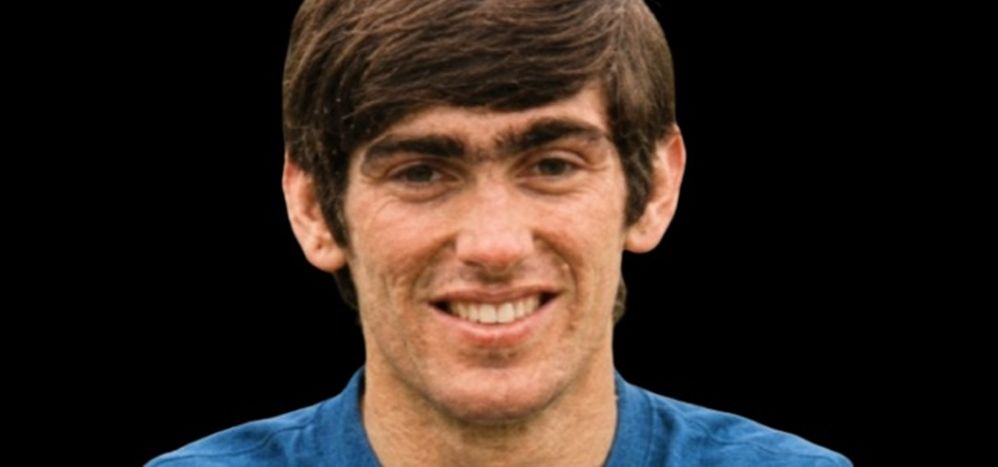
Dennis Ronald Hawkins, born 22 October 1947, Swansea, Wales.
PART ONE
Dennis Hawkins signed apprentice forms with Leeds United in October 1964, at the age of sixteen. Don Revie’s Leeds, by that stage, had already begun its transformation from a middling Second Division outfit into one of the most feared and meticulously drilled sides in the country, and the youth set-up at Elland Road reflected that same obsessive attention to detail, demanding not merely raw ability from its young hopefuls but also a tactical discipline and a physical hardness that many boys simply could not withstand. Hawkins, operating in an attacking midfield role and contributing to Leeds’ build-up play with the kind of patient, probing football that Revie prized, showed enough promise to be considered one of the club’s better young forwards, even if the finer details of his day-to-day training have long since faded from the record.
His first taste of senior football arrived on 13 October 1965, in a League Cup tie against West Bromwich Albion at Elland Road, when Revie, needing to rest his first-choice men, fielded an experimental Leeds side stuffed with youngsters; Hawkins played at centre-forward that night alongside the likes of David Harvey and Paul Madeley, and though Leeds went down 4-2, the occasion nonetheless marked him out, however briefly, as a player who had crossed the threshold from promising apprentice to first-team performer. It would prove, however, to be one of only a handful of such occasions, for Leeds’ strength in depth by the middle of the decade was simply extraordinary, and a young Welshman competing for a place against Billy Bremner in midfield or Peter Lorimer out wide faced odds that were never going to favour him.
Remarkably, before he had even made his League debut, Hawkins had already pulled on the Wales Under-23 shirt, winning his first cap on 30 November 1966 against Scotland at Wrexham, a fixture in which Leeds’ own Eddie Gray lined up for the opposition and inflicted a chastening 6-0 defeat on the young Welshmen; it says something of the esteem in which Hawkins was held by the Welsh selectors that they picked him for such recognition while he was still waiting on his first sighting of League action.
That wait continued into the new year, and on 22 February 1967 he collected a second Under-23 cap against Northern Ireland in Belfast, a match that was ultimately abandoned with the Irish leading 2-1, before, at last, on 15 May 1967, in the final fixture of the 1966-67 season, Hawkins made his long-awaited League debut against Sheffield Wednesday at Elland Road. Leeds, fielding yet another understrength side that afternoon, edged the game through a goal from Terry Hibbitt, and though Hawkins himself did not get on the scoresheet, the debut stood nonetheless as a modest personal landmark after nearly three years on the club’s books.
Further recognition at international level followed soon afterwards, for on 1 November 1967 Hawkins won his third Wales Under-23 cap, this time on home soil in Swansea, in a match England edged 2-1, and a fortnight later, on 15 November, he was back in a Leeds shirt for a League Cup fourth-round tie at Sunderland, called upon because Mick Jones was cup-tied and watching from the stands as two goals from Jimmy Greenhoff sent Leeds through to the next round. A further outing followed later that same year, coming on as a substitute against Nottingham Forest, though by now it was becoming plain, both to Hawkins and to those watching closely at Elland Road, that his path to regular first-team football was blocked by circumstance rather than by any deficiency in his own game.
Even so, the Welsh selectors had not finished with him, and on 20 March 1968 he collected a fourth Under-23 cap in a narrow 1-0 defeat to Northern Ireland at Cardiff, adding to a growing collection of representative honours that stood, somewhat incongruously, alongside a Leeds first-team record that after nearly four years amounted to just two League appearances and two in the League Cup, with not a single goal to show for any of them. It was against this backdrop of representative promise and club frustration that October 1968 brought the change that would come to define the shape of his career, as Leeds, having concluded that a player of his undoubted quality deserved a stage where he might actually be seen, sanctioned his transfer to Shrewsbury Town for an estimated transfer fee of £10,000.
Notably, a fifth Wales Under-23 cap arrived that same month, on 2 October, in a 3-1 defeat to England at Wrexham in which he lined up alongside his fellow Welshman Terry Yorath while Jimmy Greenhoff, on this occasion wearing an England shirt, got among the goals; whether that particular cap fell just before or just after the paperwork on his move to Shropshire was finalised is not entirely clear from the available record, though most sources place it firmly within his Leeds registration.
PART TWO
At Gay Meadow, and for the first time in his career, Hawkins found himself trusted with a starting shirt on a regular basis, and Shrewsbury’s Third Division campaign of 1968-69 duly closed with the club in seventeenth place on 43 points from their 46 fixtures, a solid if unspectacular return that nonetheless gave Hawkins the platform he had been denied at Elland Road. The following season brought further evidence of his development, and among the highlights was a goal against Stockport County in a 1-1 draw during the 1969-70 campaign, a small but meaningful contribution as Shrewsbury climbed one place to finish fifteenth with 44 points; all the while, Hawkins continued to operate as the link between midfield and attack, exploiting the spaces that opened up in front of him and offering a more prominent attacking role than anything Leeds had ever afforded him.
His international career, meanwhile, reached its conclusion on 14 January 1970, when he was capped for the sixth and final time against Scotland in Aberdeen, a 1-1 draw in which he again lined up alongside Terry Yorath and in which John O’Hare found the net for the Scots; it brought to a close a representative record that had, remarkably, begun before his League debut and had spanned two different clubs, five caps won as a Leeds player and one, that final Aberdeen appearance, earned while on Shrewsbury’s books.
Back on the domestic front, September 1970 brought a loan move to Chester City, undertaken after increased competition for places at Gay Meadow had temporarily squeezed him out of Shrewsbury’s plans, and across the 1970-71 Fourth Division season he made seven appearances for the Sealand Road club, six of them starts, scoring once; Shrewsbury themselves, in his absence, finished thirteenth on 45 points, their defence conceding somewhere between sixty and sixty-seven goals across these seasons while Hawkins and his forward colleagues chipped in a return of between fifty-one and seventy-three at the other end.
Restored to the Shrewsbury fold, Hawkins helped the club to a twelfth-place finish in the Third Division during 1971-72, on 44 points, before a second loan spell took him, in March 1972, to Workington in Cumbria, a considerable distance from Shropshire that underlined just how far clubs of that era were prepared to send players in search of match fitness and regular football. He started six games for Workington in the Fourth Division that season and scored once, adapting, not for the first time, to the demands of a new dressing room and an unfamiliar corner of the country, before returning south once more as his Shrewsbury contract wound down. Then, in May 1972, with his time at Gay Meadow finally at an end after three and a half eventful years, Hawkins completed a permanent move to Newport County, a transfer that carried him back towards his Welsh roots and into what would prove to be the final chapter of his League football.
Newport, under Hawkins’ watch in 1972-73, mounted a genuine push for promotion from the Fourth Division, finishing fifth with 56 points from their 46 matches, twenty-two wins to their name and a healthy goal difference of plus twenty, though the Exiles ultimately fell just short of the places that would have taken them up; Hawkins himself made nine appearances that season and scored once, a limited but far from insignificant contribution to a campaign that brought genuine excitement to Somerton Park. Then, in June 1973, at the age of twenty-five, and with his League days behind him, Hawkins stepped away from the professional game altogether, bringing to a close a spell that had begun with such promise at Elland Road nearly a decade earlier and had wound its way, via Shropshire, Cheshire and Cumbria, back to South Wales.
Retirement from the Football League, however, did not mean retirement from football itself, and Hawkins continued to turn out in non-league circles for both Telford United and Nuneaton Borough, staying involved in the game he had first shown a gift for as a Swansea schoolboy, before, in 1988, he took his first steps into management with Tadcaster Albion of the Northern Counties East League, a role that allowed him to put to use whatever he had absorbed across nearly a decade in professional dressing rooms. Away from the touchline, Hawkins built a working life in the confectionery trade, taking up employment at Monkhill Confectionery in York.