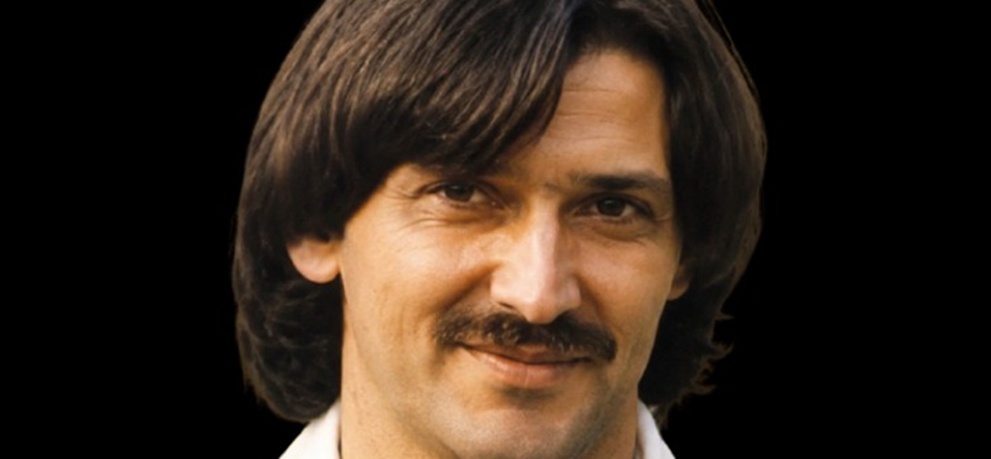
Trevor Anderson, born March 3 1951, Belfast, Northern Ireland.
PART ONE
Born in Belfast, Trevor Anderson grew up within touching distance of Windsor Park, and it was there, amid the noise and the sectarian intensity of Irish League football, that he first learned his trade. Anderson scored in Portadown’s 1972 Irish Cup Final, though the day ended in disappointment as Coleraine came out on top, and it was that sort of big-occasion contribution, allied to two years of consistent scoring, which persuaded English scouts to take notice. Even so, when the transfer move to England finally arrived, few people in Northern Ireland had expected it to be Manchester United who came calling, and fewer still had expected beleaguered manager Frank O’Farrell to be the man doing the calling, since Old Trafford in 1972 was hardly the picture of stability that a young forward might have hoped to walk into.
O’Farrell paid Portadown a fee of £20,000 for Anderson in October 1972, and although nobody said so publicly at the time, it seems reasonable enough to assume that the United manager had one eye on the future when he signed him, since another Ulsterman, George Best, was by then a fading and increasingly troubled figure whose finest days at Old Trafford were fast receding into the distance. Whatever plans O’Farrell had for his new signing, however, they were never given the chance to develop, because within a matter of weeks the Manchester United manager had been sacked, and the raw young forward from Portadown found himself a peripheral figure under an entirely different regime.
Tommy Docherty took charge at Old Trafford and, whatever his other qualities, he did not appear to see Anderson as central to his rebuilding plans, and the Belfast man’s early months in Manchester passed largely unnoticed, spent watching from the sidelines while more established names were given the opportunities that a teenager arriving from the Irish League might reasonably have expected for himself. It was not until the last day of March in 1973 that Anderson finally got his chance, making his debut on 31 March in a 2–0 win over Southampton at The Dell, a game in which Bobby Charlton and Jim Holton were the scorers. Anderson did not have to wait long for his first goal in United colours as he found the net in a 1–0 victory against Leeds United at Elland Road on 18 April, a result which offered a small crumb of comfort during an otherwise miserable season for the Old Trafford club, and which briefly suggested that he might yet force his way into Docherty’s longer-term thinking.
Manchester United’s troubles did not end there, though, and the opening of the following season, 1973–74, brought a chastening reminder of just how far the club had fallen. On 25 August 1973, more than 50,000 spectators packed into Highbury to watch Arsenal put three goals past United without reply, and the manner of the defeat told its own story. Ray Kennedy gave the home side an early lead inside two minutes, converting from a free-kick worked by Peter Simpson, and although United rallied for spells during the afternoon, Arsenal always looked the more composed and dangerous of the two teams.
John Radford doubled the home side’s advantage with a close-range finish shortly after half-time, beating away goalkeeper Alex Stepney from a tight angle, and even though Lou Macari thought he had pulled a goal back for Manchester United later in the game, the effort was chalked off because Anderson had fouled Jeff Blockley in the build-up. As if that were not galling enough, Arsenal added a third deep into the closing stages, Kennedy again the provider as he slid a clever pass through for Alan Ball to apply the finish in the 87th minute, and United trudged away from Highbury having been comprehensively outplayed.
There was, however, a small measure of personal redemption to come that same season. On 8 September 1973, Anderson found the back of the net in a 2–1 defeat at Ipswich Town, a result which, on the face of it, looked like an improvement on the previous season’s corresponding fixture, when Bobby Robson’s side had thrashed Manchester United 4–1 at Portman Road. Any hope of revenge, though, evaporated almost as soon as the match began, because Mick Lambert put Ipswich ahead inside six minutes, latching on to a long ball and finishing calmly past Stepney, and Dave Johnson added a second with three minutes of the first half remaining, heading home from a Mick Mills free-kick. It was Anderson who gave United something to cling to, rising to meet a superbly delivered free-kick from Willie Morgan and heading the ball beyond the Ipswich goalkeeper with five minutes left on the clock, but there was no time left for an equaliser and the visitors returned to Manchester with nothing to show for their efforts.
Results of that sort became depressingly familiar as the 1973–74 season wore on, and United’s slide eventually culminated in relegation to the Second Division, a fate that would have seemed almost unthinkable a few years earlier for a club that had been crowned champions of Europe within living memory of most of its supporters. For Anderson personally, the Old Trafford spell amounted to only 19 league appearances and two goals, a modest return by any measure, and it was clear enough, both to the player and to those watching from the terraces, that he had not been given a proper opportunity to establish himself in such an unsettled and turbulent dressing room, one in which grander names than his were also finding first-team places hard to come by. So it was that in 1974, with United now a Second Division club and Anderson himself unsettled in Manchester, the forward moved on, dropping down two divisions to join Swindon Town, a decision that on paper looked like a retreat but which, in practice, would prove to be the making of him as a goalscorer in English football.
PART TWO
If Old Trafford had been a difficult and unforgiving environment for a young forward still finding his feet in English football, Swindon Town turned out to be exactly the opposite, and Anderson wasted no time in making an impression on the Wiltshire club’s supporters. Third Division football in the mid-1970s was a rougher, more physical proposition than the First Division game Anderson had briefly sampled at Old Trafford, but it suited a player of his particular gifts far better, since he was given the freedom and the regular football that a young forward needs in order to develop his instincts in front of goal. He scored the winning goal on his debut, a 1–0 victory over Chesterfield at the County Ground on 5 November 1974, and from that moment on he became one of the most important attacking players at Swindon, a lively, dependable presence who chipped in with goals from midfield and further forward alike, and who quickly won over a set of supporters not always inclined to warm so readily to a player arriving with the tag of a First Division reject attached to his name.
Nowhere was that more evident than on 23 November 1974, when Swindon, then sitting second in the Third Division table, thrashed Fourth Division Reading 4–0 in the first round of the FA Cup. Swindon arrived at that game full of confidence, having lost only once in eleven matches and having won five successive fixtures at home, and although the pitch was heavy after persistent rain and the afternoon was blustery, goalkeeper Joe Butler was preferred to Hugh MacLean in an otherwise unchanged side. There was an added subplot for Swindon defender Will Dixon, who had spent four years on Reading’s books and made more than 150 league appearances for the Elm Park club before crossing to Wiltshire.
Anderson, playing only his fourth game for Swindon since arriving from Manchester United, was the man who set the rout in motion, capitalising just after the half-hour mark when Reading goalkeeper Steve Death failed to hold on to a corner from John McLaughlin and allowed the ball to squirm over the line. He turned provider on the hour, setting up Peter Eastoe for Swindon’s second with a crisp left-footed finish, Eastoe’s fourteenth goal of the season, and five minutes later it was 3–0 as Eastoe surged down the right and drove in a low cross which Canadian international Bob Lenarduzzi could only turn into his own net under pressure. Swindon added a fourth in the 13th minute of the second half, Tommy Youlden losing his footing on the greasy surface and handling the ball as he tried to recover, and Dave Moss duly converted the resulting penalty. There might have been a fifth goal too, since Moss was brought down by Death inside the area with three minutes left, but referee Jack Taylor insisted he had already blown for an earlier infringement and awarded only a free-kick just outside the box.
Swindon continued their cup exploits with a 3–1 win over non-League Maidstone United in the second round and a 2–0 victory against Fourth Division Lincoln City in the third, before being paired with First Division West Ham United in the fourth round, a tie that would provide Anderson with one of the more bittersweet afternoons of his time at the County Ground. A late goal from Eastoe earned Swindon a 1–1 draw at Upton Park and dragged the Hammers back to Wiltshire for a replay, and although Anderson gave Swindon the lead in that second meeting, West Ham hit back with two goals in the second half to progress with a 2–1 win, ending the underdogs’ run.
Anderson’s contribution to Swindon’s cause continued to grow across the following seasons, and by 1975–76 he had established himself as the club’s leading marksman, finishing the campaign as top scorer with 15 goals, a return that placed him firmly among the more prolific forwards outside the top two divisions of English football that year. His finest single afternoon in front of goal came on 24 April 1976, when he converted a hat-trick of penalties during a 5–1 thrashing of Walsall at the County Ground, a rare and slightly unusual feat that spoke to the trust his teammates and coaches placed in his composure from twelve yards, and one that supporters who were present still recall with a good deal of fondness.
By the time he eventually left Wiltshire, Anderson had scored 35 league goals in 131 appearances for the Robins across a three-year stay, figures that comfortably outstripped anything he had managed at Old Trafford and which reflected just how much more suited his game was to the rhythm and demands of Third Division football, where a forward with pace, movement and a cool head in front of goal could flourish in a way that the grinding pressure of a struggling First Division club had never allowed him to do.
In December 1977, with his reputation as a reliable goalscoring forward well established, Anderson joined fellow Third Division outfit Peterborough United for a fee of £20,000, the same amount that Manchester United had paid Portadown for his services more than five years earlier. His time at London Road brought him close to the sort of success that had eluded him at Old Trafford, and Peterborough came agonisingly close to promotion to the Second Division during the 1977–78 season, a campaign in which Anderson’s own contribution was recognised when he was named the club’s Player of the Year for 1978. The following season, though, told a very different story, and Peterborough were relegated at the end of 1978–79, bringing Anderson’s time in England to an end after seven goals in 58 appearances for the Posh.
PART THREE
Rather than search for another club in the Football League, Trevor Anderson chose instead to return home to Northern Ireland, and it was there, with Irish League giants Linfield, that he finally found the kind of sustained success that had proved so elusive during his years in England. Coming home was not, in the context of Irish football at the time, any sort of step down, since Linfield were among the grandest and most decorated clubs on the island, and a player of Anderson’s proven pedigree in the Football League arrived at Windsor Park with the sort of reputation that supporters immediately took to.
At Windsor Park he won every honour the domestic game had to offer, topping the Irish League goalscoring charts in both 1984 and 1986, and remarkably, at the age of 35, he was named the Northern Ireland Football Writers’ Association Player of the Season in 1986, a rare distinction for a player so far advanced in years by the standards of a physically demanding league, and a fitting reward for a forward whose sharpness in front of goal seemed barely to have dimmed with age. Across his eight seasons with Linfield, Anderson made 327 appearances and scored 96 goals, figures which, when added to his totals from Portadown, Manchester United, Swindon Town and Peterborough, brought his overall club output to 616 appearances and 179 goals, a thoroughly substantial record by any reasonable measure, and one built patiently across four different countries and more than a decade and a half of senior football.
Alongside his club exploits, Anderson also carved out a significant place for himself in the Northern Ireland set-up, and it was on 8 May 1973 that he announced himself on the international stage in truly emphatic fashion, scoring twice on his full debut in a 3–0 World Cup qualifying win over Cyprus at Craven Cottage. That was precisely the sort of eye-catching start that earns a young player his place in the side for the following season’s Home Nations Championship, and Anderson duly retained his spot in the Northern Ireland team. Over the course of two years at Old Trafford he won six caps in total for his country, and it was frequently observed, not least by those who followed both his club and international form closely, that his performances in the green shirt tended to outstrip whatever he was managing to produce week to week in the Football League.
His final cap arrived as a substitute against Denmark in October 1978, and it proved to be a memorable one, since Anderson came off the bench to score the winning goal with a header, his first international goal in more than five years, and a strikingly satisfying way to bring his run of appearances in the green shirt to a close, even if nobody at the time realised it would prove to be his last outing at that level. His impressive form for Linfield later earned him a recall to the Northern Ireland squad for the 1981 British Championships, although he was unable to add any further caps to a total that eventually stood at 22, four of which had brought him goals, a modest but respectable tally for a forward whose international recognition had always been squeezed into whatever gaps his club circumstances allowed.
When his playing days finally came to a close, Anderson did not stray far from Windsor Park, taking up a position as youth team coach at the club where he had enjoyed such success as a forward, and it was there, working with young players rather than scoring goals himself, that he began to build the second, equally substantial phase of his life in the game. He steadily worked his way up through the ranks and was appointed manager of the Linfield first team in 1992, a role in which he proved every bit as successful as he had been as a player, applying the same instincts for the game that had served him so well in front of goal to the rather different challenge of organising and motivating a squad. Under his guidance, Linfield collected seven trophies, including two Irish League Championships and two Irish Cups, before he eventually decided to step down in early 1997, leaving the club in considerably better shape than he had found it.
Rather than take a break from the game, Anderson surprised many observers by immediately accepting the post of Director of Football at Newry Town, a club that sat a division below Linfield but which had built something of a reputation for spending big money by the standards of Irish League football, and which clearly hoped that his experience of winning trophies at the very top of the domestic game would translate into similar success on a smaller stage. The gamble paid off handsomely, since the club won promotion under his direction, proof that his eye for organising a successful side had not been a product of Linfield’s superior resources alone.
From there Anderson moved on to manage Ards, guiding the Red and Blue Army to promotion in 2001 and adding yet another line to an increasingly impressive managerial record, before crossing the border in October 2002 to take charge of League of Ireland side Dundalk, a post he held at Oriel Park for two years until 2004, bringing to a close a period of more than a decade during which he had barely been out of work in the Irish game, whether north or south of the border.