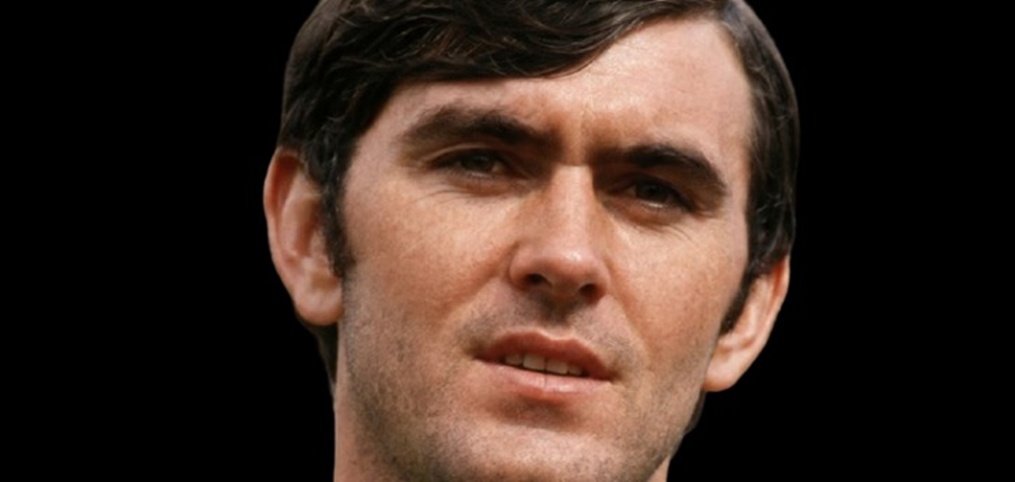
John James Rimmer, born February 10 1948, Southport, England.
PART ONE
Jimmy Rimmer was born in Southport and when Manchester United took him on as an apprentice in September 1963 he was only 15, a Sandgrounder leaving home for a club that had recently won the FA Cup and was again pushing towards the top of the English game under Matt Busby. He signed professional forms in May 1965, but United were not a club at which a young goalkeeper could expect patient, private development, because every mistake was examined and every appearance carried the weight of a famous red shirt, while Harry Gregg remained a powerful figure and David Gaskell was also competing for the position.
Rimmer learned his work on the training ground and in the reserves, where he developed into a brave, agile and technically sound goalkeeper, but his route to the first team became still narrower when United paid Chelsea £55,000 for Alex Stepney in September 1966. Stepney quickly established himself, and although Rimmer was progressing well, the difference between being considered good enough and actually getting into the side was becoming painfully clear.
His opportunity eventually came on Easter Monday, 15 April 1968, when Busby selected him against Fulham at Old Trafford, and Rimmer marked his First Division debut with a clean sheet as United won 3–0 before a crowd of more than 60,000. Denis Law scored twice and George Best supplied the other goal, but it was still a significant afternoon for the 20-year-old goalkeeper, who had spent nearly five years working towards a senior appearance and now found himself playing in a team containing Stepney, Law, Best and Bobby Charlton during one of the most important seasons in Manchester United’s history.
A little more than five weeks later United met Benfica in the European Cup final at Wembley, and although Stepney was naturally chosen in goal, Rimmer was the substitute goalkeeper as Busby’s side won 4–1 after extra time, with Charlton scoring twice and Best and Brian Kidd adding the other goals. Rimmer therefore received a winner’s medal without entering the field, and at 20 he had an honour that many outstanding players never secured, yet the immediate problem remained untouched: Stepney was only 25, was producing his best football and had just made one of the defining saves of the final when he stopped Eusébio late in normal time. Rimmer could enjoy the medal and absorb the experience, but he also knew that the goalkeeper ahead of him was not approaching retirement, losing form or likely to be displaced.
The seasons that followed demanded patience, and although Rimmer was never treated as a spare part, his first-team football came in scattered portions rather than one unbroken run. He played four League matches in 1968–69 and five in 1969–70, then received his longest spell during 1970–71, when he made 20 League appearances and at last showed over several months that he could handle First Division football, but Stepney returned and Rimmer did not play a League match at all in the following season. Four more League appearances arrived in 1972–73, leaving him with only 34 in the competition during his years at Old Trafford, though his total in all first-team matches reached 46.
Those figures did not represent a goalkeeper who had failed, because United regarded him highly enough to keep him for almost a decade after he became a professional, but by the autumn of 1973 they described a man of 25 whose best playing years were in danger of passing from one reserve-team fixture to another. United themselves were in decline after the departures of Busby, Law and Charlton, and Tommy Docherty was trying to reconstruct an ageing side, yet Stepney remained first choice. Rimmer needed matches more than promises, so in October 1973 he accepted a loan move to Fourth Division Swansea City, where the manager was Harry Gregg, the former United goalkeeper who understood both the position and the frustration of waiting.
Dropping from Old Trafford and the First Division to the Vetch Field and the Fourth was not glamorous, but it was precisely what Rimmer required, because Swansea offered him the weekly responsibility that Manchester United could not. He made 17 League appearances during the loan, dealt with crowded penalty areas, uneven pitches and forwards who considered the goalkeeper fair game, and gradually recovered the rhythm that no amount of reserve football could supply. There was little protection and still less ceremony at that level, but Rimmer was playing for points, making decisions under pressure and rediscovering the authority that comes only when a goalkeeper knows the position is his.
PART TWO
Arsenal manager Bertie Mee had begun looking for a successor to Bob Wilson, whose bravery and spectacular style had made him one of Highbury’s most popular figures, and Jimmy Rimmer’s work at Swansea persuaded Mee that an experienced but still relatively young replacement was available at a modest price. In February 1974 Arsenal paid Manchester United £40,000 for him, bringing an end to an association that had begun when Rimmer was a schoolboy, and although his first spell with Swansea had lasted only a few months, it had changed the direction of his football. Without those 17 matches he might have continued to be discussed as a capable deputy; because of them, he returned to the First Division ready to become a recognised number one.
Wilson remained Arsenal’s goalkeeper for the closing weeks of 1973–74, so Rimmer had to wait again, but this time the circumstances were temporary and clearly understood, and he made his only appearance of the season in a goalless draw against Liverpool at Highbury. Wilson retired that summer and Rimmer took over, starting 40 of Arsenal’s 42 League matches in 1974–75 as a side that had won the Double only four years earlier became involved in a grim fight near the bottom of the table. The defence in front of him was changing, the confidence surrounding the team had drained away and Arsenal finished 16th, only four points above the relegation places under the two-points-for-a-win system, but Rimmer repeatedly kept difficult afternoons from becoming disastrous ones.
He was quick off his line without charging out wildly, dependable when dealing with crosses and capable of sharp reaction saves, while his manner was generally calm and free from unnecessary display. Supporters understood the value of that work and voted him Arsenal’s Player of the Season for 1974–75, a notable achievement for a goalkeeper in his first complete campaign at the club and an emphatic answer to the idea that his long spell behind Stepney had reduced him to permanent reserve status. He had not suddenly learned how to keep goal after moving south; he had finally been given enough football for everybody else to see what Manchester United had kept in waiting.
Rimmer missed only one League match in 1975–76 and played all 42 in 1976–77, but Arsenal continued to struggle for much of that period, finishing 17th in the first of those seasons before recovering to eighth in the second. Mee departed in the summer of 1976 and Terry Neill took charge, while established players such as Alan Ball moved on and younger men, including Liam Brady, Frank Stapleton and David O’Leary, began to assume greater importance. Through that alteration Rimmer remained reliable, and his Arsenal form brought the international recognition that had appeared unlikely during the long years on Manchester United’s bench.
Don Revie selected him for England’s match against Italy in the United States Bicentennial Cup tournament at Yankee Stadium on 28 May 1976, and Rimmer started behind a side containing defenders Phil Neal, Colin Todd and Dave Watson, midfielder Trevor Brooking and forward Mick Channon. The Italians went two goals ahead through Torino striker Francesco Graziani in the 17th and 20th minutes of the encounter respectively, and Revie replaced Rimmer with another debutant, Manchester City goalkeeper Joe Corrigan, at half-time as part of a wider reshuffle; The Three Lions then recovered courtesy of a couple of goals from Channon and a goal by defender Phil Thompson to win the match by a narrow 3–2 margin. It proved to be Rimmer’s only senior cap, a harshly brief international record for one of the leading English goalkeepers of the period, but Ray Clemence, Peter Shilton and Corrigan supplied imposing competition, and a poor collective first half in New York had given him little chance to make the place his own.
By the summer of 1977 Rimmer had played 146 matches for Arsenal in all competitions, including 124 in the First Division, but another accomplished goalkeeper was about to block his way. Neill signed Pat Jennings from Tottenham Hotspur, an extraordinary transfer between the north London rivals, and Rimmer realised that he could again be reduced to deputy just as he had been at Manchester United. Aston Villa manager Ron Saunders acted quickly, paying £65,000 for him in August, and the move suited both parties because Villa needed greater certainty in goal after John Burridge’s uneven period in the side, while Rimmer had no intention of spending another portion of his playing life waiting for someone else to be absent.
PART THREE
Aston Villa had returned to the First Division in 1975 and won the League Cup in 1977, and Saunders was assembling a strong, hard-working team rather than merely trying to keep the club among the leading sides. Rimmer went straight into the League side and played every match in 1977–78 and 1978–79, then missed only one in 1979–80, bringing stability to a defence built around players such as Allan Evans, Ken McNaught and captain Dennis Mortimer. His arrival was not accompanied by extravagant claims, but he supplied exactly what Saunders required: dependable positioning, physical courage, concentration and the ability to make difficult saves without turning each one into a personal performance.
Villa finished eighth in Rimmer’s first League season and eighth again in his second, but 1978–79 also brought a run to the UEFA Cup quarter-finals, where Saunders’s team defeated Valur, Górnik Zabrze and Athletic Bilbao before going out to Barcelona. The following campaign was less impressive in the table as Villa finished seventh, yet Saunders continued trimming and strengthening his squad, with Gordon Cowans maturing in midfield and Gary Shaw emerging in attack, while Tony Morley arrived from Burnley and Peter Withe was signed from Newcastle United in the summer of 1980. Villa began 1980–81 without being widely regarded as the most likely champions, for Liverpool had won the previous two titles and Ipswich Town, managed by Bobby Robson, possessed one of the finest sides in the country, but Saunders trusted a remarkably small group and demanded that they withstand the full 42-match programme.
Rimmer played every minute of the League campaign, as did six other Villa players, and the understanding created by that continuity became one of the team’s greatest strengths. He was now 32, hardened by the years of waiting and by more than 300 senior appearances, and while Withe and Shaw supplied 38 League goals between them, Rimmer and the defence conceded only 40. Villa won 26 matches, drew eight and lost eight, but Ipswich remained close enough to keep the argument alive until the final afternoon.
That last day, 2 May 1981, provided a peculiar conclusion, because Villa lost 2–0 at Arsenal while Ipswich, who could still overtake them, were beaten 2–1 by Middlesbrough at Ayresome Park. News of the Ipswich result reached Highbury and turned Villa’s defeat into celebration, giving the Birmingham club its first League championship since 1910 and completing an astonishing rise under Saunders. Villa finished with 60 points, four ahead of Ipswich, and Rimmer’s ever-present contribution was fundamental because a championship built upon a small squad could not have survived uncertainty in goal. He had won a European Cup medal as Manchester United’s reserve 13 years earlier, but this honour was different, for he had played all 42 matches and carried the same weekly burden as Mortimer, Evans, McNaught, Cowans, Shaw and Withe.
There was no argument about the scale of his involvement and no need to explain that his work had largely been done away from public view. He had left Manchester United after 34 League appearances, reached Arsenal through a Fourth Division loan and then left Highbury when Jennings arrived, but at Villa Park he had found a manager who trusted him without reservation, and together they had reached the summit of English football. The triumph also placed Villa in the following season’s European Cup, where Rimmer would encounter the most glorious and most frustrating night of his playing life.
PART FOUR
Villa began the 1981–82 European campaign by beating Icelandic champions Valur 7–0 on aggregate, winning 5–0 at home and 2–0 away, before advancing past Dynamo Berlin on away goals after a 2–1 victory in East Germany and a 1–0 defeat at Villa Park. Dynamo Kyiv were held to a goalless draw in the Soviet Union and beaten 2–0 in Birmingham in the quarter-final, while Tony Morley’s goal gave Villa a 1–0 home victory over Anderlecht in the first leg of the semi-final and a goalless return match in Brussels completed the work.
Rimmer played throughout that progress, but the domestic season had been complicated by the strain of defending the championship and by a dramatic change in the dugout, for Saunders resigned in February after failing to agree a new contract, leaving his assistant Tony Barton to guide the team through the decisive European matches. Bayern Munich awaited Villa in the final at De Kuip in Rotterdam on 26 May 1982, and Rimmer entered the match carrying a neck and shoulder problem that had troubled him before the evening began. He attempted to continue, but after only nine minutes the pain became intolerable and he signalled that he could not go on. Nigel Spink, 23 years old and with only one previous senior appearance for Villa, came from the bench, while Rimmer walked off knowing that the match for which he had waited through nearly two decades was continuing without him.
Spink played magnificently, producing several important saves as Bayern applied heavy pressure, and Villa survived until the 67th minute, when Morley broke down the left and crossed for Withe, whose finish went in off the post. Bayern could not recover and Villa won 1–0, making Rimmer a European champion for the second time and only the second player, after Italian defender Saul Malatrasi, to collect European Cup winner’s medals with two different clubs. Yet the bare record concealed an unusual cruelty: across the 1968 and 1982 finals he had been available for 129 minutes of football, but had spent 120 of them on the bench and played only nine, first because Stepney stood ahead of him and later because his own body would not allow him to remain on the field.
All the same, Villa had not reached Rotterdam because of nine minutes alone, and Rimmer had kept goal throughout their passage to the final after being ever-present in the championship season that earned admission to the tournament. Spink quite properly became one of the heroes of the night, but his astonishing performance did not reduce the importance of the man he replaced, and Rimmer’s medal was earned through the long succession of domestic and European matches that had carried Villa to the greatest result in the club’s history. Aston Villa’s route and the 1982 final
Rimmer remained at Villa Park for 1982–83, although injuries and Spink’s emergence restricted him to 20 League appearances, and he left in August 1983 after six seasons, 229 First Division matches and a place in one of the strongest sides Aston Villa had fielded. He returned to Swansea City, no longer a Manchester United loanee looking for regular work but an experienced former England goalkeeper with League and European honours, and he played 66 League matches during three seasons at the Vetch Field. Swansea were suffering a steep fall after rising from the Fourth Division to the First under John Toshack, and Rimmer’s second stay unfolded amid financial problems, managerial changes and successive relegations, yet he continued playing through a much less comfortable period than the one he had known at Villa.
Brief spells with Ħamrun Spartans in Malta and Luton Town followed in 1986, although he did not make a League appearance for either club, and he then moved naturally into coaching. Swansea again became central to his working life as he served as goalkeeping coach and twice accepted caretaker control of the first team during the troubled 1995–96 season, first after Bobby Smith and later following Kevin Cullis’s extraordinary seven-day spell as manager, before Jan Mølby took charge. Rimmer subsequently worked abroad, including periods coaching in China with the national set-up and Dalian Shide, and later in Canada, passing on the knowledge gathered during more than 20 years in senior football.
The final figures present a strong but still incomplete picture: 470 Football League appearances, comprising 34 for Manchester United, 17 during his Swansea loan, 124 for Arsenal, 229 for Aston Villa and 66 after returning to Swansea, as well as 146 Arsenal appearances and 46 United appearances in all competitions. He was Arsenal’s Player of the Season in 1974–75, played every League match when Aston Villa became champions in 1980–81, started the European Cup final victory over Bayern Munich and won two medals in that competition 14 years apart, while his solitary England appearance arrived against Italy in New York on 28 May 1976.