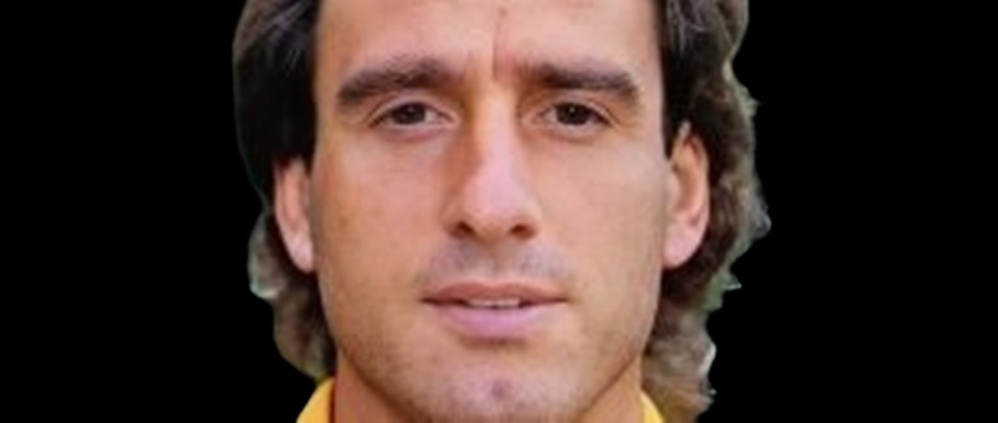
Francesco Graziani, born December 27, 1952, Firenze, Italy.
PART ONE
Francesco Graziani is a name that resonates deeply with Italian football fans, representing an era of attacking brilliance and a player whose career spanned several of Italy’s most iconic football clubs. Known for his speed, finishing ability, and tenacity, Graziani made his mark as a prolific striker in both club and international football.
Graziani began his journey in football at an early age, like many of Italy’s stars, being drawn to the sport’s beautiful rhythm and competitive edge. Graziani’s rise through the ranks of local football was not immediate but came with dedication and raw potential. As a youth, Graziani honed his skills with local sides before catching the eye of Serie A scouts who saw in him not just another player, but one who could one day represent Italy on the world stage.
His professional career began with a modest start at Fiorentina, where he joined their youth academy. In 1971, Graziani was given his chance in the first team, marking the beginning of a career that would see him become one of Italy’s most feared strikers. Fiorentina provided Graziani with the platform to showcase his skills, but it was his move to Torino that truly defined his career.
Graziani’s time at Torino, from 1976 to 1980, would see him cement his reputation as one of Italy’s best forwards. His performances were instrumental in Torino’s push for Serie A glory. In his four seasons at the club, Graziani’s talent for scoring goals was on full display. With his powerful shot and clinical finishing, he became one of the league’s most consistent performers.
During the 1976–77 season, Graziani’s contribution was crucial, helping Torino finish third in Serie A. His performances didn’t go unnoticed, earning him a spot in Italy’s national team, a dream for many players, but especially significant for Graziani. By the time he left Torino in 1980, Graziani had become a club legend and had set the stage for the next chapter of his career.
Graziani’s transfer to AS Roma in 1980 marked another milestone in his career. Here, he would go on to achieve even more, contributing to Roma’s 1983 Serie A title, which remains one of the most cherished achievements in the club’s history. Graziani’s partnership with other Roma forwards like Roberto Pruzzo was key to their attacking success, and his presence in the box made him a constant threat to opposition defenses.
His time at Roma was also marked by international recognition. Graziani’s inclusion in Italy’s squad for the 1982 World Cup, led by coach Enzo Bearzot, would be the defining moment of his career. The 1982 World Cup in Spain is perhaps one of the most iconic tournaments in the history of football, and Graziani played a pivotal role in Italy’s triumph.
PART TWO
Francesco Graziani’s most significant career achievement came in 1982, when he was part of the Italian national team that won the 1982 FIFA World Cup. Although Graziani did not score as many goals during the tournament as some of his teammates, his work rate, off-the-ball movement, and ability to support the attack were vital to Italy’s overall success. Graziani’s selfless style of play was emblematic of the team’s collective spirit, as they went on to defeat West Germany 3-1 in the final.
Graziani’s role in Italy’s World Cup campaign might not have been flashy, but he was a key figure in their forward line, providing crucial assists and drawing defenders away to allow his teammates to shine. His performance during the tournament helped solidify his place as one of Italy’s finest forwards and a key figure in the golden age of Italian football.
After his stay at Roma, Graziani’s career began to wind down. He spent his final years as a player with Fiorentina again, but his best days were behind him. Despite his advancing age, Graziani still displayed flashes of the brilliance that had made him famous, but his physical condition began to decline, and he eventually retired in 1987.
Following his playing days, Francesco Graziani transitioned into coaching, although he would never achieve the same level of fame in management as he did as a player. He managed several Italian clubs, including Fiorentina and Venezia, though with less success. Graziani’s experience as a player, particularly in high-stakes games like the World Cup, helped shape his managerial approach, where he focused on discipline and tactical awareness.
Today, Francesco Graziani is regarded as one of the most significant players in Italian football history. His contributions both at the club and international level were invaluable, and his role in Italy’s 1982 World Cup victory places him among the country’s footballing elite. Graziani was known for his determination, intelligence on the ball, and his ability to perform in the most challenging of situations.
While his legacy may not have been as adorned with personal accolades as some of his contemporaries, his teamwork, vision, and unrelenting drive left an indelible mark on every team he played for. His blend of speed and finishing made him one of the top strikers of his era, and his association with some of Italy’s greatest clubs ensured his name would be remembered for generations.
Off the pitch, Graziani remained a proud ambassador of Italian football, often participating in charity matches and football-related events. His status as a symbol of the 1982 World Cup team remains strong in Italy, where the image of him lifting the trophy is cherished by fans to this day.
From his early years at Fiorentina to his legendary time at Torino and Roma, Graziani proved himself to be a forward of exceptional talent. His contribution to Italy’s 1982 World Cup success is forever etched in the annals of football history, and he remains one of the key figures in Italy’s golden era of football.
Though Graziani may not have garnered the same level of individual recognition as some other players from that era, his place in the hearts of Italian football fans is secure. He will always be remembered as one of Italy’s finest strikers – a true World Cup hero whose impact was felt on every pitch that he graced.