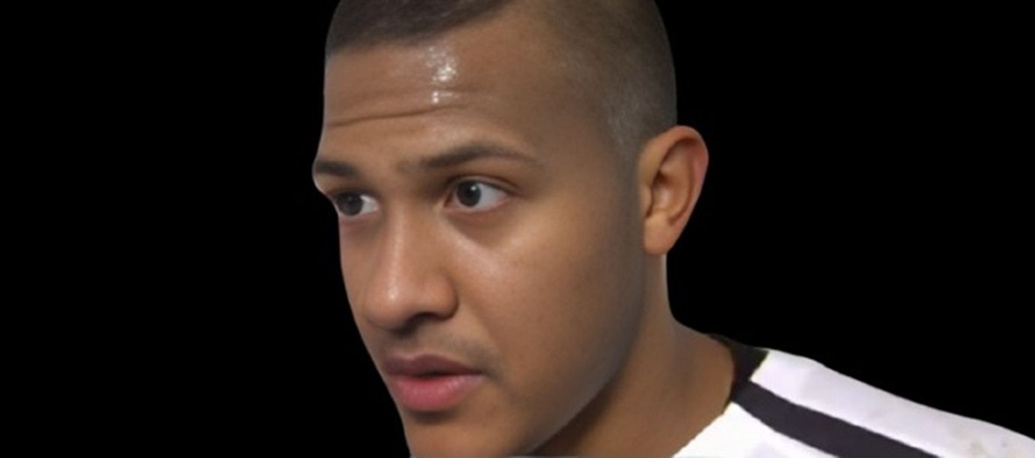
José Salomón Rondón Giménez, born September 16, 1989, Caracas, Venezuela.
PART ONE
Salomón Rondón grew up with a passion for football. His talent was evident from a young age, and he soon found himself joining the youth ranks of Aragua FC, a club based in Maracay. In 2006, at the age of 16, he made his senior debut for Aragua, becoming one of the youngest players to feature in the Venezuelan top flight. Over the next two seasons, he impressed with his physicality, aerial ability, and knack for scoring goals, earning him a move to Europe.
In 2008, Rondón moved to Spain to join UD Las Palmas in the Segunda División. His adaptation to European football was swift, and he became a crucial figure for the club. In two seasons, he hit 12 goals in 46 appearances, showcasing his ability to play as a traditional target man while also being mobile enough to trouble defenses.
His performances caught the attention of Málaga CF, who signed him in 2010. This move saw Rondón make his debut in La Liga, and he quickly proved that he belonged at the highest level. In two seasons with Málaga, he netted 27 goals in 72 league appearances, playing a key role in their rise as a competitive force in Spanish football. His ability to hold up play, combined with his finishing prowess, made him one of the most sought-after strikers in La Liga.
In 2012, Rondón took on a new challenge, moving to Russia to sign for Rubin Kazan. Playing in a physically demanding league, he continued to shine, scoring 13 goals in his first season. His performances in the Russian Premier League and UEFA Europa League enhanced his reputation as a reliable goal scorer.
His success at Rubin Kazan led to a transfer to Zenit St. Petersburg in 2014, where he played under the management of André Villas-Boas. At Zenit, Rondón flourished, scoring 28 goals in 58 appearances. He played a pivotal role in helping Zenit win the Russian Premier League title in the 2014-15 season, further cementing his reputation as one of the best strikers outside Western Europe.
Rondón’s exploits in Russia earned him a move to England in 2015 when he joined West Bromwich Albion for a then-club record fee. Over three seasons at the Hawthorns, he became a fan favorite due to his tireless work rate, strength, and ability to score crucial goals. He registered 28 goals and 9 assists in 120 Premier League appearances for West Brom, standing out even as the club struggled.
Following West Brom’s relegation in 2018, Rondón was loaned to Newcastle United, where he reunited with former manager Rafael Benítez. His time at Newcastle was arguably his best in English football, as he led the line superbly, scoring 11 goals and providing 7 assists in 32 league matches. His partnership with Ayoze Pérez and Miguel Almirón helped Newcastle secure a respectable mid-table finish.
After his loan spell at Newcastle, Rondón followed Benítez to China, signing with Dalian Professional in 2019. He adapted well to the Chinese Super League, scoring 14 goals in his first season. However, due to the COVID-19 pandemic, the league’s disruptions prompted him to seek a move back to Europe.
In 2021, he joined CSKA Moscow on loan, where he played 10 matches and scored 4 goals. Later that year, he returned to the Premier League with Everton, reuniting with Benítez once again. However, his time at Everton was less successful, as he struggled for form and regular game time, managing only 3 goals in 31 appearances.
In January 2023, Rondón made a surprising move to Argentina, signing with River Plate. His experience and leadership proved valuable, and he helped the club win the Argentine Primera División title in 2023. Despite limited game time, he managed to contribute with crucial goals.
In December 2023, he moved to Mexico to join Pachuca in Liga MX where he continued to display his goal-scoring ability, leading the line for the club and adding another chapter to his diverse and accomplished career. Then, in July 2025, he returned to La Liga after signing a one-season loan deal with Real Oviedo.
PART TWO
The journey of Salomón Rondón in the colours of La Vinotinto is one of resilience, record-breaking feats, and a steadfast dedication to the cause, and while Venezuelan football has not always been synonymous with global success, Rondón has stood tall as a beacon of hope, carrying the dreams of a nation on his broad shoulders, from the under-20 stage to a century of senior caps.
It all began in earnest during the 2009 FIFA U-20 World Cup in Egypt, where a young Rondón showcased his eye for goal, finding the net four times in the tournament, including a hat-trick in an 8-0 demolition of Tahiti that announced Venezuela’s arrival on the world stage; what’s more, this performance helped La Vinotinto qualify for the knockout rounds, an achievement that injected fresh belief into Venezuelan football, and it was clear that Rondón was a striker who could thrive under the spotlight.
However, before his under-20 exploits, a teenage Rondón had already made his senior debut on 3 February 2008, stepping onto the pitch against Haiti as an 18-year-old, and barely six weeks later, he would mark his first international goal with a match-winning strike in a 1-0 triumph over El Salvador, a moment that foreshadowed his ability to deliver when it mattered most; little did anyone know, this was merely the beginning of a career that would see him become Venezuela’s all-time leading goalscorer.
Fast forward to the 2011 Copa América in Argentina, where Venezuela defied expectations by finishing fourth, their best-ever showing in the prestigious tournament, and amid the chaos of a dramatic semi-final run, Rondón’s impact was undeniable, as he opened the scoring in a thrilling 3-3 draw with Paraguay, a result that saw both teams progress to the next stage; undoubtedly, this tournament reinforced his reputation as a key man for Venezuela in their quest for continental recognition.
The years rolled on, and so did Rondón’s ability to rise to the occasion, and in the 2015 Copa América, he once again proved his worth by scoring the decisive goal in a historic 1-0 victory over Colombia, a win that sent shockwaves across South America.
But just when it seemed like Venezuelan football was finding its feet, off-the-field turmoil threatened to unravel the progress, as Rondón, along with 14 of his teammates, openly considered quitting the national team in protest against accusations from the Venezuelan Football Federation president, who claimed they had conspired to remove the manager, Noel Sanvicente; in the end, the dust settled, but the episode highlighted the challenges players faced beyond the pitch.
By the time the 2016 Copa América Centenario arrived, Rondón had already become the linchpin of the Venezuelan attack, and in a tournament that marked 100 years of South American football’s biggest competition, he reached his 50th cap in a 1-0 group stage win over Jamaica.
However, it was in the next match where he truly made history, scoring the only goal in a famous win against Uruguay, thus becoming the first Venezuelan to score in three different Copa América tournaments, and although Venezuela’s campaign ended in the quarter-finals at the hands of Argentina, Rondón had once again etched his name into the record books.
If there was any lingering doubt about his place among Venezuela’s greatest, it was put to rest on 10 June 2019, when Rondón scored twice in a 3-0 friendly win over the United States, surpassing Juan Arango’s long-standing record to become the nation’s all-time leading scorer with 24 goals, and as if that wasn’t enough, he continued to add to his tally later that year, netting a hat-trick against Japan in the Kirin Challenge Cup, demonstrating that he could deliver against opposition from across the globe.
Nevertheless, the unpredictability of football meant that Rondón would endure setbacks as well, missing the 2021 Copa América due to stringent COVID-19 regulations in China, where he was playing club football at the time, a cruel twist of fate that denied him the opportunity to further cement his legacy in the tournament he had graced so many times before.
Still, true to his nature, he bounced back with another landmark performance in the 2022 World Cup qualifiers, scoring a hat-trick against Bolivia in a 4-1 win, a display that, while exhilarating, could not prevent Venezuela from missing out on the finals in Qatar.
Now, the story did not end there, because on 17 October 2023, Rondón achieved a milestone few Venezuelan players had reached—earning his 100th cap, and what better way to celebrate than with a goal in a commanding 3-0 victory over Chile, proving that even as he entered the twilight of his international career, his hunger for goals remained insatiable.