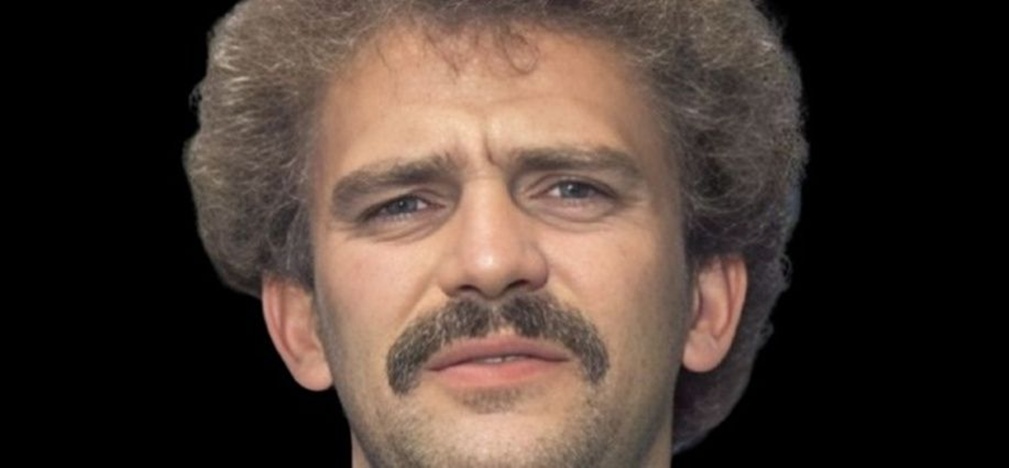
Herbert Prohaska, born 8 August 1955, Vienna, Austria.
PART ONE
Herbert Prohaska grew up kicking a ball on Viennese streets at a time when street football was still the genuine academy of the working-class game, where instinct was developed not through drills but through necessity, through the tight angles of narrow alleyways and the uneven bounce of cobbled surfaces.
It was here that he developed the close control and spatial awareness that would later bewitch opponents in some of the most demanding leagues in the world, and it was here that his father — a part-time coach who recognised talent the way a sommelier recognises a good vintage — decided that Prohaska´s gifts needed proper nurturing and direction.
Undoubtedly, the name Prohaska itself carries a kind of story, and it is worth pausing on it briefly, because names matter in Central Europe, they carry geography, history, and migration in their syllables. The original form, Prochazka, appeared in historical records as far back as 1618 in the Czech lands, a name tied not to power or nobility but to movement, to people who wandered, who travelled, who carried their lives from place to place in search of trade or work. Because of German cultural influence spreading across Bohemia and Silesia, that original name gradually softened and shifted, becoming Prohaska, a version that retained its sound while fitting more comfortably into the German-speaking world of the Habsburg Empire. By the 18th and 19th centuries, as Austria extended its administrative reach across much of Central Europe, the name had already taken root in Austrian soil. So even in his name, Herbert Prohaska carries something of that restless, travelling spirit, a quality, as it turned out, that proved deeply useful when the time came to take his talent abroad.
At the age of 17, Prohaska joined the youth academy of Austria Vienna, a club steeped in the kind of old-world tradition and seriousness of purpose that suits a player of his temperament. The Violets, as they are known, have always prided themselves on footballing intelligence over brute physicality, on technique over tonnage, and that culture suited the young Prohaska perfectly. He was not the biggest player on the pitch, nor the quickest over thirty yards, but he had something that no amount of coaching can fully manufacture; an innate sense of where the game was going before it got there.
In those early years with Austria Vienna, Prohaska became the focal point of the midfield in a way that was quite unusual for someone so young. He could dictate play with his passing range, slow the game when it needed calming, accelerate it when the moment demanded, and thread passes through gaps that other players simply hadn’t noticed were there. His movement off the ball was equally impressive, always finding an angle, always making himself available, always ensuring that the man in possession had an option when options were running out. Additionally, his understanding of space was something that coaches across Europe would spend entire careers trying to teach, yet Prohaska seemed to have arrived with it pre-installed, as if he had simply absorbed it from the streets.
Over the course of eight formative years with the club, Prohaska helped Austria Vienna secure four league titles and three cups — a record of domestic achievement that would make most footballers happy to call a full career, and yet for Prohaska, it was really just the prologue. His reputation had been building steadily throughout Austrian football and beyond, and by the late 1970s, serious clubs across Europe were paying close attention.
Before the move abroad came the moment that would define Prohaska’s standing in the wider football world, and it arrived not in a club shirt but in the red and white of Austria on a warm June evening in Cordoba, Argentina.
The 1978 FIFA World Cup was already a tournament full of drama and controversy, but on the 21st of June, Austria did something that stopped the entire footballing world in its tracks. Their opponents that day, in a second-round group stage match at the Estadio Olímpico Chateau Carreras, were West Germany, the defending world champions, the side managed by the legendary Helmut Schon, a team laden with some of the finest players in the history of the German game. Rummenigge was in that side. Holzenbein was in that side. Yet it was Austria who left Cordoba with a 3–2 victory that shook the sport to its core.
The referee was Abraham Klein of Israel. The attendance was 38,000. And the match itself was an extraordinary piece of theatre, swinging and lurching with the kind of momentum that makes football such a magnificent and maddening sport. West Germany struck first through Karl-Heinz Rummenigge on 19t minutes, and for a while it looked as though the natural order of things would prevail. But Austria equalised in the 59th minute of the tie through a Berti Vogts own goal, and then Hans Krankl put the Austrians ahead in the 66th minute with a goal that had the Austrian bench leaping from their seats.
West Germany responded almost immediately: Bernd Holzenbein equalised seven minutes past the hour mark, and suddenly the game was back in the balance, tight and breathless and full of menace on both sides. But then came the moment that Austrians would talk about for generations: Krankl again, in the 87th minute of action, drilling home the winner that completed one of the most celebrated upsets in World Cup history. It was Austria’s first victory against West Germany in 47 years, and it eliminated the defending champions from the tournament in one of the most dramatic fashion imaginable. The Dutch went through from Group A to the final; Italy advanced as runners-up; and West Germany, stunned, humiliated, already reaching for excuses, went home. In Austria, they called it the Miracle of Cordoba. In Germany, with considerably less affection, it became known as the Disgrace of Cordoba.
Throughout that match, Prohaska was magnificent. He dictated the tempo in midfield with the kind of calm authority that seems almost inhuman in a game of that intensity and consequence. He kept the ball moving, found space where there appeared to be none, and outclassed the Germans in the engine room with a performance that confirmed him as one of the very finest midfielders in the world. Austria ultimately finished in a respectable 7th position in that tournament, and Prohaska emerged from Argentina with his reputation significantly enhanced, not just at home, but across the continent.
PART TWO
By 1980, the inevitability of a major move abroad had become obvious to anyone watching Austrian football, and it was Inter Milan who came calling. Serie A in 1980 was a different world from Austrian domestic football, more cynical, more physical, more tactically rigorous, more suffocatingly attentive to defensive organisation. For a player who had grown up expressing himself with relative freedom, the adjustment was significant, and in his early months at the San Siro, Prohaska found the Italian game demanding in ways he had not fully anticipated.
Now, the beautiful thing about genuinely intelligent footballers is that they adapt. They study, they adjust, they find a way to make their qualities work within a new framework, and Prohaska proved himself to be exactly that kind of player. His ability to control the tempo of matches, to slow things down when Inter needed composure, to accelerate the play when a counterattack was on, made him increasingly valuable as he settled into Italian life. He operated effectively as a deep-lying playmaker, sitting just behind the more advanced midfielders and dictating the flow of the game with a quiet authority that the Italians, who understood and respected that kind of tactical intelligence, came to appreciate.
His reward came in 1982, when the midfield man helped Inter Milan lift the Coppa Italia, bringing silverware to the club and confirming that his adaptation to Serie A had been a complete success. It was a major honour, and Prohaska collected it with the measured pride of a man who had worked hard for something and knew exactly what it had cost him.
Yet it was his next chapter that would prove the most glorious of his Italian adventure. In 1983, Prohaska moved to AS Roma, the great Roman club then under the management of the shrewd and experienced Swedish coach Nils Liedholm. Roma had always been a club of enormous passion and ambition, a club that felt like it should be winning league titles even when circumstances conspired to prevent it, and Liedholm had built a side that was genuinely ready to mount a serious challenge for the Scudetto.
Prohaska arrived at precisely the right moment and in precisely the right role. He became the lynchpin of Roma’s midfield almost immediately, the player through whom everything passed, the conductor through whom the orchestra found its rhythm. His creative passing was the link between Roma’s solid defensive structure and their attacking threat, and in the 1982–83 season, Roma powered to the Serie A title with a campaign of real authority and conviction. Prohaska’s contribution throughout that Scudetto-winning season was widely regarded as one of the finest individual performances in a Serie A campaign by any player of that era — a remarkable achievement in a league where the standard of midfield play was extraordinarily high.
Having achieved something remarkable in Italy, Prohaska returned to former employer Austria Vienna in 1983, and if anyone had assumed that a 28-year-old returning from the highest level of European football might be beginning to ease himself toward the quieter waters of a career’s later stages, he immediately and emphatically proved them wrong. His return brought an instant injection of quality and leadership to the Violets’ midfield, and Austria Vienna responded by winning the Austrian Bundesliga title in 1984 with a conviction that made it look almost effortless.
They repeated the feat in 1985, this time with even greater swagger and assurance, as if Prohaska’s presence had simply raised the ceiling of what the entire team believed they were capable of. But the crowning jewel of this second stint came in the 1985–86 season, when Austria Vienna did not merely win the league title for a third consecutive time but added the Austrian Cup to complete a glorious domestic double. Prohaska’s midfield partnership with the likes of Dzemal Mustedanagic and the emerging young talent Andreas Ogris gave the side a blend of experience, finesse, and raw energy that opponents found thoroughly difficult to handle.
What made Prohaska’s contribution so distinctive during this period was the way it spread across the entire team like a quiet light. He rarely troubled the scoreboard himself, but his fingerprints were all over every move that did lead to goals, the precise passes that unlocked defences, the patient possession play that frustrated opponents, the intelligent positioning that guaranteed Austria Vienna always had an extra option in the moments that mattered most. By the time he eventually called time on his playing career in 1989, he had won three Bundesliga titles and one cup during this second spell with the Violets, had helped to guide and inspire a generation of younger players, and had established himself as the single greatest player in the history of Austrian club football.
Running parallel to the glories of his club career was a long and distinguished international career with the Austrian national team. He had made his debut for Austria in 1974, and over the next 15 years, he accumulated 83 caps, a total that spoke not just of quality but of consistency, durability, and an enduring relevance to a national team that relied on him in the way that truly great sides rely on their most important player.
Beyond the Miracle of Cordoba, Prohaska was instrumental in Austria’s qualification for the 1982 FIFA World Cup in Spain, guiding the team through the demanding European qualification process with his usual blend of composure and creativity. The tournament itself ended disappointingly for Austria, with an early exit that left the squad frustrated, but the performances of Prohaska throughout the campaign were consistently impressive. He carried himself with the quiet authority of a leader who knows that not every battle can be won, but who refuses to lower his standards regardless of the outcome.
As captain, Prohaska brought to the national team the same qualities he had always brought to his clubs , a steadying influence, a tactical awareness that helped his teammates understand the game’s geometry in real time, and an unshakeable commitment to playing with intelligence and style. Even as he aged through his thirties and the urgency of those legs diminished slightly, the mind remained as sharp as ever, and Austria continued to lean on his experience and leadership right up until the end of his international career.
PART THREE
When Herbert Prohaska eventually retired from playing in 1989, football did not lose him. It simply found a new way to use him. He transitioned into management with a thoughtfulness and purposefulness that was entirely in keeping with his character, studying the game from a new angle, finding new ways to communicate what he understood intuitively as a player, and building teams that reflected his own values of technical quality, intelligent pressing, and collective organisation.
His return to Austria Vienna in a managerial capacity brought further silverware, two more Austrian Bundesliga titles and two Austrian Cups, confirming that his understanding of what it took to win at this level was not diminished by the transition from the dressing room to the dugout. His teams were well-balanced affairs, blending the creative flair he had always prized with a disciplined defensive structure that prevented opponents from exploiting the space that attacking play inevitably creates. What’s more, he was never the kind of manager who confused possession for its own sake with effective football; his sides were always looking to use the ball constructively, to build toward goal, to threaten with genuine intent.
But the crowning achievement of his managerial career came at the level of the national team. Appointed as Austria’s head coach, Prohaska set about the considerable challenge of guiding a relatively modest footballing nation through the qualifying process for the 1998 FIFA World Cup in France. It was a task that required patience, tactical acumen, and the kind of man-management skills that had quietly defined his entire relationship with football. And he succeeded. Austria qualified for France ’98, earning their place at one of the great sporting gatherings on the planet and doing so through genuine merit and careful preparation.
The World Cup campaign itself did not deliver the result that Prohaska or Austrian football had hoped for, but the achievement of qualification was significant in its own right, a reminder that a nation does not need to be a football superpower to dream big or plan carefully, and that the right man in the right position at the right moment can make the difference between hoping and achieving.
Even after stepping away from coaching, Prohaska refused to drift quietly into retirement. Instead, he found a natural home as a pundit and analyst for the Austrian Broadcasting Corporation, where his deep footballing intelligence, his encyclopaedic experience as both player and manager, and his ability to communicate complex tactical ideas in plain, accessible language made him an invaluable and genuinely popular voice. Viewers who had grown up watching him play on their television screens now found him helping them understand the game they loved, explaining why a midfielder was pressing wrong, why a defensive line was sitting too deep, why an attacking move broke down in the final third.
It was, in its way, the perfect final chapter for a man who had spent his entire professional life thinking about football rather than simply playing it. Prohaska had always been a football intellectual, a player who understood the game at a level that went beyond instinct and into genuine strategic analysis, and the punditry role gave him the platform to share that understanding with an entire nation.