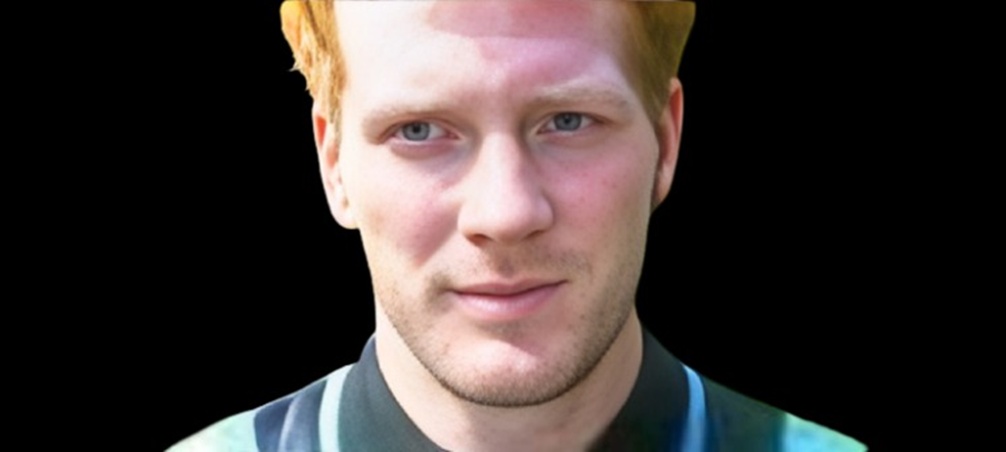
Matthias Sammer, born 5 September, 1967, Dresden, East Germany.
PART ONE
Born in the city of Dresden, in what was then the German Democratic Republic, Matthias Sammer entered a world where football was not merely a pastime but a carefully managed instrument of national pride, and where talent was identified early and develpoed with almost military precision.
Being the son of Klaus Sammer, a highly respected player and head coach at Dynamo Dresden, meant that young Matthias was immersed in football not just as a sport, but as a way of life that demanded discipline, intelligence, and emotional control.
From the outset, the young boy showed a natural affinity for the game, yet it was not raw flair that defined him, but rather a sharpness of mind, an ability to read situations before they unfolded, and a quiet determination that set him apart. Accordingly, when he joined the Dynamo Dresden youth academy in 1976 at the age of nine, it felt less like a beginning and more like a continuation of a path that had already been laid before him.
As Sammer progressed through the youth ranks, his development mirrored the structured efficiency of the East German system, yet he brought something uniquely personal to it—a creativity that could not be fully contained by rigid frameworks. In addition, his performances on the international youth stage announced his arrival to a wider audience, particularly during the 1986 UEFA European Under-18 Championship, where East Germany defeated Italy 3–1 in the final, with Sammer playing a central role.
The following year, at the 1987 FIFA World Youth Championship in Chile, he elevated his reputation even further, scoring four goals and driving his team to a third-place finish, and in doing so, he demonstrated not only technical ability but also a composure under pressure that belied his age. Consequently, it became increasingly clear that Sammer was not just another promising youngster, but a player destined to shape games at the very highest level.
Sammer made his senior debut for Dynamo Dresden in the 1985–86 season under the guidance of his father, and although the circumstances might have invited scrutiny, he quickly justified his place with performances that spoke for themselves. Operating initially as a striker, he managed to register eight goals in 18 appearances, showcasing a clinical edge that hinted at a natural goalscorer.
What set Sammer apart was not merely his output, but his adaptability, and over the next few seasons he transitioned from striker to winger and then into central midfield, each shift revealing new layers to his game. And by the time Dynamo Dresden secured the DDR-Oberliga title in 1988–89, Sammer had evolved into a complete footballer, capable of influencing matches from multiple positions.
The club’s success continued into the 1989–90 season with a league and cup double, and their run to the UEFA Cup semi-finals in 1989, where they narrowly lost to VfB Stuttgart, further underlined the strength of the team and Sammer’s importance within it. Yet, even as these achievements piled up, the world around him was beginning to change dramatically.
PART TWO
The fall of the Berlin Wall in 1989 marked a seismic shift not only in politics but also in football, and for players like Sammer, it opened doors that had previously been firmly closed. Consequently, his move to VfB Stuttgart in 1990 symbolized more than just a transfer—it was a crossing from one system into another, from state-controlled sport into the competitive, commercial landscape of the Bundesliga.
His debut season in the West was impressive, as he hit 11 goals in 30 outings, adapting quickly to the demands of a faster, more physically intense league. On top of that, his intelligence allowed him to bridge the gap between the two footballing cultures, blending the discipline of the East with the freedom of the West.
In the 1991–92 season, Sammer played a pivotal role in Stuttgart’s Bundesliga title win, contributing nine goals and countless moments of influence that often went beyond statistics. Notably, his versatility became a key asset, as he operated in midfield and defensive roles with equal assurance, guiding his team through a tightly contested campaign.
This title was significant not only for Stuttgart but also for German football as a whole, as it represented the first championship in a reunified nation, and Sammer stood at the heart of it, a symbol of integration and excellence. Hence, his reputation soared, attracting attention from some of Europe’s biggest clubs.
In 1992, Sammer made a high-profile move to Inter Milan, stepping into the demanding world of Serie A, where tactical discipline and defensive organization were paramount. But despite flashes of quality, including a goal in the Derby d’Italia against Juventus, his time in Italy proved challenging.
The slower, more cautious style of play did not suit his natural instincts, and coupled with personal difficulties such as homesickness, his performances never reached the heights expected of him. Consequently, after just a few months, he returned to Germany, seeking an environment where he could rediscover his best form.
His move to Borussia Dortmund in 1993 marked a turning point, and from the moment he arrived, it was clear that this was a partnership destined for greatness. And it was at Westfalenstadion, under the guidance of Ottmar Hitzfeld, that Sammer underwent a transformation that would define his legacy. Repositioned as a libero, he was given the freedom to roam, to defend, to attack, and most importantly, to think, and in this role, he became the heartbeat of the team.
The mid-1990s saw Dortmund rise to the summit of German football, winning consecutive Bundesliga titles in 1994–95 and 1995–96, with Sammer at the centre of everything they did. Also, his ability to read the game, intercept passes, and launch attacks from deep made him a unique presence on the pitch.
He was not just a defender, nor merely a midfielder, but something in between—a conductor orchestrating the flow of the game. As a consequence, his performances earned him the German Footballer of the Year award in both 1995 and 1996, recognition of his dominance in a role few could truly master.
The pinnacle of Sammer’s club career came in 1997, when Dortmund defeated Juventus 3–1 in the UEFA Champions League final in Munich. Moreover, as captain, Sammer led by example, marshalling the defence while initiating attacks, embodying the very essence of the libero role.
This victory was followed by success in the Intercontinental Cup, further cementing Dortmund’s status as one of Europe’s elite teams. And as a result, Sammer’s legacy was no longer confined to Germany but had expanded onto the global stage.
PART THREE
Matthias Sammer’s international career is unique, spanning both East Germany and the unified German team, and reflecting the political transformation of the era. What´s more, his final match for East Germany, a 2–0 win over Belgium in 1990, saw him score both goals, a fitting farewell to a team that was about to disappear.
Transitioning seamlessly into the unified German side, he became a key figure, contributing to campaigns in Euro 1992 and the 1994 World Cup. But it was at Euro 1996 that he reached the zenith of his international career.
In England, Sammer delivered performances of extraordinary quality, scoring crucial goals and anchoring the defence with authority and intelligence. Moreover, his role as a libero allowed him to influence every aspect of the game, from breaking up opposition attacks to driving forward and creating opportunities.
Germany’s victory in the final against the Czech Republic, secured by a golden goal, crowned a tournament in which Sammer was named Player of the Tournament. Consequently, he was awarded the Ballon d’Or later that year, becoming the first defender since Franz Beckenbauer to receive the honour.
Just as he seemed unstoppable, fate intervened, and a serious knee injury following the 1997 Champions League triumph curtailed his playing career. Besides, complications from surgery limited his appearances, and despite his determination, he was forced to retire in 1998 at the age of 30.
It was a cruel end to a footballing career that still had much to offer, yet even in retirement, Sammer’s influence did not fade. Instead, it found new avenues.
Sammer transitioned into coaching with Borussia Dortmund, leading them to the Bundesliga title in 2001–02 and a UEFA Cup final appearance. Evidently, his analytical approach and emphasis on tactical discipline reflected the qualities that had defined his playing career.
Subsequent roles at Stuttgart and later as technical director of the German Football Association saw him shape the future of German football, contributing to the development systems that would produce a whole new generation of stars.
In the years since his retirement, the role of the libero has largely disappeared from modern football, yet Sammer remains one of its last great exponents, a player who combined defensive solidity with creative intelligence in a way few others could match. And as fate would have it, his journey from East Germany to European champion encapsulated a period of profound change, both in football and in society.