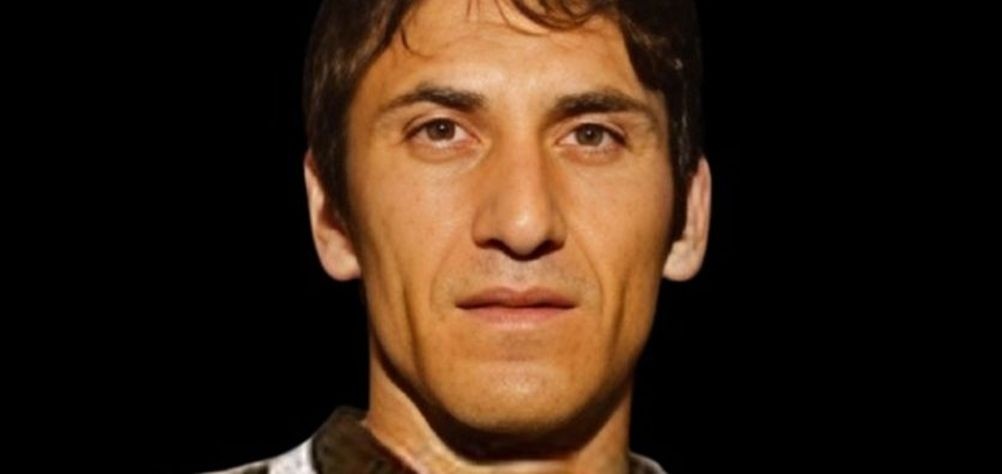
Giuseppe Furino, born 5 July, 1946, Palermo, Italy.
PART ONE
Giuseppe Furino started his senior with Savona in 1966, and although the spotlight was faint and the crowds modest, the foundations of his game were already clear—tenacity, intelligence, and a relentless appetite for the ball. He was not the tallest or most physically imposing player, but he compensated with timing and anticipation, snapping into challenges with a bite that would soon earn him a fearsome nickname.
A move back to his hometown club, Palermo, followed in 1968, and it was here that Furino took his first steps in Serie A. He made his debut on 29 August 1968 against Cagliari, and although Palermo struggled that season, Furino’s performances hinted at a player ready for a bigger stage. However, even in those early days, he was less about flair and more about function, less about headlines and more about hard work.
In 1969, came the move that would define his life and career, as Juventus secured his services ahead of the 1969–70 season. It was a step up not just in level but in expectation, and the young Sicilian arrived in Turin knowing that survival alone would not be enough—he had to thrive.
He made his debut for Juventus on 31 August 1969 in a Coppa Italia clash against Mantova, and from that moment, he began carving out a role that would grow in importance with each passing season. While others chased glory with goals and assists, Furino became the man who made those moments possible, breaking up attacks, shielding the defence, and keeping the rhythm of the team steady.
The early 1970s marked the beginning of Juventus’s domestic dominance, and Furino was right at the heart of it. The 1971–72 season saw the men in black and white stripes lift the Serie A title, and this was followed swiftly by another in 1972–73, establishing a pattern of success that would define the decade.
Success was not always straightforward, and the 1972–73 campaign also brought heartbreak on the European stage, as Juventus reached the European Cup final only to lose narrowly1-0 to Ajax at the Red Star Stadium in Belgrade. Yet, even in defeat, Furino’s value was unmistakable—he was the glue that held the side together, the tireless worker who allowed more creative teammates to flourish.
The 1974–75 season brought another league title, and by now Furino was no longer just a squad member but a leader, a figure whose influence extended beyond the pitch. His nickname, “Furia,” captured perfectly the way he played—ferocious, unyielding, and utterly committed.
As the years rolled on, Furino’s role at Juventus only grew, and he would eventually wear the captain’s armband, leading the Old Lady of Turin with a quiet authority that matched his style of play. Unlike flamboyant captains who commanded attention with words, he led through action and through an unbreakable sense of duty. The titles continued to arrive: 1976–77, 1977–78, and later 1980–81 and 1981–82, each one adding another layer to an already remarkable legacy. His consistency was astonishing, as he became a fixture in the Juventus midfield for over a decade, racking up appearance after appearance with scarcely a dip in performance.
PART TWO
By the time he approached the latter stages of his career, Furino had become synonymous with Juventus itself, a living embodiment of the club’s values—discipline, resilience, and an unrelenting desire to win. While domestic success was abundant, European glory proved more elusive, though not for lack of effort. Juventus reached the European Cup final again in 1983, having previously come close in 1973, and each time they fell short.
Persistence eventually paid off in other competitions, and the 1976–77 season brought victory in the UEFA Cup, a triumph that showcased Juventus’s strength on the continental stage. Additionally, the crowning moment of Furino’s European career came in the 1983–84 season, when Juventus lifted the European Cup Winners’ Cup. As his playing days drew to a close, he could look back on a career that had spanned not just years but eras, bridging generations of players while maintaining the same relentless standard.
Over 15 seasons with Juventus, Furino amassed 361 Serie A appearances and 528 in all competitions, scoring 19 goals—a modest tally, perhaps, but one that scarcely reflects his true contribution. Indeed, his game was never about scoring but about enabling, about doing the unseen work that wins matches and titles. He also claimed eight Serie A titles, a record at the time, placing him alongside legends of the Italian game and underlining his role in one of the most dominant sides the country had ever seen.
Furino was not a showman, not a player who sought the spotlight, but rather one who thrived in the shadows. Despite his relatively small stature, he was incredibly strong, both physically and mentally, and his ability to read the game allowed him to anticipate danger before it fully developed. His tackling was precise and often ferocious, earning him both respect and, at times, the ire of opponents.
It would be a mistake to view him solely as a destroyer, because he also possessed a tidy touch and a calmness on the ball that allowed him to distribute possession effectively. In other words, he combined grit with intelligence, aggression with composure, and effort with understanding.
Furino’s final match for Juventus came on 6 May 1984 against Avellino, bringing the curtain down on a career that had spanned 15 remarkable seasons at the highest level. By then, he had seen it all—titles won, finals lost, battles fought and victories earned—and he left the pitch not as a fading star but as a club legend, a player whose contribution could never be measured purely in statistics.
In 2025, his place in the Juventus Hall of Fame was confirmed, a fitting recognition for a man who had given so much to the club. But his true legacy lies not in awards or records but in the memory of those who watched him play, who understood the value of a player who never stopped running and never stopped fighting.
Internationally, Giuseppe Furino amassed three appearances for the country of his birth after making his debut as a second-half substitute in a goalless draw against Uruguay on 6 June 1970.