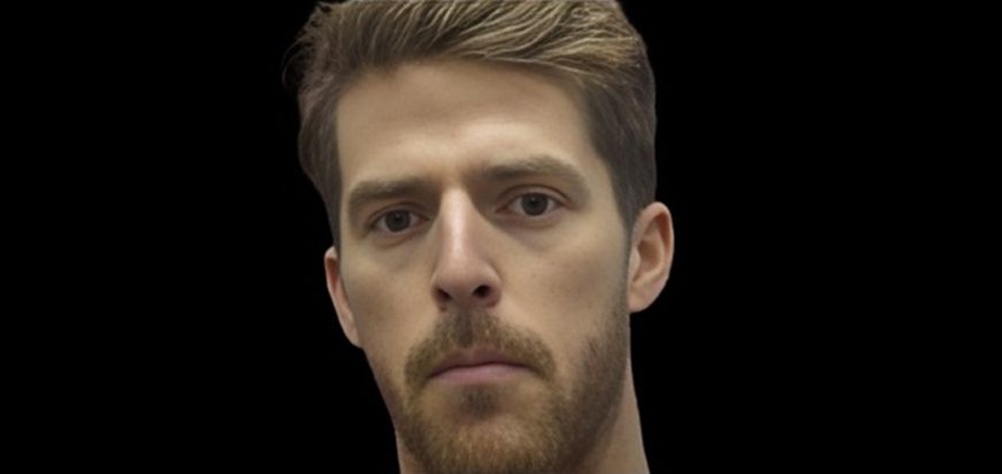
William Charles Clarke, born 13 December, 1987, Cork, Ireland.
PART ONE
Billy Clarke was not just another hopeful chasing a ball across damp grass but a sharp, instinctive forward with a hunger that quickly set him apart, and it was that edge that carried him across the Irish Sea into the academy ranks of Ipswich Town, where promise met opportunity in the mid-2000s.
Clarke’s development at Ipswich came at a time when the club still prided itself on nurturing young talent, and his contribution to their FA Youth Cup triumph in 2005 hinted at a player who could not only finish but also link play, drift into pockets, and influence matches beyond the traditional striker’s remit.
His professional debut arrived in November 2005 against Cardiff City, a fleeting appearance perhaps, but one that marked the first step of a career that would stretch across nearly two decades. Indeed, his early promise did not go unnoticed back home as he picked up the Irish Examiner Junior Sports Star of the Year award in 2005, while also earning a nomination for Ireland’s Under-19 Player of the Year in 2006, and such accolades suggested a trajectory that might have led to something grander had circumstances aligned differently.
As it was, Clarke soon found himself navigating the loan system, first heading to Colchester United in 2006, where he gained valuable minutes but little fanfare, and yet those six appearances represented a crucial education in the physical demands of senior football.
Consequently, his next move to Falkirk in January 2008 proved more fruitful, and it was there that Clarke announced himself with a dramatic late winner against Inverness Caledonian Thistle, a goal that spoke of composure, timing, and a knack for decisive moments.
Returning to Ipswich with renewed confidence, Clarke began to show glimpses of what he could offer, and his first league goal came in a 2–1 victory over Southampton, a strike that was quickly followed by another winner against Coventry City just three days later.
He added to his tally in a 3–1 win over Southend United, and for a brief moment it seemed as though Clarke might cement a place in the Ipswich first team, blending his finishing with intelligent movement between midfield and attack. Yet football is often unforgiving, and managerial changes can alter destinies overnight, and with Roy Keane taking charge, Clarke found himself transfer-listed, his path at Portman Road abruptly redirected.
Clarke responded in the only way he knew—by scoring goals, and his loan spell at Darlington in 2008 became a defining chapter as he netted four times in a single game against Macclesfield Town, a ruthless display that underlined his clinical edge.In addition, he struck a crucial League Cup goal against Walsall, showcasing his ability to deliver in knockout scenarios, and by now Clarke was building a reputation as a forward who could change games in bursts.
His next stop at Northampton Town brought immediate fireworks as he scored a hat-trick on debut in a 5–1 demolition of Crewe Alexandra at Sixfields Stadium, the club’s first hat-trick since 2002, and a reminder that Clarke thrived when trusted.
His final loan move of that remarkable season to Brentford saw him hit six goals in eight games, including two against his former club Darlington in the match that sealed the League Two title, and by the end of that whirlwind campaign, Clarke had scored 18 goals across three clubs.
Despite such productivity, the East Anlia club opted to release him in May 2009, a decision that might have crushed a lesser character, but Clarke instead treated it as a fresh start, determined to prove that his playing days were far from over.
PART TWO
Billy Clarke´s next chapter began with Blackpool under the management of Ian Holloway, and he arrived eager to establish himself at Championship level while embracing a club on the brink of something extraordinary.
His debut season in 2009–10 was steady rather than spectacular, yet he delivered memorable moments, including a goal in a thrilling 4–3 League Cup defeat to Stoke City and a lightning-fast strike just 23 seconds into a derby clash with Preston North End.
But football can be cruel, and just as Blackpool surged towards an unlikely promotion, Clarke suffered a devastating knee injury during pre-season ahead of their Premier League campaign, rupturing his anterior cruciate ligament and missing the entire 2010–11 season.
The timing could hardly have been worse, as Blackpool’s rise to the Premier League represented the pinnacle of Clarke’s environment, yet he was forced to watch from the sidelines, unable to contribute as the club battled among the elite. Still, he fought his way back to fitness, and although opportunities were limited, he managed a loan spell at Sheffield United in 2011, scoring once in five appearances for the Blades and proving that his instinct for goal had not deserted him.
In contrast to the uncertainty at Blackpool, Clarke found stability at Crawley Town after joining in January 2012, and it was here that he rediscovered consistency, becoming a key figure in the side. His 2012–13 season was particularly impressive as he hit 14 league goals in League One, earning the club’s Player of the Year award, and establishing himself as more than just a striker—he was now a creative force capable of dictating play.
Even so, injuries continued to interrupt his rhythm during the following campaign, limiting his output to only seven goals, but Clarke’s influence extended beyond just statistics as he linked midfield and attack with intelligence and subtlety.
By 2014, Clarke moved to Bradford City, a club that would become central to his identity, and from the outset he made an impact, assisting James Hanson’s opener in a 3–2 win over Coventry City on his debut. His versatility allowed him to operate in multiple roles, and Bradford supporters quickly embraced his work rate, creativity, and knack for popping up with crucial contributions when it mattered most.
In 2017, Clarke took his talents to Charlton Athletic, seeking a fresh challenge, and he made an immediate impression by scoring in a 2–1 EFL Cup victory over Exeter City. Unfortunately, fate intervened once more as he suffered another serious knee injury in December 2017, rupturing his anterior cruciate ligament in his left knee, and for a player already tested by setbacks, it was another brutal blow.
In January 2019, Clarke eventually returned to Bradford City determined to contribute once again, but the club’s relegation and subsequent release of a number of players, including Clarke, marked a difficult period both personally and professionally.
At the start of the 2019–20 season, he found himself without a club , training with Bolton Wanderers while searching for an opportunity, and openly admitting how much he missed playing. Eventually, a short-term deal with Plymouth Argyle in October 2019 offered a lifeline, and although his appearances were limited, Clarke remained a valuable squad presence.
Similarly, his move to Grimsby Town in January 2020 brought an immediate highlight as he scored on his debut against Leyton Orient, a moment that encapsulated his enduring instinct for goal. In a fitting twist, Clarke returned to Bradford City for a third spell in July 2020, and although his time was nearing its end, there was a sense of symmetry in finishing where he had felt most at home.
Accordingly, in May 2021, Bradford announced his departure, and by August that year Clarke officially retired from active playing, bringing down the curtain on a footballing career which spanned 390 appearances and 89 goals across 16 seasons.
Alongside his club journey, Clarke represented the Republic of Ireland at various youth levels, earning himself 45 caps from under-16 through to under-21 and scoring 14 goals, and even featuring in the inaugural Intercontinental Cup in Malaysia in 2008.
Transitioning from player to mentor, Clarke wasted little time in stepping into coaching, joining Hull City as an under-18 assistant manager in September 2021, and bringing his experience to the next generation.