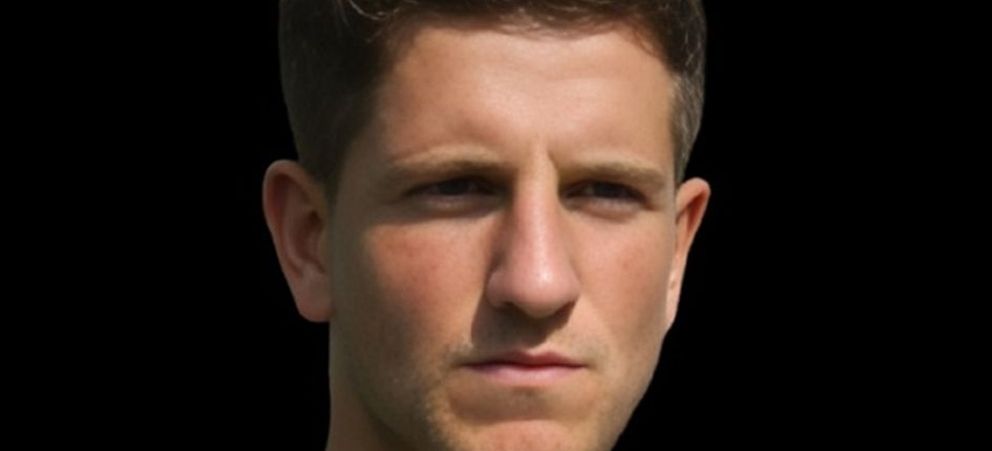
Samuel Edward Hutchinson, born 3 August, 1989 Windsor, Berkshire, England.
PART ONE
Sam Hutchinson joined the Chelsea Academy in 1998, at the tender age of nine. The Academy was — and remains — one of the most demanding football finishing schools in the country, and for someone from Berkshire to make his way through it required not only talent but a particular kind of mental toughness.
Hutchinson broke through as a defender, versatile enough to operate at right-back or right centre-half, and his progress was sufficiently impressive that the club saw a genuine first-team future for him. In May 2007, at the age of just seventeen, he made his senior debut for Chelsea, and the following August he signed a new four-year contract — a significant endorsement from a club that in those days was spending colossal sums on ready-made stars rather than backing their own. Later that same month, Plymouth Argyle manager Ian Holloway announced his interest in taking the youngster on loan, which gave Hutchinson’s stock a further boost, even if that particular move did not ultimately materialise.
The future, in the summer of 2007, looked genuinely bright. He was a Chelsea professional, he had senior experience, and he had four years of contract security in which to develop. Yet football, as he would discover many times over in the years ahead, has a particular talent for turning promise into pain with little warning.
The knee is the footballer’s great nemesis, and it became Hutchinson’s too. A recurring injury ground away at him through his late teens, and despite the best efforts of the medical staff at Stamford Bridge, the problem refused to yield. In August 2010, Sam Hutchinson did something that must have felt completely surreal — he retired from professional football at the age of twenty-one. Not because he had lost his ambition or his desire, but because his body appeared to have stopped cooperating, and there was no clear path back to full fitness. He was still, by any reasonable definition, a young man who had barely started his career, and yet here he was, stepping away from the game entirely.
Approximately sixteen months after walking away, in December 2011, something shifted. Hutchinson’s knee showed what the club described as a significant improvement, and Chelsea, recognising the opportunity, offered him a new one-and-a-half-year contract. He accepted, of course and the work of rebuilding began. On 29 April 2012, Hutchinson made his comeback as a substitute in a 6–1 demolition of Queens Park Rangers, and if there is a more satisfying venue in which to announce your return to professional football than a resounding home win, it is hard to think of one. The Chelsea faithful applauded, the scoreboard showed a scoreline that needed no further explanation, and Hutchinson was back in the game.
But Chelsea, with their squad of internationals and their Champions League ambitions, were never going to be the place where Hutchinson truly found himself. He needed games, consistent games, and that meant going out on loan. In August 2012, the club sent him to Nottingham Forest, then competing in the Championship, and a new chapter started.
On 16 August 2012, Hutchinson officially signed on loan for Forest, and within days he was in competitive action. His debut came on 21 August in a 1–1 draw away at Huddersfield Town — a workmanlike result for a workmanlike performance, which is exactly what the situation required. However, it was his home debut that announced him more emphatically to the City Ground faithful: on 1 September 2012, Hutchinson scored in a 2–1 win over Charlton Athletic, a goal that must have felt like the beginning of something real.
Sadly, the knee had other ideas. Following yet another flare-up, Hutchinson was forced to return to Chelsea in September for an injection that was intended to clear the problem up by the October international break. The treatment failed. He remained sidelined through mid-December, missing fifteen matches and watching from the sidelines as Forest’s season unfolded without him. Only at the beginning of March 2013 did he finally return to training with the club, but by that point the loan spell had been irreparably disrupted, and the momentum he had briefly found was gone.
The following summer brought a different kind of adventure. On 2 September 2013, He joined Vitesse Arnhem on a season-long loan — a Dutch club with a strong tradition of taking Chelsea loanees and giving them actual football, a practice that suited both parties well. His debut for Vitesse came on 31 October, not in the Eredivisie but in a league cup game against VV Noordwijk, which the hosts won comfortably 5–0. Then, on 2 November, he made his league debut in extraordinary fashion, coming on as a late substitute in a 1–0 win over Ajax. A victory over Ajax, even as a substitute, even late in the game, is the kind of result that lodges itself in the memory.
Yet the Arnhem adventure, like so many chapters in his career, was cut short. On 2 January 2014, it was announced that he had been recalled from his loan spell, with the full season still months away. The reasons were not widely publicised, but the pattern was by now familiar: Hutchinson would start somewhere, show enough promise to generate genuine interest, and then circumstances would intervene and uproot everything.
PART TWO
What happened next would define the rest of Hutchinson’s footballing days more than any other single decision. On 14 February 2014, he teamed up with Championship side Sheffield Wednesday on an initial 28-day loan — a short-term arrangement that carried little guarantee of anything beyond a few games. The loan was extended through to 9 April, and then, on 23 May 2014, Chelsea released him on a free transfer. The bridge back to Stamford Bridge was finally, definitively, burned.
But he was not finished. On 8 July 2014, he signed a permanent two-year contract with Sheffield Wednesday, and in doing so began the most sustained and successful period of his career. At Hillsborough, something clicked. He was no longer a Chelsea Academy graduate on loan, no longer a prospect waiting for a chance — he was simply a Wednesday player, and he flourished in that identity. During his time at the club, he also evolved significantly as a player, shifting his position from defender into central midfield, where his reading of the game and his physicality proved just as effective.
The 2016–17 season brought the clearest proof of how far he had come. He picked up three Player of the Month awards over the course of that campaign — a remarkable achievement for any player, let alone one who had retired at twenty-one and fought his way back through a series of setbacks. The club rewarded him in January 2017 with a new two-and-a-half-year contract, and for a while it seemed as though Hutchinson had finally found the stability that had eluded him for so long. On 24 June 2020, however, it was announced that he would leave when his contract expired at the end of the month. Another door closed.
After leaving Wednesday, Hutchinson spent a month without a club before signing for Cypriot side Pafos on 21 September 2020. It was an unusual destination for an English Championship veteran, but unusual had never particularly frightened Hutchinson, and at least it offered him games. He made seven appearances in all competitions for the Cypriot club, but on 26 December 2020 his contract was terminated.
On 25 January 2021, he signed a permanent contract to return to Sheffield Wednesday, and just a few days later he made his third debut for the club — this time against Coventry City. His first goal on his second stint came against Derby County on the final day of the season, but the result that day ultimately saw Wednesday relegated to League One, a painful backdrop to what had otherwise been a fine individual contribution.
Hutchinson’s commitment was total. He played in twenty-two matches and missed only one game on his return, and his consistency was such that he triggered a one-year option in his contract based on his number of appearances — a fact confirmed by the club on 20 May 2021. He stayed on for another season, before leaving again on 21 May 2022 when his contract expired. By any calculation, he gave Sheffield Wednesday everything he had, across multiple stints that added up to several years of genuine service.
In July 2022, he had a trial with Championship club Reading, training with the first team and featuring in pre-season friendlies. Manager Paul Ince was sufficiently impressed to offer him a two-year contract, which Hutchinson signed on 20 July 2022. It was another chance to prove himself at Championship level, and while the details of his time at the Madejski Stadium were less dramatic than some earlier chapters, he remained a professional doing what professionals do — turning up, working hard, and contributing. He was released at the end of the 2023–24 season, bringing his time at Reading to a close.
On 10 December 2024, at the age of thirty-five, he joined League Two side AFC Wimbledon on an initial one-month deal lasting until 8 January 2025. The deal was subsequently extended until the end of the 2024–25 season — an indication that Wimbledon, like so many clubs before them, had found something worth keeping in this most resilient of footballers.
But nothing in Hutchinson’s life has ever been straightforward, and what happened next was the most serious, most frightening chapter of all. On 3 May 2025, he was taken ill following a game, and on 13 May the club announced he had undergone heart surgery. He later revealed that he had suffered a heart attack.
Alongside his club career, Hutchinson had a taste of international recognition. He represented England at under-18 and under-19 level, and his potential was rated highly enough that he was named as the prospective captain for the 2008 UEFA European Under-19 Championship — before injury denied him that honour too.
In October 2009 he was called up to the England under-21 squad for a European Championship qualifier against Macedonia, only to withdraw injured once again. He never quite got the international breakthrough his talent might have merited, but then again, his story has never really been about what the game gave him — it has always been about what he refused to let the game take away.