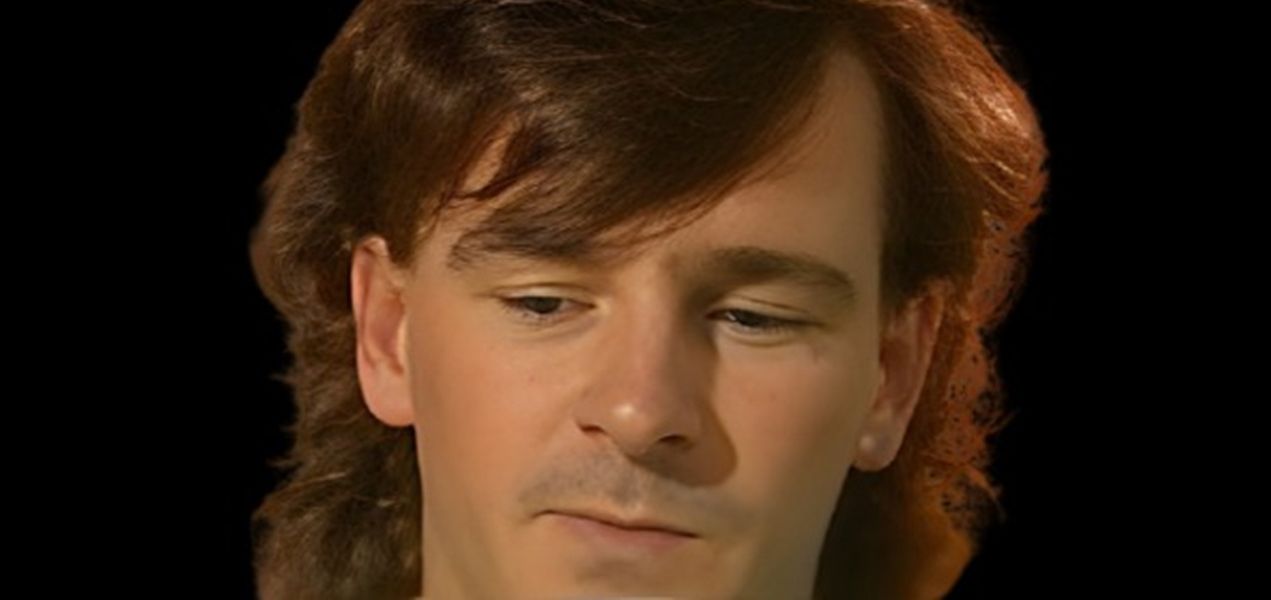
Charles Nicholas, 30 December, 1961, Cowcaddens, Glasgow, Scotland.
PART ONE
Charlie Nicholas began modestly enough, making his way through the Celtic Boys Club before signing for Celtic proper in 1979, a teenager with quick feet, a sharp brain and the kind of instinctive movement in and around the penalty area that coaches spend years trying to teach and rarely can.
His first team debut came on 14 August 1979, in a Glasgow Cup tie against Queens Park, and if anyone in the stadium expected the youngster to look nervous or tentative, they were quickly disabused of that notion. Nicholas scored Celtic’s second goal in a 3–1 victory and, beyond the goal itself, he displayed the alertness and confidence that would come to define him, a boy who seemed entirely unbothered by the weight of the green and white jersey. Less than a fortnight later, on 22 August, he was at it again in the next round of the same competition, opening the scoring in a 3–0 win over Clyde and providing the assist for Bobby Lennox to tuck away Celtic’s third. Two appearances, two goals, one assist, and already a buzz about the place.
Still, Nicholas spent the bulk of that first season back with the reserves, learning his trade in relative anonymity. His next first team chance arrived in July 1980 in a Drybrough Cup tie against Ayr United, a match Celtic lost 1–0 in a poor collective showing, though Nicholas himself continued to catch the eye with his quick and busy play, the sort of performance that leaves managers scratching their heads about how a teenager can look so composed when the team around him is struggling. Then came 16 August 1980, the day that truly announced him to the wider world, when he replaced the injured Frank McGarvey during the second half of Celtic’s 3–0 win away against Kilmarnock in the league. It was not a cameo of mere promise — it was a statement of arrival.
From that point, Nicholas began to feature regularly for Celtic, and on 30 August he scored his first goals in major competition, netting twice in a 6–1 demolition of Stirling Albion in the Scottish League Cup. Playing up front alongside either Frank McGarvey or George McCluskey, he found a rhythm that many strikers spend entire careers chasing, and by the end of December 1980 he had notched up an extraordinary 20 goals in just 23 appearances. The numbers alone were remarkable, but it was the manner of the goals, the instinct, the movement, the sheer joy of a young man playing without fear, that had the Parkhead faithful talking in terms they reserved for only the very special.
He continued to score regularly into the new year, and in February 1981 he delivered one of those performances that sticks in the memory of anyone who witnessed it, scoring twice against Rangers as Celtic came from behind to win 3–1 and go top of the league. The Old Firm derby is the most pressurised stage in Scottish football, a game where reputations can be made or shattered inside ninety minutes, and for a youngster to score twice on that stage spoke volumes about his nerve and his quality.
Manager Billy McNeill was not a man given to extravagant praise, but even he could not contain himself, declaring it a wonderful thing for a youngster to score twice in one of those Old Firm games — high commendation indeed from a man who had captained Celtic to European glory. Nicholas finished that first full season with a total of 28 goals, the last of which came in a 1–0 win over Rangers at Ibrox in April 1981, and Celtic went on to clinch the Scottish Premier Division title days later with a win at Dundee United. Not surprisingly, Nicholas won the 1981 Scottish PFA Young Player of the Year Award, and few who had watched him throughout the campaign would have argued with the decision.
The following season was less smooth, and Nicholas suffered the cruel misfortune that haunts even the most gifted of players — he broke his leg in a friendly match against Morton in January 1982 and missed the rest of the campaign. Having already lost his automatic place in the side to McCluskey, the injury piled frustration on top of frustration, and there must have been moments during that difficult winter when even a young man as confident as Nicholas found himself questioning the fates. However, the measure of a footballer is not how they perform when everything is going smoothly, but how they respond when the ground gives way beneath them, and Nicholas responded magnificently.
He returned to the team for the start of season 1982–83 in August 1982, and wasted absolutely no time in reminding everyone what they had been missing. Playing in all six matches of the group stages of the 1982–83 Scottish League Cup, he scored seven goals as Celtic qualified with ease, including a stunning four-goal haul in a 7–1 rout of Dunfermline that had even neutral observers reaching for superlatives. By mid September, with the league campaign in full swing, Nicholas had amassed a total of 16 goals, and the whispers that had accompanied his earlier seasons were fast becoming a roar. Celtic faced Ajax in the first round of the European Cup in September 1982, and here Nicholas added another dimension to his growing legend, scoring a penalty in the first leg at Parkhead as the match finished 2–2 on the night.
But it was the second leg in Amsterdam that produced the goal which Nicholas himself would later describe as probably his all-time favourite. Celtic went into the tie as underdogs, which was entirely fair, because Ajax were a formidable European force, yet football has always had a glorious disregard for what is supposed to happen. In a move that also involved Frank McGarvey, Nicholas received the ball from his fellow Glaswegian and ran into the Ajax area with the kind of purposeful directness that separates the very good from the genuinely exceptional. He evaded two tackles from Ajax defenders with quick, assured footwork, before curling an exquisitely placed left-foot finish past goalkeeper Piet Schrijvers and into the corner of the net. Ajax later scored themselves to make it tense, but a last minute winner from George McCluskey sent Celtic through 4–3 on aggregate, and the goal by Nicholas, composed and precise in the most pressured of environments, lingered in the consciousness long after the final whistle. It was the kind of goal that defines careers, and it defined this one.
By the autumn of 1982, the comparisons had grown as tall as the man himself could have wished. Nicholas was now being described as the most outstanding young player to emerge in Scotland since Kenny Dalglish, and though such comparisons carry enormous weight and can sometimes crush those upon whom they are placed, Nicholas appeared to wear the tag lightly. He displayed an excellent touch and remarkable vision on the ball, possessed a strong shot with both feet and moved with the kind of intuition that cannot be coached. The only aspect of his game that critics pointed to was a relative lack of blistering pace, but as had been evident since those early days in the Celtic reserve team, his other attributes covered for that with something to spare.
His partnership up front with McGarvey had blossomed into one of the most productive and watchable in the British game, and Nicholas had become the leading goalscorer in Scotland, a fact that brought him not just admiration but an increasingly urgent and noisy chorus from clubs south of the border.
On 4 December 1982, however, he had more immediate matters to attend to, as Celtic faced Rangers in the Scottish League Cup final at Hampden Park, and Nicholas rose magnificently to the occasion. Celtic were 2–0 up at half time, and the first of those goals belonged to Nicholas — a shot on the move after a fine run by David Provan, struck with the casual authority of a man who had scored in bigger games and expected to score in bigger ones still. Murdo MacLeod added the second with a blistering effort from the edge of the area, and though Rangers struck back through Jim Bett’s fine free kick in the 47th minute to make it nervy, Celtic held on, Roy Aitken making a crucial late interception to prevent Rangers from equalising. Nicholas collected the first major medal of his senior career in front of rain-soaked Celtic fans on the open Hampden terraces, and the image of the young striker lifting silverware in the Glasgow winter would not be the last time that scene played out.
After the new year of 1983, something shifted in the atmosphere around Charlie Nicholas, and it was impossible to ignore. The intensity of media speculation linking him with a move to England became a story in itself, with television reporters, radio journalists and newspaper correspondents making the journey north specifically to cover his goalscoring exploits. The Saturday lunchtime television show Saint and Greavsie featured his latest goals with what amounted to barely concealed enthusiasm, turning him from a Scottish football star into a pan-British celebrity, and the combination of his on-field brilliance and his off-field charm made him irresistible copy. The uncertainty over his future, however, appeared to unsettle Celtic as a collective, and despite Nicholas’s own form remaining remarkably consistent, they ended up losing the league to Dundee United — a painful end to a campaign that had promised so much.
The final league match of that season offered Nicholas one last moment of pure theatre at Parkhead. Celtic recovered from a 2–0 deficit at half-time against Rangers to win 4–2, and Nicholas scored twice from penalty kicks in the comeback, a fitting farewell to the competition. At the end of the game, he ran behind the goal and waved to the Celtic fans in a gesture that carried obvious emotional weight — a young man saying goodbye to the club that had made him, acknowledging the supporters who had adored him, while knowing that the next chapter of his career was about to begin somewhere entirely different.
He finished the season with an astonishing 50 goals in all competitions and became only the second player in Celtic’s history to win both the Scottish PFA Player of the Year and Scottish Football Writers’ Player of the Year in the same year. The weeks that followed were a frenzy of speculation as Liverpool, Manchester United and Arsenal all declared their interest. Liverpool’s Kenny Dalglish and Graeme Souness, men whom Nicholas knew from the Scotland international squad, made strenuous personal efforts to persuade him to come to Anfield, and Tottenham Hotspur and Inter Milan were also in the frame.
But in the end, Arsenal manager Terry Neill moved quickly and decisively, signing Nicholas for £750,000 on 22 June 1983. It was a fee that seemed, even then, like very good business for the Gunners.
PART TWO
The move to London was the making of a legend and, in certain ways, the complication of one. Nicholas made his competitive debut for Arsenal in the opening league match of the 1983–84 season on 27 August at Highbury against Luton Town, and though he did not score, he turned in a performance of genuine quality, helping his new employers to a 2–1 victory over the Hatters.
Former Liverpool and Scotland international striker Ian St John, watching from the press box, remarked that Nicholas showed he was a footballer of genuine class and that there was a buzz of excitement every time he moved on to the ball — and the Scot was not a man who threw compliments around carelessly. Two days later, Nicholas scored his first goals for the Highbury club in a 2–1 win against recently promoted Wolverhampton Wanderers at Molineux, and the relief and release of scoring was evident in his celebration, a man who had crossed a border in every sense and was determined to prove the decision correct.
What followed, though, was a period of adjustment that tested the young Scotsman in ways that going straight into a winning team never could. His next goal did not arrive until December, by which time Arsenal had slumped badly in form and were lying 16th in the First Division, a position that owed much to collective failings but which inevitably cast a harsh light on their big-money player. Neill paid the price with his job and was replaced by Don Howe on 16 December, and the appointment of the the ex-West Bromwich Albion and Galatasaray manager proved to be the circuit-breaker that Arsenal desperately needed.
The festive period brought Nicholas back to the form that had made him one of the most coveted strikers in Britain, and the occasion could hardly have been more loaded with significance — Tottenham Hotspur versus Arsenal at White Hart Lane on Boxing Day, the bitterest of North London derbies. Howe’s first tactical masterstroke was to drop Nicholas back into the hole behind the front two of Tony Woodcock and Raphael Meade, giving him the space and the freedom that his instincts demanded, and the decision paid dividends almost immediately. After 26 minutes, Nicholas gave Arsenal the lead, and although Tottenham equalised when Graham Roberts slid home Glenn Hoddle’s free kick in the 37th minute, Arsenal did not fold.
The second half began with Ian Allinson’s through ball sending Nicholas clear, and what followed was the kind of moment that earns a player permanent status in the affections of a football club’s supporters — a delicious, audacious lob over Ray Clemence and into the net, sending the Arsenal fans behind the goal into absolute raptures. Tottenham replied through Steve Archibald to make it 2–2, but Arsenal kept pressing, kept believing, and after 74 minutes Meade headed the ball past Clemence for 3–2. With just four minutes remaining, Clemence parried a Nicholas effort into the path of Meade, who converted to complete a remarkable 4–2 victory. The following day, Nicholas scored a penalty in a 1–1 draw against Birmingham City, his first goal scored at Highbury, and the Champagne Charlie mythology was well and truly under construction.
The 1983–84 campaign proved to be Nicholas’s best at Arsenal, and he finished the season with 11 league goals and won Arsenal’s Player of the Year award, a recognition from his own supporters that carried particular meaning in a year when the club had been inconsistent and when Nicholas himself had needed time to find his feet. Off the field, meanwhile, the tabloids were working with equal diligence on a rather different narrative. London suited Nicholas in every sense, it seemed — the city’s pace and energy matched his own personality, and the nickname Champagne Charlie, which attached itself to him during this period, spoke both to his glamorous image and to the less helpful habits that accompanied his fame. In November 1984, while still at Arsenal, Nicholas received a second drink-driving ban in the space of two years, a development that did him no credit and provided the newspapers with material they were all too eager to exploit.
On the pitch, the 1984–85 season was one of considerable frustration for Arsenal as a collective. Their start had been relatively promising — eight wins from the first eleven league matches, and by late October they sat at the top of Division One, daring to believe that a title challenge was taking shape. But football has a habit of punishing optimism, and a 4–2 defeat at Manchester United began a slow, painful decline that left Arsenal finishing seventh, their title challenge having evaporated long before spring arrived.
The cup competitions, which might have offered consolation, instead delivered embarrassment — Second Division Oxford United knocked them out of the League Cup, and, far more damagingly, Third Division York City eliminated them from the FA Cup in the fourth round with a 1–0 victory at Bootham Crescent on 26 January 1985, a last-minute penalty by Keith Houchen completing one of the competition’s most memorable shocks. A star-studded Arsenal side that had cost more than £4.5 million to assemble and that contained eight internationals had been undone on a snow-bound day in York by a team operating three divisions below them, and the humiliation lingered.
The 1984–85 season also brought the final curtain for Pat Jennings, one of the game’s truly great goalkeepers, who played his last competitive match for Arsenal at Hillsborough against Sheffield Wednesday on 25 November 1984 before John Lukic permanently claimed the position. Jennings was given a farewell match against Tottenham at Highbury on 8 May 1985, a warm and fitting tribute to an extraordinary career, and three days later Arsenal drew 2–2 with West Bromwich Albion at The Hawthorns in their final fixture of the campaign, finishing seventh in the standings with 66 points from 42 games. It was not enough for a club of Arsenal’s ambitions, and everyone inside Highbury knew it.
The 1985–86 season, Don Howe’s second full campaign in charge, began with the familiar weight of expectation pressing down on the marble halls of Highbury, because this was Arsenal, and the ghost of Herbert Chapman and the memory of Bertie Mee demanded more than respectable finishes and polite applause. Howe trusted the shape of his squad, with Kenny Sansom offering real class from left-back, Viv Anderson adding steel and experience, David O’Leary marshalling the defence with authority, and in midfield Graham Rix and Stewart Robson providing both craft and industry. The opening day brought a brutal examination at Anfield, where the Reds comfortably beat Arsenal 2–0, though there was no dishonour in losing on Merseyside. Back at Highbury three days later, Arsenal rallied with a thrilling 3–2 win over Southampton, but on 24 August Manchester United arrived and won 2–1, exposing defensive uncertainties that would recur throughout the campaign.
The autumn brought patches of genuine encouragement — a 1–0 win at Queens Park Rangers, a 2–0 success at Coventry City, a 1–0 home win over Sheffield Wednesday — suggesting that Arsenal could build something coherent. But then came Goodison Park in November, where Howard Kendall’s magnificent Everton, the reigning champions at the height of their powers, tore Arsenal apart 6–1 in one of the season’s most sobering afternoons, a result that exposed just how large the gap remained between Arsenal and the very best. Nevertheless, just when the critics were sharpening their pencils most vigorously, Arsenal produced a run of form that silenced them with pleasing abruptness. On 14 December they defeated Liverpool 2–0 at Highbury, with goals from Nicholas and Niall Quinn. The following week they won 1–0 at Old Trafford, with Nicholas again finding the net. Then, seven days later, Queens Park Rangers were dispatched 3–1 at Highbury through goals from Rix, Nicholas and substitute Tony Woodcock, and the Christmas period belonged entirely to Arsenal.
A 0–0 draw with Tottenham in the North London derby on New Year’s Day maintained the momentum, and through January and February results continued to encourage. Four consecutive victories in March — crushing Aston Villa 4–1, beating Ipswich 2–1, edging West Ham 1–0, sweeping aside Coventry 3–0 — transformed the atmosphere inside the club and lifted Arsenal to fifth in the table, with the season seemingly alive and pointing somewhere meaningful. But then came the shock that no one had quite seen coming, or perhaps that everyone had half-expected without admitting it: Don Howe resigned.
His departure felt less like a catastrophe than an inevitability, because Howe had been a decent manager who had never quite been given the resources or the fortune to turn Arsenal from a club of tradition into a club of trophies. Three successive seventh-place finishes had accumulated into something that the Highbury boardroom could no longer accept with equanimity, and though his decency and tactical intelligence were genuine assets, they were insufficient substitutes for silverware. Caretaker Steven Burtenshaw stepped in and the wheels promptly fell off — a 1–0 defeat at Tottenham was bad enough, but back-to-back defeats to Watford, 2–0 at home and 3–0 away in consecutive days, were disastrous, and Arsenal staggered to a 7th place finish once more, with a 3–0 final day defeat at Oxford rubbing salt into wounds that had been open for months. On 14 May, Arsenal appointed George Graham, and the future suddenly looked very different.
George Graham’s arrival at Highbury in the summer of 1986 signalled the beginning of a transformation that would, within a few years, deliver the club the Championship in the most dramatic circumstances football had ever witnessed. But in the short term, his arrival presented Nicholas with an uncomfortable reality, because the new manager had his own ideas about how his team should play and his own priorities about which players would execute those ideas, and Nicholas did not fit as neatly into Graham’s blueprint as he had hoped.
Arsenal started the 1986–87 season with genuine promise, sitting at the top of the league from mid-November to late January, their collective solidity and organisational discipline bearing Graham’s clear tactical fingerprints. Injuries to key players, most notably Paul Davis, disrupted the rhythm of their challenge, and a ten-match winless run in the second half of the season ended their title hopes definitively, leaving them to finish fourth as Everton claimed the Championship for the second time in three seasons. It was a frustrating conclusion to a campaign that had promised more, but Graham was a man building something for the long term, and he had already demonstrated his intention to reshape the squad on his own terms.
The League Cup, however, offered redemption of the most theatrical kind, and it was Charlie Nicholas who took centre stage at the very moment the club needed him most. Arsenal’s route to Wembley had been characterised by comebacks of implausible drama — the semi-final against Tottenham being the most vivid example, as Arsenal lost the first leg 1–0 at Highbury, then fell further behind in the second leg at White Hart Lane, only to score twice through Viv Anderson and Niall Quinn to force a replay, and then in the replay came from 1–0 down again with late goals from Ian Allinson and David Rocastle to advance. It was the kind of story that breeds belief, and by the time the League Cup Final against Liverpool at Wembley arrived in April, Arsenal had become a team that genuinely trusted in the possibility of the improbable.
Liverpool led 1–0 through Ian Rush, that most predatory of strikers, after 23 minutes, and the pattern seemed depressingly familiar for Arsenal supporters. But seven minutes later, Nicholas equalised after a goalmouth scramble, and the Wembley end that housed Arsenal’s red and white army erupted. In the second half, Nicholas appeared to be fouled in the penalty area by Gary Gillespie, and while the referee waved away Arsenal’s protests, there was no doubting the urgency with which his side continued to press. With seven minutes remaining, Perry Groves crossed from the right, Nicholas shot at goal, the ball took a deflection off Ronnie Whelan and deceived Bruce Grobbelaar entirely before nestling in the net: Arsenal 2 Liverpool 1.
The final whistle that followed brought with it a release of emotion that eight years without a major trophy had made all the more intense, and it was Nicholas, with his two-goal performance on the biggest domestic stage, who had delivered it. He became a club hero in the truest sense of the phrase — not through a season of accumulated goals, but through a single defining afternoon when everything he had promised was fulfilled.
Yet even Wembley glory could not prevent what came next. Nicholas was dropped from the Arsenal team just four matches into the 1987–88 campaign, with Perry Groves preferred as the strike partner for new signing Alan Smith. The decision was harsh in its bluntness and final in its application — Nicholas would spend the rest of his time at Highbury in the reserves, a situation that was as much an indignity for a man of his talent as it was a clear signal that Graham’s Arsenal had moved on.
Bonnie Prince Charlie had, all told, accumulated 54 goals in 184 appearances in all competitions for Arsenal, and been ranked 28th in the club’s list of the 50 Greatest Gunners of all time, which is no small distinction for a man who had spent significant portions of his Highbury career being asked to operate in positions that did not suit his most natural instincts as a pure goalscorer.
PART THREE
In January 1988, Charlie Nicholas joined Aberdeen for a transfer fee somewhere in the region of £400,000, stating clearly his desire to get his career back on track in the environment that had originally shaped him, and the move north proved to be one of the wisest decisions he ever made.
After a slow start at Pittodrie — three goals in 16 Scottish Premier Division games in the second half of the 1987–88 season — he rediscovered the form and the confidence that had made him such a compelling figure a decade earlier, registering 16 league goals in the 1988–89 season and finishing joint top-scorer alongside Celtic marksman Mark McGhee. It was an emphatic and wholly satisfying answer to those who had begun to wonder if the talent had been permanently dimmed.
He maintained that form into his final season at Pittodrie, 1989–90, and in October 1989 he collected his first silverware since returning to Scotland, as Aberdeen won the Scottish League Cup in a final against Rangers at Hampden attended by 61,190 spectators. Paul Mason gave Aberdeen the lead with a header in the 22nd minute, Rangers equalised through Mark Walters’ penalty in the 35th minute after a foul on Ally McCoist, and the match stretched into extra time without further scoring. In the 103rd minute, Mason struck again, drilling home a low shot from a flick-on by Willem van der Ark, laid off by Nicholas himself, and Aberdeen won 2–1 after 120 minutes. Nicholas had not scored, but his contribution to the winning goal was the kind of intelligent, selfless link play that his critics had always underestimated.
The arrival of Dutch forward Hans Gilhaus in November 1989 provided Nicholas with the ideal foil he had so often lacked during his time at Arsenal, and the pair formed an immediate and productive partnership that helped carry Aberdeen to the Scottish Cup final in May 1990, where they faced Celtic at Hampden before 60,493 spectators. The match was a cautious, tense affair that both sets of defences dominated, with Alex McLeish and Brian Irvine outstanding for Aberdeen and Packie Bonner equally important for Celtic, making several key interventions to preserve his clean sheet. After 90 minutes the score was 0–0, after 120 it remained the same, and for the first time in the competition’s history the Scottish Cup final went to penalties.
Both sides converted four of their first five kicks, with Celtic’s Dariusz Dziekanowski blasting over, while Nicholas calmly converted Aberdeen’s. The shootout then entered sudden death territory, and both teams scored their next four each to reach the extraordinary scoreline of 8–8, at which point Aberdeen goalkeeper Theo Snelders saved Anton Rogan’s kick,, and Brian Irvine stepped up to convert Aberdeen’s ninth penalty, securing a 9–8 victory and the Pittodrie club’s seventh Scottish Cup. In all, Nicholas played 104 games for Aberdeen in two and a half years, scoring 36 goals — a record that speaks to a thoroughly worthwhile and successful return to his homeland.
In the summer of 1990, Nicholas returned to Celtic, and the circle began to close in ways both satisfying and occasionally painful. His comeback season at Parkhead saw him play 14 games and score six league goals — solid rather than spectacular, the contribution of a man finding his feet at a club that was itself in a period of transition. The arrival of Liam Brady as manager in 1991 brought a new energy to Celtic, and Nicholas responded to it with what proved to be the finest goalscoring season of his second spell at the club, netting 21 league goals during 1991–92 in a campaign of real consistency and, at moments, genuine brilliance.
In March 1992, he produced two goals in consecutive weeks that reminded everyone watching exactly why he had once been spoken of in the same breath as the greatest Scottish strikers of his generation. On 21 March, he opened the scoring at Ibrox in a 2–0 win over Rangers — taking a long ball from a Chris Morris free kick and volleying home a powerful shot past Andy Goram, a finish of the highest technical order from a man in his early thirties who had lost none of his sense for the moment.
A week later on 28 March, against Dundee United, he ran across the opposition defence from 25 yards out and suddenly, with no apparent warning, chipped the ball over an unsuspecting Alan Main and into the net — a goal of outrageous imagination and perfect execution, the kind of thing that makes a crowd catch its breath before releasing it in a long, collective shout of astonishment. Despite his prolific form, Celtic failed once again to win silverware, and there was a melancholy quality to the sight of Nicholas at his best inside a Celtic team that could not quite convert individual quality into collective trophy-winning.
His later years at Celtic were marked by the frustrations that inevitably accompany the end of a distinguished career — losing his place to Frank McAvennie in the first half of 1992–93, regaining it when McAvennie fell out of favour, and then playing only 12 of 36 league games in 1994–95 without scoring, his body finally declining to cooperate with his enduring will. He was left out of the 1995 Scottish Cup Final squad against Airdrie, Celtic released him, and a career at Parkhead that had encompassed five years across this second spell — 114 league games and 37 league goals — ended without the silverware that Nicholas and the supporters had craved. In July 1995 he joined Clyde on a free transfer, spent one season there, scored five times in 31 league games and then called time on a playing career that had stretched across more than 15 years at the top of the game.
Nicholas had also carried the responsibility and honour of representing Scotland at senior level, winning his first cap on 30 March 1983 near the end of his first Celtic spell, scoring in a 2–2 draw with Switzerland at Hampden Park. He went on to earn 20 senior caps in total, appeared in the 1986 World Cup in matches against Denmark and Uruguay, and scored his final international goal on 17 October 1984 in a 3–0 win over Iceland at Hampden in the World Cup qualifying stages. His last cap came on 26 April 1989 in a 2–1 win over Cyprus. Five international goals from 20 caps is a return that reflects both the talent he brought to the national team and the inconsistent manner in which he was deployed, a pattern that felt rather too familiar for a player of his gifts.
In retirement, Nicholas found a natural home in front of the cameras and behind the microphone, becoming one of Scottish football’s most recognisable pundits through his work on Sky Sports’ Soccer Saturday and its Scottish football coverage, as well as writing as a newspaper columnist with the same directness and passion that had characterised his playing days.
He was never been shy about expressing his opinions — in April 2010, for instance, he criticised Celtic’s majority shareholder Dermot Desmond with characteristic bluntness, accusing Desmond of treating the Glasgow club like a toy and failing to invest properly in the playing staff, a critique that landed with the force of someone who understood precisely what Celtic should be and was frustrated at watching it fall short of that standard.
Then finally in January 2014,Nicholas was inducted into the Scottish Football Hall of Fame, a recognition long overdue for a man who had brought such colour and quality to the game.