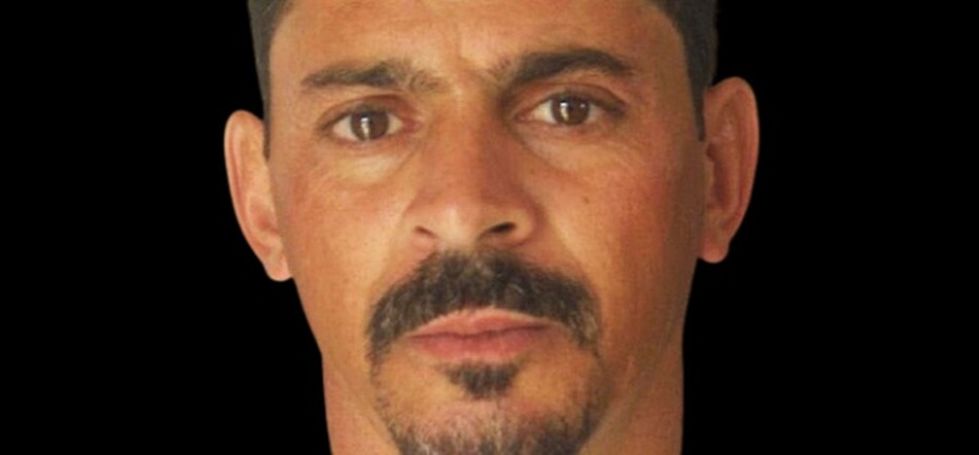
Valdir de Moraes Filho, born 15 March 1972, Rio de Janeiro, Brazil.
PART ONE
Valdir de Moraes Filho — simply known as Valdir Bigode — grew up in Rio de Janeiro where the game is not merely a pastime but a shared religion. Rio in the early 1970s and 1980s was a city that produced footballers the way an assembly line produces cars — in great, relentless numbers, each one stamped with a particular flair and competitive fire that you simply could not manufacture elsewhere.
Bigode absorbed all of it. He was a big, physically imposing forward with a striker’s instincts that seemed almost instinctive, almost primal — the ability to sniff out space inside the area, to time a run to the far post, to hang in the air just a fraction of a second longer than the defender. But alongside that physical menace, he possessed composure, the rarest of qualities in a young forward, and it was that coolness in front of goal that would eventually carry him through years of professional football at the very highest level of the Brazilian game.
His formal story as a professional footballer begins in 1992, when Bigode was transferred to Vasco da Gama, one of the great clubs of Brazilian football and an institution steeped in the kind of proud, combative tradition that shapes young players very quickly indeed. He did not arrive at Sao Januario as a finished product. He was raw and eager, a boy thrust into a system that demanded results, and he initially worked his way through the club’s youth structures before forcing his way into contention for the senior side. But even that transitional period announced something important about him, because in his very first year he led Vasco’s youth squad to victory in the Copa Sao Paulo de Futebol Junior — the Copinha, as it is universally known in Brazil — finishing as the tournament’s leading scorer with seven goals, a haul that demonstrated, with hard statistical clarity, that his nose for the net was no accident and no illusion.
Seven goals in a national youth tournament is the kind of return that makes coaches stop what they are doing and watch a bit more closely, and the Vasco coaches duly obliged. The Copinha victory was a statement of collective strength but it was also, unmistakably, a statement about Bigode´s personally. He was not a player who hid in the wider spaces or looked for an easy game; he went to the places where matches were decided and he delivered. Furthermore, that early success had a psychological effect that is easy to underestimate — it gave him the confidence to believe he belonged at the senior level, and in Brazilian football, belief is everything. Without it, the step up from youth football to the ruthless competitive arena of the Campeonato Carioca and the Serie A would have crushed a less resilient character entirely.
The Campeonato Carioca is not a gentle introduction to professional football. It is a furious, passionate, hyper-local competition in which every club carries the weight of a neighbourhood, a social identity, a deeply personal allegiance, and the derbies — Vasco against Flamengo, Vasco against Fluminense, Vasco against Botafogo — are contested with an intensity that outsiders struggle to fully comprehend. It was in this cauldron that Bigode developed, contributing to Vasco’s Carioca title victories in 1992, 1993 and 1994, three consecutive triumphs in a tournament that mattered enormously to the club and its supporters. Those three championships were not mere footnotes on a résumé; they were proof that Bigode could perform when the stakes were highest, when the noise in the stadium was loudest, when the opponents were most desperate to stop him.
By the end of 1993, the goals had accumulated into dozens, and Bigode had completed the transition from promising prospect to first-team mainstay, from the kid with potential to the striker that Vasco’s attacking plans were built around. He was a fan favourite at Sao Januario, a player whose directness and physical commitment the crowd loved, and his relationship with the club’s supporters was one of genuine warmth and mutual appreciation. Still, even the most content of footballers begins to wonder, eventually, whether there is something more to be won and somewhere more to grow.
In January 1995, Bigode made the decision to test himself somewhere new, signing for Sao Paulo FC in what represented a significant move both geographically and in terms of prestige. Sao Paulo are not a club that accommodates sentiment or indulges mediocrity; they are one of the elite institutions of Brazilian football, a club that had only recently, in the early 1990s, been scaling remarkable heights under Tele Santana, winning back-to-back Copa Libertadores titles and claiming the FIFA Club World Cup. Joining such a club, with its demanding supporters and its tradition of excellence, required a player to be at his sharpest from the very first session, because the competition for places was fierce and the patience for gradual development was limited.
Bigode’s spell at Sao Paulo — which stretched through to early 1996 — was not a period of headline-generating production in the way his Vasco years had been, but it was never supposed to be. He was adding experience rather than simply adding goals, learning how an elite club operated, what it demanded of its players in terms of discipline and tactical awareness, and how to survive professionally in an environment that did not carry him. He scored goals during his time there, demonstrating in Série A matches and state competitions that his finishing had not deserted him, though he never quite nailed down the starring role that the limitations of Sao Paulo’s deeper, more richly populated squad perhaps made inevitable. What he did was remain professional, remain productive and accumulate the kind of experience that, in retrospect, looks more and more like essential preparation for what was coming next.
The move to Atlético Mineiro that followed proved, in time, to be the most consequential of his career. Based in Belo Horizonte, with a support base of thunderous passion and an ambition to compete on the continental stage, Atletico Mineiro gave Bigode something that Sao Paulo, for all its prestige, had not quite offered — a central, load-bearing role in a team that needed him urgently and used him accordingly. His performances quickly established him as one of the club’s primary attacking threats and earned him, in the summer of 1996, something quite extraordinary: a transfer to Benfica, the great Portuguese club, one of the most historic and supported institutions in European football.
PART TWO
In July 1996, Bigode became a Benfica player. The significance of that move should not be understated. Portugal’s Primeira Liga was, and remains, one of the more competitive leagues in Europe, and Benfica themselves — whatever the fluctuations in their fortunes — were a club operating at a level of ambition and expectation that demanded real quality from every player on their books. He appeared in ten matches during the 1996-97 season, starting every one of them across his 900 minutes of action, and he scored three goals. Those are, on the face of it, modest numbers; but consider the context.
A Brazilian striker, arriving in a foreign country, adapting to a new language, a new style of play, a new set of teammates and a new set of expectations, had stepped into one of Portugal’s largest clubs and started every game he was involved in. That is not the record of a player out of his depth; that is the record of a player who earned his place every time his name was written on the teamsheet. But his European adventure proved short-lived, and by July 1997 he was back in Brazil with Atletico Mineiro — and it was there, that very same year, that the crowning achievement of his playing life arrived.
The Copa Confederacion Sudamericana de Futbol was South America’s secondary continental club competition, a tournament that sat below the Copa Libertadores in terms of prestige but which nonetheless attracted serious clubs and demanded serious football. In 1997, Atletico Mineiro navigated their way to the final against Universitario de Deportes of Peru, and Bigode was not merely a participant in that run — he was its driving force, its most consistently lethal weapon, the player whose goals cleared paths through opposition defences when Atlético needed the net to move most urgently.
He finished the competition as its leading scorer with seven goals, a return that placed him at the very summit of the tournament’s individual honours and that speaks, more directly than any tactical description could, to his importance across every round of the competition. Seven goals, in a knockout tournament, against opponents from across a continent — that is the goalscoring record of a striker firing at the absolute height of his powers, a man for whom every match presented not a problem to be solved but a stage to perform on. Furthermore, when the final itself arrived, and the tension and the weight of the occasion pressed down on both sides, Bigode delivered once more. Atletico Mineiro drew the first leg 0-0 away against Universitario, a creditable result that preserved their ambitions, and then, in the decisive second leg, Bigode scored in a 2-0 victory that sealed the title and set off celebrations that the Atletico Mineiro supporters have never entirely forgotten. He was not merely a footballer in that moment; he was the author of a chapter in the club’s history.
Following his triumph with Atletico and that productive stint at Benfica, Bigode’s career in Brazil continued through the latter years of the 1990s and into the early 2000s with characteristic industry and professionalism. He represented Botafogo and Santos during this period, two clubs of enormous Brazilian tradition, and though these spells did not yield the concentrated, tournament-defining brilliance of his earlier years at Vasco and Atlético, they were far from mere holding patterns. He was a professional at the top of the Brazilian game, competing in the Série A and state championships against the country’s best defenders, and continuing to add to a goalscoring record that was, across the entirety of his domestic career, genuinely formidable.
In 2002, he returned to Vasco da Gama for a second stint with the club that had launched his professional life, and his second period at Sao Januario proved to be more than simply sentimental. He contributed meaningfully to Vasco’s Campeonato Carioca title victory in 2003 and reached the final of the competition again in 2004, by which point he was 32 years old and still performing at a level that demanded respect. Some players decline gracefully; Bigode continued to be useful, and in a sport that discards its older players with startling efficiency, remaining useful at 32 is a statement of professional longevity all by itself.
In September 2004, Bigode made the most surprising move of his professional life, signing for Al-Nasr in the United Arab Emirates’ top flight, the United Arab Emirates Pro League. It was not, on the surface, an obvious destination for a man who had spent his career in the competitive heat of Brazilian football and the prestige surroundings of European club competition, but Bigode approached it with the same direct, goalscoring purpose that had characterised everything he had done before.
What happened next was nothing short of extraordinary. In the 2004-05 season, he led the entire United Arab Emirates Pro League in scoring with 23 goals — a tally that placed him unambiguously at the summit of the competition’s forwards and announced, to anyone who might have wondered whether his effectiveness would transfer to a different football environment, that his ability to find the net was not geography-dependent. 23 league goals in a single season, at 32 years of age, in a a foreign league, is the achievement of a striker who had simply never lost the art of scoring and who approached every new challenge with the same unapologetic conviction that the goal was his territory and the opposition’s defence was a problem he was going to solve.
Bigode remained at Al-Nasr for the following season, continuing to contribute, before transferring domestically within the United Arab Emirates to Dubai Cultural Sports Club in July 2006. His final years as a professional were spent in that Gulf setting, and on the 1st of July 2008, at the age of 36, following his release from Dubai CSC, Bigode retired from professional football.