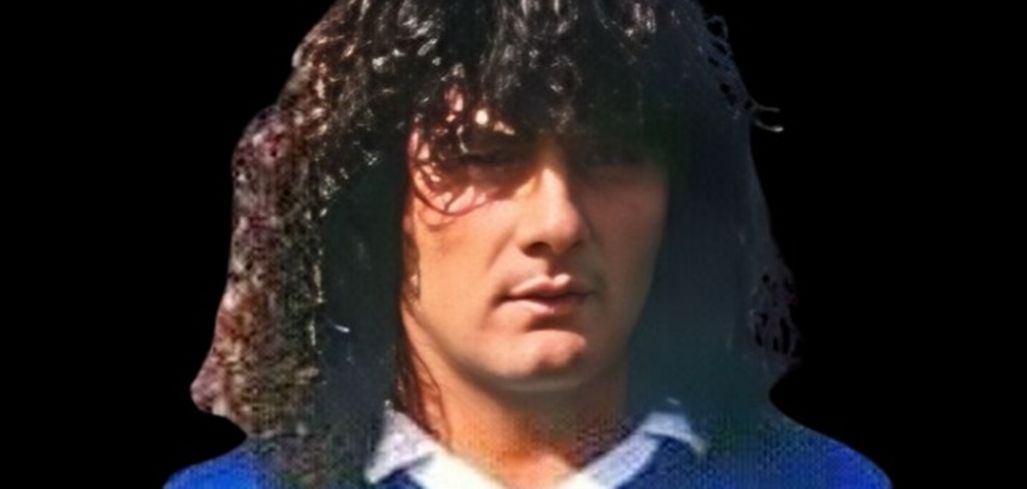
Claudio Martín Cabrera, born 20 November, 1963, Buenos Aires, Argentina,
PART ONE
Claudio Cabrera´s story begins with River Plate, one of the two great monolithic clubs of Buenos Aires. Cabrera made his professional debut for Los Millonarios in 1982, stepping out of the youth structure and into the harsh, unforgiving light of the Argentine Primera División at the age of eighteen. He appeared in 18 matches that year without scoring, and though a debut season without a goal might suggest a modest beginning, the reality for a central midfielder in Argentina was rather more nuanced than a tally in the scorers’ column, because the Argentine game demanded intelligence above all else, positioning, discipline, the ability to recycle possession and cover space, and those qualities Cabrera possessed in abundance.
His appearance in six more matches in 1983 suggests that the coaching staff at River saw enough to keep faith with him, even if his appearances were carefully managed, because young midfielders in that particular River Plate setup were expected to earn their place incrementally, not to seize it through brute force of personality. However, the club’s deeper squad options and the competitive demands of a team chasing silverware meant that for Cabrera to grow, to find regular football and build the kind of experience that only consistent minutes can provide, he would need to look elsewhere, and so in 1984 he did exactly that, making the move across Buenos Aires to a club that would become the most formative chapter of his playing life.
Club Atlético Huracán sits in the Parque Patricios neighbourhood of Buenos Aires, a working-class club with a proud and occasionally tempestuous history, the kind of football institution that does not dazzle with money or star power but instead builds on culture, community and the sheer stubborn will to compete with the giants above them. For Cabrera, it was the perfect environment, because Huracán rewarded technique and intelligence rather than athleticism or raw aggression, and a midfielder with his particular gifts could flourish here in a way that might not have been possible in a more results-obsessed setting.
Over three seasons at Huracán, from 1984 to 1986, Cabrera accumulated 51 appearances and seven goals, figures that tell only a fraction of the story because the most important thing the midfield man brought to the Red and Whites was not the occasional goal but the constant, measured authority with which he organised the middle of the park, reading the game a step ahead of those around him and making the men alongside him look considerably better than they might otherwise have done.
His standout campaign came in 1985/86, when he amassed 31 appearances and contributed 4 goals, his most prolific season to that point and a performance that drew admiring glances from clubs higher up the Argentine food chain. In addition to the statistics, it was during this period that his reputation for what Argentine football writers of the era called elegancia técnica — technical elegance — first began to solidify into something approaching a permanent characterisation, and that label would follow him for the rest of his playing days, for better and occasionally for worse.
Joining Vélez Sarsfield in 1986 represented a step upward in terms of ambition and infrastructure, even if the club had not yet reached the heights it would achieve in the 1990s under Osvaldo Zubeldía and, later, Carlos Bianchi, and Cabrera spent four seasons at Liniers becoming one of the most reliable central midfielders in the Primera División, a man coaches could build a system around precisely because he never complicated the simple or simplified the complex. He accumulated 68 appearances and 4 goals during his time at Vélez Sarsfield, and though the goals-per-game ratio was modest, it was consistent with his role as the player who facilitated rather than finished, who built rather than broke.
Cabrera´s 1986/87 campaign, with 36 appearances, demonstrated the physical and mental durability required to sustain a position in a competitive Argentine side across a full season. His most prolific season in front of goal arrived in 1988/89, however, when he found the back of the net on four occasions in 19 outings — a rate that, for a central midfielder of his type, was actually rather healthy. At the José Amalfitani Stadium, he developed what might be called his footballing philosophy: the idea that consistency over time is more valuable than brilliance in isolation, that the job of a proper playmaker is not to turn matches but to shape them, quietly and without fuss, in the direction his team needs them to go. Despite the fact that Vélez did not secure any major honours during his time there, the experience left him as a genuinely respected figure in the Argentine game.
PART TWO
The year of 1988 brought Claudio Cabrera the highest honour that Argentine football could bestow on a player at the time: a call-up to the senior national team, the very same national team that was the reigning World Champion, having won the 1986 FIFA World Cup in Mexico under manager Carlos Bilardo with Diego Maradona at the very height of his powers. The squad that pulled on the light blue and white of Argentina in 1988 was not the same vintage that had conquered the world two years earlier, but it was still a collection of exceptional footballers, and for Cabrera to be considered among their number was a remarkable validation of everything he had been doing at club level.
Cabrera´s debut came on 6 July 1988 in Adelaide, Australia, as part of Argentina’s tour for the Bicentenary Gold Cup, a 2–2 draw against Saudi Arabia that gave him his first taste of international football, and he acquitted himself well enough that the coaching staff kept faith with him through the remainder of the tour. Just four days later, on 10 July in Melbourne, he started in a goalless draw against Brazil — which, in the context of the South American rivalry, is always a result of some significance — and then, four days after that, found himself in Sydney for the most chastening result of the tour, a 4-1 defeat to Australia that raised eyebrows across Argentina and was, by some distance, the low point of his international experience. Still, Bilardo’s staff showed enough confidence in Cabrera to start him again on 16 July in Canberra, where Argentina recovered their composure in a 2–0 victory over Saudi Arabia, and it seemed, briefly, that he might be establishing himself as a fixture in the national setup for seasons to come.
But his fifth cap came in rather more difficult circumstances, as a substitute in a 1-0 defeat at the hands of Colombia in Bogotá on 9 March 1989, a result that stung Argentine pride and effectively closed the door on his involvement with the senior squad. In total, five caps, no goals, all in friendlies, and yet those appearances represent something that most Argentine footballers of his generation never achieved: the opportunity to represent their country at the highest level, wearing the shirt that Maradona had made synonymous with genius, and to do so in a way that brought no shame whatsoever on the blue and white.
Running parallel to his senior international appearances, and in many ways providing the more dramatic narrative of that extraordinary year, was Cabrera’s involvement with Argentina’s under-23 squad at the 1988 Summer Olympics in Seoul, South Korea. Olympic football in 1988 was still an under-23 tournament rather than the Under-23 tournament with senior wild cards it would later become, and Argentina arrived in Seoul with serious ambitions, a squad of talented young players who believed they could go deep into the competition.
And deep they went — all the way to the quarterfinals, finishing fifth overall after a 1-0 defeat to Brazil, the same side whom Cabrera had helped Argentina hold goalless in the friendly in Melbourne just weeks earlier, which gave the result a particularly painful symmetry. He featured in two matches during the Seoul tournament, making one start and one substitute appearance for a total of 84 minutes of Olympic football, and while the team fell short of a medal, the experience of competing on that stage — in front of the global audience that the Olympics commands, under the kind of pressure that only major tournaments generate — was the closest thing to a high-stakes international experience that his playing days would offer him, and he drew on it in ways that would only become fully apparent much later, when he stepped into the very different pressures of management.
After leaving Vélez in 1990, Cabrera made one more meaningful contribution to the Argentine Primera División with Argentinos Juniors, the La Paternal club famous for producing Maradona himself and for an approach to youth development that has always been thoughtful and technically demanding. During the 1990/91 season, he featured in 24 matches and scored 3 goals, providing exactly the kind of midfield stability that a team in transition requires — not pyrotechnics, not headlines, but the steady professional application that keeps a squad functional when other parts of the machinery are spluttering.
Later that year, he signed for Boca Juniors, the Xeneize, and the enormity of the blue and gold shirt — one of the most iconic kits in world football, worn by a club that sits in the Bombonera and whose supporters make more noise per square metre than almost any other ground on earth — was not lost on a Buenos Aires boy who had grown up watching these institutions from the outside. His stint at Boca was brief, just 7 appearances in the 1991/92 season without a goal, but it was notable nonetheless, a full stop on a sentence that had begun at River Plate a decade earlier and had traced an elegant arc through the upper reaches of Argentine football. Brief though it was, no player who has pulled on the Boca shirt can ever quite be called insignificant, and the experience of training and competing at the Bombonera left a mark on Cabrera that complemented the one left by River Plate at the other end of the city and the other end of Argentine football’s great divide.
There followed a period away from the top level of Argentine football, a period which involved the kinds of injury setbacks and contractual uncertainties that end many careers without any single dramatic moment of conclusion. In the 1996/97 season, he surfaced briefly at Arsenal de Sarandí, a club then competing in the Second Division rather than the top flight, making just two appearances before persistent injuries finally brought the curtain down on a professional playing career that had lasted, in its various forms, across 15 productive years. In total, Cabrera amassed 176 appearances and 14 goals across the Argentine leagues, numbers that in isolation might appear modest but which, measured against the quality of opposition he faced and the technical demands of the positions he filled, represent a career of genuine substance and lasting respect.
PART THREE
Cabrera retired, as the records have it, due to persistent injuries, and there is something almost poignant about that phrasing, because the body that had carried him so elegantly through the terraces of River, Huracán, Vélez and Boca had finally run out of credit, and the most technically gifted midfielder of his particular generation in Buenos Aires had to accept what all players eventually must: that the game moves on, and you must move with it, or step aside and find another way to stay connected to the thing you love most.
And that other way, for Cabrera, turned out to be management, though not management of the flamboyant, headline-seeking variety — not the kind that holds press conferences designed for viral moments or builds a brand around personal charisma. Instead, it was the quiet, methodical, deeply knowledgeable kind of management that drew directly on what he had learned as a player over 15 years in the Argentine game, and it found its expression, fittingly, at Huracán, the club where he had arguably done his best playing and where, three and a half decades later, he would do his most important coaching.
In January 2022, as part of a broader restructuring of the club’s reserve and youth setup under new coordination, Cabrera was appointed manager of Huracán’s reserve team — Huracán II — and the appointment made perfect sense to anyone who had watched his playing career with any attention, because the values he had embodied as a midfielder — patience, technical precision, the prioritisation of the team over the individual — were exactly the values that a youth and reserve environment needed to instil in the next generation of Argentine footballers. His return to the club where he had made his name as a player in the 1980s was not merely sentimental; it was purposeful, a deliberate choice by the club’s hierarchy to place their emerging talent in the hands of a man who understood what it took to make the transition from promise to professionalism.
Under Cabrera’s guidance during the 2022 season, the reserve team achieved results that surprised even some of the more optimistic observers at the club, reaching the quarterfinals of the Copa de la Liga Profesional’s reserve tournament, a competition that draws entries from the full complement of Argentine first-division clubs and is consequently a genuine measure of a team’s quality rather than a soft exercise in confidence-building. The squad demonstrated a coherence and tactical discipline that spoke directly to Cabrera’s influence — a five-match winning streak included a particularly eye-catching 4–1 triumph against Aldosivi, a result which placed them among the contenders for the Reserve League title.
Over his tenure from January 2022 to December 2023, Cabrera managed 22 matches in the reserve league, averaging 1.27 points per match, and while that average is not the kind of statistic that wins prizes on its own, the context matters enormously: this was a reserve team at a mid-table club, navigating a period of significant instability in the first team above them, and the fact that the reserves maintained a competitive identity throughout that turbulence is a tribute to the steadiness that Cabrera brought to the environment. Moreover, several young players progressed to first-team training sessions during his tenure, which is ultimately the primary measure of a reserve team manager’s success, because the point is not to win reserve competitions — though that matters — but to produce footballers capable of operating at the level above.
Fate, or club circumstance, twice placed Cabrera in temporary charge of Huracán’s first team, and both occasions were illuminating in ways that went well beyond the results themselves. The first came in May 2022, following the resignation of Frank Darío Kudelka after a run of poor results in the Liga Profesional, and Cabrera was appointed interim manager on 16 May, working alongside his assistant Eduardo Papa and with the support of Marcelo Broggi, taking charge of preparations from the following morning and lasting until 25 May, when Diego Dabove was officially installed as permanent manager.
In that brief window, Cabrera oversaw one match: a 0–0 draw against Platense on 21 May at the Estadio Tomás Adolfo Ducó, Huracán’s intimate and characterful home in the Parque Patricios. A goalless draw is not typically the stuff of glowing testimonials, but in the context of a club in crisis, a team stripped of confidence after weeks of poor results, the ability to organise a defensive performance that kept a clean sheet and denied a technically capable opponent spoke to exactly the kind of tactical stability that Cabrera’s playing philosophy had always emphasised. A team that cannot defend cannot build, and in his single match as first-team interim, Huracán did at least demonstrate that whatever else had broken down, defensive shape could be restored.
His second opportunity came in June 2023, under even more fraught circumstances, after Sebastián Battaglia was dismissed on 29 June following Huracán’s elimination from the Copa Sudamericana, South America’s secondary club continental competition, and Cabrera stepped in again alongside Broggi to manage the final match before Diego Martínez arrived to begin his own stint in the dugout. On 2 July, Huracán lost 1–0 to Independiente at the Estadio Libertadores de América, with Martín Cauteruccio scoring the only goal of the clash in the 65th minute, a result that extended the team’s winless streak but preceded the arrival of a permanent appointment, and Cabrera stepped aside as cleanly and as professionally as he had stepped up. arrangements so often descend into chaos or recrimination, that composure under pressure is not nothing.