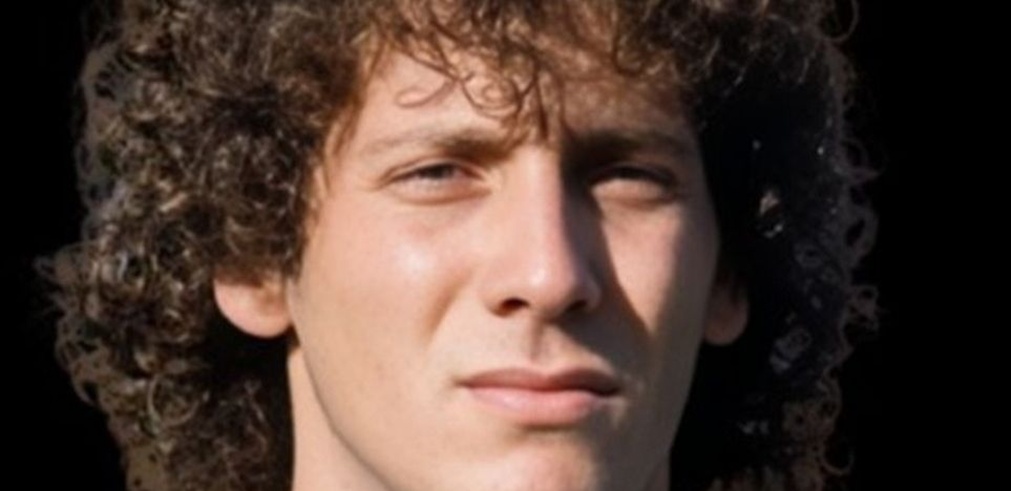
Pedro Antonio Troglio, born 28 July 1965, Buenos Aires, Argentina.
PART ONE
In 1983, at the age of only 18, Pedro Troglio pulled on the famous red-and-white shirt of River Plate — one of the two supreme powers of Buenos Aires football — and in doing so stepped into an institution whose ambitions were as vast and restless as the Argentine game itself, a club that demanded nothing less than excellence from every man who wore its colours. The young midfield talent would spend five full seasons at the Estadio Monumental, amassing 59 appearances and find the back of the net on three occasions, but those bare numbers communicate only a fraction of what those extraordinary years in the club’s history truly meant for someone still learning his trade at the highest level.
The mid-1980s at River Plate were not just successful — they were the kind of sustained, magnificent dominance that fans spend the rest of their lives talking about in hushed, reverent tones — and Troglio was right there in the middle of it all, a functioning part of a squad that swept through Argentine and South American football with an authority that left rivals genuinely bewildered and their own supporters breathless with joy. In the 1985-86 season, Los Millonarios claimed the Argentine Primera División title, and the momentum of that triumph carried the club forward with irresistible force into what followed.
In 1986, River Plate conquered the Copa Libertadores, South America’s most prestigious and fiercely contested club prize, and then — as if to leave absolutely no room for doubt about their standing in the world game — they defeated Steaua Bucharest in the Intercontinental Cup in Tokyo, a match that sealed their place among the truly great club sides of the era. To complete what was already a dazzling year, they also claimed the Copa Interamericana, meaning Troglio, still only in his early twenties, had accumulated a haul of honours that the overwhelming majority of professional footballers never come close to across an entire career.
As River moved into a period of transition and Troglio himself grew into a player hungry for new challenges and new horizons, the pull of European football became impossible to ignore, and in 1988 he packed his bags and flew to Italy, joining Hellas Verona — a club that had itself produced one of the most remarkable and unexpected title victories in Serie A history when they claimed the Italian championship in 1985. At Verona, Troglio made 32 appearances and scored once, settling into the particular rhythms of Italian football with the kind of methodical, unflappable determination that had always characterised his approach to the game.
Though his time in Verona lasted only a single season, it was more than enough to attract attention from clubs further up the peninsula, and in 1989 he moved to Lazio in Rome — a club operating in the considerable shadow of city rivals Roma, but possessed of its own fierce, passionate, and absolutely distinct identity that Troglio found himself drawn into almost from the first day of pre-season.
Over two seasons at Lazio he made 40 appearances and added one more goal to his Italian account, but it was his subsequent move to Ascoli in 1991 that would represent the longest and most productive chapter of his time in the country — 106 appearances spread across three campaigns, 13 goals, and the kind of consistent, reliable contribution that earns genuine respect from supporters who follow the game closely enough to appreciate the difference between a footballer who truly works and one who merely occupies space.
PART TWO
Even before the Ascoli years began, there had already occurred one moment in the summer of 1990 that embedded Pedro Troglio’s name permanently in the memory of anyone who watched that World Cup unfold on Italian soil, and it came not in club colours but in the sky-blue-and-white of the Argentine national team.
Between 1987 and 1990, Troglio had earned 21 caps for the Albiceleste but it was at Italia 90 that he produced his most enduring international contribution, scoring against the Soviet Union on 13 June 1990 at the Stadio Diego Armando Maradona in Naples as Argentina, the defending world champions under Carlos Bilardo, cruised to a 2-0 victory. Argentina would make their way all the way to the final before losing 1-0 to West Germany in Rome — a defeat that stung deeply but could not diminish the achievement of reaching the world’s greatest stage for the second consecutive tournament — and Troglio, as a genuine part of that squad, shared in both the extraordinary pride of the run and the sharp, lasting pain of how it ended.
In 1994, with his Italian chapter drawing toward its close, Troglio made a decision that surprised more than a few observers back in Argentina — he signed for Avispa Fukuoka in Japan, joining what was then known as the Japan Football League at a moment when that competition, still in its early and energetic years, was attracting experienced professionals from around the world who fancied one final productive spell somewhere they had never imagined finding themselves.
And productive is precisely what it proved to be — in two seasons with Fukuoka, Troglio made 56 appearances and scored 20 goals, a return that comfortably dwarfed anything he had managed in front of goal at any previous club, and in 1995 he collected yet another winner’s medal when Avispa Fukuoka claimed the Japan Football League title. Whether the dramatic change of scenery somehow liberated him offensively, or whether Japanese defences had simply not yet worked out the particular timing of his late runs from midfield, the numbers speak clearly enough, and those years stand as one of the most fascinating and unexpected detours in a career already packed with them.
Returning to Argentina in 1997, Troglio signed for Gimnasia y Esgrima de La Plata — the club from the university city south of Buenos Aires — and that relationship would end up defining him in ways that could scarcely have been anticipated when he first walked through their gates as a player. Over five seasons at the club he made 124 appearances, scored four goals, and in the 2001-02 season was part of a squad that achieved a runners-up finish in the Argentine Primera División — the best result in the club’s entire history and a source of enormous, heartfelt pride for a fanbase that had spent most of its existence looking enviously upward at the country’s larger, more decorated institutions.
In 2002, at the age of 37 and long past the point where most professional footballers have already quietly retired, Troglio dropped down to Villa Dálmine in the Fourth Division, playing alongside veterans like José Basualdo, Roberto Monserrat, Mario Pobersnik, and Raúl Cardoz — men who, like him, were simply not prepared to surrender the game regardless of what the calendar said. He played 31 times for Villa Dálmine and notched up four goals before finally stopping, having accumulated across two decades and four countries a total of 448 appearances and 46 hits.
PART THREE
The transition into management began in 2004, when Troglio took charge of Godoy Cruz de Mendoza in the Primera B Nacional, but it was the telephone call he received in March 2005 that truly shaped the next chapter — Gimnasia La Plata, the club he had served so loyally as a player, were in difficulty, morale was fragile, and they needed someone who understood what the institution meant from the inside and could steady the ship before relegation became a genuine reality.
He went back, kept them up, and then in the 2005 Apertura led them to a second-place finish that equalled the finest result the club had ever produced in that particular competition and generated something close to delirium among the supporters. Then, in June 2006, came the gesture that transcended ordinary footballing sentiment — Gimnasia retired his number 21 shirt, the first time any club in Argentine football had ever permanently honoured a player in that way, a moment that carried a weight of emotion entirely appropriate for the relationship that had built up between this man and this club over so many years.
The good times, however, did not hold indefinitely — a 7-0 humiliation in the local derby against Estudiantes de La Plata, alongside a string of other heavy defeats, made Troglio’s position as coach untenable and he resigned in April 2007, though most of the supporters’ anger was directed at club president Juan José Muñoz rather than at the man on the touchline, and Troglio departed with his reputation among the fanbase essentially and remarkably intact. Later in 2007, following Jorge Burruchaga’s exit from Independiente, Troglio was handed the reins of one of Argentine football’s most storied and trophy-laden institutions, but the appointment ended in March 2008 when inconsistent results led the board to replace him with Miguel Angel Santoro — a sharp reminder that prestige offers no shelter from the impatience of results-driven football.
He responded by crossing into Paraguay, taking charge of Cerro Porteño in Asunción, and in 2009 delivered them the Paraguayan Primera División title — demonstrating unmistakably that the setback at Independiente had not blunted him and that he still possessed the tactical intelligence and man-management capabilities required to build a winning side from scratch in an unfamiliar environment.
Further stints followed at Argentinos Juniors, from May 2010 through September 2011, before the most remarkable chapter of his managerial life began in 2019 when he agreed to travel to Honduras and take charge of CD Olimpia — the country’s most celebrated club, desperately hungry for success after an extended trophy drought stretching back to the 2015-16 Clausura. What followed was a period of sustained, genuinely historic dominance — the 2019-20 Clausura, the 2020 Apertura, the 2021 Clausura, the 2021 Apertura, and the 2022 Apertura — accompanied by the CONCACAF League title in 2022 and, after a brief return to Argentina with San Lorenzo, the 2023 Clausura back in Tegucigalpa before Troglio finally stepped away from Olimpia in 2024.
In 2025, he went on to manage Instituto before subsequently taking charge of Banfield — another chapter added to a life in football that has, from first to last, refused to run short of them.