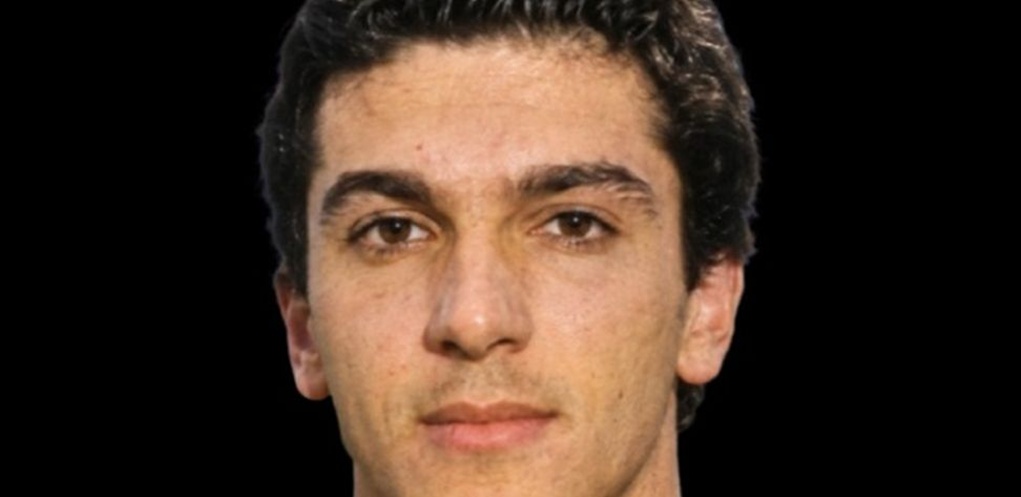
Marco Branca, born 6 January 1965, Grosseto, Italy.
PART ONE
Marco Branca started out playing for his local team Grosseto before he was signed by Cagliari. The Sardinians gave him his senior debut in the 1984–85 Serie B season, and over two campaigns in the rossoblù shirt he made 52 league appearances and scored four goals, modest numbers on paper but the sort of grounding that taught a young forward how to survive against the granite defenders of Italy’s second tier. Moreover, it was at Cagliari that Branca first learned the unglamorous truth of lower-division football in Italy: nobody hands you anything, and every yard of space has to be fought for on a pitch as often muddy as it is manicured.
In 1986 Udinese, the Friulian club forever caught between promotion dreams and relegation nightmares in that era, took a chance on him, and he repaid them with 18 Serie A appearances and two goals in the 1986–87 campaign, his first taste of the top flight. It was not a taste that lasted, though, because the following season he was shipped out on loan to Sampdoria, where in 1987–88 he made just nine Serie A appearances and scored a solitary goal. Even so, the loan was not wasted, since he found himself on the fringes of a Sampdoria side that lifted the Coppa Italia that season, a first winner’s medal for a player still feeling his way in the game. Having tasted a cup success without being one of its architects, Branca returned to Udinese for the 1988–90 seasons, and there his numbers finally began to tell a fuller story: 55 league matches straddling Serie B and Serie A, and 12 goals, the return of a forward learning to finish rather than merely participate.
By 1990 Sampdoria wanted him permanently, and this time the move would define the whole of his time in the game, because in the 1990–91 season, playing under the shrewd Yugoslav coach Vujadin Boskov, Branca made 20 Serie A appearances and scored five goals as Sampdoria won the club’s first and, to this day, only scudetto. He was not the headline act in that Sampdoria team; Gianluca Vialli and Roberto Mancini, the celebrated twin strikers of Genoa, took the acclaim, and it says something about the competition for places that someone contributing goals to a title-winning side could still be regarded as a squad player rather than a talisman. Nevertheless, that medal sat alongside the Coppa Italia winner’s medal from three years earlier, and by the age of 26 Branca had already collected two of Italian football’s biggest domestic prizes without ever being anything other than a useful, unspectacular member of the cast.
The summer of 1991 brought a move to Fiorentina, a transfer reported at around €3.7 million, a fee that reflected a player now firmly established as top-flight quality. In the 1991–92 season he made 23 appearances and scored five goals for the Viola, respectable figures for a mid-table finish, but stability was never quite Branca’s lot, and for the third time he found himself heading back to Udinese, first for the 1992–93 season and then for 1993–94. It was during these two years in Friuli that he produced the finest sustained scoring of his time in Italy: 29 appearances and eight goals in the first season, followed by 29 appearances and 14 goals in the second, a return good enough to place him among the division’s leading marksmen. Consequently, when Parma came looking for a proven finisher ahead of the 1994–95 season, Branca was exactly the sort of player they wanted, a forward who had shown he could score consistently against the best defences in the country rather than merely against relegation fodder.
Parma, under Nevio Scala, were on the rise, blending home-grown talent with shrewd signings, and Branca slotted into a forward line that would go on to make 1994–95 one of the club’s finest ever. In Serie A that season he played 25 matches and scored seven goals, and in the Coppa Italia he struck 6 times, enough to tie him for the competition’s top scorer alongside Juventus’s Fabrizio Ravanelli, though Parma would go on to lose the final 3–0 on aggregate to the same Juventus side. Yet where domestic cup disappointment stung, Europe brought compensation, because Parma went on to win the 1994–95 UEFA Cup, beating Juventus 2–1 on aggregate in the final and handing Branca the first genuinely major trophy of his time in the game, a European medal earned not as a bystander but as one of the goalscorers who had carried the club there.
Given that form, the move to Roma in the summer of 1995 looked, at the time, like the natural next step for a forward entering his prime. Instead it proved to be the briefest and least productive stop of his travels, just seven Serie A appearances and two goals in the 1995–96 season, hampered by injuries and squeezed out by the competition for places that had dogged him at almost every club. Rome, for all its size and ambition, simply did not work for Branca, and by November 1995 he had moved on loan to Inter Milan, a switch that would later be converted into a permanent deal and that would, almost overnight, turn a solid journeyman into one of the most feared finishers in the division.
PART TWO
At Inter, everything clicked. In that first, remarkable half-season Marco Branca scored 17 goals in just 24 matches, forming a devastating spearhead alongside Youri Djorkaeff and Ivan Zamorano, and suddenly, at the age of 31, Branca was playing the best football of his life. That form was enough to earn him a recall to the wider Italian set-up, albeit not to the senior side proper but to the Under-23 squad preparing for the 1996 Atlanta Olympics, where the rules of the time allowed three overage players to be included. Branca was one of the three chosen, alongside Massimo Crippa and Angelo Di Livio, and between 19 July and 4 August 1996 he gave Italy’s Olympic side a spell of finishing that the senior team, for all its riches, had never seen fit to call upon.
He played all three of Italy’s Group C matches. Against Mexico on 21 July he went the full 90 minutes without scoring as Italy lost 1-0. Against Ghana two days later he scored twice, a right-footed strike in the eighth minute and a penalty in the 44th, yet still finished on the losing side as Ghana’s late goal won the match 3–2. And in the final group game, against South Korea on 25 July, he scored both of Italy’s goals in a 2–1 win that arrived too late to rescue the side’s tournament, since Italy finished fourth in the group on three points and did not progress to the knockout rounds, ending 12th overall. His four goals nonetheless made him the second-highest scorer of the entire tournament, behind only a young Brazilian forward named Ronaldo, and they stand as the only appearances Branca ever made in an Italy shirt of any description.
That last point deserves dwelling on, because it is the strangest single fact about a player of Branca’s evident quality. He was eligible for national selection from 1984 onward, following his debut at Cagliari, and yet he went all the way through to his retirement in 2001 without earning a single senior cap. The explanation lies less in any deficiency of his own and more in the sheer weight of attacking talent Italy could call upon throughout the 1990s. Vialli, his old teammate from that Sampdoria title-winning side, captained the national team and had already featured prominently at the 1990 World Cup, while Salvatore Schillaci had emerged from nowhere to become the surprise top scorer of that same tournament with six goals, a fairytale run that made him an instant folk hero and effectively closed the door on rival forwards for years afterward.
Giuseppe Signori, a three-time Serie A top scorer across the decade, gathered 27 senior caps on the back of similarly prolific domestic form, while Pierluigi Casiraghi earned 22 caps and a place at the 1994 World Cup through a comparable body of goals. Against that backdrop, even Branca’s finest Inter form, 23 goals in 52 Serie A appearances across his main years at the San Siro, was not quite enough to force open a door that had already been bolted shut by richer, more fashionable names. His form did dip somewhat in the 1997–98 season, when persistent injury concerns limited him to just three league goals, and across his full stretch at Inter from 1995 to 1998 he made 70 appearances in all competitions and scored 25 goals, contributions that helped push the club to a Serie A runners-up finish in 1997–98 even as his own body began to betray him.
Seeking regular football rather than a place on the bench, Branca crossed the Channel in February 1998, joining Middlesbrough of the English First Division for a reported £1 million, and what followed was, for a few dizzying weeks, the most eye-catching form of his entire time in the game. He made an instant impact, scoring on his debut in the second leg of the League Cup semi-final against Liverpool on 18 February, netting inside four minutes to help Middlesbrough to a 2–1 win and send them through to the final on away goals.
Three days later he scored twice on his league debut against Sunderland, the second a sublimely curled effort that had Teesside purring, and before long he had added a hat-trick against Bury to a rapidly growing reputation. In total he scored nine goals in just 12 league appearances that season, a return that played a genuine part in Middlesbrough’s promotion back to the Premier League. But football, as it so often does, turned cruel just as quickly as it had turned kind, and a serious knee ligament injury sustained in April 1998 wrecked the rest of his time at the club, limiting him to a single Premier League appearance the following season before his contract was terminated.
The knee injury proved to be the beginning of the end. Branca dropped down to FC Luzern in the Swiss Super League for the 1999–2000 season, managing just 10 appearances and 2 goals as the damage to his ligaments continued to sap his mobility, a cruel diminishment for a man who had, barely two years earlier, been terrorising English defences. In 2000 he returned to Italy one last time, joining Serie C1 side Monza for the 2000–01 season, where he made 17 appearances and scored seven goals in what proved to be his final professional stretch. It was, in its own way, a fitting close: back in the lower reaches of Italian football where he had started, still finding the net even as his body wound down, before he announced his retirement at 36 upon completing that Monza season, citing the accumulated toll of injuries and a simple readiness to move on from playing the game. Across all of it, from Cagliari to Monza, Branca amassed 348 appearances and 102 goals, a record built almost entirely on the back of relentless movement between clubs rather than settled service at any single one of them.
PART THREE
By 2002 Branca had re-joined Inter, only this time he came through the door as a scout rather than a striker. That scouting role did not stay modest for long. In 2003 Branca was appointed technical director, a title that would, over time, evolve into the sort of sporting director responsibility that put him at the heart of every major transfer the club made, and over his twelve years in the post he was involved in more than a hundred player deals, an extraordinary volume of business for one man to oversee. Moreover, his rise through Inter’s hierarchy tracked the club’s own fortunes closely, since the early years of his tenure coincided with a period of rebuilding under Roberto Mancini, and it was under Mancini’s guidance that Branca’s negotiating work first began to bear serious fruit, helping deliver four consecutive Serie A titles across the 2005–06, 2006–07, 2007–08 and 2009–10 seasons, an unbroken run of domestic dominance built as much in his meeting rooms as on the training pitch.
Yet it was in the summer of 2009, working alongside a newly arrived José Mourinho, that Branca produced the transfer window that would define the whole of his time in the job. He brought in Lúcio from Bayern Munich, Diego Milito and Thiago Motta from Genoa, Wesley Sneijder from Real Madrid, and, in a swap deal that sent Zlatan Ibrahimović the other way, Samuel Eto’o from Barcelona. Those signings, assembled with the eye of a man who had spent fifteen years learning the game from the inside as a player, formed the spine of the Inter side that won the historic treble in 2010, claiming the Serie A title, the Coppa Italia and, most remarkably of all, the Champions League against Bayern Munich, the club’s first European crown of that stature since 1965. Milito alone repaid the investment with thirty goals in his debut campaign for the Nerazzurri, while Lúcio was widely regarded as the finest defender in Europe that season, and for a brief, glorious spell Branca’s reputation as a dealmaker stood almost unchallenged in Italian football.
Eventually, the very signings that had brought Branca his greatest triumph would, within a couple of seasons, become the source of growing criticism. Lúcio had been thirty-one when he arrived from Bayern Munich, and Milito twenty-nine upon leaving Genoa, and although both men were unquestionably in their prime when they signed, age caught up with them soon enough, and by the early 2010s Inter’s ageing spine was struggling to reproduce the level that had carried the club to the treble.
Nevertheless, Branca pressed on with his work, and in the years following Mourinho’s departure he turned his attention increasingly toward financial discipline as much as marquee signings, steering the club through UEFA’s newly introduced Financial Fair Play regulations by trimming the wage bill and recouping funds through sales; between the end of the 2009–10 season and the summer of 2012, Inter spent around €70 million on incoming players while recouping roughly €90 million from outgoing ones, a deliberate rebalancing act that reflected the tighter financial climate facing Italian clubs at the time. Branca was candid about the club’s caution in the market during this period, ruling out a move for Ronaldinho as little more than a newspaper story and confirming that any fresh business, including interest in Udinese’s Alexis Sánchez, a club with which he said his own relationship stretched back over two decades to his playing days there, would have to wait until later in the summer.
Even so, patience with Branca inside the club was wearing thin, and by 2013 a section of Inter’s support and its wider football commentary had begun to lay much of the blame for the team’s stagnation at his door, arguing that the quality of the squad rather than the coaching was the real obstacle to a return to the top of Italian football. Matters came to a head in January 2014, when a proposed swap deal involving Fredy Guarín and Mirko Vučinić, intended to take Guarín to Juventus in exchange for Vučinić moving the other way, collapsed in acrimonious fashion and became, by most accounts, the final straw for a club leadership already looking to modernise.
New majority owner Erick Thohir, who had taken control of Inter and was eager to install his own people ahead of the coming transfer window, moved swiftly, and on 8 February 2014 the club confirmed that Branca and Inter had reached an agreement to end their working relationship, with Piero Ausilio taking over the reins of the club’s technical area and reporting directly to managing director Marco Fassone. Inter’s official statement thanked Branca for his valuable contribution, first as a player and then as a director, while Branca in turn thanked the club for the opportunities it had given him and for what he called the “prestigious results achieved together,” bringing to a close a stretch of more than a decade during which he had gone from occasional scout to one of the most influential figures in the club’s boardroom.
What followed was, by Branca’s own standards, an unusually quiet spell. He took a year away from the game altogether, and by late 2014 he was said to be ready to return to football activities, though no high-profile coaching, management or administrative post materialised in the immediate aftermath, a silence that stood in sharp contrast to the near-constant transfer activity of the previous decade. It was not until 2019 that Branca resurfaced in a clearly defined role, taking on a key management position at World Football Strategies, a Malta-based investment fund built around scouting and developing young talents aged sixteen to nineteen across European clubs, with reported ambitions that included acquiring a lower-tier club outright and raising €20 million in funding to support the project.
Public detail on precisely how that venture ultimately fared remains thin, but Branca’s attentions soon turned in a fresh direction regardless, and he built a further chapter for himself as a football agent in Italy, representing high-profile players including Napoli’s Fabián Ruiz and RB Leipzig’s Dani Olmo, and engaging in negotiations with major clubs such as AC Milan on their behalf. Alongside the agency work, he became a familiar and outspoken voice in the Italian football media, offering commentary on transfer strategy in general and on his old club’s fortunes in particular, including its handling of the Financial Fair Play constraints that had shaped so much of his own final years in the job back in 2022, and its pursuit of the Serie A title again in 2024.