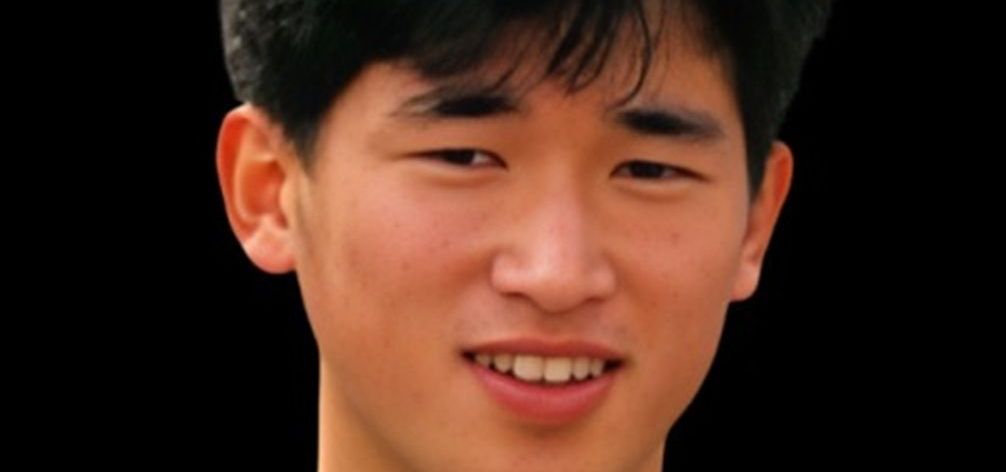
Kazuyoshi Miura, born 26 February, 1967, Shizuoka, Japan.
PART ONE
In 1982, at the age of fifteen, Kazuyoshi Miura walked away from Shizuoka Gakuen High School after less than a year and boarded a plane to Brazil alone, without a contract, without a guarantee of anything, armed with nothing more substantial than the conviction that this was the only way to become the kind of player he wanted to be. But Brazil in the early 1980s was not a welcoming destination for a Japanese teenager with no Portuguese and no professional standing, and the fact that he not only survived but thrived there says something fundamental about the stubbornness of will that would go on to define every chapter of his life in the game.
He signed with the youth squad of the São Paulo club Juventus, learned to play football the Brazilian way — on hard ground, in tight spaces, with the kind of technical and physical intensity that shapes either exceptional players or broken ones — and spent four years finding his feet before signing his first professional contract with Santos in 1986, the club where Pelé had played, a name synonymous with everything Brazilian football aspired to be. From Santos he moved on to Palmeiras and then Coritiba, gathering experience and improving with each club, and by the time he finally returned to Japan in 1990 he was eight years away from home and had become, in the fullest possible sense, a different player from the teenager who had stepped off the plane at Guarulhos Airport with wide eyes and very little else.
His return to Japan in 1990 coincided almost perfectly with the moment when Japanese football was preparing to transform itself, and Miura was positioned at the very centre of that transformation. He signed up with Yomiuri SC of the Japan Soccer League, a club that would shortly spin off from its parent company and reinvent itself as Verdy Kawasaki when the J1 League launched in 1993, and at Yomiuri he found teammates who matched his ambitions — notably Ruy Ramos, the Brazilian-born naturalised Japanese midfield playmaker whose technical quality had already made him a fan favourite, and Tsuyoshi Kitazawa, one of the most productive forwards in the domestic game. Together they formed the spine of a side that won four consecutive league titles: the last two JSL championships in 1991 and 1992, and then the first two J1 League titles in 1993 and 1994 after the professional era got under way.
Those four titles in four years established Verdy Kawasaki as the dominant force of the nascent J.League era, and Miura was the face of the whole enterprise, the player who most completely embodied what the new professional league was trying to be — exciting, ambitious, internationally minded, and unafraid to think big. When the J.League named its first ever Most Valuable Player in 1993, the award went to Miura, which surprised nobody who had watched him play that season, but which nonetheless marked a moment of genuine significance: here was Japanese football, newly professional and hungry for stars, crowning the man who had gone to Brazil at fifteen and come back better for it.
The next step was Europe, and Miura took it in the summer of 1994 when he signed for Genoa and entered Serie A as the first East Asian footballer ever to play in the Italian top flight. The significance of that milestone was not lost on anyone at the time, and it remains one of the most genuinely remarkable individual achievements in the history of Asian football — not just because Serie A in the mid-1990s was arguably the most technically demanding and tactically sophisticated league in the world, but because Miura had earned his place there on merit, through the accumulation of quality that had begun on dusty Brazilian pitches a decade earlier.
The frontman accumulated 21 appearances for Genoa across the 1994–95 campaign, which was not a bad return for a player arriving in an unfamiliar environment, and he scored once — in the Genoa derby against Sampdoria, which is as good a stage as Italian club football offers for a memorable goal.
And on 15 January 1995, he contributed a goal assist when Antonio Manicone registered the match winner against Padova, another moment of tangible contribution from a player who could easily have gone to Italy and been swallowed up by the strangeness of it all. But he was not swallowed up and returned to Verdy Kawasaki at the end of the season with his standing in world football considerably enhanced.
PART TWO
Back in Japan for the 1995 season, Miura continued at Verdy Kawasaki until the end of 1998, and it was during this period that his international contributions reached their most dramatic point. He had debuted for the Japan national team back on 26 September 1990 at the Asian Games, coming on against Bangladesh in a match that was modest in terms of opposition but significant as the starting point of an international story that would eventually run to 89 caps and 55 hits. In 1992, he was at the Asian Cup, scoring the winner in a 1–0 group stage victory over Iran — a goal that proved crucial as Japan went on to win the tournament and Miura was named its Most Valuable Player, an honour that reflected not just the goal but the authority he had shown throughout.
In 1993, during qualification for the 1994 World Cup, Miura played thirteen games and scored thirteen goals, a return that would have been the envy of strikers anywhere in the world and that made him the driving force of Japan’s campaign. Despite that, Japan missed out on qualification and Miura had to wait before he got another chance to take Japan to the game’s biggest stage. The wait turned out to be worth it. In 1997, during qualification for the 1998 World Cup in France, he scored fourteen times, leading the Samurai Blue all the way to their first ever World Cup appearance, a breakthrough moment for Asian football and a personal vindication for every hour Miura had spent perfecting his game in Brazil and Italy and on every training pitch in between.
And then came the decision that Japanese football supporters still talk about with a mixture of disbelief and outrage. Japan’s head coach Takeshi Okada, despite Miura’s fourteen goals in qualification and despite his status as the man who had done more than anyone to get Japan to France in the first place, left him out of the 1998 World Cup squad. The reasons were tactical — Okada felt Miura’s style didn’t fit the approach he wanted to use in France — but the effect on Miura and on the Japanese public was shattering. He had given everything to get Japan there, and he was not going. He did not play in the World Cup he had qualified for. He spent the summer of 1998 watching on television.
A lesser man might have quit at that point, and nobody would have blamed him. Miura did not quit. He made one more attempt at European football, joining forces with Croatia Zagreb in 1999 and then having a brief trial with AFC Bournemouth before returning to Japan and signing for Kyoto Purple Sanga and then Vissel Kobe, and throughout it all he kept scoring, kept training, kept maintaining the physical standards that had allowed him to compete at the highest level across two decades and two continents. By 2005, when he signed for Yokohama FC, he was 38 years old and most footballers of that age are working out their pension arrangements, but Miura was playing in the second tier of Japanese football with a club that had its eyes on promotion and needed someone with his experience and his goals.
Yokohama achieved that promotion two years later, rising to the J1 League, and in 2007 Miura was selected for the J.League All-Star Soccer for J-East, where he played exceptionally well — not adequately for a 40-year-old, not respectably for someone who’d been in the game since before half the spectators were born, but genuinely, conspicuously well in a way that made people stop and reassess what they thought they knew about age and footballers and the point at which the body finally tells the mind it’s over.
That point never seemed to come for Miura. In November 2015, at the age of 48, he signed a new one-year contract with Yokohama. In January 2017, he signed another, taking his professional story into his fifties, which is a sentence that sounds like a misprint but is not. And then, on 5 March 2017, came the moment that made the whole world sit up. Miura started in Yokohama’s 1–1 draw against V-Varen Nagasaki at the age of 50 years and seven days, and in doing so surpassed the record for the oldest player ever to feature in a professional match, a record that had been held since 1965 by Stanley Matthews — the great English winger, the wizard of the dribble, a man whose longevity had itself seemed extraordinary — by two days.
After fifty-two years, the record that Stanley Matthews had carried fell by a margin of 48 hours to a Japanese forward who had left home at fifteen and never really stopped moving since. And then, seven days later, Miura broke another Matthews record — this time for the oldest goalscorer in professional football — when he struck the only goal of a 1–0 win over Thespakusatsu Gunma. The word historic is used far too freely in football, but there is no other word that fits here. These were genuinely historic moments, achievements that transcended the sport, and the image of Miura performing his trademark hip-swivelling celebration after that goal — a celebration he had been doing since the 1990s, unchanged and undiminished — was shared around the world.
On 5 August 2020, he started in a J.League Cup match against Sagan Tosu at the age of 53 years, 5 months and 10 days, becoming the oldest player ever in Japan’s league cup competition and surpassing a record that had stood at 42 years and 10 months, a gap of more than a decade that tells you something about the scale of Miura’s physical and mental exceptionalism. On 23 September 2020, he went further still, starting in the J1 League match against Kawasaki Frontale and becoming the oldest player ever to take to the pitch in a top-flight professional match anywhere in the world, playing 57 minutes of a game at the highest level of club football in Japan at an age when his contemporaries were drawing their pensions.
PART THREE
In January 2021, Kazuyoshi Miura extended his contract for his 36th season and the numbers at this point had moved beyond statistics into something closer to mythology. Then, on 30 December the same year, Miura reached an agreement to join Suzuka Point Getters in the Japan Football League, the fourth tier of Japanese football, and when he made his debut for the Racers on 13 March 2022, at the age of 55, the Suzuka home ground drew 4,620 people — the highest attendance in the club´s history, smashing the previous record of 1,308 set in 2019. He was 55 years old and people were queuing up to watch him play fourth-tier football. Not out of pity, not out of nostalgia, but because Miura at 55 was still worth watching, still capable of contributing, still the most interesting footballer on whatever pitch he happened to be standing on.
Miura´s presence at Suzuka transformed the club’s commercial existence in a way that no signing in their history had come close to matching. The Point Getters appeared in nine of the ten best-attended JFL matches throughout the 2022 season, and on 9 October, a game between Suzuka and Criacao Shinjuku at the Japan National Stadium drew a crowd of 16,218 spectators — the highest-attended JFL match ever played — because people knew Miura was in the squad. Three weeks later, he found the back of the net from the penalty spot in the 85th minute of a 3–1 triumph against Tiamo Hirakata to become the oldest scorer in JFL history, and then scored again from open play on 12 November at the age of 55 years and 259 days, breaking two more records and ensuring that the autumn of 2022 contained more genuinely newsworthy football from a man than most international tournaments manage to generate from squads of players half his age. In the space of thirteen days he played three matches and scored two goals, something that you could not make up.
Then, in January 2023 came the most unexpected chapter yet. Portuguese Second-Division outfit União Desportiva Oliveirense — whose parent company, the Onodera Group, had by then acquired a 52.5 per cent majority stake in Yokohama FC, creating the connection that made the move possible — announced that Miura would join them on loan for the remainder of the season, making him by a considerable margin the oldest professional player ever to sign a contract in Portugal, surpassing a record previously set by a 47-year-old volleyball player. Oliveirense launched his presentation with a video done in the style of Japanese manga, which captured something perfectly about what Miura had become — not merely a footballer but a cultural figure, a character bigger than any single club or competition.
He passed his medical tests without difficulty, visited the Japanese Embassy in Lisbon where he presented a signed shirt to the staff, and on 22 April 2023 came on in the 90th minute of a Liga Portugal 2 match against Academico de Viseu at the age of 56, a detail so improbable that it reads like a sentence someone has made up and then decided is too implausible to publish. On 28 May, in the final league game of Oliveirense’s season, he played the last 20 minutes as a substitute in a 4–3 win over Leixões and was named man of the match. Man of the match. At 56. In Portugal’s Second Division.
In the summer of 2023, Miura´s loan was extended indefinitely. A year later in 2024, he returned on loan to Suzuka, now rebranded as Atletico Suzuka, and on 29 September, at 57 years and 216 days old, he broke the JFL appearance record again, becoming the oldest player ever to feature in the competition and extending a record that was already, by any reasonable measure, unbreakable. On 26 October he made his first start of the season in a 0–0 draw to Sony Sendai, playing 55 minutes. Then, on 30 December 2025, Fukushima United announced that Kazuyoshi Miura would join the club on 10 January 2026, at the age of 58 years.