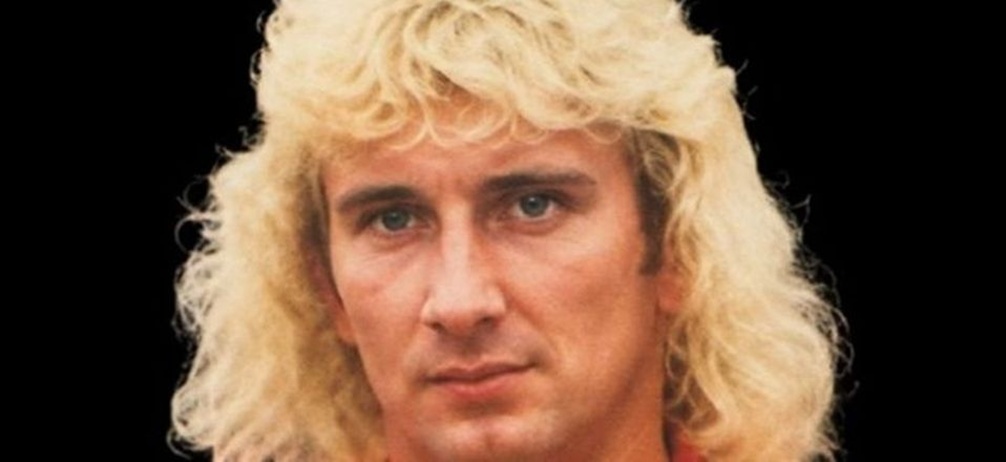
Dean Francis Mooney, born 24 July 1956, London, England.
PART ONE
Born on 24 July 1956, Dean Mooney came of age in an era when English football was still largely a working-class religion, when youngsters from all over the country dreamed of Wembley Stadium and the First Division and thought nothing of running through brick walls to get there. Mooney was a forward, built for the penalty area, sharp in the air and clever with his feet, and when good old Orient came calling in 1974, the young player walked through the door of Brisbane Road in East London with everything to prove.
The Orient that Mooney joined in 1974 was a club caught between ambition and circumstance, a Second Division outfit that had shed the flamboyant shadow of its long-serving eccentric chairman Harry Zussman but had held on to something arguably more useful — a manager who knew exactly what he was doing. George Petchey, a former midfielder who had done his time at London clubs West Ham United, Queens Park Rangers and Crystal Palace, was widely reported to be earning £15,000 a year, and given what he had built at Brisbane Road, that was money well spent. Around Mooney, the dressing room bristled with solid, competent professionals: Barrie Fairbrother bringing graft and intelligence on the flanks, Bobby Fisher solid and dependable in midfield, Ricky Heppolette offering craft and guile, Derek Possee a constant menace in forward areas, and Gerry Queen someone who could hurt any defence on his day.
The 1973-74 season had only just finished when Mooney arrived, and what a tantalising near-miss it had been — Orient had finished the campaign in fourth position in the Second Division, agonisingly close to promotion to Division One, only to be pipped at the very last by Carlisle United, a surprise package that nobody had seen coming. That near-miss gave the O´s a hunger that was almost palpable, and Mooney fed off it, working his way into the first-team squad and making his debut as a substitute in a 1-0 triumph over Bristol Rovers at Brisbane Road on 22 February 1975, with Phil Hoadley bagging the winning goal for the hosts.
He registered his first goal for Orient in a 2-1 win away to none other than Carlisle on 22 November the same year and hit the winner in a 2-1 home victory over Oxford United on 24 April 1976. The competition for a regular spot was intense, however, with plenty of players competing for places in attack and he would eventually be on his way out. All in all, he contributed three goals in 22 Division Two appearances during his two-year stay at the Leyton club. They were not staggering numbers, but they were honest ones, and they told the story of someone still learning his trade, still finding the language of professional football, still growing.
Mooney moved on to Walthamstow Avenue in 1976, stepping back a level into non-league football, but even then the hunger did not leave him, and when the chance came to go abroad, he took it without a second thought. In 1978, he made a decision that set him apart from most English footballers of his generation — he packed his bags and headed for Norway, signing with Haugar in the country’s Third Division and joining fellow Englishmen Dennis Burnett, who was managing the club, and Barry Salvage, who had made the same leap of faith. It was not glamour, and it was not the First Division, but it was football on his own terms, in a country that was still in the early stages of professionalising its domestic game, and Mooney threw himself into it completely.
Haugar had been founded in 1939, a club with modest roots but real local pride, and they carried with them the memory of a painful day back in 1961, when they had reached the Norwegian Football Cup final at the Ullevaal Stadium in Oslo, only to be demolished 7-0 by Fredrikstad in a defeat so comprehensive it must have scarred the club’s collective soul for years. That history gave the place a particular edge, a sense of unfinished business, and Mooney found himself at the centre of something building. He was the club’s top scorer in both seasons he was there, an immediate hit with the supporters, a focal point around whom Haugar’s attacking ambitions could crystallise, and in 1978 the club won promotion from the Third Division to the Second, carried in no small part by Mooney’s goals and the confidence he brought to the forward line. But 1979 would be the year that everything came together — and then fell apart, all in the space of one October afternoon.
PART TWO
On 21 October 1979, Dean Mooney walked out onto the Ullevaal Stadium pitch in Oslo for the Norwegian Football Cup final, and for one brief, glittering moment, he put his name into Haugar’s history in the best possible way. Facing Viking, a club of considerably greater pedigree and resources, Haugar needed someone to stand up and be counted, and Mooney did precisely that, powering home a trademark header to put his side 1-0 ahead in the 25th minute of the contest and send the Haugar supporters into raptures.
It did not last. After half-time, the match turned on two moments of fortune, a dubious penalty that had Haugar’s defenders furious and an own goal that broke the resistance of a side that had given everything, and Viking took the match and the trophy while Mooney and his teammates were left to carry the weight of what had been and what might have been. It was a cruel way for his Haugar chapter to end, but it was also fitting in a way — the story of Dean Mooney was always one of getting close, of being there when it mattered, of contributing something real, even when the final result did not go his way.
From Haugar, Mooney crossed into Sweden to join GAIS for the 1980 season, and he produced perhaps the most efficient football of his time in Scandinavia, playing 21 league matches and scoring seven goals for a club based in Gothenburg with a history stretching back to 1894. Seven goals in 21 appearances is a return any striker would be pleased with, and it demonstrated clearly that Mooney had matured as a player during his years abroad, that the experience of a Norwegian cup final and a successful promotion campaign had sharpened him in ways that polite Second Division football at Brisbane Road perhaps could not.
The Londoner eventually returned to English football in 1980, signing for AFC Bournemouth in the Third Division, and over 27 league appearances for the south coast club he registered 10 goals — a solid, workmanlike contribution that showed he could still do the job back home. AFC Bournemouth were a club on their own long upward curve in those years, and Mooney was part of a forward line that gave them genuine attacking options, even if the big moves and the big money that sometimes rewarded such performances never quite materialised. Following his stay at Dean Court, the nomadic pattern resumed with a kind of inevitability, as though staying in one place for too long was simply not in Mooney’s nature. He went back to Sweden to play for Vasalund, then spent time with Viken, then surfaced at Road Sea Southampton, one of the more unusual clubs in the non-league landscape of the early 1980s, before a brief three-game spell at Trowbridge Town provided a further staging post on a footballing road that kept taking unexpected turns.
In 1984, Mooney signed for Torquay United, a Fourth Division club whose sea-view ground and breezy Devonian setting had seen any number of honest footballers come and go over the years, and in 15 league appearances he hit two goals, adding his contribution to a club that was always fighting to establish itself at the lowest rung of the Football League ladder. It was not a prolonged stay — by 1985 he was back at Road Sea Southampton for a final season — but it completed a picture of a man who had given English professional football what he could, and taken from it what it offered, without ever demanding more than was his due.