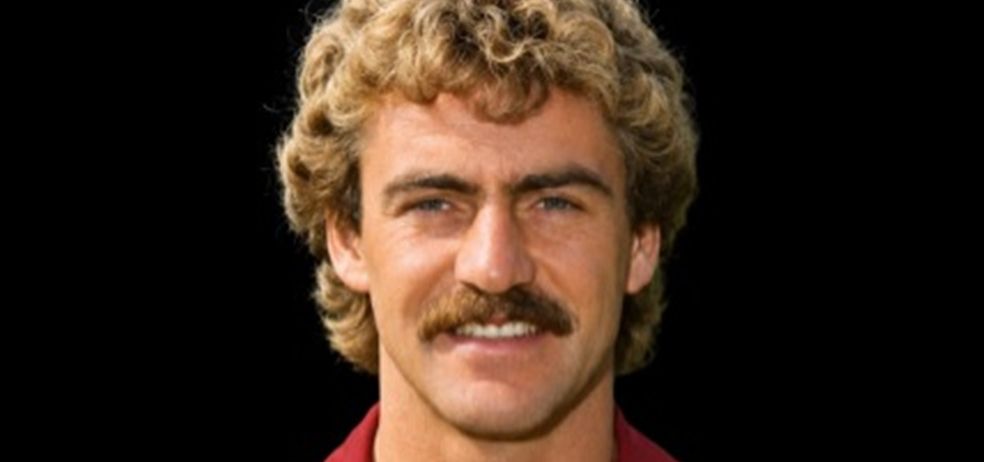
Walter Schachner, born 1 February 1957, Leoben, Austria.
PART ONE
Walter Schachner played youth football at St. Michael before the striker joined Alpine Donawitz in 1975. Schachner´s international debut came on 5 December 1976 in Valletta, where Austria edged out Malta 1–0 in a World Cup qualifier, and ten days later, on 15 December in Tel Aviv, he scored his first goal for his nation in a 3–1 friendly fixture win over Israel. Another goal followed against Greece in a 2–0 victory in Vienna on 9 March 1977, and he found the net again against Turkey at the Praterstadion on 17 April 1977, which turned out to be the only goal of a World Cup qualifier. Austria then hammered Malta 9–0 in Salzburg on 30 April in the same group, and the side was now heading for Argentina with a second-division forward in the squad.
The 1978 finals opened for Austria in Buenos Aires on 3 June against Spain, and Schachner scored the opening goal in a 2–1 win, which meant a Donawitz player had scored at a World Cup before he had ever kicked a ball in the Bundesliga. Austria then beat Sweden 1–0 on 7 June but lost 1–0 to Brazil on 11 June, and that was still enough to carry them into the second group stage. The second round began badly, with a 5–1 defeat by the Netherlands on 14 June and a 1–0 loss to Italy on 18 June, so by the time the holders West Germany arrived on 21 June the Austrians had nothing left to play for except their own pride.
What happened in Córdoba on 21 June 1978 is still talked about, and Schachner was among the starting eleven at the Estadio Chateau Carreras in front of a crowd of more than 38,000 spectators. Karl-Heinz Rummenigge put the Germans ahead in the 19th minute, Austria drew level in the 59th when Berti Vogts turned the ball into his own net, and Hans Krankl made it 2–1 in the 66th before Bernd Hölzenbein equalised two minutes later. Then, three minutes from the end, Krankl hit his second goal in the 87th minute and Austria had won the clash 3–2, which knocked the reigning champions out of the tournament.
Later that summer the big clubs finally moved, and although Rapid Wien wanted him as well, the sought-after player agreed to a one-year contract with Austria Wien on 14 July after having netted 65 goals in 72 appearances for Alpine Donawitz. Schachner´s three years in Vienna brought 101 league appearances and 72 goals, which is a scoring rate that most strikers would be glad to keep up for a single season, never mind three. Austrian records credit him with the Bundesliga top-scorer’s title in both 1978-79 and 1979-80, and with an Austrian Cup winner’s medal in 1980. He no longer had anything to prove at home, and so Italy came calling, which in those days was the only place an Austrian forward of his quality really wanted to go. By 1981 his name was known in every Italian Serie A boardroom, and his next move was only a matter of time.
In the summer of 1983, Schachner was signed by Cesena who had just been promoted to Serie A. The supporters were so taken with him that the ultras changed their name to the Weisschwarz Brigaden, which is German for the Black-and-white Brigades, as a way of honouring the Austrian. On 14 October 1981 he scored in a 3–1 home defeat by West Germany in a World Cup qualifier in Vienna, a game that did nothing for his reputation as a man who beat the Germans but did show he could find the net against a good side. He finished his first Italian season with 9 goals in 28 league games, which was a respectable first year in a division where defenders were far better organised than anything he had met in Austria. Cesena stayed up, the Brigades kept singing, and Schachner was soon packing his bags for Spain.
PART TWO
The 1982 World Cup brought the match that Austrians and Germans still mention in the same breath as Córdoba, the “Disgrace of Gijón” of 25 June 1982. West Germany scored early through Horst Hrubesch and, with both sides apparently happy to go through at the expense of Algeria, the game wound down into a slow trot that angered neutrals and spectators alike. Walter Schachner is remembered as the one Austrian who kept trying to play a proper game, and the story goes that he was prepared to run at the West Germans long after his teammates had decided to stop. Austria lost that match 1–0, lost again by the same score to France in Madrid on 29 June, and then drew 2–2 with Northern Ireland in Madrid on 1 July. And that was it.
Back at Cesena for 1982–83, Schachner found the back of the net on eight occasions in 30 league apperances, which brought his total for the club to 17 goals in 58 games, and in the summer of 1983 he moved to Torino for whom he amassed 18 goals in 85 outings during his three campaigns there. After spending a short time with Pisa in 1986, the marksman settled at Avellino where he went on to make 48 league appearances and score 13 goals before leaving in 1988. That finished a seven-year spell in Italy, which had brought him 191 Serie A matches and 48 goals, and by the age of 31 he returned home.
Back in his native Austria the experienced campaigner moved from one club to another, mostly in the lower divisions, beginning with Sturm Graz in 1988–90, where he registered three goals in 16 appearances. A season at FC Salzburg in 1990 was far better, with 18 goals in 20 games, and it suggested that he could still stay at the top of his game for a while longer. Relatively brief stints followed with Grazer, St. Pölten, Donaufeld, Alpine Donawitz Leoben and Tirol Innsbruck, none of them long enough to count as a settled home. He eventually retired from the national team in 1994 after having scored 23 goals in 64 appearances for the country of his birth. He kept on playing for another few years before he finally ended his footballing days with Eintracht Wels in 1998, aged 41.
After hanging up his boots, Schachner went into management in 1999 when he was appointed manager of Zeltweg, whom he navigated from Division Four to Division Three at the very first attempt. He then took the managerial reigns at FC Kärnten for the 2000–01 and 2001–02 seasons, and the results came quickly as the Sportzentrum Fischl side gained promotion from the First League to the Austrian Bundesliga and won the national cup in 2001 and added the Supercup in 2002.
At the beginning of the 2002–03 campaign he took over Austria Wien, the club that had given him his big break as a player, and the opening weeks were excellent, with the Violets seven points clear at the top of the table and a 5–2 win over the Ukrainian champions Shakhtar Donetsk in the UEFA Cup. Even so, Austria Wien replaced him with Christoph Daum in early October 2002, a decision which baffled most people. Schachner would later manage several clubs, including Grazer, 1860 Munich and Admira Wacker Mödling.