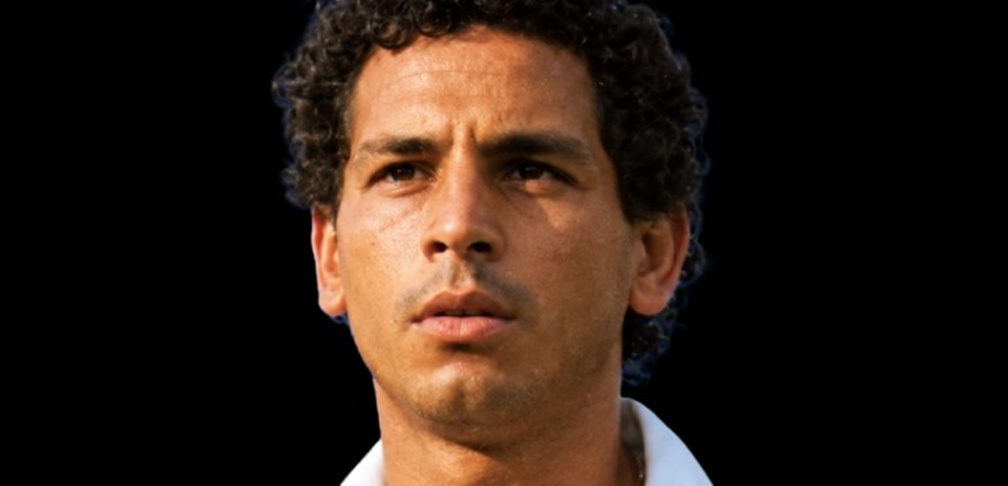
Giuseppe Galluzzo, born 30 May 1960, Siderno, Italy.
PART ONE
Giuseppe Galluzzo began with Juventus Siderno, playing football in the Calabrian town where he had been born on 30 May 1960, and when Lecco took him north in 1976, the move gave a sixteen-year-old striker his first chance to turn local promise into a place in the professional game. That opportunity demanded more than a change of shirt, because leaving Siderno for Lombardy meant leaving familiar surroundings while he was still a boy, and the early adjustment was sufficiently difficult for him to try to return to Calabria before Francesco Meregalli intervened and encouraged him to stay.
Once he settled, Lecco began to see why they had brought him such a distance, and during the 1976–77 league season he made one appearance and scored one goal, a modest beginning in terms of playing time but an encouraging one for a youngster learning to compete with grown men. The club also enjoyed success in the Coppa Italia Semiprofessionisti and the Anglo-Italian tournament, and on 29 June 1977 Galluzzo found the net in the memorable 3–0 final triumph over Bath City, with Zandegù supplying the other two goals. He was seventeen, he had helped Lecco win a match that mattered, and a move which had initially seemed too much for him was beginning to produce tangible rewards, with the first-team shirt becoming something he could earn rather than merely hope to wear.
With that first season behind him, Galluzzo developed into a regular scorer, registering thirteen goals in thirty-two league appearances during 1977–78 and another thirteen in thirty-three games in 1978–79, when Lecco were playing in the newly established Serie C1. Those figures gave him sixty-six league appearances and twenty-seven goals across his three seasons, and they explain the interest from Milan more clearly than any elaborate description of a promising youngster could do, because he had already supplied evidence that he could score repeatedly rather than depend on one conspicuous performance. His progress had been quick, but there was substance beneath it, with two full seasons of senior football following his first brief league involvement and a steady scoring return that survived the change in the divisional structure.
In the summer of 1979, Galluzzo was signed by AC MIlan who had just won their tenth Italian championship. His first official appearance for Milan came on 22 August 1979 against Monza in the Coppa Italia, although the venue was the Galleana stadium in Piacenza, where the fixture was staged because San Siro was unavailable, and he entered in the sixty-third minute in place of Gabriello Carotti. Stefano Chiodi then scored two penalties to secure a 2–0 victory, giving Galluzzo a winning introduction while underlining the presence of an established striker ahead of him.
European football arrived soon afterwards, with substitute appearances against Porto in the European Cup, first in the goalless away leg on 19 September and then in the 1–0 home defeat on 3 October, as Milan went out at the first hurdle. Such outings put him into competitions far removed from the ones he had been playing at Lecco, but brief appearances also made it difficult to establish the continuity that had supported his scoring there, and he remained a young addition to Massimo Giacomini’s side rather than a settled choice. By the autumn he had played for Milan in domestic cup football and in Europe, yet his first appearance in the Italian top division was still to come.
PART TWO
Giuseppe Galluzzo´s Serie A debut for Milan came on 20 January 1980, when he replaced Chiodi during Milan’s 1–0 defeat at Avellino, but the spring brought events which overwhelmed the ordinary questions of selection and form as the Totonero betting scandal engulfed Italian football. Milan eventually received a punishment of relegation to Serie B, despite finishing third on the field, and the club which had welcomed him as national champions faced a season outside the top division. Amid that upheaval, Galluzzo was selected to start away to Catanzaro on 27 April, and in the twelfth minute he scored his first Serie A goal, opening the scoring in the region where he had learned his football. Roberto Antonelli added a second before a Giuliano Groppi own goal completed Milan’s 3–0 win, and Galluzzo had made a direct contribution at a time when his club’s name was appearing in the news for reasons far removed from the quality of its football.
That performance was followed by another start in the 3–1 home victory over Pescara on 4 May, when Aldo Maldera scored twice and Walter De Vecchi supplied Milan’s third goal, before Galluzzo found the net again away to Lazio on 11 May. His ninth-minute opener at the Olympic Stadium was followed by a late goal from Carotti in a 2–0 win, and it brought his first Serie A season to a close with two goals from four appearances, a small sample of matches but a return which gave him reason to seek further opportunities.
When Milan began their Serie B programme with a 1–0 home victory against Bari on 14 September 1980, Galluzzo was involved from the start, but the campaign did not develop into the extended run in the side that his late goals in the previous campaign might have suggested. He made nine league appearances without finding the back of the net as Milan won promotion, and his final official outing for the club came in the 2–2 draw at Rimini on 7 June 1981, leaving him with twenty appearances and two goals across all senior competitions. The summer brought a loan to Monza, and the 1981–82 campaign gave him the sustained involvement that had been missing, with thirty-one league games producing nineteen goals and the scoring title in Serie C1’s northern group as Monza earned promotion to Serie B.
Although he returned to Milan after the loan, his next competitive spell was with SPAL, whom he joined in October 1982, and the 1982–83 season yielded ten league goals in twenty-nine appearances in Serie C1 before Bari signed him in 1983. The move south put him into another successful side, and in his first season he scored eleven times in twenty-four league matches as Bari won the southern group of Serie C1 and returned to Serie B. He then contributed four goals in another twenty-four appearances during 1984–85, when Bari achieved a second successive promotion and reached Serie A, so his two seasons there produced fifteen goals in forty-eight league games and involvement in a remarkable climb through two divisions.
Milan had provided his own top-flight appearances, Monza had given him a prolific promotion season, and Bari now offered another example of his usefulness within a team moving upwards, with his contribution remaining part of the record even though he would not accompany them into Serie A. By the summer of 1985, the young striker who had struggled to settle at Lecco had become an experienced professional with goals and promotions behind him, and his next move took him back north to Cremonese.
PART THREE
At Cremonese in 1985–86 Giuseppe Galluzzo scored twice in twenty Serie B appearances, a reduced return after the more productive spells at Monza, SPAL and Bari, and he moved to Ancona for 1986–87, where seventeen league outings in Serie C1 also brought two goals. Spezia followed in 1987–88, with three goals in twenty-eight matches, before he joined Fidelis Andria in 1988 and supplied four goals in twenty-two Serie C2 appearances during a season which ended with another promotion, this time into Serie C1. These were shorter stays, and the scoring totals show that clubs were no longer receiving the volume of goals he had delivered earlier, but the figures alone do not establish why those returns changed, nor do they justify writing him off as a player simply running down his remaining years.
Galluzzo was still in his twenties, still finding professional employment, and at Andria he was again part of a squad which improved its position in the league structure, adding another promotion to a playing record already shaped by several successful teams. The following move brought him closer to his beginnings, since in 1989 he joined forces with Kroton and returned to Calabrian club football after more than a decade spent playing elsewhere in Italy.
Back in Calabria, Galluzzo scored six league goals in each of his two seasons with Kroton, making twenty-eight appearances in 1989–90 and twenty-five in 1990–91, and those twelve goals in fifty-three games represented an improvement on the individual totals from his preceding three clubs. He then joined Centese for 1991–92, making nineteen Serie C2 appearances without scoring, which closed the professional league record covered by those statistics at 346 appearances and ninety-six goals. His subsequent football work took him into coaching, including Reggina’s youth setup in 1998–99 and senior posts with Catanzaro in 2000, Gela in 2000–01 and Vigor Lamezia in 2001–02, before two seasons at Matera from 2002 to 2004.
A return to Vigor Lamezia in 2004–05 was followed by spells with Sapri and Rossanese, and he later managed Siderno and Castrovillari, keeping much of his work within the southern football he knew from his earliest playing days. The change of role meant judging and preparing other players rather than depending upon his own finishing, and his experience covered enough different clubs and divisions to give that work a broad practical foundation, with youth football as well as senior management becoming part of his continuing employment in the game.
His coaching work also extended beyond those early managerial appointments, and in 2012 he became Massimo Drago’s assistant at Crotone, serving in a Serie B staff before following Drago to Cesena in 2015 and joining him again at Reggina in February 2019. That later partnership added a substantial period of professional coaching to the playing record, showing that Galluzzo’s involvement continued well beyond his last season at Centese and beyond the small-club appointments which first established him as a manager. In the assistant’s role he worked within another coach’s staff, a different responsibility from leading a side himself but still one requiring knowledge of players, preparation and the daily demands of senior football, and his later work also included coaching Crotone’s Primavera team.