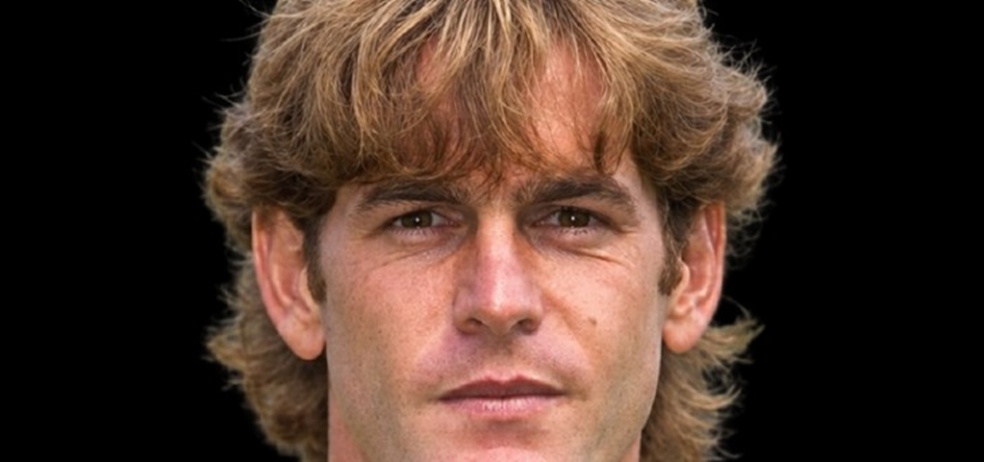
Roberto Mussi, 25 August 1963, Massa, Italy.
PART ONE
Roberto Mussi made his senior debut for Massese in 1981 and over the following three seasons he grew from a promising defensive prospect into a player trusted with real responsibility, helping his local club to a promotion into Serie C2 by the time his spell at the Stadio Gianpiero Vitali drew to its close in 1984. It was unglamorous work in an unglamorous corner of Italian football, the fourth tier of a pyramid that stretched, far above him, toward the grandest stages in the European game, but it was there, among the marble-town crowds, that the foundations of a defender both dynamic and dependable were properly laid.
Parma came calling in 1984, and although the club was then a modest Serie C1 outfit rather than the continental force it would soon become, the move carried an importance that only became clear with hindsight, for it placed Mussi directly under the guidance of a young and largely unproven manager by the name of Arrigo Sacchi. Sacchi had not yet built the reputation that would later make him one of the most influential coaches in the sport’s history, but even then he possessed a clear vision of positional discipline and a demanding, detail-obsessed way of working, and Mussi absorbed it eagerly, adapting his game to the coach’s exacting requirements for a full-back capable of contributing in both directions. The partnership paid off handsomely. Parma won the Serie C1 title in 1985–86, securing promotion into Serie B, and Mussi’s part in that achievement did not go unnoticed by the man who had engineered it, because when Sacchi left Parma for altogether grander surroundings, he did not forget the young defender who had served him so faithfully in the lower divisions.
That grander surrounding was AC Milan, and in 1987 Sacchi returned for his former full-back, paying to bring Mussi into a Milan side that was, by any measure, one of the most formidable ever assembled on Italian soil. Sacchi’s Milan of the late 1980s built its reputation on a rigorous, zonal style of pressing football that demanded total commitment from every outfield player, full-backs included, and Mussi found himself training and competing alongside Franco Baresi, Paolo Maldini, and the celebrated Dutch trio of Frank Rijkaard, Marco van Basten, and Ruud Gullit, a company of players that would have intimidated lesser characters into anonymity.
He did not disappear into the background, however, but carved out a role within the squad across two seasons at San Siro, contributing to a Serie A title in 1987–88, the club’s first championship since the Totonero scandal had rocked Italian football, and adding a Supercoppa Italiana later that same year. The following season brought the crowning achievement of his time at Milan, as Sacchi’s side swept to the European Cup in 1988–89, the forerunner of today’s Champions League, a competition Milan won with a swagger that announced them, unmistakably, as the dominant force in the European game. For a defender who had begun his path among the marble quarries of Massa only a handful of years earlier, it represented a remarkable elevation, though Mussi’s appearances at Milan remained, by the standards of the club’s biggest stars, relatively limited, thirty league outings across his two seasons there, a reflection of the sheer strength in depth that Sacchi had assembled rather than any shortcoming on the player’s own part.
It was in 1989, with that European Cup medal safely won, that Mussi chose to move on again, this time to Torino, then plying their trade in Serie B and hungry for the kind of experienced, tactically disciplined defender who could help drive them back toward the top flight. He proved precisely that, helping Torino to the Serie B title in the 1989–90 season and, with it, promotion into Serie A, and what followed at the Stadio Comunale was arguably the richest and most consistent spell of his entire time in the professional game. Torino qualified for the UEFA Cup by finishing fifth in Serie A, and in 1991 Mussi added the Mitropa Cup to his growing collection of honours, a competition with genuine historical prestige in Central European football even if its lustre had faded somewhat by the early 1990s.
The following campaign, 1991–92, produced the finest league form of his time with the club, Torino finishing third in Serie A and, in parallel, driving all the way to the final of the UEFA Cup itself, only to be denied by Ajax on aggregate in a final that remains one of the most fondly remembered European nights in the club’s history. There was still more to come. In the 1992–93 season Torino won the Coppa Italia, a domestic cup triumph that gave Mussi a second major honour with the granata, though the club’s push for further silverware fell just short when they missed out on the Supercoppa Italiana that followed.
By the time that Coppa Italia had been secured, Mussi was approaching thirty and had already accumulated the kind of medal collection that most defenders spend an entire lifetime chasing without success, yet the story of his football was far from finished, for a return to Parma awaited, and with it an even greater international recognition still to come. It is to that second, richer spell at Parma, and to the extraordinary role Mussi played on the game’s largest stage in the United States in the summer of 1994, that the second half of this account must now turn, for a defender who set up one of the most famous goals in Italy’s World Cup history, and who lined up in a World Cup final itself, deserves every inch of the space still to be filled.
PART TWO
Roberto Mussi returned to Parma in 1994, and the club he rejoined bore little resemblance to the Serie C1 outfit he had first joined a decade earlier, for under the presidency of the Tanzi family and a succession of ambitious coaches, Parma had established themselves as one of the most consistently dangerous sides in Italian football, capable of competing with the traditional giants both domestically and across Europe. It was, in every sense, the ideal stage for the second act of Mussi’s professional football, and he wasted little time in making himself indispensable to a side that combined defensive solidity with genuine attacking flair.
His second spell in the Emilian city brought him a haul of honours that even eclipsed his earlier achievements at Milan and Torino, chief among them two UEFA Cup triumphs, the first arriving in 1994–95 and the second following in 1998–99, bookending a five-year stretch during which Parma established themselves as one of the most feared travelling sides in European competition. Domestically, Parma reached the Coppa Italia final in 1995, narrowly missing out on that particular trophy, but they returned to lift it in 1999, giving Mussi a Coppa Italia winner’s medal to sit alongside the one he had already won with Torino some years before.
The league form during that second Parma period was similarly impressive, and rarely dipped below the standard expected of a club with genuine European ambition. Parma finished third in Serie A in 1994–95, an outstanding platform from which to build, and two seasons later, in 1996–97, they went one better still, finishing runners-up in the league behind Juventus in a campaign that many Parma supporters still regard as the closest their club ever came to landing the Scudetto itself. By 1998–99, the season that also brought the second UEFA Cup and the Coppa Italia double, Parma finished fourth in Serie A, a position that nonetheless secured continued European involvement and rounded off an extraordinary five-year stretch in which silverware of one description or another arrived almost every season.
It was, taken as a whole, the most decorated period of Mussi’s football, and it brought his overall contribution in Italy’s top flight to 250 Serie A appearances across a professional football that had carried him from Massa to Milan, from Turin back to Parma, gathering trophies at almost every stop along the way. He retired from playing in 1999, bringing the curtain down on a professional football that had begun in the fourth tier of the Italian pyramid and finished among the champions of Europe, though it is worth noting, for completeness, that he made one further, brief, and ultimately uneventful appearance in football’s lower reaches during the 2010–11 season, turning out again for Massese, the club where it had all begun, without managing to add a single competitive appearance to his record during that nostalgic postscript.
Running alongside those club honours, and arguably eclipsing them in the memory of ordinary Italian football supporters, was the international football that Mussi enjoyed between 1993 and 1996, all of it under the management of the very man who had first spotted his talent at Parma and Milan, Arrigo Sacchi, by then in charge of the Azzurri themselves. Mussi won eleven caps for Italy across those three years, a modest tally in isolation but one weighted heavily with significance, because it was Sacchi’s decision to place his trust in the defender for the 1994 FIFA World Cup in the United States, a tournament that would ultimately deliver both the finest and the most painful afternoon of Mussi’s entire football.
Mussi featured three times across that campaign, but it is the second round tie against Nigeria, played in Boston on 5 July 1994, for which he is still remembered above all else, for with Italy trailing and staring at elimination deep into the second period, it was Mussi’s ball forward that set up Roberto Baggio for a last-minute equaliser that remains one of the most celebrated goals in the country’s World Cup history. Baggio, revived by that intervention, went on to win and convert a penalty-kick in extra time to complete the turnaround, sending Italy through to the quarter-finals and, in doing so, elevating a piece of quiet, unheralded full-back play into a moment of genuine national legend.
Italy continued their run through that tournament all the way to the final itself, where they met Brazil in Pasadena on 17 July, and Mussi took his place in the side for the biggest match of his entire football, only for misfortune to intervene: he picked up an injury during the encounter and had to be replaced by Luigi Apolloni, watching from the sidelines as the final finished goalless and Brazil eventually prevailed on penalties, denying Italy, and denying Mussi personally, the one honour that had eluded him throughout an otherwise glittering list of achievements. He returned to the national side two years later for UEFA Euro 1996 in England, making three further appearances as Sacchi’s Italy exited at the group stage, a disappointing coda to an international football that had, at its peak in Boston two summers earlier, produced one of the most replayed passages of play in the country’s modern football history.