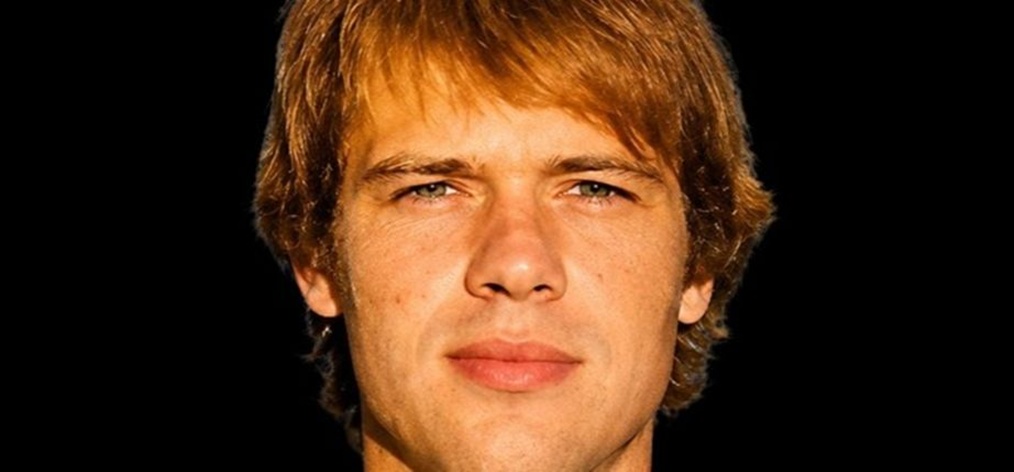
Soren Skov, born 21 February, 1954, Nyborg, Denmark.
PART ONE
Soren Skov´s earliest steps in football were taken with the clubs closest to home. Nyborg gave him his first taste of organised football, the kind of grassroots experience that shapes a young player’s understanding of the game. From Nyborg, the logical next step was Odense, the biggest club on the island and one of the most respected names in Danish football. Playing for Odense sharpened his game considerably, raising the level of competition around him and beginning the process of turning a talented youngster into a professional.
It was his performances in Danish football that earned Skov his first international recognition, and in June 1975, he made his debut for the Denmark under-21 national team. That call-up was more than a personal achievement — it was a statement that the football world was beginning to take notice of the young man from Nyborg. He went on to play four games for the under-21 side between June and October of that year, scoring one goal and demonstrating the kind of finishing ability that would come to define his professional life. Furthermore, those four appearances showed a level of composure and technical quality that pointed clearly towards a future beyond the borders of the Kingdom of Denmark.
In 1975, Skov made the bold decision to leave Denmark and move abroad, joining St. Pauli in the 2. Bundesliga Nord, the second tier of German football. It was, by any measure, a significant step. The 2. Bundesliga was competitive, physical, and demanding in ways that Danish football of that era simply was not, and moving to Hamburg — a great port city with a strong working-class identity and a football culture to match — would have been both exciting and challenging for a young Dane still only in his early twenties.
He made his debut for St. Pauli in December 1975, and the manner in which he introduced himself to German football was anything but tentative. Two goals in his first three games told the club immediately that they had signed someone who could do the most important thing a forward is asked to do: put the ball in the net. From that point on, Skov became a consistent presence in the St. Pauli side, missing only two games for the remainder of the 1975–76 2. Bundesliga season and finishing with a total of four goals in nineteen appearances as the club ended the campaign in fourteenth place. It was a solid, if unspectacular, first full season — enough to prove himself, enough to establish that he belonged, but not yet enough to hint at what was to come.
The 1976–77 season was a different story altogether. Skov registered seven goals in 34 outings, a return that reflected both his development as a player and his growing comfort with the demands of German football. But the goals were only part of the story, because that season St. Pauli won the 2. Bundesliga Nord title and earned themselves promotion to the top-flight Bundesliga championship. For a club that had spent years in the shadow of their city rivals and national giants, it was a tremendous achievement, and Skov had been a meaningful contributor to the effort. The title, though, as it so often happens in football, marked the end of one chapter rather than the beginning of another.
Despite playing his part in earning St. Pauli their place in the Bundesliga, Skov did not follow the Neighbourhood Kickers into the top flight. Instead, he moved to Belgium to join Cercle Brugge in the First Division, a decision that, on the surface, might have looked like a sideways step but which would ultimately define the most productive and celebrated period of his footballing life.
PART TWO
Skov´s first season at Cercle, however, did not go to plan. The Dane scored three goals in 29 league appearances — respectable enough numbers for a first season at a new club in a new country — but Cercle Brugge finished seventeenth of eighteen teams and were relegated to the Belgian Second Division. For many players, relegation is the catalyst for departure, the moment where ambition and comfort part ways and you go looking for a club operating at the level you believe you deserve. But Skov did not leave. He stayed, and that decision says something important about the kind of man he was — not a mercenary, not someone who only wanted to be associated with success, but a footballer willing to dig in, fight, and help rebuild.
And rebuild they did. In the 1978–79 season, Cercle Brugge won the Belgian Second Division and earned immediate promotion back to the First Division. Skov was part of a squad that had responded to adversity with resolve and professionalism, and the experience of fighting through a difficult season in the lower division almost certainly made the entire group stronger. Back in the First Division, Skov hit his stride in a way that suggested all that character-building had paid dividends on the pitch. In the two seasons that followed their promotion, he scored nineteen goals in 62 league games, numbers that established him firmly as one of the club’s most important attacking players and one of the more reliable forwards in Belgian football.
But even those numbers were merely a prelude to the season that would represent the peak of his club career. In the 1981–82 First Division season, he hit 23 goals in 33 league games. That is a striking rate of return by any standard, in any era, in any league, and in the Belgian First Division of the early 1980s — a competition that was no pushover, containing clubs of genuine quality and defenders of real experience — it was the kind of form that simply could not be ignored. He had gone from a youngster playing for Nyborg to one of the most prolific forwards in Belgian top-flight football, and the journey had taken him through relegation, promotion, hard winters in Germany, and the accumulated wisdom of nearly a decade of professional competition.
It was that extraordinary 1981–82 season that finally brought Skov to the full attention of Danish national team coach Sepp Piontek, the West German who had taken charge of the Danish national side in 1979 and was slowly, methodically building the team that would become one of the most exciting sides in European football during the 1980s. Piontek had an eye for players operating in the top European leagues, men who were tested and battle-hardened, and Skov’s 23-goal campaign for Cercle could hardly have escaped his notice.
On 5 May 1982, Skov pulled on the red and white of Denmark for the first time at senior level, making his full international debut in an evenly-contested 1–1 draw against old rivals Sweden. It was, by its nature, a significant milestone — the culmination of years of work, sacrifice, and persistence — and Skov followed it with two further appearances for the national side later that same month. Three caps in total, all in May 1982, all against the backdrop of a campaign in which he had been among the best forwards in Belgium. It is true that three caps does not amount to a long international chapter, and it is equally true that the Danish squad of that period was beginning to fill with exceptional talent — men of the likes of Preben Elkjaer, Michael Laudrup, and Morten Olsen — which made breaking into the side and staying there a genuine challenge for any player. Nevertheless, those three appearances for the country of his birth represent something real and earned, the recognition of a professional who had built his reputation through sustained excellence far from home.
In the summer of 1982, riding the momentum of his finest domestic season, the attacker made his most ambitious move yet, signing for Avellino in the Serie A — Italy’s top flight, and at that time, arguably the best league in the world. Avellino were a modest club from the Campania region in southern Italy, not a giant of Italian football by any stretch, but a Serie A club nonetheless, and simply being on that stage represented a remarkable achievement for someone from the small town of Nyborg.
The 1982–83 Serie A season ended with Avellino finishing ninth, a mid-table position that suggested a club of limited resources punching above their weight and surviving with some comfort. Skov’s personal contribution to that finish is not exhaustively documented, but the fact that he was part of a Serie A squad competing in one of the most tactically sophisticated football environments in the world speaks to his ability and adaptability. Italian football demanded intelligence as much as instinct, defensive organisation from the entire team, and a forward who could create and convert chances in tight spaces — and Skov had demonstrated across his time at Cercle that he possessed all of those qualities.
After his time in Italy, Skov returned to Germany, this time joining Hertha Berlin in the 2. Bundesliga. It was, in a sense, a return to familiar territory — German football, the second tier, the kind of environment in which he had first proved himself nearly a decade earlier at St. Pauli. His two seasons in Berlin brought seven goals in 48 games, numbers that spoke of a player giving everything he had but perhaps beginning to feel the natural slowing that comes with age and accumulated mileage. Still, those 48 appearances for Hertha represent a level of commitment and professionalism that is worth noting, a refusal to simply wind down.
Soren Skov finished his professional playing days in Switzerland, representing first Winterthur and then St. Gallen. Switzerland offered a different kind of football — less physically demanding than Germany, less tactically intense than Italy, perhaps a little closer to the pace of the game as it had been when he was a youth starting out in Nyborg. It was a fitting way to close things out: calmly, quietly, on his own terms, far from home but in a country that valued the game and treated its players well.