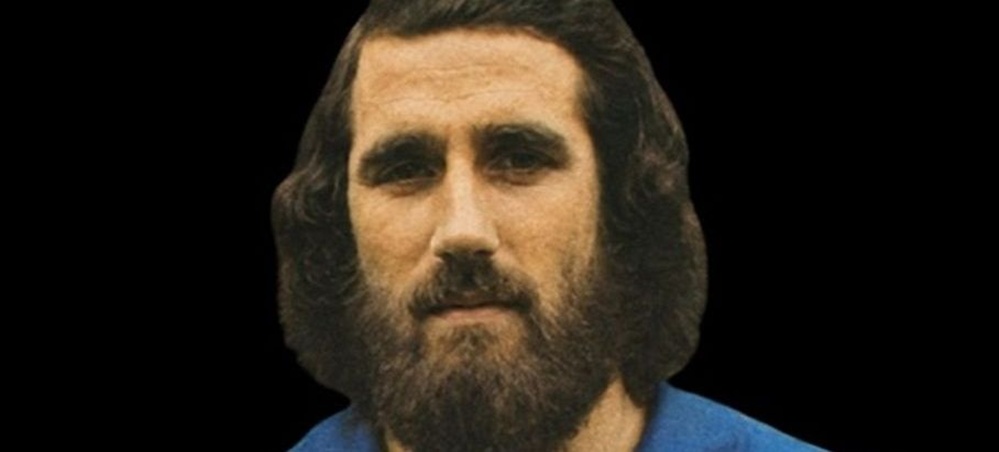
Alan Wilks, born 5 October, 1946, Slough, England.
PART ONE
Like countless talented youngsters growing up during the 1950s and early 1960s, Alan Wilks spent his formative years dreaming of becoming a professional footballer, and those ambitions took a significant step forward when Chelsea recognised his potential and brought him into their ranks, offering him the opportunity to develop within one of the country’s most ambitious clubs. At the time Chelsea were building an exciting young side under Tommy Docherty and possessed a wealth of attacking talent, yet Wilks impressed sufficiently within the youth structure to earn a professional contract in 1964 when he was still only seventeen years old, a milestone that represented both a reward for years of dedication and the beginning of an entirely new challenge.
Signing professional forms at Stamford Bridge was one thing and establishing oneself in the first team was quite another, however, because Chelsea’s forward line contained players who would become household names throughout English football, and among them were Bobby Tambling and Peter Osgood, men whose quality ensured that opportunities for aspiring young attackers were exceptionally difficult to obtain. Consequently, while Wilks continued his football education with the reserves and youth sides and worked tirelessly to improve every aspect of his game, the breakthrough he desperately sought remained frustratingly out of reach, and throughout the 1964-65 season he was unable to force his way into the senior side despite displaying promise whenever called upon below first-team level.
Nonetheless, the experience gained at Chelsea should not be underestimated because training every day alongside top-class professionals provided a valuable apprenticeship, and although he never made a first-team appearance for the club, he learned the standards required to survive in professional football and witnessed first-hand the commitment necessary to compete at the highest level. Yet football is often a matter of timing as much as talent, and with established stars blocking his path, Wilks eventually recognised that his future lay elsewhere, leading to a move that would provide him with the opportunity he had been seeking.
In May 1965, still only eighteen years of age, Wilks left the Blues on a free transfer and signed for neighbouring Queens Park Rangers, a club whose fortunes were beginning to rise and whose supporters were increasingly optimistic about what the future might hold. Although Rangers were then operating in the Third Division, there was a growing sense that something special was developing at Shepherd´s Bush, and for Wilks the move represented a chance to play meaningful senior football rather than spending another season waiting patiently in reserve-team matches. Even so, his arrival did not instantly transform his circumstances because competition for places remained fierce, and once again he found himself needing to prove his worth while waiting for an opportunity to present itself.
The young forward refused to become discouraged, though, and continued working diligently behind the scenes, understanding that professional football often rewards persistence as much as natural ability. That patience was finally rewarded on 27 December 1966 when he made his Football League debut in a 2-2 draw to Brighton & Hove Albion at Goldstone Ground, a day that marked the fulfilment of a dream he had carried since childhood and one that justified the years of hard work that had preceded it. While the match itself ended all square, the occasion represented a personal triumph for Wilks, who had successfully navigated the difficult transition from promising youngster to professional footballer.
His emergence coincided with one of the most exciting periods in Queens Park Rangers’ history because the 1966-67 season would ultimately bring tremendous success to the club, who surged towards the Third Division title and secured promotion in impressive fashion. Although Wilks was not among the headline names of that side, he contributed valuable support and depth to a squad that needed every available player during a long and demanding campaign, and being part of such an environment allowed him to experience first-hand the winning mentality that often separates successful teams from unsuccessful ones. Furthermore, the promotion campaign generated enormous enthusiasm among supporters of the club and established foundations upon which even greater achievements would soon be built.
As Rangers continued their upward trajectory, Wilks remained determined to seize every opportunity that came his way, and nowhere was that determination more evident than during a remarkable League Cup tie against Oxford United on 10 October 1967, a match that would forever secure his place in Queens Park Rangers folklore. With approximately 17,000 spectators inside Loftus Road, Rangers entered the second-round encounter hoping to progress in the competition, yet few present could have anticipated the extraordinary individual performance that was about to unfold. Wilks needed only ninety seconds to open the scoring, finishing cleverly from a difficult angle on the right side after exploiting uncertainty within the Oxford defence, and that early strike immediately set the tone for a memorable evening.
What followed was little short of sensational because Wilks repeatedly found himself in dangerous positions as Rangers attacked with confidence and purpose, and with Ian Morgan delivering a succession of dangerous crosses into the penalty area, the centre-forward demonstrated precisely why managers value players who possess sharp instincts inside the box. Before half-time he had completed a magnificent hat-trick through a combination of intelligent movement, clinical finishing and sheer determination, and although Oxford briefly threatened a response when Mickey Bullock headed past Ron Springett two minutes before the interval, Rangers remained firmly in control. Wilks was not finished, however, because after the restart he added a fourth goal when presented with an opportunity created by Mike Keen before completing an astonishing five-goal haul by reacting quickest when the ball rebounded from the crossbar, sealing a 5-1 victory and writing his name into the club’s record books in unforgettable fashion.
Scoring five goals in a senior match is an achievement few footballers ever accomplish, and for Wilks the performance served as emphatic proof of the qualities he possessed whenever given the chance to express himself. Moreover, it highlighted the importance of perseverance because the striker had spent years battling for opportunities, yet when the spotlight finally shone upon him he responded with a display that supporters would remember for decades. It remains one of the most remarkable individual performances produced by a Queens Park Rangers player and stands as a fitting reminder that football history is often shaped by moments that nobody sees coming.
Meanwhile, Rangers continued progressing as a club and soon achieved another extraordinary feat by winning the Second Division championship and earning promotion to the First Division, a remarkable accomplishment for a side that had been playing Third Division football only a short time earlier. Wilks played his part during this exciting period and experienced the thrill of helping a club rise through the divisions, even if competition for places often limited his opportunities. Yet football can be unforgiving, and after reaching the top flight Rangers found life considerably more challenging against the country’s strongest teams. The 1968-69 campaign ultimately ended in relegation, and while the disappointment was significant, Wilks remained committed to the cause and continued serving the club whenever called upon.
PART TWO
By the time Alan Wilks´ association with Queens Park Rangers came to an end in 1971, he had accumulated 50 league appearances and scored 14 goals, respectable figures considering the strength of the squads in which he had competed for places. More importantly, he left having experienced promotions, memorable cup nights and some of the most successful years in the club’s history, and those experiences would prove invaluable when he embarked upon the next chapter of his football life.
That next chapter began in the summer of 1971 when Gillingham paid a fee of around £10,000 to bring him to Priestfield, a transfer move that would ultimately result in the longest and perhaps most productive spell of his professional playing days. Whereas opportunities at Chelsea and Queens Park Rangers had often been limited by competition from established star players, Gillingham offered Wilks the chance to become a central figure within the squad, and he embraced that responsibility from the very moment he arrived. Supporters quickly warmed to his wholehearted approach and tireless work ethic, qualities that became trademarks of his performances throughout his years in Kent.
His debut season proved particularly impressive because he featured in 46 league matches and notched up eight goals while also contributing two further strikes in the FA Cup, demonstrating both durability and consistency across a demanding campaign. Even though the Gills were undergoing a transitional period, Wilks emerged as one of their most dependable performers and regularly led by example through his commitment and professionalism. Consequently, the Gillingham fans voted him the club’s Player of the Year for the 1971-72 campaign, an honour that reflected the high regard in which he was held and the impact he had made during his first year at Priestfield.
Wilks remained an important figure during the 1972-73 season, appearing in 35 league matches plus one substitute outing and contributing seven goals as Gillingham pursued improvement within the Fourth Division. Although promotion remained elusive on that occasion, the team was steadily moving in the right direction and Wilks continued providing the sort of reliability managers cherish because they know precisely what they will receive every week. His willingness to work for the team, challenge defenders physically and contribute creatively as well as statistically made him a valuable asset within the dressing room and on the pitch.
The 1973-74 campaign would ultimately represent the high point of his time at Gillingham because everything came together magnificently for both player and club. Wilks hit 14 league goals in 42 appearances and formed part of an attack that consistently troubled opponents throughout the campaign, while Gillingham themselves produced a sustained promotion challenge that gathered momentum as the season progressed. Week after week they accumulated crucial points, and as confidence grew, belief spread throughout the club that promotion was genuinely achievable. That belief was eventually rewarded when Gillingham finished second in Division Four and secured promotion to Division Three, providing Wilks with yet another success story to add to his footballing record and further underlining his knack for being involved with teams capable of moving forward.
The move into a higher division inevitably brought new challenges. Opponents were stronger, matches became more demanding and competition within the squad intensified, while Wilks also had to contend with minor injuries that restricted his involvement. Consequently, opportunities became harder to secure during the 1974-75 season, when he made eight starts and seven substitute appearances without finding the net in the league. Although the statistics suggested a reduced role, his influence within the squad remained important because experienced professionals often contribute in ways that are not immediately visible in goals and appearances.
The following season unfolded in a similar fashion, with Wilks making seven starts and four substitute appearances during the 1975-76 campaign before eventually bringing his professional association with Gillingham to a close. Across five seasons he had amassed 138 league appearances and scored 29 goals, while also contributing in both the FA Cup and League Cup, and his service to the club was widely appreciated by supporters who recognised the effort and dedication he brought to every match.
At the age of twenty-nine he departed Priestfield having established himself as one of the more dependable performers of that era and having played a major role in helping the club achieve promotion. Yet although his Football League days were ending, his love of football remained undiminished, and rather than stepping away from the game he chose to continue playing within the non-league ranks. Folkestone became his next destination, allowing him to remain active while sharing his experience with younger teammates, and his enthusiasm for competition ensured that he remained a valuable contributor despite advancing years.
Later, during the summer of 1979, he joined Canterbury City, where an interesting new challenge awaited because he increasingly adapted to a defensive role rather than continuing exclusively as a forward. Such versatility is often overlooked when assessing footballers from previous generations, yet Wilks demonstrated a willingness to put the team’s needs ahead of personal preference, embracing responsibilities wherever they arose. During the 1979-80 season he played a prominent role in Canterbury City’s successful Kent Senior Trophy campaign, scoring three goals on the road to the final before helping the club secure a 2-1 victory over Cray Wanderers on 12 April 1980, another memorable moment in a playing life that had already featured several notable achievements.
A subsequent spell with Chatham Town enabled him to prolong his involvement in football into the early 1980s, and while the crowds and publicity were naturally smaller than those experienced during his Football League years, the enjoyment of playing remained exactly the same. Many professionals struggle to walk away from the game they have loved since childhood, and Wilks’ continued participation illustrated the genuine affection he felt for football long after the glamour of the professional stage had faded.