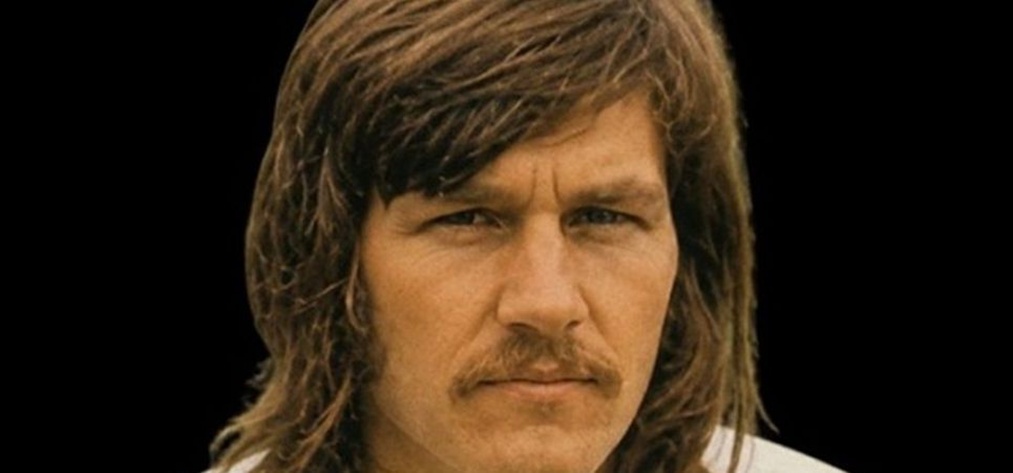
Colin MacLean Sinclair, born 1 December, 1947, Edinburgh, Scotland.
PART ONE
Colin Sinclair´s football education took place at Linlithgow Rose, one of Scotland’s most respected junior clubs, where he developed into an attacking player capable of influencing matches through both creativity and goalscoring instinct. Playing as a winger, he had the kind of qualities that crowds instantly respond to — pace, trickery, a low centre of gravity, and a finishing instinct that suggested he understood intuitively where the ball was going to end up before anyone else in the penalty area had worked it out.
This was the late 1960s, after all, when George Best was simultaneously reinventing what a footballer could be on the pitch and what a footballer could look like off it, and Sinclair — with his distinctive hairstyle and his swagger with the ball at his feet — earned the kind of comparison that local football supporters love to bestow on their most exciting talents. They called him the George Best of junior football, and while such comparisons are always affectionate exaggerations, the fact that it stuck tells you something important about the impression he made on people who watched him regularly.
The junior game in Scotland has always been something of a pressure cooker, competitive and physically demanding in ways that often surprise people who have only ever seen it described, but Sinclair thrived in that environment rather than being overwhelmed by it. He built his game there match by match, developing the toughness and the tactical awareness that would serve him well when the step up to professional football arrived, and though the specific details of any formal trials during this period are not documented in surviving records, it is clear that his form for Linlithgow Rose was more than sufficient to attract the attention of men who were paid to find exactly this kind of talent.
The move that changed everything came on 8 March 1969, when Sinclair signed for Raith Rovers, the Scottish First Division side from Kirkcaldy in Fife, and in doing so crossed the threshold from the amateur world into the professional game with all the weight and finality that such a crossing implies. The man who brought him in was Raith manager Jimmy Millar, who had watched him in the junior ranks and seen enough to be convinced that the step up would suit him, and this was the kind of direct scouting pathway — one man watching another man play and trusting his own eyes — that characterised Scottish football’s talent identification process at the time rather than the elaborate academies and data-driven recruitment systems that would come much later.
The Scottish First Division in 1969 was a genuine test for a young inside forward, physically demanding and tactically unforgiving, and Sinclair would have been under no illusions about the size of the challenge in front of him. But what happened next was the kind of debut-season story that sticks in the memory of everyone involved, because Sinclair did not merely adapt to First Division football — he announced himself to it in the most emphatic terms possible. He scored on his league debut against Rangers. Then he netted against Celtic. Two of the biggest clubs in world football, let alone Scottish football, and this former amateur from West Lothian was putting the ball in their net in his opening weeks as a professional.
Over his two seasons at Kirkcaldy, Sinclair emerged as the club’s leading scorer, contributing consistently to Raith’s mid-table finishes in the First Division during what was a period of comparative stability for the club. His style — built on pace and an instinctive reading of the game in the final third — suited the directness that First Division football demanded, and he became a genuinely important figure in the forward line rather than a promising fringe player. Nevertheless, football has always had a brutal way of reminding good players that their status is never quite as secure as they might hope, and the arrival of a new manager at Raith Rovers brought with it a shift in priorities that would prove to have profound consequences for Sinclair’s immediate future.
Despite being the top scorer at the club, he found himself excluded from the new coach’s plans. There is something simultaneously maddening and fascinating about this kind of situation in football, where a player’s output — the only metric that should, in theory, matter most for a striker — is insufficient to guarantee his place in the building plans of the person who has just arrived with a new vision, and Sinclair’s departure from Raith Rovers in 1971 had a sense of unnecessary waste about it. But it opened a door, and what was waiting on the other side of that door would come to define the most important chapter of his playing life.
PART TWO
Colin Sinclair´s transfer to Darlington was finalised in the summer of 1971 for a fee of around £5,000, and the circumstances of its completion have a wonderful period flavour to them — the deal was concluded at Newcastle Railway Station, which says everything you need to know about the informality and the human texture of football business at that level in that era, before agents and lawyers and video calls turned the whole process into something infinitely more procedural and infinitely less interesting.
Sinclair arrived at Feethams as an established Scottish First Division scorer joining a Fourth Division club, and in footballing terms that represented a significant downward step in the formal hierarchy of the professional game. But football has never been quite as simple as hierarchies suggest, and the English Fourth Division in the early 1970s was not a gentle introduction for anyone arriving with inflated expectations. It was physical, combative, and full of experienced professionals who had learned every trick available to them, and Sinclair’s debut on the opening day of the 1971–72 season — a 3–0 defeat away to Southend United — was a reminder that adaptation, even for a proven scorer, was not automatic.
He struggled initially. This is worth acknowledging honestly, because the story of his subsequent impact at Darlington is only fully appreciated against the backdrop of that early difficulty. The pace and physicality of English football was different from what he had known in Scotland, and the tactical rhythms of the Fourth Division required an adjustment that did not happen overnight. But then came February 1972 and a game against Aldershot, and Sinclair found the back of the net twice, and something clicked into place that would stay clicked for the next four years.
From that point, he became a constant and a reliable one in a Darlington squad that was anything but constant, playing through a period of managerial instability that saw chairman George Tait preside over no fewer than eight different managers in five years. Think about what that means for a player who is trying to build consistency, who is trying to develop understanding with teammates and find his best position within a coherent system — and yet Sinclair made 223 appearances for Darlington and scored 65 goals in all competitions, which is a record that speaks for itself regardless of the chaotic administrative backdrop against which it was achieved.
The team itself was, for much of this period, fighting for survival rather than competing for promotion, making multiple applications for re-election to the Football League as results proved inconsistent and the gap between ambition and resource remained stubbornly difficult to bridge. In that kind of environment, goals from a forward who could be relied upon to turn up in the right place at the right moment were not a luxury — they were existential. And Sinclair provided them.
He formed strong bonds within the squad, particularly with Clive Nattress, and benefited from the mentorship of experienced striker Bill Atkins during a period when the dressing room’s internal culture mattered enormously to a club that could not rely on external resources to paper over the cracks. Of all the managers he played under at Feethams, it was Dick Connor whom Sinclair later identified as the most effective — a man whose strict but fair approach created the kind of clarity that footballers respond to best, where expectations are clear and the standards are consistent regardless of results.
There is a particular story from this period that captures something essential about Sinclair’s character as a player, and it involves a match at Hartlepool where Darlington found themselves trailing 2–0 at half-time and everything about the situation suggested the afternoon was going to end in another disappointing loss. Sinclair headed the winner in a 3–2 comeback, which was remarkable enough in itself, but what makes the story richer is the detail that Peter Madden had given him an earlier dressing-room reprimand — and yet there was the manager, afterwards, praising the man he had just been tearing into. This is football at its most human, messy and contradictory and ultimately defined not by the tension before the final whistle but by what happens after it.
PART THREE
The 1975–76 campaign was the best of Sinclair’s professional life, and the evening of 18 October 1975 at Plainmoor in Torquay was the centrepiece of it. He had been going through a goalless drought stretching to seven games, which for a forward with his scoring instinct must have felt considerably longer than seven games feel to most people, and then came Torquay United in what should have been an unremarkable Fourth Division fixture with nothing particular riding on it beyond two points and the small matter of professional self-esteem.
Sinclair scored four goals. Four goals in a 4–2 away win, and not anonymous bundled efforts off the post or scuffed finishes in crowded penalty areas, but proper goals — the kind of goals that make a commentator’s voice lift involuntarily in a way that cannot be manufactured. Barry Davies was on the BBC’s Match of the Day cameras that night, and he lauded the quality of the strikes, with particular attention to a volley from a throw-in that was the kind of improvised technical excellence that you simply cannot coach into someone who does not already have it. Seven games without a goal, then four in an evening, with Barry Davies talking about you on national television. If you are a footballer at that level, in that era, it does not get much better than that.
Sinclair finished the season with 22 goals — his most prolific single campaign — and the free-flowing flank forward also achieved something that relatively few players in the history of Darlington have managed, scoring in seven consecutive league matches. That particular feat is the kind of record that lives in a club’s unofficial memory long after the results that surrounded it have been forgotten, and it speaks to the streak of consistency that it arrived with full force.
That season also brought a League Cup run that took Darlington beyond Luton Town and Sheffield Wednesday in a penalty shootout — Sinclair converted his spot-kick with composure — before a 3–0 defeat to West Ham United brought the adventure to an end. Even then, Sinclair carried a grievance about a teammate’s goal that he believed had been wrongly disallowed for offside, which tells you that he was not a man who made peace with results easily, and that the competitive instinct that had served him so well from the junior pitches of West Lothian had not been dimmed by years of lower-league football.
Promotion, throughout his time at Darlington, remained elusive. Despite everything Sinclair and his teammates produced, the club could not escape the gravitational pull of the Fourth Division, and that fact represents perhaps the only genuine frustration during a five-year spell that was, by virtually every other measure, a success. But football does not always give its most committed participants the rewards the results tables demand, and the reward Sinclair eventually received came not from a league table but from the people who had watched him throughout those years.
In 2003, as Darlington prepared to leave Feethams — the historic ground that had been the club’s home for over a hundred years — supporters voted Sinclair onto the club’s all-time Dream Team as part of the Farewell to Feethams celebrations. He had been gone from the club for nearly three decades by then, and yet the fans remembered him, and not as a historical footnote but as someone good enough to stand alongside the very best the club had ever produced. There is no more honest or more moving form of recognition in football than that.
PART FOUR
After leaving Darlington in 1976, Sinclair’s career entered a more peripatetic phase, as tends to happen with players in their late twenties who have given the best years of their professional output to a single club and find themselves now looking for a new home that matches what remains of their ambition and their ability. Hereford United in the Third Division came first, and Sinclair spent the 1976–77 season adapting to a new club in a new division, contributing to the Bulls during a period of squad rebuilding without necessarily recapturing the extraordinary form of his final years at Feethams.
Then came an unexpected return to Scottish football in the shape of a loan spell at Dunfermline Athletic, beginning on 10 December 1977 with a debut against Albion Rovers in the Second Division. It was a brief stint — four appearances, three starts and one as a substitute, between December 1977 and January 1978 — and he did not score, but there is something affecting about the image of Sinclair back in Scotland, playing at the level where he had started his professional life, perhaps experiencing the kind of complicated nostalgia that football always eventually produces in those who have spent their best years somewhere else.
Newport County followed, and two seasons there under manager Len Ashurst represented Sinclair’s final professional output in the English leagues. His scoring efficiency was no longer what it had been at its peak, which was entirely natural for a player entering the final stretch of his professional playing days, but he continued to contribute and to compete, and the accumulation of appearances and experiences across these latter clubs added another dimension to a professional record that already had more texture and more interest than the careers of many players who operated at considerably higher levels.
By around 1979, Colin Sinclair’s professional engagements in England were concluded, and he did what the story seems to have been quietly insisting upon all along — he came home. Back to Scotland, back to West Lothian, back to Linlithgow Rose and the non-league world where the whole thing had begun. Playing now as a veteran forward in the Scottish Junior Football East Region Premier League, he brought to those pitches everything he had accumulated in a decade of professional football — the technical refinement, the tactical intelligence, the scorer’s instinct — and contributed his experience to the club in the early 1980s in the way that only someone who has been away and come back can contribute.
There is a completeness to this that feels right. Sinclair had left Linlithgow Rose for the professional game as a 21-year-old, full of promise and potential and that George Best comparison following him around like a shadow, and he returned as a man in his early thirties who had done the thing that most of his contemporaries in junior football could only imagine — he had crossed into the professional game and stayed there for a decade, he had scored goals against Rangers and Celtic and Torquay and Sheffield Wednesday, he had appeared on Match of the Day and been praised by Barry Davies, and he had been voted onto a Dream Team by fans who never forgot what he gave them.
The retirement from playing came in the mid-1980s, prompted by the natural arithmetic of age — he turned 35 in 1982, and the physical demands of even non-league football eventually have their say in ways that no amount of desire can fully override — but also by the pull of something new. Sinclair had interests beyond football, and he transitioned into the hotel trade, eventually owning pubs, a shift that represented not a retreat from ambition but a redirection of it into a different arena.
What made this transition possible, he acknowledged, was the prudent financial advice he had received during his professional playing days, advice he had been sensible enough to act upon at a time when many footballers at his level were less careful about preparing for a life that would eventually have to exist without football at its centre. He had saved sufficiently, had planned ahead, and consequently the end of his playing career was the beginning of something rather than simply the absence of something.