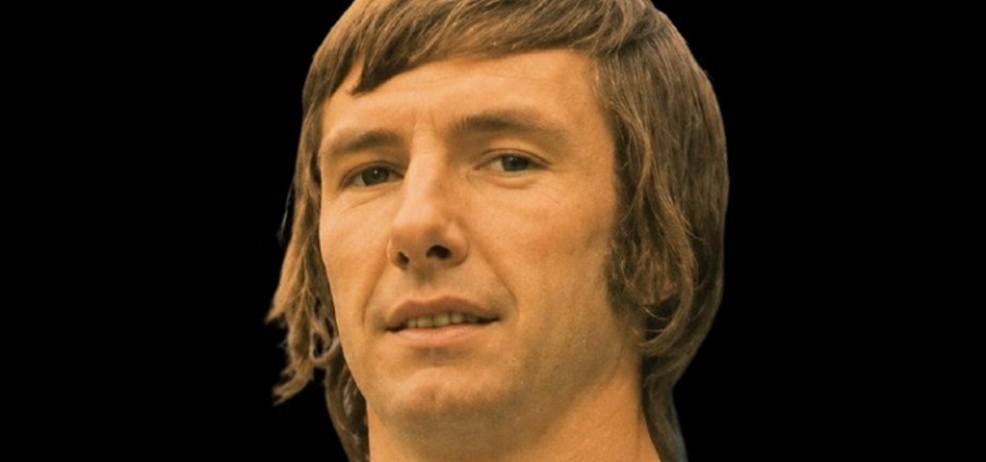
John Price, born 25 October 1943, Easington, England.
PART ONE
Johnny Price’s early years in organised football were spent at Horden Colliery Welfare, a non-league outfit based just a short distance from Easington and entirely typical of the colliery welfare clubs that dotted the northeast landscape in those years, nurturing talent in conditions that were often basic but always fiercely competitive. Playing as a winger, he developed the key attributes that would define his professional years — pace off the mark, an ability to hug the touchline and beat his man, and the kind of low centre of gravity that made him a difficult proposition for full-backs who liked their duels to be simple. Not everything about those early games at Horden was polished or pretty, but then it did not need to be. Price was learning, absorbing, sharpening his tools against men who had no interest in going easy on a teenager with ideas above his station.
It was in November 1960, when Price was just seventeen years old, that the professional game first came calling. Burnley Football Club, based in the Lancashire mill town of Burnley and one of the most respected clubs in English football at that moment, sent scouts into the northeast and liked what they saw, signing Price from Horden Colliery Welfare and bringing him into their youth setup. This was no small thing. Burnley had just won the First Division championship at the end of the 1959–60 season, and in manager Harry Potts they had a man of intelligence and quiet authority, a figure who understood that building a sustainable club meant developing your own players rather than simply buying them. Price, raw and young and a long way from home, found himself in the company of genuine top-flight footballers, and it says something about his character that the experience appeared to sharpen rather than diminish him.
Progress, however, was necessarily slow. A club competing at the highest level of English football is not a place where a seventeen-year-old winger from a non-league colliery side can simply walk into the first team, and Price spent his early years at Turf Moor in the reserves, working on his game under the watchful eye of Potts and his coaching staff. The manager, who would guide Burnley from 1958 all the way through to 1970, was methodical and patient in the way he integrated young players into the first-team setup, and Price was no exception to this careful, considered approach. He trained hard, kept his head down, and waited for his chance.
That chance came, finally, on 7 October 1963, when Price made his senior debut in a 3–1 league defeat away at West Ham United. It was not the most auspicious of beginnings — a defeat, away from home, against a West Ham side that was itself full of talented young players and building towards something significant — but the important thing was that he had been trusted with a first-team shirt, and he had worn it. The door had been opened, even if only a crack. Over the 1963–64 season that followed, Price made eight league appearances and contributed one goal, performing with enough consistency to suggest he was developing into a reliable option for Potts to call upon. Burnley, for their part, finished tenth in the First Division that year, maintaining their presence among the game’s elite without quite threatening the summit again.
The following season, 1964–65, brought thirteen more league outings and another solitary goal, plus a single FA Cup appearance, as Burnley settled into thirteenth place and began to show the first faint signs of the long decline that would eventually see them drop out of the top flight in the early 1970s. In total across his time at Turf Moor, Price compiled twenty-one league appearances and two goals — numbers that speak not to failure but to circumstance, to the simple fact that at a club of Burnley’s standing, with a forward line of genuine First Division quality, the opportunities available to a young winger from Durham were always going to be limited. He had proved he could function at that level, proved that the jump from Horden Colliery Welfare to the old First Division was one he was capable of making, but the regular first-team football he needed to truly express himself was not going to come from Burnley. Then, kin May 1965, a £4,000 fee changed everything.
Stockport County, at that point operating in the Fourth Division of the Football League, might have seemed to the casual observer like a significant step down from the rarefied air of Burnley and the First Division, but for a player of Price’s particular circumstances — hungry for games, ready to be a starter rather than a fringe man — it was the precisely right move at precisely the right time. The fee of £4,000 that took him from Turf Moor to Edgeley Park in May 1965 was a modest sum even by the standards of the mid-1960s, but it purchased something that Burnley had never quite been able to offer: a regular place in the team.
He made his debut for Stockport on 21 August 1965, in a Fourth Division match away at Chester, and County won 1–0. That was the kind of start a player dreams of when arriving at a new club, and Price wasted no time in establishing himself as a key figure in Stockport’s left-wing berth, quickly proving to supporters and management alike that the club had invested wisely. Over the six seasons that followed, he would make 241 league appearances for Stockport — a figure that speaks to a consistency of selection and a durability of performance that defines a player’s genuine value to a football club.
The peak of his time at Edgeley Park came in the 1966–67 season, when Stockport County won the Fourth Division title with 64 points from 46 games, securing promotion to the Third Division and giving the club and its supporters something genuinely worth celebrating. Price played thirty-six league games that campaign — he was essentially an ever-present — and while his goal contribution that year amounted to just one, including a penalty in a 2–2 draw at Wrexham on 29 April 1967, his value to the team was never measured in goals alone. He was the man who stretched defences, who gave opposing full-backs nightmares with his direct running and sharp feet, who created space for others and maintained width in a team that needed exactly those qualities to function as Stockport’s manager intended.
There were managerial changes during his Stockport years, as there tend to be at lower-league clubs navigating the financial and competitive realities of the Fourth and Third Divisions. Bert Trautmann, the great German goalkeeper whose name is inseparably linked with the 1956 FA Cup final, took charge in October 1965 and brought his own ideas to the club, but Price adapted without apparent difficulty. Similarly, when Jimmy Meadows succeeded Trautmann in October 1966 and steered the club through and beyond the title-winning campaign, Price remained a constant, a reliable presence on the left flank who helped stabilise the squad through the kind of transitional periods that unsettle lesser characters.
However, life in the Third Division proved challenging, and Stockport eventually found themselves relegated back to the fourth tier in 1970–71, a campaign in which Price still featured in thirty-four league matches — loyal to the last, still putting in the shifts even as the club struggled. By the time the 1971–72 season opened and he had accumulated seven more league appearances with two goals, a new opportunity had materialised, and Stockport County’s loss was Blackburn Rovers’ gain.
PART TWO
In September 1971, Price departed Stockport County for Blackburn Rovers in a transfer that cost the Lancashire club £20,000 — five times the fee that had originally taken him from Burnley to Stockport six years earlier. It was a measure of the reputation he had built, a recognition that a player with more than 240 appearances and a thorough understanding of Third Division football was worth significant investment. Blackburn, then a Third Division club themselves under manager Ken Furphy, were building a side with ambitions of reaching the Second Division, and Price — small, swift, and technically accomplished — fitted the profile of winger they needed to provide pace and width in attack.
He settled quickly at Ewood Park, as experienced players often do when they arrive at a new club with a clear sense of their own ability and their own role. The Blackburn supporters took to him readily: here was a direct, honest outside-right who would run at defenders, who was difficult to knock off balance given his low centre of gravity, and who understood that a winger’s job is ultimately to create problems for opponents, not merely to look impressive in training. Over three seasons at the club, he made seventy-six league appearances and scored twelve goals — a considerably more productive return in front of goal than he had managed at Stockport, suggesting that Rovers’ style of play gave him slightly more freedom to arrive in threatening positions.
The 1971–72 campaign saw Blackburn finish a respectable tenth in the Third Division, and Furphy used the platform to build more aggressively for the following season. The 1972–73 campaign was the one that really caught the imagination: Rovers mounted a serious promotion push, ultimately finishing third in the Third Division table with fifty-five points accumulated from twenty wins and fifteen draws. They were close — genuinely, excitingly close — to the automatic promotion places occupied by Bolton Wanderers and Notts County, but third place in the Third Division in that era meant the top two went up and everyone else stayed behind. It was a frustration, but it was also testament to how far the club had come under Furphy, and Price was a meaningful part of that progression.
The end, when it came for Furphy, arrived in December 1973, with Gordon Lee taking over the managerial reins at Ewood Park in January 1974. Under the new man, Blackburn slipped back to fourteenth place in the Third Division as the momentum that had been building stalled somewhat, and by March 1974, Price had made the decision — or more likely had the decision made for him — to make his return to former employer Stockport County at the age of thirty years.
If the first stint at Edgeley Park had been the defining professional experience of Johnny Price’s working life, then the return in March 1974 was something altogether more bittersweet — a homecoming of sorts, a recognition that the football he had always understood best was the football he had played in those six seasons during the club’s rise from the fourth tier to the third. He rejoined Stockport County on a free transfer from Blackburn Rovers, arriving as an experienced hand in a side positioned uncomfortably near the bottom of the Fourth Division and in genuine need of the kind of steadiness that an older, wiser player can provide.
His debut in the second stint came on 17 March 1974, when he entered the fray as a substitute in a 1–0 away victory at Bradford City — a winning return that must have felt like a sign, however modest. Over the remainder of that season and the full campaign of 1974–75 that followed, Price made twenty-seven league appearances, scored once, and added an FA Cup outing, contributing the kind of reliable, experienced wing play that kept Stockport competitive in difficult circumstances. There was no championship-winning glory this time around, no title celebrations or triumphant promotion marches, but there was professionalism and commitment and the quiet satisfaction of a player who understood his job and did it without fuss.
The 1975–76 season brought twenty-one league starts and two more goals, alongside five FA Cup appearances and one in the League Cup, rounding off a second Stockport chapter that amounted to fifty-one league appearances in total across two campaigns, plus three goals. In combination with his first spell, Price had now made well over two hundred and ninety appearances for the club across all competitions — an extraordinary level of service to a single employer that, in the lower divisions of English football in the 1960s and 1970s, represents something that deserves proper recognition.
The final curtain came on 3 April 1976, when Price appeared as a substitute in a 3–1 defeat against Crewe Alexandra at Gresty Road. He was thirty-two years old, and it was time. No farewell match was organised, no official ceremony marked the occasion, because that was not how football worked in those years at that level — you played your last game and you stepped away, and the turnstiles kept on clicking and the next season arrived and the world moved on. But Edgeley Park remembered, even if the record books did not make enough of the fact, and the supporters who had watched him play across two separate spells at the club knew what they had been given: a winger of real quality and extraordinary commitment, a professional who had served them honestly and without vanity for the better part of a decade.