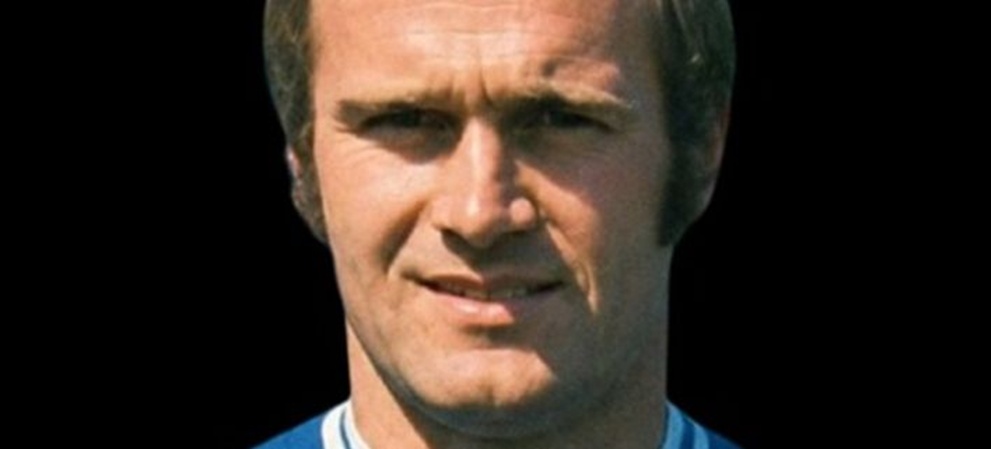
David John Simmons, born on 24 October 1948, Ryde, England.
PART ONE
Dave Simmons signed his first professional contract with Arsenal in 1966, and for a time it seemed as though the future might unfold along a conventional and upward trajectory. But football, as it so often does, had other ideas. The Arsenal first team in that period was not short of attacking options, and Simmons found himself stuck — prolific in the reserves, dangerous in friendlies, but unable to force his way into Bertie Mee’s competitive plans. It was a frustration familiar to any number of talented young forwards at big clubs: you could score goals for fun at the level below, but the door to the first team remained resolutely shut, and the weeks and months accumulated without the senior debut that every young professional craves.
So it was that Arsenal sent him out on loan to Bournemouth & Boscombe Athletic in 1968, a Fourth Division club on the south coast where he could at least play competitive football and sharpen the tools that reserve-team action could not fully hone. He made seven appearances and scored three goals during that spell — a solid enough return, particularly for a young man adjusting to the physicality and relentlessness of lower-league football — but it wasn’t enough to change the equation at Highbury. He returned to Arsenal still without a first-team competitive appearance to his name, still the talented reserve who might just need a permanent move to unlock his real potential.
The answer, when it came in February 1969, arrived in the form of Aston Villa and their manager Tommy Docherty — a figure who was never short of opinions about attacking football and who had identified in Simmons exactly the kind of direct, physical centre-forward he wanted. The fee was £15,000, modest even by the standards of the day, and Simmons left London for Birmingham with something to prove and a clearer stage on which to prove it. Villa at the time were operating in the Second Division and doing so with a degree of anxiety: mid-table uncertainty had a way of becoming something worse, and the club was not in the kind of shape that its history and support demanded. But for Simmons, it was a chance, and he grabbed it.
At Villa Park, he developed into the archetypal English centre-forward of his era — someone who used his body as a battering ram, who was dangerous in the air, who held the ball up and brought others into play, and who had an eye for goal that kept him relevant even when the service was inconsistent. Under Docherty’s direct approach, he thrived in a way that the more refined surroundings of Arsenal had never quite allowed. Over the 1969–70 and early 1970–71 seasons, he made 19 appearances in total — 13 starts and 6 as substitute — and hit 7 goals, a return that painted a picture of a useful and committed forward even if it fell short of the spectacular.
The goals themselves told a story about the kind of footballer Simmons was: grounded, instinctive, and unafraid to get his boots dirty. There was a winner against old foes Birmingham City, scored while lying on the ground in a goalmouth scramble, the kind of goal that supporters remember for decades not because it was pretty but because it was so perfectly characteristic of the player who scored it. There was a narrow-angle effort that won a 1–0 game against Bury, a long-range shot in a 3–1 victory over Sheffield United, and a headed equaliser in the dying minutes against Queens Park Rangers — each goal different in its execution, all of them speaking to a player with more variety in his armoury than his reputation as a simple target man might have suggested.
Villa were relegated from the Second Division as 21st-placed finishers after 1969–70, a heavy blow for a club of their stature, and the arrival of new faces — Bruce Rioch and Andy Lochhead among them — changed the dynamic around Simmons. Docherty himself was sacked in January 1970, replaced by Vic Crowe, and in the reshuffle Simmons found himself squeezed to the margins once more. He was loaned to Walsall in November 1970 to maintain his sharpness, but the writing was on the wall, and on 17 December 1970 he was sold permanently to Colchester United for £6,000. It looked, on paper, like another step down — from Arsenal to Villa had been a move in search of first-team football, and now from Villa to a Fourth Division club seemed like further descent. But what happened next at Colchester United would ensure Simmons was never forgotten by those who were there to see it.
PART TWO
Layer Road in Colchester was not the kind of ground that featured in glossy football magazines or television highlights packages. It was a working-class football ground for a working-class town, with stands that had seen better days and a pitch that could be unpredictable at the best of times, but it had atmosphere — the kind that only comes from a community that genuinely lives and breathes its local club — and in December 1970, Dave Simmons arrived to add himself to the mix.
He settled quickly, as experienced forwards often do when they join a lower-league club with good team spirit and an uncomplicated style of play. Between 1970 and 1973 he made 71 appearances in all competitions and scored 19 goals, numbers that placed him among the more reliable contributors in the Colchester dressing room during that period. But there was one afternoon, one extraordinary Saturday in February 1971, that set him apart from every other player in that team’s history and gave him a place in the wider folklore of English football.
The FA Cup fifth round of the 1970–71 season brought Leeds United to Layer Road on 13 February 1971. Leeds, managed by the legendary Don Revie, were one of the great sides in European football at the time — not merely the best team in England but a squad of genuine international quality, packed with players like Billy Bremner, Johnny Giles, Norman Hunter, Jack Charlton, and the effortlessly gifted Peter Lorimer. They had won the First Division title in 1968–69, had been runners-up in the European Cup and the Fairs Cup, and were at the time near the top of the First Division again. The idea that a Fourth Division club from Essex could beat them in the FA Cup seemed not merely unlikely but faintly absurd, a fantasy scenario for supporters who were already grateful just to be in the same draw.
What unfolded that afternoon at Layer Road was, and remains, one of the great Cup upsets in the competition’s long and storied history. Ray Crawford, a veteran striker who had won the First Division title with Ipswich Town a decade earlier and who knew all about facing elite opposition, was magnificent, scoring twice and giving the Leeds defence a torrid time. And then, with the score at 2–2 and Layer Road generating the kind of noise that could only come from people watching something they had never quite believed possible, it was Dave Simmons who stepped forward, latched onto the ball, and drove it into the net to make it 3–2.
The final whistle when it came must have felt almost surreal to those inside the ground — supporters who had never dreamed they would see their club in the quarter-finals of the FA Cup, and who now had to process the fact that it had actually happened. Crawford’s two goals rightly earned him the lion’s share of the headlines, but Simmons’ contribution was essential, decisive, and historic. It was the goal that turned a remarkable upset into a historic one, the goal that secured a place in the last eight of the tournament, and for a man who had come from Arsenal and Aston Villa without ever quite fulfilling what those clubs had hoped for, it was a moment of pure and uncomplicated triumph.
The adventure continued too, as Colchester reached the quarter-finals before being knocked out by Everton, but the memory of Leeds was what lingered. That 3–2 victory became the moment by which the club measured everything else, and Simmons was forever a part of it. There was more to his time at Layer Road than that one famous afternoon, though, and it would do Simmons a disservice to reduce him to a single goal in a single match. Later in 1971, Colchester competed in the Watney Cup — a pre-season tournament of some standing in those years — and reached the final against West Bromwich Albion at The Hawthorns. The match finished 4–4 after normal time and extra time, a result that sent it to a penalty shootout, and in the course of that extraordinary final Simmons scored to level the score at 2–2, keeping the U´s in the game at a crucial moment. They won 4–3 on penalties, and it was the club’s first major piece of silverware — an achievement that, combined with the Leeds result, gave the Colchester faithful two monumental memories to treasure within a matter of months.
Simmons played out his time at Colchester through to 1973, helping the team in promotion pushes in the 1971–72 and 1972–73 seasons, though the team finished mid-table in both campaigns and fell short of the step up they were chasing. His consistency throughout that period, his reliable goal return, and his ability to hold the line as a forward even when the team around him was finding things difficult cemented his standing as one of the more popular players of that era in Colchester’s history.
In March 1973, Simmons moved to Cambridge United, another Fourth Division club, in a deal worth £2,500 — a figure that reflected the realities of lower-league transfers but did nothing to diminish his appetite for the game or his determination to keep performing. He made 25 league appearances and 5 cup appearances in the 1973–74 campaign, scoring 10 goals in total, and Cambridge finished 10th in the league, a respectable mid-table position that owed something to his contribution up front. But before the season was out, another move came his way.
PART THREE
In March 1974, Simmons joined Brentford, yet another Fourth Division side, and made his debut for the Bees on 16 March 1974 in a 1–1 away draw at Rotherham United. His first goal for the club followed quickly, in a 3–1 home win over Northampton Town on 18 March — two days after his debut, which told you something about the man’s readiness and his ability to hit the ground running at whatever club he found himself at. Over the rest of the 1973–74 season, he made 12 appearances for Brentford, all starts, and scored 4 goals, including efforts against Crewe Alexandra, Colchester United — his former club — and Bradford City, all of them helping Brentford to a 10th-place finish.
The following 1974–75 campaign was the fullest of his time at Griffin Park, with 46 appearances and 14 goals — a total that gave him 58 appearances and 18 goals across his time at the club, and established him as a regular, dependable presence in a side that had plenty of determination if not always the quality to match its ambitions. As a target man, Simmons provided exactly what Brentford needed: aerial presence, physical commitment, and the ability to score from the kinds of positions that required bravery as much as technique.
The final chapter of his professional career brought him back to Cambridge United in November 1975 for a second spell, and it was a chapter defined as much by what was happening to his body as by what he contributed on the pitch. Arthritis and injury had begun to take their toll — the accumulated punishment of years of professional football at the physical end of the spectrum, where defenders do not pull their tackles and goalmouth scrambles leave their mark — and though Simmons made 17 league appearances and one cup tie in the 1975–76 season, scoring 5 goals, it was clear that the end of his professional days was approaching.
Cambridge United finished the campaign in fourth place in the Fourth Division standings, earning promotion to the Third Division, and it was a fitting note on which to close his professional account — going up, achieving something, ending on a positive rather than a lament. But at the comparatively young age of 27, with his body telling him in no uncertain terms that it had taken enough, Simmons retired from professional football at the end of that season. .
But retiring from professional football did not mean retiring from the game altogether, and Dave Simmons had neither the temperament nor the inclination to simply give up on football when he still loved it so completely. After a period away from playing, he came back in non-league football, joining Cambridge City for the 1978–79 season and demonstrating that even with the limitations imposed by his arthritis, he still had something to offer at that level. Subsequently he turned out for Newmarket Town, Ely City, and Soham Town Rangers — all clubs in Cambridgeshire, all connected to the local community in which Simmons had settled — and in doing so he extended his involvement in the game he loved well into the 1980s.
By then he had made his home in the Ely area, a quiet and ancient city on the edge of the Fens, and the non-league football he played there was very different from the packed terraces of Layer Road or the tense atmosphere of Villa Park, but it was football nonetheless, played with the same commitment and the same desire to make a difference that had always characterised his approach. Ely City and Soham Town Rangers were not going to make the back pages, but they were part of the same fabric that connected grass-roots football to the professional game, and Simmons understood that better than most.