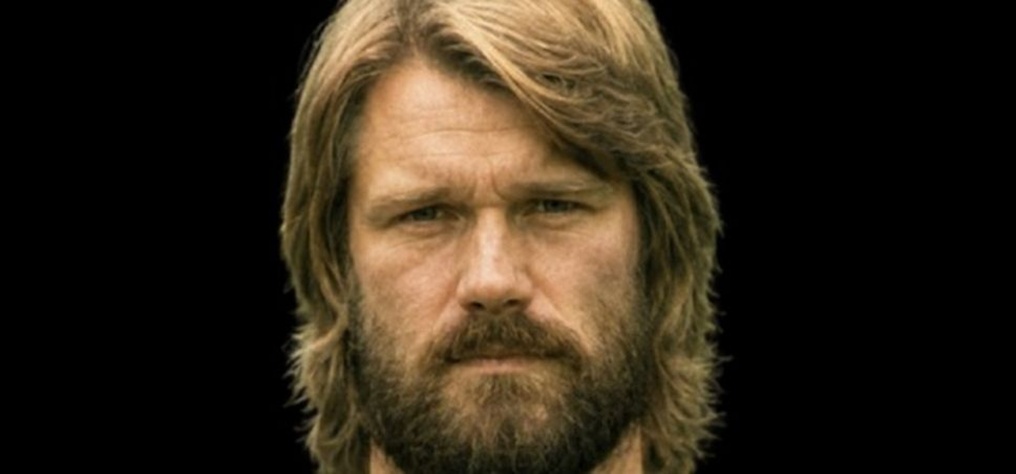
David James Webb, born 9 April 1946, Stratford, England.
PART ONE
During the early 1960s, David Webb trained with West Ham United, one of the great nurseries of east London talent in the 1960s, a club that in those years was producing players like Bobby Moore and Geoff Hurst and Martin Peters. But Webb did not make the grade at Upton Park, and West Ham let him go, and for a lesser man that might have been the end of it. Instead, in May 1963, he signed for Leyton Orient, a modest Third Division club from east London, and it was there that his professional education truly began. His league debut came in the 1964–65 season, and from that first afternoon on a football pitch as a paid professional, you could already sense what kind of player Webb was going to be: combative, versatile, utterly fearless, and impossible to frighten off the ball.
He made 62 appearances for Orient, learning the game at pace and earning a reputation as a defender who could read the play well ahead of the ball, and in March 1966 Southampton came calling and paid enough to take him south to the coast. George O’Brien went in the opposite direction as part of the deal, and Webb arrived at The Dell ready to prove himself at a higher level. He did exactly that, and what is particularly striking about his time with Southampton is not the quantity of his appearances — 75 games in total — but the quality of his contribution, most memorably the goal he scored on his debut to level things up at 1–1 in a crucial promotion-chasing fixture away at Wolverhampton Wanderers. However, it was not at Southampton but at Chelsea where David Webb would write the chapters of his playing life that people still talk about today, and the story of how he got there is almost as dramatic as what followed.
He joined Chelsea in February 1968, and the Blues at that point were a club fizzing with talent and ambition under their manager Dave Sexton, a thoughtful, meticulous coach who had assembled a squad bristling with personality: Peter Bonetti in goal, the silky Peter Osgood up front, the creative Charlie Cooke, the ferociously competitive Ron Harris, and now Webb himself, adding grit and reliability to the back line. Webb was primarily a right back at Chelsea, but even in those early months it was becoming clear that his value to the side was not limited to any one position, and Sexton was the kind of manager who understood how to use that flexibility intelligently.
The season that would define Webb’s Chelsea career was 1969–70, and it culminated in one of the most dramatic FA Cup finals the competition has ever produced. Chelsea and Leeds United, two of the very best sides in England, met at Wembley Stadium on 11 April 1970, and what followed remains the stuff of football folklore. The first game at Wembley was not a happy afternoon for Webb. Playing at right back, he found himself matched up against Eddie Gray, the Leeds left winger, and Gray — nimble, quick, gifted with an almost supernatural ability to change direction at pace — simply ran him ragged. It was one of those performances where a winger is so far ahead of his marker that you almost feel sorry for the defender, and Webb, to his credit, has never shied away from acknowledging just how difficult Gray made life for him that day. Chelsea were arguably fortunate to emerge from the first game with a 2–2 draw, and the general consensus going into the replay was that something had to change.
Dave Sexton thought so too. For the replay, played at Old Trafford on 29 April 1970, he made a decisive tactical switch that showed both his intelligence and his trust in Webb’s ability to adapt: he moved Webb into central defence alongside John Dempsey, and instead it was Ron Harris — the relentless, uncompromising, granite-hard Harris — who was given the job of marking Gray. It worked beautifully. Harris, with his very different physical style, made life considerably less comfortable for Gray than Webb had, and Chelsea as a team found a much stronger footing in this second encounter.
The match went to extra time, as so many great cup finals do, and it was in those final exhausted minutes that David Webb wrote his name permanently into Chelsea history. Ian Hutchinson, Chelsea’s rugged centre forward, launched one of his famously enormous long throws from the right flank, the ball arced into the Leeds penalty area, and there was Webb — the big defender, the man who had been cruelly exposed at Wembley just weeks earlier — rising above everyone else and powering a header into the net to win the FA Cup for Chelsea. The goal that turned humiliation into glory, scored by the very man who had suffered most in the first game. Football rarely tells a story that neatly.
PART TWO
The 1970 FA Cup was only the beginning of the honours Webb would win in a blue shirt, because the following year Chelsea went even further, reaching the final of the European Cup Winners’ Cup against Real Madrid. That tie also required a replay — the first game in Athens ended 1–1 — and Chelsea won the second encounter 2–1, also in Athens, to claim European silverware, with Webb once again part of the back-line that stood firm against one of the most storied clubs in world football. Two major trophies in two consecutive seasons: for a boy from Stratford who had failed to make it at West Ham, it was a story of redemption almost too good to invent.
Yet what makes Webb’s Chelsea story so irresistible is not just the medals but the sheer, glorious, almost comical breadth of his contribution to the club. Playing at right back was never going to be enough for a man of his restless versatility, and over the course of his six-and-a-half years at Stamford Bridge he wore every shirt from number one to number twelve, except the number eleven. He played in central defence. He played up front. He occasionally played in midfield. And on one particular afternoon in December 1968 he played as a centre forward and hit a hat-trick against Ipswich Town, which is the sort of thing that centre backs are simply not supposed to do, but which Webb somehow pulled off with characteristic cheerfulness.
Ipswich, fittingly, were also the audience for his most eccentric contribution to Chelsea’s season of 1971–72. On 27 December 1971, with Chelsea’s goalkeeper unavailable, Webb pulled on the green jersey and kept goal for the entire match, the big defender standing between the sticks and keeping a clean sheet. And then, as if to underline the absurdity of it all, when Chelsea met Ipswich again in the return fixture in March 1972, Webb played as a centre forward and scored twice. The same player, the same opponents, two different positions, two completely different roles — and he excelled in both. It is the kind of thing you simply could not write.
In July1974, after 230 appearances and 21 goals — a remarkable return for a defender — Webb left Chelsea and joined Queens Park Rangers for a fee of £120,000. What happened next at Loftus Road was, to put it charitably, eventful. In February 1975, Webb stunned the football world by announcing his retirement from the game, having played only a handful of months for Rangers. It seemed an abrupt, perhaps even slightly baffling decision for a man still only in his late twenties with plenty of football left in him, but there were personal matters to resolve, business complications that had been weighing on him, and Webb is nothing if not a man who has always followed his own counsel.
However — and this is the characteristic Webb twist — just a week after announcing his retirement, he asked to come back. The personal issues had been sorted out, not least with the help of his close friend Terry Venables, who was also at Rangers at the time and whose practical, forthright wisdom clearly helped Webb see things more clearly. He returned to the fold, buckled down, and proceeded to produce some of the best football of his career, helping Rangers to the runners-up position in the Football League at the end of the 1975–76 season — their highest ever league finish. That near-miss at the title remains one of the great what-ifs in QPR’s history, and Webb was a significant part of making it happen.
After seven goals in 116 appearances for Rangers, he moved on in September 1977, signing for Leicester City in a £50,000 deal and spending just over a year at Filbert Street, making 33 appearances for the Foxes. Then came Derby County in December 1978, where his debut arrived on 23 December in a goalless draw at home to Aston Villa, and where he would make 26 appearances and score once before leaving the Baseball Ground in May 1980. His final playing port of call was AFC Bournemouth, where he managed just 11 appearances before the next phase of his footballing life began — not as a player, but as a manager.
PART THREE
In December 1980, David Webb was appointed manager of Bournemouth, and it says something about the quality of his thinking about the game that he took them up to the Third Division in 1982, a genuine achievement for a club of that size and resource. He was sacked in February of that year following a dispute with the chairman over the club’s new ownership, which is the kind of abrupt end that so often comes to managers who speak their minds, and his successor was Don Megson.
There followed a spell out of the game entirely, during which Webb worked as a self-employed salesman — a detail that humanises him considerably, and that speaks to his straightforward, unpretentious character. In February 1984 he was appointed manager of Torquay United, succeeding the man who would go on to become one of British football’s most celebrated figures, Bruce Rioch. Torquay had finished ninth in the Fourth Division at the end of the 1983–84 season and were looking upward, but the following campaign they finished bottom of the division, and Webb — perhaps looking back on his hat-trick against Ipswich — pulled himself out of retirement to score once in two league appearances that season.
On 21 August 1985 he became managing director at Torquay, appointing first John Sims and then Stuart Morgan as his managers on the pitch, but the club finished bottom again the following season too, surviving only because automatic relegation to the Conference had not yet been introduced. It was not a period that is remembered fondly in Devon: five of the club’s best players were released almost immediately when Webb took over, others — including Keith Curle, who would go on to have a very fine career elsewhere — were sold at prices that seemed to undervalue them badly, the replacements were inferior, and even the club colours were changed to blue. Webb left Torquay to take over at Southend United on 17 June 1986.
His time at Roots Hall would, in time, become the most compelling chapter of his managerial story — a saga of relegation and promotion, of departure and return, that stretched across more than a decade and a half. He departed in March 1987, just weeks before Southend won promotion to the Third Division, which is the sort of timing that haunts a man. He came back in November 1988, could not save the club from slipping back down to the Fourth Division, but then set about the kind of patient, grinding reconstruction that good lower-league managers understand better than almost anyone.
He guided Southend to promotion from the Fourth Division in 1990, and then from the Third Division a year later, taking them into the Second Division for the first time in the club’s entire history. That double promotion in consecutive seasons is a serious managerial achievement by any measure, and the 1991–92 campaign that followed was, for a while, genuinely extraordinary: Southend briefly sat at the top of the Second Division in the autumn of 1991, emerging as entirely unexpected contenders not just for further promotion but for a place in the brand new FA Premier League. Ultimately they fell away to mid-table as the second half of the season wore on, but the brief, exhilarating moment when Southend United led the second tier of English football was Webb’s doing, and the supporters who were there for it have never forgotten it. Webb resigned at the end of that campaign.
PART FIVE
Midway through the 1982-83 campaign, Chelsea came calling again. The West Londoners had gone over two months without winning a single Premier League match, had slipped from the top five to twelfth in the Premiership standings, and the atmosphere at Stamford Bridge was rather gloomy. David Webb took over from Ian Porterfield and set about the kind of pragmatic, no-nonsense recovery job that his active footballing career suggested he would be rather good at.
Under Webb the results came back, the performances improved, and Chelsea finished the 1992–93 season in eleventh place — not spectacular, but stable, and considerably better than the trajectory had suggested before his arrival. Furthermore, there was a quiet dignity about the way he managed the club, a refusal to panic or to try too hard to impress, that earned him genuine respect among the players. The board, however, chose not to give him the permanent contract he had surely earned, appointing Glenn Hoddle instead, and Webb accepted the decision with what appeared to be characteristic equanimity.
He was back in the game within days, this time at Brentford, where in May 1993 he took over a club that had just been relegated to Division Two. Two play-off campaigns followed without the promotion they were chasing, and during this period Webb went further than any of his previous managerial roles had taken him, acquiring an ownership stake in the club. He resigned as manager in 1997, and when Brentford were relegated to Division Three in 1998 and protests from supporters grew louder, he sold the club to Ron Noades in June of that year. It was a messy ending to a period that had begun with genuine optimism, and Webb emerged from it with his reputation somewhat muddied, though those who were close to the situation would argue that the financial constraints he was operating under were always likely to make success difficult.
In March 2000, Webb added a new club to his managerial portfolio, taking over at Yeovil Town in the Conference, only to resign in September 2000 to return to Southend United for a third time. He left Southend again in October 2001, returned as caretaker in November 2003 — bridging the gap between Steve Wignall’s departure and Steve Tilson’s arrival — and then, in December 2005, took over as Chief Executive of Yeovil Town after buying the club from Jon Goddard-Watts. He resigned from that role in February 2006, sold his shares to chairman John Fry, and in March 2010 returned to Southend yet again, this time as assistant manager, serving until the end of the 2009–10 season.
It is a career that resists easy summary, and perhaps that is fitting for a man who was never very easy to categorise. He was the defender who scored hat-tricks and kept clean sheets in goal. He was the manager who won promotions and also presided over relegations. He was the businessman who bought clubs and then had to sell them under pressure. He was the loyal clubman who kept going back to Southend United, again and again, because some attachments run too deep for logic to override them.