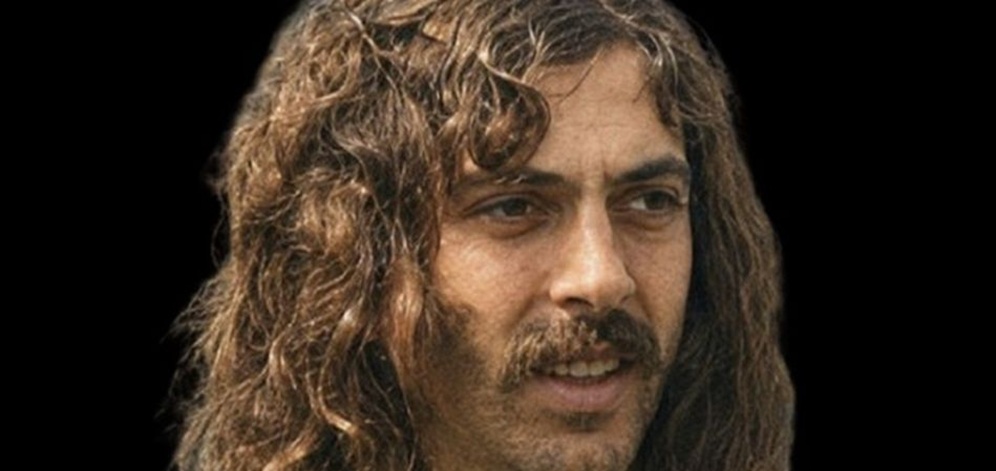
John Graham Pugh, born 12 February 1948, Chester, England.
PART ONE
Graham Pugh had the engine of a midfielder and the brain to go with it, and by 1965, at the age of seventeen, Sheffield Wednesday had seen enough to sign him as an apprentice at Hillsborough. Wednesday were a proper club in those days, a First Division outfit with history and ambition and a manager in Alan Brown who believed in getting the ball down and playing it properly. The city of Sheffield pulsed with football — United on one side, Wednesday on the other — and to be a young professional at Hillsborough was to be dropped into a world that demanded you grow up fast or get left behind. Pugh grew up fast. He worked his way into the reckoning, learning his trade among experienced professionals, and by the time the 1965-66 season came around he had done enough to earn his place in the squad that would go all the way to Wembley.
The FA Cup run of 1966 was the kind of thing that Sheffield Wednesday fans would talk about for years, not because it ended in glory — it did not — but because of how close it came, and because of the extraordinary manner of its ending. Brown’s side lined up for the final against Everton on 14 May in a 4-4-2 formation that had served them well throughout the campaign: Ron Springett in goal; Don Megson, Sam Ellis, Wilf Smith, and Gerry Young across the back; and in midfield, Peter Eustace, Jim McCalliog, Graham Pugh, and John Quinn providing the engine room, with David Ford and Johnny Fantham as the two forwards asked to do damage up front. Everton, managed by Harry Catterick and deploying their own 4-4-2, had Gordon West in goal, a back four of Tommy Wright, Ray Wilson, Jimmy Gabriel, and the formidable captain Brian Labone, midfielders Brian Harris, Colin Harvey, and Alex Scott, and a forward line of Derek Temple, Alex Young, and Mike Trebilcock.
No substitutions were permitted under the rules of FA Cup finals at the time — that would not change until 1967 — so both managers named their eleven and hoped that nobody picked up a knock. Pugh was eighteen years old, playing at Wembley in an FA Cup final, and the occasion must have felt enormous. But Wednesday began as though the occasion had made them sharper rather than smaller, and within four minutes they had the lead. McCalliog drove in a shot from the edge of the penalty area and it struck the heel of Ray Wilson, looping wickedly up and over Gordon West and into the back of the net.
For much of the first half, Everton came back at them hard, with Alex Young probing cleverly and Derek Temple causing problems wide, but Ron Springett was equal to whatever they threw at him and at halftime Wednesday led 1-0, nursing their advantage and believing, perhaps, that this was their day. The second half began, and on the fifty-seventh minute Wednesday pushed the knife in deeper: David Ford latched onto a through-ball and fired past West to make it 2-0, and at that moment the cup seemed as good as on its way to Hillsborough.
What followed was one of Wembley’s great reversals, and Pugh, out there on the pitch, had to live through every minute of it. In the fifty-ninth minute — just two minutes after Ford’s goal — Temple flicked on a cross and Trebilcock, a twenty-one-year-old Cornishman who had barely figured in Everton’s season, struck a first-time shot from twelve yards that flew into the bottom corner. The deficit was halved. Wednesday were rattled, and Everton, sensing blood, did not let up. Five minutes later, in the sixty-fourth minute, Alex Scott’s free-kick found Trebilcock again, and this time the young forward met it with a swerving half-volley that beat Springett cleanly to level the scores at 2-2. The noise inside Wembley was extraordinary, and in the chaos following the equalizer, an Everton supporter named Eddie Cavanagh ran onto the pitch in wild celebration, pursued by police while the match swirled around him, adding to the surreal, feverish quality of the afternoon.
Wednesday needed to regroup, needed to slow the game down, needed to rediscover the composure that had carried them to 2-0 — but momentum is a cruel and slippery thing in football, and Everton had it all now. In the seventy-fourth minute, a long ball from deep in the Everton half dropped toward Gerry Young, one of Wednesday’s defenders, and Young slipped. Temple was onto the ball in an instant, advancing quickly, and he drove a low, hard shot into the far corner past the helpless Springett. Three-two. Wednesday pushed forward in the closing minutes, Ford heading narrowly wide in a moment that would haunt him, but Everton held firm, Labone and Gabriel defending with authority, and the final whistle blew on one of the most remarkable comebacks in cup final history. Everton had done what only Blackpool had done before them, in 1953, overturning a two-goal deficit to win within ninety minutes.
Building upon those formative years at Hillsborough, Pugh continued in the blue and white stripes of Sheffield Wednesday for several more seasons, racking up appearances in the First Division and proving himself one of the more dependable midfielders in the division. His was not a style built on spectacle. He was not the player who made the crowd gasp with a thirty-yard volley or a mazy dribble through three defenders, but he was the player who made the players around him work better — the one who was always available, always moving, always closing down, always finding the simple pass that kept the team ticking. Managers value that enormously, even when the terraces do not always notice it, and Pugh was very good at it for a very long time.
PART TWO
By the time Graham Pugh left Hillsborough in 1972, the midfield man had amassed 142 league appearances for Sheffield Wednesday, a considerable contribution across seven years that included a cup final, top-flight football, and all the grinding work of a career at a major club. He was twenty-four years old and moving to Huddersfield Town, the Terriers of Leeds Road, a club with their own proud history — they had, after all, won the First Division title three times in the 1920s under the great Herbert Chapman — but who now plied their trade in the lower reaches of the Football League.
At Huddersfield, he made 80 league appearances over the course of three seasons, the reliable engine in their midfield, the man who kept things moving and covered the ground that needed to be covered. The Terriers were not challenging for honours but they were a professional outfit and Pugh gave them everything he had, as he had given Sheffield Wednesday everything he had. And then, in 1975, another move — this time back toward his birthplace, to Chester, the club of the city where he had grown up. There is something appealing about that detail, something that speaks to a certain rootedness in the man, and he gave Chester 69 league appearances across two seasons before the game called him onward again.
In 1977, Pugh moved to Barnsley, the Colliers of Oakwell, a Yorkshire club with a passionate and knowledgeable support and a tradition of unearthing and developing good footballers. He was twenty-nine by now, at the age where many players start to think about winding down, but he was not remotely interested in winding down. He made 130 league appearances for Barnsley — one hundred and thirty — a number that tells you everything about the man’s durability, his professionalism, his love of the game in its most basic, most honest form. Week after week, month after month, he pulled on the Barnsley shirt and did what he had always done: ran, pressed, distributed, tackled, kept the team moving. Four seasons of that, give or take, and then one more club to go.
Scunthorpe United were the last Football League port of call, and Pugh gave them 55 league appearances before the curtain finally came down on his time in the professional game and he moved to Matlock Town to see out his playing days. The game has always been full of men such as Pugh, and it has always been inclined to forget them rather quickly, preferring instead to remember the goalscorers and the entertainers, the players who shaped headlines rather than shaped the space around them on the pitch. But the Football League, for all its long and glorious history, was built on players like him as much as it was built on any of the game’s great stars — on the midfielders who won the ball back, the men who covered sixty yards of ground in a minute and then did it again and again and again for ninety minutes, the professionals who turned up without fuss and did their jobs without fanfare.
Pugh played in an FA Cup final at the young age of eighteen years and watched his side lose in the most harrowing circumstances imaginable, and he kept going for another fifteen years without complaint. He moved from First Division football to the lower leagues and gave every club precisely the same quality of effort. He played in Chester, where he was born, and in Barnsley, where nobody would have known him from Adam, and he gave them the same honest service. That is, in its quiet way, admirable.