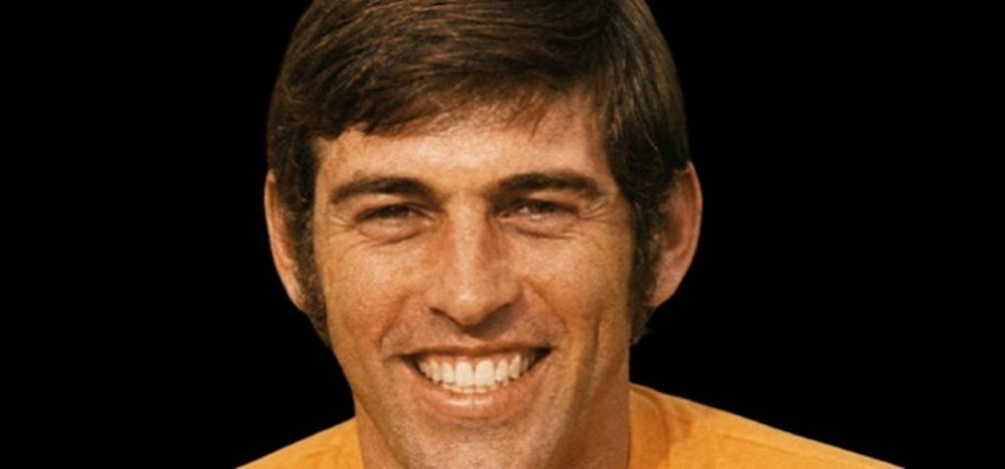
Laurence John Calloway, born 17 June 1945, Birmingham, England.
PART ONE
Laurie Calloway signed his apprenticeship with Wolverhampton Wanderers in 1962, a club still basking in the afterglow of their late-1950s championship years and still capable of attracting young talent from across the Midlands. The reserves at Molineux were a different world from the first team, naturally, and for a young converted defender trying to impose himself, the path forward was far from guaranteed. Wolves did not keep him, but the grounding they gave him — the discipline, the tactical education, the sense of what professional football demanded at its highest reaches — was something he would carry for the next three decades and more.
It was Rochdale who gave him the professional contract in 1964, and it is worth pausing on what that meant. The Fourth Division in the mid-1960s was a place of hard grounds, modest wages, small crowds and large ambitions, where players who had not quite made it at bigger clubs arrived alongside young men still trying to prove they belonged anywhere in the professional game at all. Calloway did more than survive it. Over four seasons from 1964 to 1968, he made 162 league appearances for Rochdale and scored 4 goals — numbers that speak to a player who was always there, always reliable, always part of the structure that made a lower-division side function. Defenders who score four goals in 162 games at that level are not collecting assists in the modern sense; they are doing the unglamorous work of stopping things, of organising, of holding the line when everything else is falling apart.
In 1968, he moved up a tier — two tiers, in fact — when Blackburn Rovers signed him for the Second Division. Blackburn in that era were a club in transition, a once-proud top-flight side who had slipped down the divisions and were trying to find their footing again. For Calloway, the step up was a test of whether his qualities translated to a higher level of competition, and the honest answer, as his numbers suggest, was that he was used sparingly. Twenty-five league appearances and 1 goal over two seasons does not paint the picture of a regular starter but rather of a squad player valued for his reliability and his experience of the game’s basics, the kind of defender who could be trusted when the first choice was injured or suspended and who would not let anyone down.
In August 1970, he moved to Southport in the Fourth Division — back to where he had started, in terms of the division — via an exchange deal that sent forward Alex Russell in the other direction. What happened next was unexpected. Rather than resuming his role as a straightforward defender, Calloway was deployed in midfield, and the result was something close to a revelation. In the 1970–71 season alone, he made 45 league appearances and contributed 7 goals — easily the most prolific single season of his playing life and a number that comfortably outstripped anything he had managed in defence.
He then spent two seasons at York City, making 55 league appearances and scoring 3 goals as the club navigated the Fourth Division with the quiet competence that defined most of York’s history in those years. His performances were solid if unspectacular, the work of a dependable professional in the latter stages of his domestic playing days. His next club were Shrewsbury Town, where he accumulated 82 league appearances and 3 more goals in the Third Division, a level that represented the highest tier of his English career outside of those two seasons at Blackburn.
In ten years of English football, from his debut at Rochdale in 1964 to his final games for Shrewsbury in 1974, Calloway made 369 league appearances and scored 18 goals. Those are the numbers of a man who gave English football a decade of honest, committed, thoroughly professional service at the level where most professional footballers actually spend their working lives — not at Wembley, not in the First Division, not in the glare of any significant publicity, but in the grinding, important, underappreciated grind of the lower leagues. And then, in 1974, something happened that changed everything.
Calloway moved to the United States in 1974, initially on loan to the San Jose Earthquakes of the North American Soccer League, and the reasons he gave were not complicated. He wanted to play against international stars — men like Pelé, like Johan Cruyff — and he understood that those encounters were not coming his way in the Third Division. There is something wonderfully direct about that motivation, something that cuts through the cautious language footballers sometimes use about transfers and speaks plainly to the hunger of a professional who had been doing his job without fanfare for a decade and wanted, before it was too late, to test himself against the very best.
The NASL in the mid-1970s was extraordinary in ways that are hard to fully convey to anyone who did not witness it. The league had been injecting talent from across the world into American cities at a rate that made the head swim, and the San Jose Earthquakes were part of that great experiment, pulling in European and South American players alongside a growing number of Americans who were beginning to take the professional game seriously. For Calloway, the adjustment was real and significant — the NASL played a faster, more open style than the tactical English game he had grown up in, with fewer of the defensive structures and more of the individual expression that characterised football in Brazil or in the Netherlands. He adapted, as solid professionals tend to do, and from 1974 to 1977 he made 71 regular-season appearances for the Earthquakes, contributing 3 goals while playing a central defensive role in a side that included, at various points, players of genuine international distinction.
The permanent transfer, reportedly costing around £25,000, made him one of the first overseas players to be signed for a fee in the NASL — a distinction that placed him, improbably, at a kind of frontier moment in the internationalisation of American soccer. In his peak season with San Jose in 1977, he made 25 appearances, contributed 2 goals and 4 assists, and helped the team reach the playoffs. The Earthquakes qualified for the postseason three times during his spell there — in 1974, 1976 and 1977 — and though George Best was among the names that attracted rather more press attention, Calloway was an integral part of the defensive architecture that made those playoff runs possible.
PART TWO
The transition from player to manager is one that many footballers attempt and relatively few navigate successfully, and Laurie Calloway began his own attempt in 1978 under circumstances that were not exactly designed to inspire confidence. He was appointed head coach of the Southern California Lazers of the American Soccer League — a new franchise in a second-division circuit — taking over just ten days before the season began, still active as a player, and handed the job of running an expansion side with all the challenges that entails. That he led them to a 15-8-1 record and third place in the standings was, in retrospect, a considerable achievement; that the franchise folded after a single season due to financial difficulties was entirely beyond his control and served as an early lesson in the economic volatility of American soccer at that level.
He would learn that lesson again, and again, in the years that followed. The NASL itself was contracting by the early 1980s, its extraordinary ambitions outrunning its financial foundations, and Calloway’s coaching career took shape against that backdrop of franchise instability. He served in assistant roles from 1979 to 1981, building the tactical vocabulary and organisational instincts that head coaching demands, before taking over the California Surf mid-season in 1981. The Surf were struggling, the season was already lost in any meaningful competitive sense, and the club folded at its conclusion — an 11-21 record and mounting debts offering no other outcome. Not for the last time, Calloway was the coach left standing in front of an empty house.
Then came Seattle, and the Sounders, and the final act of the NASL story. Calloway was hired before the 1983 season to replace Alan Hinton and bring, as the language of the time had it, a calmer approach to the management of the club. Under his leadership, the Sounders posted a 12-18 record, placed third in the Western Division, and then ceased to exist on September 6, 1983, as ownership changes and financial pressures brought down what had been one of the more popular soccer franchises in the country. The NASL itself would follow the following year. Calloway had now coached three clubs that had all folded; he had survived all of them, learned from all of them, and emerged with his reputation as a methodical, resilient, tactically thoughtful coach substantially intact.
The Western Soccer Alliance offered a lower level of competition but something considerably more stable, at least initially, and Calloway’s time with the San Jose Earthquakes in the WSA from 1984 to 1988 represented one of the most successful stretches of his coaching life. In 1985, he led the Earthquakes to the league title, finishing first with a 4-1-2 record — a clean, decisive championship campaign that demonstrated his capacity to build and maintain a winning side. By 1988, the team had reached third place in the league before the franchise folded, as had so many before it, bringing to a close another chapter in the long-running California saga.
He moved to the San Jose Oaks in 1989 and guided them to a championship victory, then took over the Salt Lake Sting in 1990, working with several former players who had followed him across the various transitions of American soccer’s lower tier. The coaching philosophy he had developed over the previous decade — disciplined, organised, demanding without being spectacular, built on the values he had absorbed at Rochdale and Southport and York — was proving effective wherever he applied it, even if the franchises themselves tended towards impermanence.
PART THREE
The American Professional Soccer League’s San Francisco Bay Blackhawks, whom Calloway took charge of from 1991 to 1992, represented something genuinely different — a well-resourced, ambitious club in a league that was, for a moment, trying to position itself as the future of professional soccer in North America. In 1991, the Blackhawks finished second in the regular season and won the national championship against the Albany Capitals, a result that cemented Calloway’s standing as one of the more effective coaches in American soccer. The following year brought something more dramatic still: as APSL champions, the Blackhawks entered the CONCACAF Champions’ Cup and advanced to the semifinals, where they faced Club América and lost 4-3 on aggregate — 3-1 away, 2-1 at home — a result that, for all its disappointment, placed an American club at a level of international competition rarely achieved by domestic sides.
In the middle of all this was Eric Wynalda, the gifted, combustible forward who would become one of the defining figures of American soccer in the 1990s, and whose relationship with Calloway would cast a long shadow over both of their subsequent histories. The fraying of that relationship during the Blackhawks period — the creative tension between a demanding coach and a talented player who believed himself above certain constraints — contributed to Calloway’s departure after 1992 and planted the seeds of a conflict that would resurface, with considerably greater consequences, when both men were reunited at the San Jose Clash.
Calloway was appointed inaugural head coach of the San Jose Clash on December 7, 1995, a moment that represented both the summit and, ultimately, the most publicly painful chapter of his coaching story. Major League Soccer was America’s latest attempt to build a sustainable top-division professional league, and its inaugural season in 1996 carried the particular weight of all that prior failure — all those collapsed franchises, all those shuttered leagues — while also offering the genuine excitement of something new and, this time, perhaps durable.
The Clash’s first MLS win came on April 6, 1996, a 1-0 defeat of D.C. United settled by a late goal from Wynalda — a moment of poetic if uncomfortable symmetry, the man Calloway had fallen out with at the Blackhawks now scoring the first victory for his new club. Over two seasons, the Clash compiled a 21-29 record, which in the context of an expansion team in a new league was not a shameful performance, though it was not good enough to satisfy a fanbase that had waited long and expected much. And then there was Wynalda again, and the grievances about training schedules, and the player complaints that escalated through the spring of 1997, and the five-game losing streak, and above Spartan Stadium one day there appeared an aeroplane banner reading: “Can the coach! The Clash deserve better!”
It was the kind of public humiliation that very few coaches in any sport ever have to endure, the hostility of the stands rendered literal and airborne, and it told you something about the fever pitch to which the Wynalda situation had risen. Calloway was fired on June 25, 1997, and with him went the first chapter of the San Jose Clash story and, in many ways, the last chapter of his engagement with top-level American soccer.
What followed were years of lower-level coaching that, in aggregate, added up to something impressive and underappreciated. At the Des Moines Menace in the Premier Development League, he coached from 2001 to 2002 and led the side to playoff appearances in both seasons; the 2002 campaign was undefeated in the regular season at 15-0-3, winning the regular-season championship and earning him the PDL Coach of the Year award. He returned to Des Moines for a second stint from 2009 to 2012, compiling an overall record of 49-17-12 across both periods — numbers that speak for themselves.
He coached the Syracuse Salty Dogs in the USL A-League from 2003, posting a 26-20-10 record over two seasons before the franchise folded — the familiar story, one more time — and then joined the Rochester Raging Rhinos in USL-1 in December 2004, guiding them to back-to-back second-place regular-season finishes in 2005 and 2006 and earning a three-year contract extension in October 2006, before new ownership arrived and dispensed with his services in March 2008.