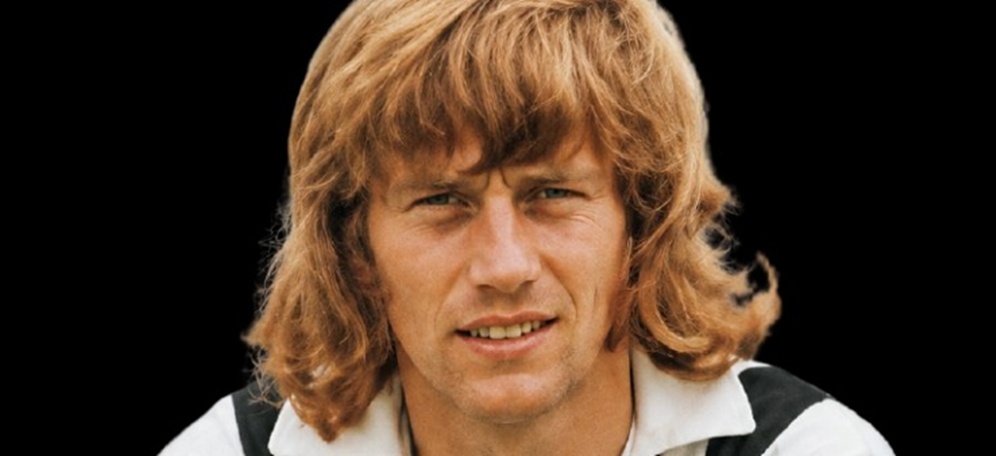
Philip John Hubbard, born 25 January 1949, Lincoln, England.
PART ONE
Born in Lincoln, Phil Hubbard grew up within walking distance of Sincil Bank, and it was there, as one of the very first apprentices taken on when the Imps launched a proper youth set-up in the mid-1960s, that his story in football truly began. He signed as a young forward, all raw promise and boundless energy, though he would end up filling more shirts than the kit man could keep track of — right back one week, midfield the next, centre-forward the week after that. Versatility, for Hubbard, was never a limitation. It was his calling card.
Lincoln in the mid-Sixties was hardly a hotbed of glamour. The Imps bounced between the bottom two divisions, the crowds at Sincil Bank were modest, and money was tight enough that a promising local kid getting a chance in the first team mattered to a community rather more than it might at a bigger club. Hubbard was that kid, and his rise, when it came, felt as though it belonged to the whole city rather than just the football club.
Breaking into any Football League side takes patience, and Hubbard had plenty of it. He served his time in Lincoln’s junior ranks before nailing down a regular first-team place in the 1968–69 season, and once he was in, nobody was shifting him. Playing predominantly as a forward in those early years, he brought a directness to Lincoln’s front line that supporters warmed to instantly. He was strong, he was quick over ten yards, and above all he knew where the goal was.
By 1970–71 that knack for finding the net had turned him into Lincoln’s leading scorer, and the supporters rewarded him with the Player of the Season award — no mean feat at a club that has, across its history, produced more than its share of talented forwards. It was proof, if any were needed, that the teenager who had joined as little more than a name on an apprenticeship list had grown into a genuine first-team force.
And then came 1971–72, the season that changed everything. Hubbard simply couldn’t stop scoring. By Christmas he had rattled in eighteen goals, a return that would have been the envy of forwards two divisions higher, and the highlight of that spell was a hat-trick in a rampant 4–1 League Cup victory over Blackburn Rovers, a result that had Sincil Bank buzzing for weeks afterwards. Word travels fast when a young player is banging in goals at that rate, and it wasn’t long before bigger clubs were sniffing around.
Norwich City, pushing hard for promotion from the Second Division under manager Ron Saunders, moved in December 1971, and Hubbard swapped the Fourth Division for a genuine promotion battle almost overnight. It was a step up in every sense — a bigger club, a higher standard, and a squad with real ambitions of reaching the First Division for the very first time in Norwich’s history. Given how sharply he’d been scoring at Lincoln, there was every reason to think he’d settle quickly on the other side of the Wash, and settle he did.
He made seventeen league appearances for the Canaries in the closing months of that campaign, chipping in with three goals, one of them arriving in a match against Fulham that got the Norwich crowd on their feet. He wasn’t the headline act — that role fell to more celebrated figures elsewhere in Saunders’ side — but a tall, physically imposing presence in midfield who could break up play and burst forward when the chance arose was exactly what a promotion push required.
Saunders had built a Norwich side that defended stubbornly and squeezed every ounce out of a limited squad, and Hubbard’s arrival gave the manager another option in a run-in that would decide whether Norfolk got its first taste of top-flight football. Every point mattered that spring, and a player who could slot into midfield and offer both energy and know-how, without needing time to bed in, was worth far more than his modest goal return suggested. Games in the Second Division back then were fought as much in the tackle as they were with the ball at feet, and Hubbard, schooled in the unforgiving trenches of the Fourth Division, was more than equipped for the fight.
Norwich duly won the Second Division title, going up to the top flight for the first time in the club’s history, and Hubbard had gone from banging in hat-tricks for a struggling Fourth Division outfit to lifting a championship trophy inside the space of a single season. Not bad going, either, for a Lincoln lad barely into his twenties who had started the campaign wondering whether he’d even get a Christmas transfer.
PART TWO
Lawrie McMenemy, the towering Geordie who had already led Grimsby Town to the Fourth Division title, then came calling in October 1972, and this time the fee made headlines of its own: £20,000, a club record for the Mariners. McMenemy had built his promotion-winning side the previous season and was now looking to strengthen for life in the Third Division, and in Hubbard he saw a forward-cum-midfielder capable of adding both goals and steel to a squad that included the likes of Matt Tees and Mickey Hickman.
Phil Hubbard repaid that faith and then some. Over four seasons at Blundell Park, right through to August 1976, he made more than 150 appearances and scored close to 40 goals, a genuinely productive spell by anybody’s standards, and one that peaked in 1973–74 when he found the net ten times in the league alone. Grimsby avoided any serious brush with relegation during his time there, settling into respectable mid-table finishes as McMenemy departed for Southampton in the summer of 1973 and the reins passed first to Ron Ashman and then, from 1975, to Tommy Casey. Whoever was in the dugout, Hubbard kept doing what he did best: turning up, working hard, and chipping in goals from wide areas or through the middle as required.
There are stories from that era that tell you plenty about the game in the early Seventies, too — like the time McMenemy, unhappy after a defeat, marched his squad down to the local fish docks as a reminder of what a proper week’s graft actually looked like. No sports science, no rotation policies, just honest toil and a manager unafraid to make a point. Hubbard, by every account, embraced that culture wholeheartedly.
Blundell Park in those days was a tough old ground to visit, tucked hard against the docks with the wind whipping in off the Humber estuary, and away sides didn’t always relish the trip up the east coast. Hubbard thrived in that environment. He wasn’t the type to complain about the conditions or the travel, and teammates from the period remember a forward who’d chase a lost cause into the corner flag as readily as he’d bury a chance from twelve yards. That willingness to graft, as much as the goals themselves, is why McMenemy’s successors kept faith in him long after the manager who signed him had departed for the south coast.
Third Division football in the mid-Seventies was an unforgiving school, littered with sides scrapping for their existence, and it demanded a particular kind of resilience from anyone hoping to last more than a season or two. Hubbard lasted four, and he did so while switching comfortably between spearheading the attack and dropping deeper into midfield whenever a manager asked him to.
By the summer of 1976, the pull of home proved too strong for Hubbard to resist. Lincoln City, managed by the young and ambitious Graham Taylor — who would go on to lead England — paid £6,000 to bring Hubbard back to Sincil Bank, and it was something of a sentimental homecoming for a player who, at 27, arrived with a proper CV behind him: a Second Division title with Norwich, and nearly 40 goals in a productive stretch at Grimsby. Taylor, as it happened, had tried to sign him before and finally got his man.
He wasted no time making an impact either. Hubbard’s second debut for the club came in the League Cup first-round second leg against Doncaster Rovers, and he retained his place for the league opener against Shrewsbury Town shortly afterwards. There was late drama in that same League Cup run, too: Hubbard scored a crucial equaliser in the replay at Nottingham Forest’s City Ground, forcing extra time and then penalties, only for Lincoln to exit the competition in a 3–2 shoot-out defeat in which Hubbard himself missed from the spot. Football has a habit of giving with one hand and taking with the other, and that night at the City Ground was as good an example as any.
Deployed mainly on the right wing that season, and used at various points to cover for the injured Dick Krzywicki, Hubbard’s experience helped steady a Lincoln side that finished a solid fourteenth in the Fourth Division. His presence off the pitch mattered just as much as his contributions on it during what was, for the club, a transitional period.
The following campaign, 1977–78, brought a new manager in George Kerr, who took over from Taylor after his move to Watford, and Hubbard remained a fixture, shuffled between wide midfield and a more central forward role as injuries to the likes of Peter Graham and Terry Cooper opened up opportunities elsewhere. Early cup ties against Mansfield Town — a 1–0 away win followed by a goalless draw at home — helped Lincoln progress, and alongside teammates such as Alan Harding and John Fleming, Hubbard’s know-how contributed to the kind of defensive solidity that keeps a club out of trouble. Lincoln finished sixteenth, comfortably clear of relegation worries, in what had briefly looked like turning into a difficult campaign.
By 1978–79, now approaching thirty, Hubbard had settled into a central midfield partnership alongside Phil Neale under yet another new manager, Willie Bell. Younger players were pushing for opportunities by this stage, but Bell valued the reliability Hubbard offered, and he even popped up to score the winner in a Lincolnshire Senior Cup tie against, of all clubs, his old employers Grimsby Town. His electric goalscoring days from a decade earlier were largely behind him by this point — Fourth Division defences had long since worked him out — but his reading of the game and his knack for calming a dressing room down proved just as valuable, and Lincoln again finished in a comfortable mid-table position. Hubbard finally left Sincil Bank in April 1979, bound for a short spell in the United States, having amassed close to 300 appearances and 60 goals across his two spells with the club stretching all the way back to 1966.
By November 1979 he had signed for non-league Boston United, where his role became more peripheral over the following three seasons as the pace of the professional game gave way to the grittier demands of non-league football. It was, in many ways, the natural next step for a player entering his thirties, and Hubbard took it in his stride.
PART THREE
In 1982 Phil Hubbard moved on again, this time to take up a player-manager role at Skegness Town in the recently formed Northern Counties East League, though fate had other plans for his playing involvement: a broken leg suffered in a pre-season incident brought a premature halt to his time out on the pitch there. It was a cruel way for an on-field playing spell to effectively wind down, though by that stage Hubbard had already banked well over 400 professional appearances across four different clubs — a figure that speaks for itself.
He drifted away from playing altogether during the mid-1980s, settling in the Lincoln area, where he later ran a newsagent’s in nearby Washingborough — proof, perhaps, that even a man who had spent two decades kicking a ball for a living needed something steadier to fall back on. There’s a certain fitting symmetry to it, too: a player who never strayed far from his home city, even during the years he spent turning out for clubs up and down the east coast, ending up serving that same community from behind a shop counter rather than a touchline.
It’s worth remembering, too, just how different the landscape was for players of Hubbard’s generation once the boots came off. There was no testimonial circuit worth speaking of at non-league level, no punditry work waiting on the sidelines, and precious little in the way of financial cushion after years spent on modest wages. Plenty of his contemporaries went into building, driving, or running small businesses of one kind or another. Hubbard’s newsagent’s was simply his version of that same story, played out on streets he’d known since he was a boy.
In November 2003, Hubbard took charge of Nettleham United, a non-league outfit close to his home patch, where he stayed until February 2006. That grounding then led to a bigger job: on 10 February 2006 he was appointed manager of Spalding United, taking over from Alan Biley with Mark Hone installed as his assistant. Hubbard inherited a Spalding side languishing in the relegation zone of the UniBond League Premier Division, and it took every bit of his old-school know-how to turn things around. Non-league management is rarely forgiving of sentiment, and a man who had spent decades absorbing knocks as a player brought exactly that same stubbornness into the dugout, refusing to let a struggling squad accept its lot without a fight. Turn them around he did, guiding the club to safety by season’s end, though a bid to land a third consecutive East Anglian Cup fell agonisingly short, with Spalding beaten 1–0 in the final by Harlow Town.
The following season, 2006–07, saw Spalding drop back into the Southern League Premier Division, and results proved stubbornly difficult to come by; the club limped home nineteenth out of twenty-two. Off-field restructuring by the Football Association then reassigned Spalding to the UniBond League Division One South for the 2007–08 campaign, but a wretched start to that season, littered with poor results, brought Hubbard’s time at the helm to an abrupt close in mid-September 2007.