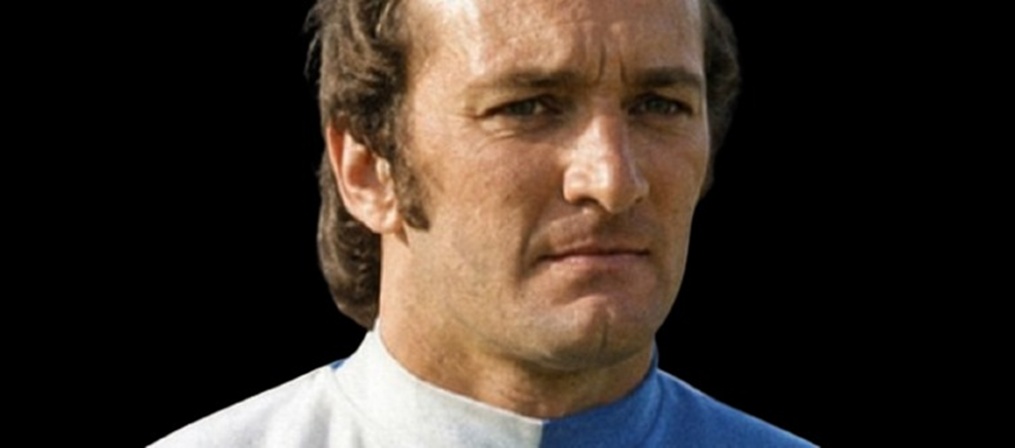
Lindsay William Parsons, born 20 March 1946, Bristol, England.
PART ONE
Lindsay Parsons was born in Bristol, and it was there, on the local recreation grounds and school pitches of a city with football running through its veins, that he first showed the defensive instincts scouts could not ignore. Bristol Rovers took note early, and in 1961, at just fifteen, Parsons signed on as an apprentice at Eastville, beginning three years of structured grounding within a club he would go on to serve, in one capacity or another, for the best part of six decades.
As a young full-back learning his trade, Parsons focused relentlessly on the fundamentals: positioning, tackling, the sort of reliability that rarely wins headlines but always wins a manager’s trust. Bert Tann, running the show at Bristol Rovers throughout that period, ran a tight ship built on discipline and integration, and young apprentices like Parsons were expected to lodge alongside senior professionals so the standards of the first team seeped into them almost by osmosis. It clearly worked. His progress through the reserve and youth sides was steady rather than spectacular, marked by a calm head and a no-nonsense approach that would come to define him for the next fifteen years.
On 20 March 1964, his eighteenth birthday, Parsons signed his first professional contract with Bristol Rovers, the natural conclusion of three years’ hard apprenticeship and the beginning of a senior career that would stretch on, remarkably, until 1977. He had already made his Third Division debut that same 1963–64 season, and from there he barely looked back, establishing himself as a mainstay of the Rovers defence and, in time, as one of the most durable full-backs the club has ever fielded.
Durable hardly does it justice, in fact. Across thirteen years at Eastville, Parsons made 360 league appearances for Bristol Rovers without ever troubling the scoresheet, a statistic that tells you everything about his job description and nothing at all about his value to the team. Somewhere within that vast total sat a run of 167 consecutive appearances, an extraordinary stretch of fitness and consistency for a full-back playing through the physical rigours of 1960s and 1970s English football, when defenders were given precious little protection and even less sympathy.
Rovers spent most of those years in the Third Division, and Parsons was central to the side that finally won promotion as runners-up in 1974, playing over forty league matches that campaign as the team built a defensive record conceding just 33 goals — numbers that speak to exactly the kind of unglamorous, disciplined defending Parsons had been schooled in since his teens. He remained a fixture through Rovers’ three subsequent seasons in the Second Division, seeing out the higher level of competition before departing Eastville in July 1977.
There was cup success along the way too. Parsons was part of the Bristol Rovers side that won the Watney Cup in 1972, and in the final against Sheffield United at Eastville Stadium, settled by a penalty shootout, it was Parsons himself who stepped up and scored — a rare moment of attacking involvement for a defender who otherwise made his name at the opposite end of the pitch, clearing danger off the goal-line rather than putting the ball in the net. Long service of that kind, seasons upon seasons of reliability without reward or recognition beyond the respect of teammates and supporters, earned him a testimonial season in 1974–75, the club’s way of thanking a player who had quietly become one of its most important fixtures.
PART TWO
By 1977, though, with Lindsay Parsons now thirty-one, Bristol Rovers decided the time had come to let him move on, and Torquay United, playing in the Fourth Division, took him to Plainmoor. He spent three seasons there as a dependable left-back, adding 56 further league appearances, again without scoring, and lending his experience from two divisions higher to a Torquay side fighting to stay afloat. The 1977–78 campaign in particular tested that resolve, with the Gulls scraping to twentieth place and survival by the narrowest of margins, Parsons anchoring the left side of a defence that somehow held firm often enough to avoid the drop.
Parsons´ performances at Torquay drew on exactly the same qualities that had served Bristol Rovers so well for over a decade — positional discipline, timely tackling, and a coolness under pressure that steadied whichever back four he happened to be playing in. Eventually, in December 1980, at thirty-four, Parsons left professional football behind and dropped into the non-league game with Taunton Town, bringing the curtain down on a senior career spanning nineteen years and two clubs.
Retirement from the professional ranks did not mean retirement from playing, however. Parsons continued turning out for Taunton Town before moving on to Gloucester City in 1982, and from there to a string of West Country clubs including Forest Green Rovers, Yate Town, Hanham Athletic and Frome Town, with some records also placing a spell at Cheltenham Town among his non-league stops. All the while, from 1983 onward, he was also coaching Bristol Rovers’ schoolboy teams, balancing playing commitments in regional football with the first steps of what would become a lengthy second act on the coaching side of the game. He finally hung up his boots for good in 1990, at the age of forty-four, having represented at least six different non-league clubs across the south-west of England in the intervening decade — proof, if any were needed, of just how reluctant he was to give up playing altogether.
That same year, 1990, Parsons joined Cheltenham Town as a coach, working under manager Ally Robertson. When Robertson departed in January 1992, Parsons stepped up as caretaker manager alongside assistant Peter Aitken, and impressed sufficiently to be handed the job on a permanent basis before the year was out. The 1992–93 season that followed saw Cheltenham, having just been relegated from the Football Conference, mount an impressive recovery under Parsons’ guidance, finishing runners-up in the Southern League Premier Division behind champions Dover Athletic. Central to that revival was a youthful squad built partly around midfielder Christer Warren, later sold to Southampton for £40,000, and striker Jimmy Smith, with Parsons also bringing in forward Jason Eaton from Gloucester City for £10,000 to strengthen the attack. It was solid, foundational work, and it laid the groundwork for Cheltenham’s eventual return to the Conference in the years that followed.
It was from Cheltenham, though, that the defining partnership of Parsons’ coaching years began to take shape. In 1995 he linked up with former Bristol Rovers teammate Tony Pulis, by then manager of Gillingham, taking the role of assistant manager at Priestfield. Together they steered Gillingham to promotion and all the way to the play-off final at Wembley against Manchester City, a match the Gills led 2–0 before somehow contriving to lose. It was a cruel afternoon, but it cemented a working relationship between Parsons and Pulis that would run, on and off, for the better part of two decades.
From Gillingham the pair moved to Bristol City, where Parsons worked in a coaching and scouting capacity, before following Pulis to Portsmouth in 2000, a spell cut short later that year when Pulis was sacked at Fratton Park. Parsons rejoined him at Stoke City in June 2003, again as assistant manager, staying until 2005 when Pulis himself left the Potteries, and the two reunited briefly that same year at Plymouth Argyle as Pulis chased promotion there too. The most enduring chapter, however, came in 2007, when Parsons returned to Stoke City as chief scout, a role he would hold right through the club’s rise into, and years spent in, the Premier League.
It was as a scout that Parsons perhaps did his most quietly significant work, identifying talent that would go on to shine elsewhere even when Stoke themselves could not be persuaded to sign it. He recommended a young Emmanuel Adebayor early in Pulis’s Stoke tenure, at a fee of around £3 million that the club, then still in the Championship, judged too rich for their blood; Adebayor instead joined Arsenal and established himself as a genuine Premier League force. Similarly, Parsons flagged Cheick Tiote and Hatem Ben Arfa, both of whom went on to excel at Newcastle United, and pushed for Demba Ba roughly two years before the striker eventually established himself elsewhere, only for a failed medical to end Stoke’s interest. None of these players arrived at the Britannia Stadium, but all of them justified Parsons’ judgement soon enough at other clubs, a frustrating pattern for any scout to watch unfold from the sidelines.
That frustration eventually spilled into the open. In April 2013, Parsons gave an interview to the Gloucestershire Echo in which he admitted, with striking candour for a man still employed by the club, that he had never liked Stoke’s direct, long-ball approach under Pulis, and voiced his irritation at seeing transfer recommendations repeatedly knocked back. Pulis responded diplomatically, insisting there was no personal rift and pointing to nearly two decades of close collaboration across five different clubs as proof that honest disagreement had never been a problem between them. Stoke City, however, took a different view, and on 3 May 2013 the club dismissed Parsons as chief scout, citing a breach of contract over public comments. It brought his second stint at the Britannia to an end, and with it, effectively, his formal involvement in the professional game.
Lindsay Parsons returned to Bristol afterwards and settled back into the city that had shaped him from boyhood, staying close to Bristol Rovers as both a regular matchday visitor and a proud member of the club’s Former Players Association, sharing stories from Eastville’s Third Division years with supporters and former colleagues alike. Harold Jarman, a Rovers icon of that same era, remembered him fondly as a quiet hard man and the side’s Mr Reliable, praising the tackling and the calm head that had made him such an asset in defence. Tony Pulis, reflecting on their long working relationship, called him a tower of strength and a really good man, someone whose honesty and hard work had left a mark on players right across the clubs they had shared together, from Gillingham through to Stoke.