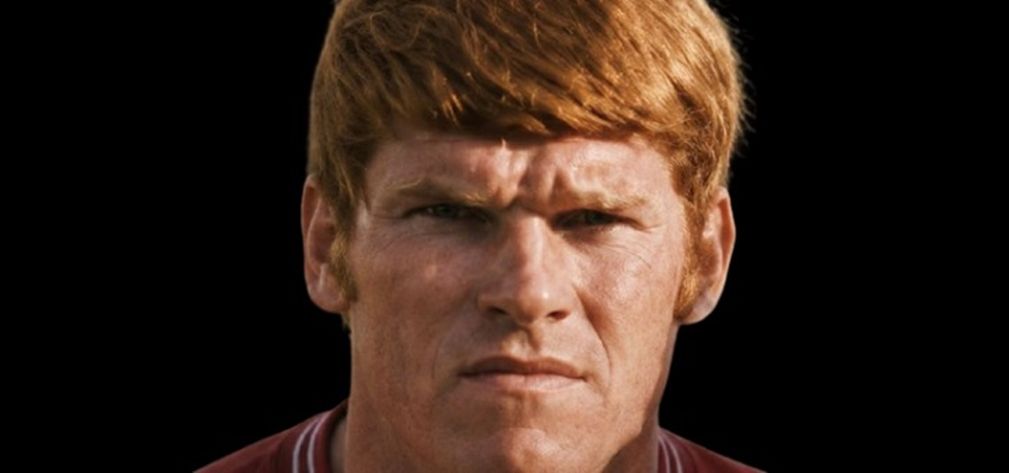
James Rodney Fletcher, born on 23 September 1945, Preston, England.
PART ONE
Rod Fletcher never fitted the usual picture of a professional footballer, because while others placed everything on the uncertain promise of making a living from the game, he trained as a teacher, built a life in the classroom and played much of his football around the demands of a working week, yet for several seasons he remained one of the most effective forwards operating in the lower divisions. He learned the game in Lancashire and appeared for Nelson as a teenager before Leeds United took him into their youth set-up in December 1962, when he was only 17 years of age, and although joining the Peacocks at that time offered an exciting opportunity, it also placed him inside a club whose standards and ambitions were rising rapidly.
Fletcher spent two years in the junior sides but began to suspect that he might not establish himself at the highest level, so rather than waiting indefinitely for an opening which might never arrive, he left Elland Road and enrolled on a teacher-training course at Madeley College in Staffordshire. Football remained important, and he represented the college while continuing to look for a route back into the professional game, but education gave him the security that football could not promise, and this balance between two occupations would shape everything that followed.
By his final year at Madeley, Fletcher had joined nearby Crewe Alexandra, and towards the end of the 1966–67 season he made his first Football League appearance, although that solitary outing did not immediately suggest that more than 200 league games lay ahead. Crewe could offer him football, but his teaching qualifications were now taking him in another direction, and after leaving college he accepted a post as a physical education teacher at Western Comprehensive School in Grimsby, which meant that remaining in Cheshire became increasingly inconvenient. Lincoln City, by contrast, offered an opportunity close enough to his new workplace for the two parts of his life to exist together, and during the summer of 1967 he moved to Sincil Bank at a time when the club was undergoing extensive changes.
Manager Ron Gray had overseen three successive applications for re-election, and after watching Lincoln struggle at the bottom of the Fourth Division he cleared out much of the playing staff and brought in a collection of replacements. Some were expected to strengthen the first team, while others, including full-back Alan York, midfielder Bobby Samuels and Fletcher, appeared more likely to provide cover. Fletcher therefore arrived without great publicity, and as a former Leeds junior with one senior appearance behind him, as well as a full-time teaching position to occupy his weekdays, he had to earn attention through the reserve side.
He did that almost immediately by scoring in his first reserve appearance, but a quick goal did not alter his position overnight, and he spent the opening months of the 1967–68 season outside the senior team while Lincoln tried to build something more dependable after years of failure. An injury to recent signing Norman Corner finally gave Fletcher his chance at the end of October, when he was selected for his City debut against Barnsley at Oakwell, but the afternoon ended in a narrow 2–1 defeat and he was soon returned to reserve football. Gray was not yet persuaded that the young part-time forward could lead the attack, and defender Jim Grummett was instead pushed into an advanced role as the manager searched for an alternative to the increasingly disappointing Corner.
Fletcher did not complain publicly or allow the setback to interrupt his scoring, and after collecting 12 reserve goals he earned a place among the substitutes for York City’s visit to Sincil Bank at the end of January. He then replaced Grummett in attack for two matches, although neither provided the breakthrough he needed, because Lincoln lost at Crewe and were beaten by Notts County on Fletcher’s home debut. With Peter Kearns subsequently signed and Corner rediscovering some of his form, Fletcher was pushed down the order once more and spent the rest of the season back in the reserves.
PART TWO
Although York and Samuels were released in the summer of 1968, Rod Fletcher had done enough to survive the changes, having finished as the reserve team’s leading scorer with 17 goals, and that total demonstrated both his knack for reaching useful positions and his willingness to keep working when first-team recognition remained scarce. The difficulty was that scoring for the second team and convincing Ron Gray that he could do the same in the Fourth Division were different matters, particularly when Fletcher was not training under precisely the same conditions as teammates who were full-time professionals. His next senior chance came in the middle of October 1968, when he deputised for Dave Smith on the left wing, but one appearance there was followed by another lengthy spell in the reserves.
Lincoln were sitting in a promising league position, yet their lack of goals concerned Gray, and the manager responded by signing Leicester City reserve Bobby Svarc rather than promoting Fletcher permanently. A further alteration followed when the hard-working but goal-shy Corner was replaced by Alick Jeffrey, the former Doncaster Rovers prodigy once celebrated as the “Golden Boy,” but neither Jeffrey nor Svarc provided the required answer. By the middle of March 1969, Lincoln had slipped to eighth, the two newcomers had produced only one goal between them, and even Grummett had been tried in attack again, so Gray finally turned to a reserve forward who had scored seven times in seven games.
Fletcher was 23 by then, and he knew that another unconvincing spell might confirm the doubts which had followed him since Leeds, but instead he produced a burst of finishing which changed his standing at Sincil Bank within weeks. His first match back came at Chesterfield, where a fierce shot secured a 1–1 draw, and he followed that by scoring again as Darlington were beaten 2–1 in Lincoln. An injury suffered during the Darlington match forced him to miss the next two fixtures, but the interruption did not cool his form, because he returned on Good Friday and scored the only goal at Aldershot.
Less than 24 hours later, Workington visited Sincil Bank and Fletcher struck the only senior hat-trick of his playing days in a 4–1 victory, while Easter Monday brought another demanding engagement at home to Bradford Park Avenue. Fatigue might have been expected after two matches in quick succession, particularly from a man also employed outside football, but Fletcher scored twice as City won 3–2 and completed a remarkable holiday programme. He failed to find the net at Grimsby in the following fixture, yet responded with the winner when Aldershot came to Lincoln, and although he did not score in the last two matches, his nine goals from nine appearances had transformed a previously uncertain campaign.
That late surge came too late to carry Lincoln into the promotion places, particularly because the Imps had played more games than several of the sides around them, and an eighth-place finish brought another season of frustration, but Fletcher had at least made himself impossible to ignore. He began 1969–70 as City’s principal striker, with Svarc initially playing beside him, and hopes were high that Gray’s team could finally mount a sustained challenge after finishing strongly. The opening afternoon against Colchester United offered an early glimpse of Fletcher’s confidence, because he scored two goals within approximately 30 seconds to put Lincoln 2–0 ahead during the first half of the tie, yet the defence failed to protect that advantage and a breathless contest ended in a 3–3 draw.
Defeats followed in the next two games, prompting Gray to replace Svarc with Jeffrey, and both Fletcher and Jeffrey scored when Southend United visited Sincil Bank, although City again surrendered goals at the other end and had to settle for another 3–3 draw. Their winless beginning finally ended with a 2–0 victory over Chester in the middle of September, and the same score was recorded at Grimsby in the next match, when Fletcher headed the opening goal in front of a crowd which almost certainly included pupils from Western School, where he remained a familiar figure during the week.
The contrast between those two parts of Fletcher’s life was striking, because boys who saw him taking lessons in Grimsby could watch him leading Lincoln’s attack at the weekend, and his performance in a 4–0 victory over York City strengthened the feeling that he had become the forward Gray had been seeking. He opened the scoring and earned a penalty as City briefly climbed above the middle of the table, but results soon became uneven once more, even though Fletcher maintained his own productivity. Two goals at Swansea earned Lincoln a point and gave him six in seven matches, while an injury to Jeffrey led to Trevor Meath, newly recruited from Walsall as a midfield player, being pushed forward alongside him.
Fletcher reached 14 goals by the middle of December, more than three times the total managed by any teammate, and three consecutive victories revived talk of promotion, but a serious injury to Meath removed one of City’s most powerful performers for the remainder of the season. Lincoln lost their momentum and Fletcher endured his first barren spell as an established first-team player, going 11 matches without scoring while his partners continued to change. He managed only two more goals before the season ended, but his total of 17 in all competitions remained respectable, particularly as he appeared in every match and once again carried a large share of the scoring burden.
PART THREE
Another eighth-place finish was not enough for a board increasingly impatient for promotion, and changes behind the scenes resulted in Ron Gray losing his position, with trainer Bert Loxley installed as manager. Rod Fletcher had flourished after Gray finally trusted him through the middle, but Loxley preferred bigger forwards and opened the 1970–71 campaign with new signings Percy Freeman and Derek Trevis in attack. Despite being Lincoln’s leading scorer during the previous season, Fletcher was moved to the left wing in place of Dave Smith, and although his pace allowed him to make ground down that side, his reluctance to deliver crosses with his left foot limited his effectiveness.
Fletcher lost his place to Smith after four matches and dropped to the bench, then returned as a replacement for the injured Freeman at Barrow, where Lincoln won 4–1. Loxley praised Fletcher’s “honest endeavour and tremendous work rate,” qualities nobody who watched him regularly was likely to question, but those compliments did not bring a settled position and he was soon among the substitutes again. For a forward who had scored so freely only months earlier, the situation must have been maddening, because he was being asked to cover several jobs without being given a sustained opportunity in the one position where he had already proved most dangerous.
Freeman and Trevis initially combined well, but two defeats altered Loxley’s thinking, and after Lincoln conceded four goals at Stockport County in early October, Trevis was switched into defence and Fletcher returned to the attack. He answered in the most practical manner, scoring twice in three matches, yet injuries elsewhere in the team meant that he was soon moved again, this time returning to the left wing because Smith was required in midfield. Lincoln defeated Barrow in the FA Cup with Bobby Svarc, recalled from a loan spell with the Cumbrian club, appearing and scoring against the side he had temporarily represented, and Fletcher remained involved as City negotiated the early rounds.
Bradford City required three matches to overcome in the next round, and Fletcher scored in the second of those meetings, but even this did not secure a lasting place through the middle. An injury to Gordon Hughes led to Fletcher being stationed on the right wing for several games, and when Freeman was unavailable he moved forward again to partner Svarc, who had struck a rich run of goals since returning. Fletcher scored during a defeat at Darlington, Lincoln’s fourth successive loss away from home, but he was subsequently sent back to the flanks, first on the left and then on the right after the experienced Hughes was allowed to leave.
Lincoln’s decline gathered pace as the season continued, and Loxley attempted to strengthen his side by signing Alan Gilliver from Brighton and Hove Albion, another powerful forward whose arrival underlined the manager’s preference for a traditional target man. Gilliver was injured during his first appearance, however, and Phil Hubbard replaced him in attack, while a managerial change removed Loxley and brought former Manchester United and Scotland striker David Herd to Sincil Bank. Herd retained Fletcher as a right winger rather than restoring him to the centre, and although the part-time player remained industrious, five different roles across a difficult season prevented him from reproducing the figures of the previous two years.
Fletcher´s last Lincoln goal came in a rare victory over Oldham Athletic in the middle of March 1971, but a remarkable 5–4 home defeat by York City was followed by another demotion to the bench. Fletcher’s final appearance for the Imps came as a substitute for Svarc during a heavy 3–0 home loss to Barrow, and he ended the season with five goals from 38 appearances in all competitions. City finished in the re-election places despite Herd’s arrival, and when the manager began rebuilding during the close season, Fletcher was placed on the transfer list along with several others.
There was no shortage of forwards at Sincil Bank by then, because Herd could choose from Freeman, Gilliver and Svarc, who had finished with 15 goals, as well as the emerging John Ward and Hubbard, whose increasingly regular use in attack had brought him a club-leading total of 19. Even so, many City supporters felt that Fletcher had been treated rather harshly, because he had spent much of the season filling gaps rather than playing in the position from which he had scored nine goals in nine matches during the spring of 1969 and 17 in all competitions the following year.
His departure was therefore understandable, and so was his choice of destination, because Scunthorpe United allowed him to remain close to his teaching post in Grimsby while offering the chance to become a central striker again. Scunthorpe had just sold Kevin Keegan to Liverpool and required a replacement for a forward who was about to become one of the biggest names in English football, yet they paid Lincoln only £2,500 for Fletcher. The fee would quickly look like an outstanding piece of business, because the teacher who had been shifted from one wing to another at Sincil Bank was about to enjoy the finest season of his playing life.
PART FOUR
Scunthorpe generally paired Rod Fletcher with George Kerr, and the arrangement provided the balance and stability he had seldom enjoyed during his final year at Lincoln. Fletcher hit his first goal of the 1971-72 campaign in a 4-1 defeat to Grimsby Town at Blundell Park on 14 August, and then got the winner in a 3-2 win over Southend United at Roots Hall on 30 August, before netting again in a 2-0 victory against Colchester United at Old Shaw Ground on 28 September. He recorded his fourth goal of the season in a 1-1 draw with Reading at Old Show Ground on 27 November and scored another one in a 1-0 win over Gillingham at Priestfield Stadium the following week. On 11 December, Fletcher netted of one the goals in a 2-0 triumph against Chester at Old Show Ground and found the goal again in a 2-0 win over Doncaster Rovers at Belle Vue seven days later.
With the new year rolling in, Fletcher registered a goal in a 1-1 draw to Colchester United at Layer Road on 21 January and followed up by scoring a brace in a 2-1 victory against Barrow at Old Show Ground on 12 February. He notched another brace in a 3-0 beating of Brentford in front of a crowd of 12,000 people at Griffin Park on 19 February and was on target again in a 3-0 triumph over Exeter City at Old Show Ground on 26 February. After scoring a consolation in a 2-1 loss to Workington at Borough Park on 4 March, he grabbed a brace in a 3-0 success against Bury at Old Show Ground on 11 March and proceeded to net the winning goal in a 1-0 win over Darlington at Feethams on the final day of the month. On 11 April, he bagged his fourth brace of the campaign when Scunthorpe edged out Cambridge United 2-1 at Old Show Ground, taking his league tally to 19 goals.
Fletcher appeared in every league game during 1971–72 and scored 20 goals in all competitions, finishing as the club’s leading marksman and supplying the decisive edge in a tight Fourth Division promotion contest. There was an added twist because Lincoln were also involved in that race, which meant Fletcher was competing directly against the club that had regarded him as surplus to requirements only months earlier, and when the season was completed, Scunthorpe had taken fourth place by a single point ahead of the Imps.
The outcome offered a plain judgement on his value: Lincoln had possessed a proven scorer, used him across the forward line, sold him cheaply and then watched his goals help another Lincolnshire club claim the promotion they wanted for themselves. Fletcher’s success did not rest solely on finishing, because his movement, pace and persistent running created room for those around him, but 20 goals remained the clearest measure of his contribution. It was also an impressive return for a man still dividing his time between professional football and teaching, and it confirmed that his earlier scoring run for Lincoln had been more than a brief accident of form.
Promotion carried Scunthorpe into the Third Division for 1972–73, where the opposition was stronger and chances were generally harder to create, but Fletcher’s reliability did not disappear even though his scoring rate declined. He missed only one league fixture and finished with 11 goals in all competitions, a useful contribution in a side fighting to retain its new status, yet Scunthorpe were unable to establish themselves at the higher level and suffered immediate relegation. Fletcher had therefore experienced the satisfaction of promotion and the disappointment of dropping back within two seasons, and when 1973–74 started he remained with the Iron in the Fourth Division.
He scored once in ten appearances during the opening months, but his circumstances were changing and another move within Lincolnshire soon became attractive. Grimsby Town were playing in the Third Division, and a transfer there in November 1973 brought Fletcher even closer to Western Comprehensive School, removing much of the travelling which had complicated the combination of his two occupations. Having represented Lincoln and Scunthorpe, he had now completed the trio of Lincolnshire’s Football League clubs, while Crewe remained the brief starting point which had given him his first senior appearance.
Unfortunately, the move to Blundell Park arrived just as Fletcher’s body began to resist the demands he had placed upon it, and a succession of knee injuries prevented him from establishing himself with Grimsby. He made only 12 appearances during the remainder of the 1973–74 season and scored one goal, a modest return compared with the 20 he had collected for Scunthorpe only two years earlier, but the explanation lay in his physical problems rather than any shortage of effort. He attempted to continue and appeared once more in August 1974, yet that proved to be his final Football League match, bringing his senior playing days to a close at 28, shortly before his 29th birthday.
His overall league record stood at 201 appearances and 60 goals for Crewe Alexandra, Lincoln City, Scunthorpe United and Grimsby Town, figures which deserve to be considered alongside the conditions under which they were accumulated. Fletcher had not followed the usual full-time route, nor had he been granted a settled place during every season, and at Lincoln in particular he was frequently moved away from the centre to cover both wings. Nonetheless, a return of 60 goals represented one in approximately every three and a third appearances, while his best periods showed that he could score in clusters capable of changing a team’s season.
Leaving the Football League did not bring an immediate end to Fletcher’s involvement in the game, because in 1975 he became manager of Immingham Town in the Lincolnshire League, a position he held until 1977. The appointment suited both his knowledge of local football and the leadership skills developed in education, while allowing him to remain involved without subjecting his damaged knees to the weekly demands of the professional divisions. He later finished his active playing days with Louth United in the Midland League, maintaining the connection with Lincolnshire which had defined most of his senior football.
In his weekday occupation, meanwhile, Fletcher taught both physical education and English at Western School before moving to Clee Grammar School, and his progression through education eventually took him to Humberston Comprehensive School. Fletcher rose to become deputy head there and remained in the profession until retiring in 2003, which placed his achievements as a footballer in their proper setting. The game provided memorable afternoons, promotion with Scunthorpe and 60 league goals, but teaching was never merely something he did until football worked out; it was a serious commitment that lasted for decades and carried responsibilities far beyond the final whistle.