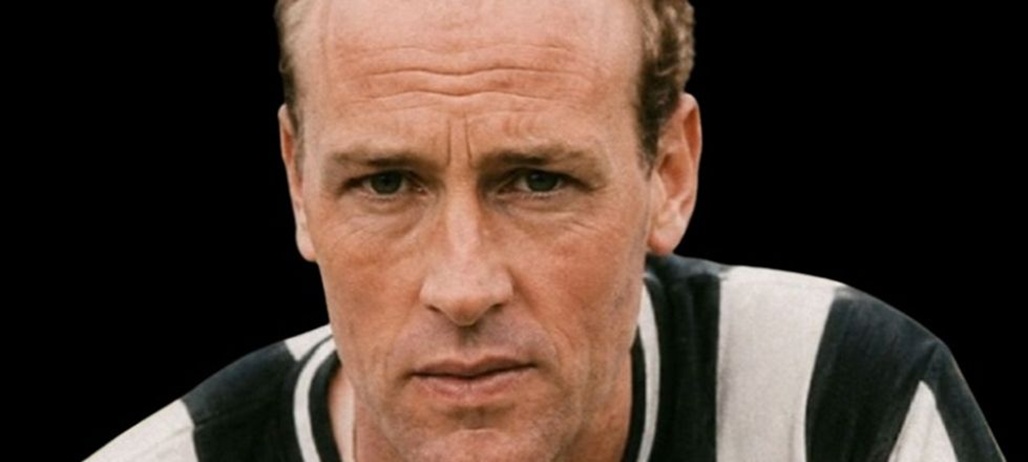
James Iley, born 15 December 1935, South Kirkby, England.
PART ONE
Jim Iley signed professional forms with Sheffield United in 1953, at seventeen years of age. He was, by all accounts, a natural at left-half: strong in the tackle, precise in his distribution, blessed with a shot that opposing goalkeepers came to fear whenever he found space twenty-five yards out. Under Joe Mercer, one of the shrewdest football men of that or any era, Iley graduated from trialist to first-team regular with a speed that surprised even those who’d watched him at Pontefract, and although the exact appearance tally has been recorded differently across the years — some settling on 99 league games, while others push the figure as high as 112 — what is beyond dispute is that Iley spent four seasons, from 1953 to 1957, as a fixture in the Blades’ midfield, and that his form was good enough by 1956 to earn him a place in a Football League representative side against the Irish League, no small honour for a boy barely out of his teens.
Those Sheffield United years were not glory years, in truth, and it would be dishonest to pretend otherwise. The club finished twentieth in the First Division in 1953–54 and thirteenth the following season, before relegation arrived at the end of 1955–56, sending the Blades down among opposition that offered fewer household names but plenty more elbows. Yet even in the Second Division, where United rallied to finish seventh in 1956–57, Iley’s tenacity in midfield remained one of the few constants supporters could rely upon, and it was this consistency — not flashiness, never flashiness, but a steady, combative reliability — that would come to define him wherever he went for the next two decades.
There was something almost inevitable about a boy from that particular corner of the West Riding turning out to be handy with a football, because South Kirkby and its surrounding pit villages had, for a generation or two, been quietly exporting footballing talent to the professional game in numbers well out of proportion to their size. The mines demanded a certain hardness of body and temperament from the men who worked them, and that same hardness translated readily enough onto a football pitch, where a half-back needed to win the ball first and think about using it second.
Iley carried that toughness with him throughout his playing days, and those who played alongside him at Bramall Lane in the mid-1950s remembered a young man who tackled as though the opposing forward had personally wronged him, then, having won possession, would look up and find the simplest, most useful pass available rather than showboat for the crowd. It was not a glamorous way to play the game, but it was an effective one, and it kept him in United’s first team through four increasingly difficult seasons for the club as a whole.
Money, too, was tighter at Bramall Lane in those years than the club’s history and reputation might have suggested it ought to be, and like most of his contemporaries Iley was not paid anything approaching what a footballer of comparable ability might command today. The maximum wage still hung over the English professional game like a low ceiling, and even a regular first-team player with representative honours to his name earned barely more than a skilled tradesman. It was a fact of football life that Iley, coming as he did from a mining background where wages were harder still and considerably more dangerous to earn, seems never to have complained about; by his own later reckoning, simply being paid to play the game he loved, rather than descend a mineshaft each morning, already amounted to a stroke of considerable good fortune.
In August 1957, Sheffield United sold Iley to Tottenham Hotspur, and by his own telling in later life, he didn’t much fancy the move at first. He was, according to those who knew him, essentially pushed towards London by a club keen to cash in, and the young Yorkshireman found himself billeted for a spell with an elderly landlady in Ponders End whose house, to his considerable discomfort, was overrun with cats. For a time he kept training with Sheffield United and living in the city, commuting down to White Hart Lane only when duty called, unable quite to let go of home. But football has a way of forcing a man’s hand, and when Spurs manager Jimmy Anderson threw him straight into a first-team squad bound for Newcastle upon Tyne in late August 1957 — with barely a training session to his name — Iley had little choice but to sink or swim. He made his Tottenham debut on 31 August 1957 in a league fixture against Newcastle United, a club that would one day come to define the finest years of his own career, though nobody watching that afternoon could possibly have known it.
Once settled, Iley became a regular fixture for Spurs, first under Anderson and then under Bill Nicholson, contributing to a side that finished third in Division One in 1957–58 — Tottenham’s best league placing in years — and adding representative caps for England’s Under-23s and the Football League to his growing collection of honours. He earned his solitary Under-23 cap in a 1958 fixture against Wales, lining up alongside players who would go on to become household names themselves, Jimmy Greaves and Brian Clough among them, plus a young Don Howe, though Iley himself never much dwelt on the company he kept; he was there to do a job, and the job was tackling, passing, and holding a midfield together. Across two seasons at White Hart Lane he made 57 senior appearances, a spell remembered fondly enough by the club that, decades later, in the tributes that followed his death, Tottenham chose to highlight precisely those years and precisely that tally.
Nicholson’s arrival partway through Iley’s time at the club marked the beginning of one of the great managerial reigns in English football. And although Iley himself would depart before Nicholson’s Tottenham reached its full, double-winning flowering in 1960–61, he nonetheless played under the early, formative version of a man who would go on to transform the club entirely. Teammates from that period recalled Iley as a willing pupil of Nicholson’s demanding training regime, a man who took instruction well and applied it without complaint even when it meant hours of unglamorous repetition on the Spurs training pitches. And yet, for all the improvement in his game and for all Tottenham’s rise up the table, something in Iley still hankered after Yorkshire, and after the sort of unpretentious, close-knit football community he had known as a boy; London, however grand a stage it offered, never quite settled into his bones the way Sheffield had, nor the way Newcastle later would.
PART TWO
By the summer of 1959, restless again and seeking regular first-team football rather than the rotation that came with squad depth at a big club, Jim Iley moved on to Nottingham Forest. It was, in a sense, a lateral move rather than an upward one, yet it suited him: over three seasons at the City Ground he amassed 93 Football League appearances and scored four goals, filling in across midfield with the sort of positional flexibility that made him useful to any manager short of options. Nottingham Forest finished twentieth in 1959–60, fourteenth in 1960–61, and sixteenth in 1961–62 — solid, unspectacular, mid-table First Division fare — and Iley’s contribution throughout was less about individual brilliance than about defensive discipline and a willingness to do the unglamorous side of the job that kept a team from drifting toward trouble.
It was, by most accounts, a happy enough spell for Iley personally, even if silverware never arrived, and Forest’s supporters of that period remembered him as a dependable, hard-working presence rather than a star turn — precisely the sort of professional a well-run mid-table club relies upon disproportionately, even if such players rarely make the newspaper headlines the way a prolific striker or a mercurial winger might. Nottingham, industrial and unpretentious in its own way, suited Iley’s temperament rather better than London had, and though he could not have known it at the time, the three years he spent quietly honing his all-round game at the City Ground would prove the ideal preparation for the far greater challenge, and the far greater reward, waiting for him a short distance up the A1 in Newcastle.
Then, at the start of the 1962-63 campaign, came the move that would define him. Newcastle United, rebuilding under the astute Joe Harvey and looking to force their way back into the First Division after slipping down, signed Iley from Nottingham Forest and handed him the captain’s armband almost immediately — remarkable trust to place in a player only just arrived at the club. He was given his black-and-white debut on 8 September 1962 against Plymouth Argyle at St James’ Park, and from there began seven years of service that would come to represent, by any honest measure, the finest football of his life.
Newcastle finished seventh in 1962–63 and eighth in 1963–64, gradually assembling the pieces, before the 1964–65 campaign delivered what everyone at St James’ Park had been building toward: the Second Division championship, won by the narrowest of margins, pipping Northampton Town to the title by a single point. Iley, ever-present bar four matches that season, contributed five goals of his own to the promotion push, marshalling a half-back line that also featured Stan Anderson and John McGrath, and it was as captain that he led Newcastle out for their return to the top flight, a moment that former teammate Bob Moncur would later recall with particular warmth, remembering Iley as the quiet professional who steadied younger players around him without ever needing to raise his voice.
The scale of what Newcastle achieved in 1964–65 deserves rather more than a passing mention, because promotion by a single point, in a division as competitive and unforgiving as the old Second was, tends to be settled by the smallest margins imaginable: a missed penalty somewhere in October, a scrambled equaliser in April, the sort of half-chance a captain converts on a wet Tuesday night that nobody outside the ground remembers six months later but which, added up across forty-two matches, makes all the difference between promotion and mid-table anonymity. Iley, ever-present bar those four absences, was the man Harvey trusted to organise his half-back line match after match and week after week, and it says something about the esteem in which he was held that the armband never left his arm throughout.
Iley’s Newcastle service didn’t end there, of course. He remained a first-team fixture through the following seasons as Newcastle adjusted to life back in the First Division, even featuring in a brief European excursion in the Inter-Cities Fairs Cup away to Feyenoord in Rotterdam, a rare taste of continental competition for a player whose career had otherwise been built almost entirely on English soil. But age and the churn of squad rebuilding began to catch up with him by 1968, as it eventually catches up with every player no matter how durable, and his final appearance for the club came on 25 September 1968 against Southampton.
By January 1969, with Newcastle’s fortunes fluctuating and younger legs pressing for his place in midfield, he left St James’ Park on a free transfer, having made 249 appearances in total for the club — figures vary slightly on his exact goal tally, with some club histories citing eleven and others as many as sixteen, though nobody disputes that 249 caps in black and white stripes represented an extraordinary stretch of service for a man who arrived, remember, only as a stopgap captain in 1962. Supporters of that generation still speak of him with genuine warmth, not because he was the most gifted player to wear the shirt but because, week in and week out, he simply never let them down.
PART THREE
Peterborough United came calling in January 1969, and Iley took the job as player-manager, a role that in those days demanded a man be simultaneously boots-on tactician and boardroom diplomat, often with precious little time to be either. It was a demanding posting: Peterborough were scrapping in the lower reaches of the Football League, and Iley’s first notable contribution to the club’s history was, rather less gloriously, becoming the first Posh player ever sent off in a Football League fixture, back in August 1969.
Nevertheless, he stabilised things sufficiently to help the club avoid the ignominy of re-election in 1968–69, finishing eighteenth, before guiding them to ninth in 1969–70 and eighth in 1971–72 — respectable positions for a Fourth Division outfit still finding its feet. As a player during this spell he amassed 76 appearances and registered five goals, continuing to turn out in midfield even as the burdens of management multiplied around him. It wasn’t to last, though: following a heavy 8–2 defeat against Chester at Sealand Road on 26 August 1972, the Peterborough board dispensed with his services, bringing his time at London Road — and, in effect, his playing days altogether — to an abrupt close.
Iley’s next posting came in July 1973, when Barnsley appointed him manager, and here he would remain for the best part of five years, the longest single managerial tenure of his working life. The Tykes had been marooned in the Fourth Division since relegation in 1972, and Iley inherited a club short on confidence and shorter still on resources, a familiar enough position for a manager who had already spent three years learning the trade the hard way at Peterborough. Over 254 matches in charge, he won 93, drew 68, and lost 93 — a modest return by the raw arithmetic of it, yielding a win percentage a shade under 37 per cent — yet the bare figures tell only part of the story, and anyone who reduces a five-year managerial tenure at a struggling lower-division club to a single win percentage is missing rather more than they’re capturing.
Money was the great constraint at Oakwell throughout Iley’s time there, as it had been at Peterborough and would be again at Exeter, and much of his work went into simply keeping the club solvent and functioning rather than chasing instant success on the pitch. Barnsley’s form steadied gradually under his stewardship nonetheless, and his final two seasons brought sixth- and seventh-place finishes, the platform from which the club would spring in the years immediately following his departure, winning successive promotions in 1979 and 1981 that carried them back up to the Second Division. Fans of that era, reflecting years later, credited Iley specifically with putting Barnsley’s finances on a sounder footing, work that went largely unheralded at the time but which paved the way for what came after under his successors. He left Oakwell in April 1978, with money at the club still tight and patience elsewhere wearing thin, a departure that, in hindsight, arrived rather sooner than the club’s subsequent progress might have warranted.
Blackburn Rovers moved swiftly to appoint him the same month he departed Barnsley, and Iley took charge at Ewood Park in the Third Division. It proved a brief and largely unhappy experience: across 28 matches he managed just nine wins against eight draws and eleven defeats, a win rate barely above 32 per cent, and though Blackburn finished a reasonably respectable tenth that season, results in the shorter term were poor enough that his time in charge was over by November 1978, barely seven months after it began. It stands as the briefest of his managerial postings, and by most reckonings the least happy.
After a gap of a year and a half, Iley returned to management in July 1980, this time at Gigg Lane with Bury, another Third Division team in need of steady hands. He remained in post until February 1984, overseeing 188 matches, of which 71 were won, 58 drawn, and 59 lost, for a win percentage of just under 38 — the best of his four managerial stints by that particular measure. Bury achieved solid mid-table finishes under him, twelfth in both 1980–81 and 1982–83 among them, built on the same disciplined, defensively organised approach that had characterised his own playing days.
But it was one cup tie above all others that Bury supporters of that generation still talk about: in the 1980 League Cup, Iley’s Fourth Division Bury dispatched his old club Newcastle United — by then a Second Division outfit, and supposedly the stronger side on paper by some distance — over two legs, a genuine giant-killing that remains one of the enduring highlights of his time in management. There must have been a certain private satisfaction in it for Iley, sending the club where he had captained a promotion-winning side crashing out of a cup competition at the hands of the unfashionable Division Four outfit he now managed, though by every account he was far too professional a man to make much public show of it, preferring simply to let the result speak for itself.
Iley eventually left Bury in the middle of the 1983-84 campaign amid calls for improved results, the Gigg Lane side left in a broadly stable position for his successor to inherit, much as Barnsley had been six years earlier — a pattern, by now, that was becoming something of a hallmark of his managerial approach: arrive at a club in difficulty, restore order and organisation over a period of years, then move on, often before the fruits of that stability were fully harvested by others.
PART FOUR
Jim Iley´s final managerial post came at Exeter City, appointed on 7 June 1984, shortly after the Grecians had suffered relegation from the Third Division under his predecessor, Gerry Francis. Iley arrived with a modest £100,000 wages budget and, characteristically undaunted, set about an almost wholesale reconstruction of the squad, bringing in sixteen new faces across the 1984–85 season, including three players signed on loan.
Of that intake, only two — defender Jimmy McNichol and Danny O’Shea — made any real impression on the Exeter supporters, though McNichol in particular would go on to matter a good deal more to the club in years to come. The season began with real promise: a thumping 5–0 opening-day victory over Northampton Town suggested Iley’s rebuilding job might bear fruit quickly. It didn’t, not consistently at any rate, and City’s form dipped as the campaign wore on. Across 46 league matches, Iley’s side won 13, drew 14, and lost 19, scoring 57 goals and conceding 79, finishing eighteenth in a table that, while not disastrous, was not the platform for revival the board had hoped for either. Ray Pratt finished the campaign as Exeter’s leading scorer with nineteen goals, a rare bright spot in an otherwise middling return.
By April 1985, with patience exhausted, Exeter’s directors asked Iley to resign. He refused, arguing — not unreasonably — that ten months was too short a window to fairly judge a rebuilding job of that scale, particularly one that had involved rebuilding the greater part of a playing squad from scratch on a shoestring budget, and supporters rallied behind him with a petition in his support, a rare and telling gesture of loyalty from a fanbase not typically given to public campaigning on a manager’s behalf. It made no difference in the end, however sincerely the petition had been meant; the boardroom had already made up its mind, and results, however contextualised, remained the only currency that mattered in the eyes of most directors.
His tenure at St James Park, Exeter’s ground rather than Newcastle’s — a coincidence of naming that must have amused Iley privately, given how much of his own footballing life had been shaped at the other St James’ Park entirely — concluded acrimoniously that spring, and with it came the close of a managerial career that had spanned four clubs and the best part of sixteen years, taking in two Fourth Division rebuilding jobs, one turbulent short spell in the Third Division, and one that fell somewhere between the two.
Football didn’t quite let go of Iley even once his time in the dugout was done. He took up scouting duties for Luton Town, putting decades of accumulated football knowledge to use in a quieter, less pressured role, spotting talent rather than managing it. Away from the game entirely, he tried his hand at business, buying and running an Italian restaurant in Chorley, Lancashire, an enterprise he kept going for roughly five years before eventually stepping back from it. Throughout these later decades he made his home in Bolton alongside his wife Lily, whom he had met years earlier in Sheffield during his time with the Blades, and it was there, rather than in any of the towns and cities his career had carried him through, that he would spend the great majority of his remaining life.
Family connections ran deeper into the game than most supporters realised. Iley was brother-in-law to Colin Grainger, the former Sheffield United, Sunderland and England winger who also enjoyed a spell as a professional singer, and to Jack Grainger too, another footballing member of that extended Yorkshire family — a reminder that the pit villages of the West Riding produced not just individual talents but whole networks of them, connected by marriage as much as by geography.
In his later years, Iley reconnected regularly with Newcastle United, the club with which he remained most closely associated, taking part in Legends events organised for former players and reflecting, when asked, on a body of work in the game that had carried him from a colliery in South Kirkby all the way to captaining a First Division club. He was characteristically modest about it all, telling one interviewer towards the end of his life simply that nobody could take away what he’d done and the clubs he’d represented, and that he was glad of it.