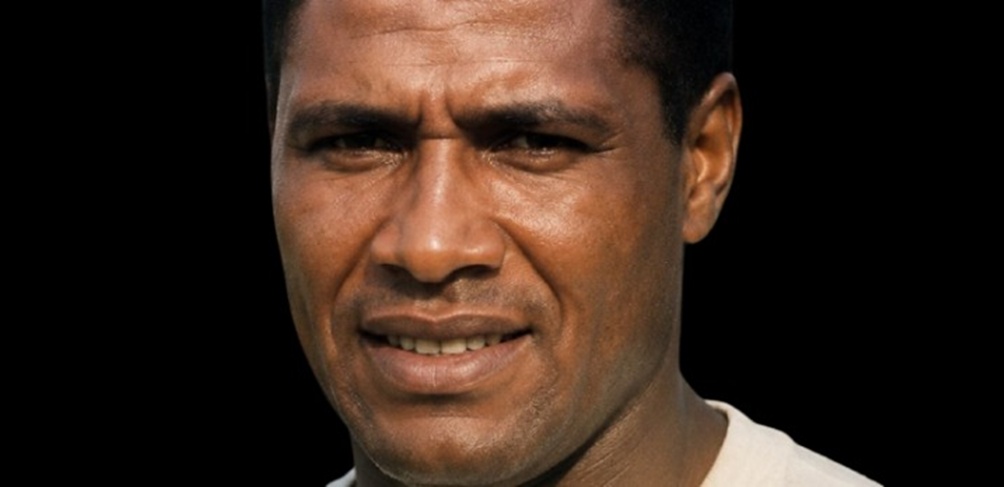
Albert Louis Johanneson, born 13 March 1940, Germiston, South Africa.
PART ONE
Albert Johanneson arrived at Leeds United in 1961 after being recommended to Leeds United by a schoolteacher while playing for Germiston Coloured School and Germiston Colliers in South Africa Leeds in the early 1960s were hardly a club in rude health. They had spent years drifting in the wrong direction, and the board had turned to Don Revie, a thoughtful and ambitious former England international, to take over as player-manager following the resignation of Jack Taylor. Revie inherited a threadbare squad and a ground that had seen better days, but he also inherited, almost by accident, the letter from South Africa recommending a slight, quick-footed left winger who had never played professional football in his life.
Johanneson was invited to Elland Road on a three-month trial, and although he arrived shy and uncertain of his place in what was, for him, an entirely unfamiliar white world, his form on the training pitch was impressive enough that Revie made him his first signing as manager, formally bringing him to the club in April 1961. Within days he was handed his debut, coming on for a 2–2 draw with Swansea Town at Elland Road on 8 April, and while the four appearances that followed before the end of that season gave only the faintest hint of what was to come, they were enough to convince Revie that he had found something rare.
The campaign that followed, 1961–62, was one of genuine peril for Leeds, and it was here that Johanneson’s part in the story truly began to matter. The club spent much of the season staring down the barrel of relegation to the Third Division, and Revie, sensing that his young Leeds side lacked the steel to escape the drop on its own, spent a fee of £25,000 of United’s limited funds on Bobby Collins, a combative Scottish international midfielder nearing the end of a fine spell with Celtic and Everton.
Collins arrived like a jolt of electricity, snarling and demanding and refusing to accept anything less than total commitment from those around him, and although Johanneson featured only sparingly that season, he scored his first goal for the club in a 2-1 League Cup fourth-round replay defeat against Rotherham United at Elland Road in January 1962, before his first league goal arrived in a 1–1 with Walsall at Fellows Park on 14 April. That strike proved to be the making of him. Leeds went unbeaten in their remaining four fixtures, and on the final day of the campaign, 28 April 1962, Johanneson scored the opening goal in a 3–0 triumph at Newcastle United that secured nineteenth place and safety, three points clear of the drop. It was a desperately close escape, but it also gave Revie the platform on which to build.
Around Johanneson, over the following two seasons, a team of real substance began to take shape, forged as much on the training ground as through the club’s celebrated youth scheme. Defender Jack Charlton and midfielder Billy Bremner had already been on the staff when Revie arrived, and now they were joined in the first team by goalkeeper Gary Sprake and defenders Paul Reaney and Norman Hunter, while forwards Don Weston and Jim Storrie proved themselves capable and willing lieutenants. Johanneson himself had by this point become the outright terror of Second Division full-backs, his change of pace so sudden and so complete that defenders who thought they had him covered would find themselves grasping at thin air a stride later.
Then, arguably the finest pieces of business Revie ever conducted arrived in the shape of playmaker Johnny Giles, signed from Manchester United, and forward Alan Peacock, a proven goalscorer bought to lead the line, both of whom made outstanding contributions as the Yorkshiremen pushed for promotion. Johanneson, growing in confidence with every passing month, worked diligently at every facet of his game, and by the 1963–64 season he had established himself as a genuinely powerful attacking force.
He found the back of the net three times in the opening four matches of that campaign, against Bury, Rotherham United and Manchester City, and then rattled in four more in as many games during a run through November and December against Preston North End, Leyton Orient, Swansea Town and Plymouth Argyle. By the time the season closed, with Leeds crowned Second Division champions and undefeated at Elland Road in all competitions, Johanneson had scored 13 league goals from 37 appearances, and with two further strikes in the League Cup his tally for the campaign stood at 15, comfortably his best return in a Leeds shirt.
PART TWO
Promotion secured, Leeds arrived in the First Division for 1964–65 with a team that nobody outside Yorkshire had expected to matter, and Albert Johanneson wasted no time announcing that the step up in class would not trouble him. He scored the club’s first goal of their return to the top flight in an impressive 2–1 win over Aston Villa at Villa Park on 22 August 1964, and he went on to make 30 league appearances that season, contributing nine goals as Revie’s team mounted an audacious and largely unforeseen challenge for the championship itself. Leeds ultimately missed out on the title to Manchester United by the barest of margins, denied only on goal average, a statistic so cruel that it would be scrapped by football’s authorities within a few years of that campaign. But there was compensation of a kind, because for the first time in their history Leeds United reached the final of the FA Cup, and it was there, on 1 May 1965, that Johanneson wrote himself into the wider history of the English game by becoming the first black footballer to appear in an FA Cup final at Wembley Stadium.
Both sides lined up in a 4–4–2 formation that afternoon, and it was Liverpool who kicked the match into life. Barely five minutes had passed when Liverpool’s Gerry Byrne collided heavily with Leeds captain Bobby Collins and broke his collarbone, yet because substitutions were not permitted in the competition at that time, and because manager Bill Shankly chose not to tell him the full extent of the injury, Byrne simply played on. The opening exchanges were scrappy and nervous, with a Liverpool free-kick from Willie Stevenson causing confusion in the Leeds box before it was scrambled away for a corner, and when Ron Yeats headed that corner on, only a smart intervention from Gary Sprake denied Ian St John.
Leeds tried repeatedly to feed the ball into Johanneson out on the left, and although a Johnny Giles pass intended for him was cut out by Tommy Smith, the flankman remained a constant outlet whenever the Peacocks could find a moment of composure. Liverpool continued to probe, Geoff Strong seeing a long-range effort deflect off Charlton for a flag kick, while at the other end Bremner, Charlton and Storrie all required treatment inside the first sixteen minutes as the game threatened to boil over into something more physical than either manager would have wanted.
As the half wore on, chances arrived at both ends without ever quite being taken. St John was crowded out by Collins after a promising run, Alan Peacock fouled Smith in a moment of frustration, and the Saint himself then dragged a shot wide when well placed. Leeds pushed back, Collins forcing Liverpool goalkeeper Tommy Lawrence into no save at all with a shot from 35 yards that sailed wide, and moments later Peacock headed over from a corner after Callaghan had failed to deal with a Willie Bell run. Liverpool had the better of the closing exchanges before half-time, Callaghan’s low ball across the box being cleared by Giles ahead of the lurking Roger Hunt, and Hunt himself then forced a fine save from Sprake from 25 yards with barely a minute of the half remaining. It finished goalless at the interval, two sides feeling each other out in a final that neither wanted to lose through carelessness.
The second half followed a similar pattern, Liverpool edging territory and chances without finding a breakthrough. Hunt headed wide from a Lawler cross, Bremner made a vital interception to deny Stevenson, and Giles saw a free-kick saved by Lawrence before Peter Thompson’s shot was turned behind by Sprake after a driving run past Bremner. Charlton, after colliding with a photographer chasing a loose ball, needed treatment of his own midway through the half, and as Liverpool continued to press, Revie shuffled his shape, pushing Bremner up to centre-forward, dropping Giles back into midfield, and switching Johanneson from the right flank to the left in an attempt to unsettle Liverpool’s rhythm. Thompson and Strong both tested Sprake again as the half drew towards its close, but neither side could find the goal that would settle matters, and for the first time since the 1947 final, the FA Cup showpiece went to extra time.
It took only three minutes of the additional period for the deadlock to break. Thompson found Byrne, playing on despite his broken collarbone, and Byrne’s cross was met firmly by Hunt to give Liverpool the lead. Leeds responded within eight minutes, Norman Hunter driving a cross in from the left that Charlton nodded down into the path of Bremner, whose finish beat Lawrence and levelled the score at 1–1. Liverpool pushed for a winner, Thompson forcing several more saves from Sprake, while at the other end Bremner drew a save of his own from Lawrence after Reaney had picked him out.
St John then went close from a corner, his header drifting narrowly over, before, with three minutes of extra time remaining, Shankly´s Liverpool side finally managed to find the goal that mattered. Smith found Callaghan, who surged past two Leeds defenders and whipped in a cross that St John headed home to make it 2–1 and hand the Merseysiders the trophy. Johanneson, for his part, had not enjoyed the afternoon he would have wanted, marked tightly and rarely afforded the room to run at defenders that had made him such a menace throughout that promotion-winning campaign, but his mere presence on that Wembley turf had already secured him a place in the history books that no result could ever take away.
PART THREE
What followed over the next several seasons was a slower, sadder story of a player gradually squeezed out of a team that was fast becoming one of the finest in the country. Albert Johanneson remained an important figure for a while yet, and on 26 October 1966 he became the first Leeds player to score a hat-trick in European competition, striking three times as DWS Amsterdam were soundly beaten 5–1 at Elland Road in the Inter-Cities Fairs Cup. Almost a year later to the day, on 17 October 1967, he repeated the feat with another hat-trick as Don Revie´s men thrashed Spora Luxembourg 7–0 in the same competition, a run that would ultimately end with the trophy itself being lifted by Leeds.
Yet a spate of injuries, combined with the rapid emergence of a supremely gifted young winger named Eddie Gray, gradually pushed Johanneson to the margins of the team he had once lit up, and over his final seasons at the club his appearances dwindled sharply. There was still time for one more piece of silverware to find its way into his hands, as Johanneson collected a winner’s medal when Leeds were finally crowned champions of England for the first time in the 1968-69 campaign, a fitting reward for a player who had been there through the leanest years and helped drag the club up from the Second Division in the first place. But by 1970, with Gray established and Johanneson’s body no longer able to reproduce the speed that had once terrified opposing full-backs, Revie decided the time had come to let him go.
Johanneson left Elland Road that year having given nine years of service to a club he had joined as a nervous, unproven trialist from a mining town on the other side of the world. Across all competitions his contribution had been substantial: 172 league appearances brought him 48 league goals, and when cup football is added to the reckoning his total rises to somewhere in the region of 197 appearances and 67 goals, an extraordinary return for a wide player rather than an out-and-out striker. He moved on to York City later in 1970, dropping down to the Fourth Division for what would prove to be the final chapter of his time in professional football, and over the 1971–72 season he scored three goals in 26 appearances for the Minstermen before retirement finally arrived, quietly and without great fanfare, in 1972.
Away from the pitch, Johanneson’s life had already taken shape in ways that brought him real happiness for a time. In 1963 he married Norma Comrie, a pharmacist who had come to England from Jamaica, and together the couple had two daughters, Yvonne and Alicia, before the marriage eventually ended in divorce after eleven years. But life after football did not treat him kindly, and the isolation that had shadowed him even at the height of his years at Leeds, where he often faced vile abuse from crowds up and down the country simply for the colour of his skin, deepened once the structure and purpose of the professional game was taken away from him.
He turned to alcohol, and the addiction that followed proved impossible to shake. There was, even in those difficult years, at least one moment of unexpected kindness recorded for posterity: in the early 1990s, George Best, himself no stranger to the ravages of drink, spotted a dishevelled figure in a Leeds city centre street, recognised the man who had once been the Black Flash of Elland Road, and took him for a meal at a nearby hotel simply to talk. It was a small act, but it spoke to the respect in which Johanneson, even in decline, was still held by those who understood what he had achieved and what it had cost him.
Albert Johanneson died on 28 September 1995, at his flat in Gledhow Towers in north Leeds, the causes recorded as meningitis and heart failure, and desperately, his body was not discovered for a week. He was 55 years old. Yet if his final years were marked by hardship, the years since his death have brought a steady and deserved recognition of what he had done for the game and for those who followed him into it. In 2010, as South Africa staged the World Cup, Johanneson was included in an exhibition researched by the Sheffield-based organisation Football Unites, Racism Divides, examining the story of South African footballers in Britain, and the exhibition was hosted at the District Six Museum in Cape Town, a fitting home given the museum’s own history of documenting the human cost of forced segregation.
In January 2019, Leeds United and Leeds Civic Trust unveiled a blue plaque in his honour on the East Stand at Elland Road, the first such plaque the Trust had ever dedicated to a footballer, and the ceremony was attended by members of his family alongside former Leeds striker Brian Deane. Then, in late 2020, his image was painted onto the side of a building on The Calls in Leeds city centre by the street artist Akse P19, standing alongside fellow Leeds greats Kalvin Phillips and Lucas Radebe in a mural that Radebe himself described as an honour to share, given that Johanneson, in his words, had paved the way for black footballers who followed. Johanneson is remembered today not only for his blistering pace and close control down the Leeds left flank, nor simply for the goals and the medals he collected along the way, but for having walked out onto some of England’s biggest stages at a time when few black footballers were given the chance to do so at all, carrying the weight of that distinction with a quiet dignity that history has only recently begun to properly honour.