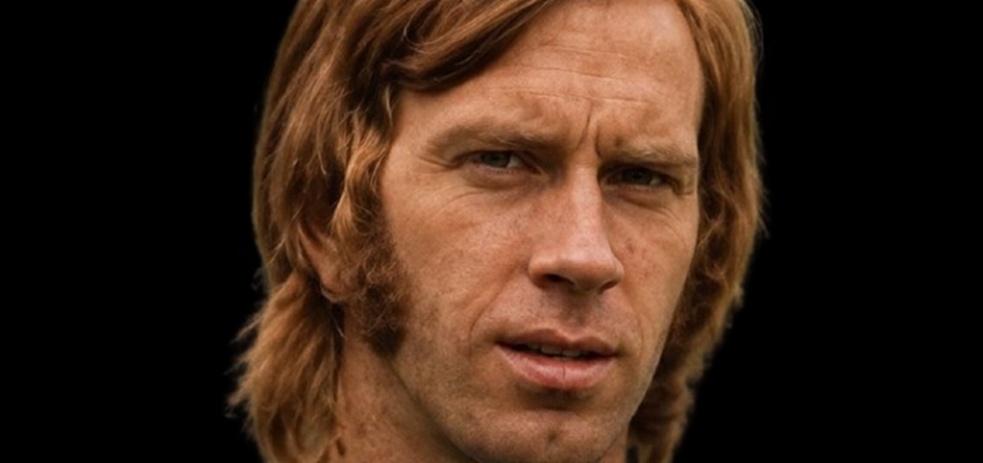
Stephen Whitworth, born 20 March 1952, Ellistown, England.
PART ONE
Steve Whitworth grew up playing for Coalville, banging in crosses and chasing full-backs twice his age around municipal pitches, and it was there that the raw material was first spotted by the sort of watchful scouts who used to haunt schoolboy football up and down the East Midlands looking for the next one. Whitworth himself never dressed it up as anything grander than a boy’s simple wish fulfilled: all he wanted, by his own account, was to pull on the shirt of Leicester City, and everything that followed in the next two decades traced back to that one uncomplicated ambition.
The first proof that he had the game to match the ambition came in 1967, when Whitworth was picked for England Schoolboys, and though the representative fixtures of that vintage rarely make the history books, they mattered enormously to the boys who played in them and to the clubs who were watching. He won four caps that year and, playing mostly through midfield rather than at the back where he would later make his name, he even found the net once. The schedule took him to Berlin on 22 April for a chastening 6–0 defeat to West Germany at the Olympiastadion, and it would have been easy for a less resilient character to let that result rattle him, but instead he was back in the side two days later for a goalless draw with the same West German opponents at the Ludwigparkstadion in Saarbrücken, showing the kind of durability that would define him as a professional.
A fortnight after that he was at the Vetch Field in Swansea on 5 May, where England ran up seven goals against Wales in an overwhelming 7–3 triumph and Whitworth claimed the solitary goal of his schoolboy representative days, before rounding off a productive spring with a 3–2 victory against Northern Ireland at Windsor Park in Belfast on 12 May. Four caps, one goal, and a body of work that told anyone paying attention this was a Leicestershire boy worth keeping an eye on.
Leicester City needed no further persuading, and in 1969, at the age of seventeen, Whitworth signed schoolboy forms and stepped into the club’s youth system, trading representative honours for the daily grind of learning his position under the Filbert Street coaching staff. It was around this time that his position on the pitch changed too, because although he had started out as a right-half in the old-fashioned sense, the coaching staff soon saw more promise in him as a full-back, and he settled into the right-back berth with an ease that suggested he had been born to defend rather than to attack, even if his attacking instincts would never entirely leave him.
Progress through the ranks was rapid, and by 1970 he had been elevated to the England Youth set-up, winning four caps at that level without troubling the scoresheet but doing enough with his defensive reading of the game to catch the selectors’ eye all over again. Those Youth caps came in the qualifying rounds for the UEFA Youth Tournament, and they brought a pair of comfortable victories over the Republic of Ireland, 4–1 away in January and a thumping 10–0 at home the following month, sandwiched around two rather less convincing results against Wales, a goalless draw away followed by a 2-1 home defeat in February and March respectively. Whatever the mixed fortunes of the team, Whitworth’s own form was consistently assured, and it was his composure at the back rather than any personal statistic that earned him the call-ups in the first place.
By September 1970 the teenager was ready for something altogether bigger, and on the second day of that month, at the age of eighteen, he was given his senior debut for Leicester City in a 4–0 Second Division win over Alan Dicks´ Bristol City at Filbert Street. It was the kind of debut a young full-back dreams about, comfortable and goal-laden and entirely free of the sort of chastening afternoon that can knock the confidence out of a newcomer, and Whitworth grabbed his opportunity with both hands.
He barely relinquished his place in the side from that afternoon onwards, featuring in thirty-nine of Leicester’s forty-two league fixtures that season as the club, playing in the Football League Second Division under Jimmy Bloomfield, went about the serious business of winning promotion. Leicester duly claimed the Second Division title that season, and Whitworth, not yet out of his teens, found himself with a promotion medal to show for a debut campaign that most young defenders could only fantasise about, his overlapping runs down the right already a source of encouragement to a Filbert Street crowd hungry for goals from unlikely sources.
Promotion secured, Whitworth’s development as a young international continued on a parallel track, and between 1971 and 1975 he won six caps for the England Under-23 side, scoring once in the process and cementing his reputation as one of the most reliable young right-backs in the country. His Under-23 debut came on 24 November 1971 against Switzerland, a tidy 1–1 draw at Portman Road that gave selectors their first extended look at how he coped against continental opposition, and he followed it with a comfortable 2–0 win over Wales at the County Ground in Swindon on 5 January 1972.
It would be three years before his next notable Under-23 involvement made the headlines, but when it came it was memorable, because on 18 December 1974, in a 3–0 victory over Scotland at Pittodrie, Whitworth got himself on the scoresheet, underlining that whatever his primary job description as a defender, he was never afraid to get forward and support the attack when the situation allowed it. Taken together, those Under-23 appearances completed a representative arc that had begun with schoolboy honours in 1967 and would, within a matter of months of that Pittodrie goal, deliver him to the very top of the international pyramid.
PART TWO
Back at club level, Steve Whitworth was busy writing himself into Leicester folklore, and nowhere more spectacularly than on 7 August 1971, when the Foxes, as Second Division champions, were invited to contest the FA Charity Shield against Liverpool after Arsenal, who had completed the league and cup double, opted out because of a clashing pre-season tour. Filbert Street was packed for the occasion, and it was Whitworth, of all people, who settled the contest, crossing into the Liverpool box only to see the ball cannon around amid a scramble of bodies before dropping invitingly at his feet, whereupon he stabbed it home with his weaker left foot for the only goal of the game.
It remains one of the more improbable footnotes in Leicester’s history that a right-back with a self-confessed standing foot for a left peg should have scored the goal that won the club its first major shield, but score it he did, and it stayed his only goal in 401 appearances for Leicester across all competitions, a single strike that has outlived entire forwards’ seasons in the club’s collective memory. Whitworth would later recall the moment with a shrug of self-deprecation, joking that the ball had bounced kindly off two defenders straight to him and that his left foot was one he had only ever previously used for standing on, but however fortunate the circumstances, the goal stood, and Leicester had their shield.
The Charity Shield triumph at Filbert Street set the tone for a decade in which Whitworth became one of the most dependable fixtures in English top-flight football, even as Leicester’s own fortunes fluctuated season by season under Bloomfield and, later, his successors. Over the course of nine campaigns as a Leicester player, from his 1970 debut through to his departure in March 1979, Whitworth amassed 353 league appearances without ever troubling the scorers in league competition, a statistic that says everything about a full-back whose value lay not in goals but in the relentless, unglamorous consistency of tracking wingers, timing tackles and delivering crosses for others to finish.
Withworth struck up productive defensive understandings across those years with team-mates of the likes of Graham Cross and David Nish, and it was that same reliability which, according to those who worked alongside him at Filbert Street, saw him set a club record at the time for playing in 198 consecutive matches, a run of unbroken selection that only a handful of players in the entire history of Leicester City have ever matched or bettered in terms of total first-team appearances.
It was against this backdrop of consistent club form that Whitworth finally arrived at senior international level, and his call-up in 1975 came under the management of Don Revie, who had taken charge of England following a transitional period and was busy reshaping the defence around younger legs. Whitworth’s senior debut arrived on 12 March 1975 in a 2–0 friendly fixture victory over the reigning World Cup holders West Germany at Wembley Stadium, where he lined up at right-back alongside a fellow debutant, Ian Gillard, on the opposite flank, and the pairing acquitted itself well enough against seasoned continental opposition to suggest Revie had found something durable in defence.
That performance was no flash in the pan, either, because Whitworth went on to start in six of England’s following eight fixtures that year, holding down the right-back position through a demanding stretch that combined qualification matches for the 1976 UEFA European Championship with the traditional British Home Championship programme. He featured in a hard-fought 1–0 away win over Cyprus in a European qualifier on 11 May, then turned out in three successive Home Championship fixtures inside a single week, beginning with a goalless draw against Northern Ireland on 17 May, continuing with a 2–2 draw against Wales on 21 May, and concluding with a result that would come to define the entire campaign, a startling 5–1 demolition of Scotland at Wembley on 24 May.
That afternoon against Scotland, managed by former St Johnstone supremo Willie Ormond, deserves to be remembered in its own right, because it stood as arguably the finest ninety minutes of Revie’s opening season in charge, closing out his first year at the helm on the highest possible note and doing so in front of a Wembley crowd that had, as was traditional for the fixture, been all but taken over by travelling Scots draped in tartan and waving the Lion Rampant. Revie’s side, captained that day by Arsenal man Alan Ball, had been freshened up from the Wales draw a few days earlier, with Kevin Beattie coming in for Ian Gillard at left-back, Colin Bell restored to midfield, and, most significantly of all for a home crowd desperate for spectacle, Kevin Keegan recalled in place of David Thomas. Scotland arrived as many people’s favourites, however, but Wembley, so often described as a graveyard for visiting Scottish goalkeepers, would live up to its grim reputation once again.
PART THREE
In front of a crowd of almost 100,000 people at Wembley, England were ahead inside six minutes, Gerry Francis collecting possession in midfield before striding forward and driving an effort home from twenty yards that Stewart Kennedy would have been disappointed to see beat him, and the goalkeeper had barely gathered his thoughts before England doubled their advantage a minute later, Ball feeding Keegan down the flank with a raking pass that the Liverpool forward chased down with searing pace before whipping in a cross for Beattie to power home a header at the far post, the shot stopper again appearing to lose sight of the ball in flight as he crashed into his own post in the process.
Scotland rallied, unluckily denied a penalty when Arthur Duncan’s cross struck Ball’s arm without the referee, the East German official Rudi Gloeckner, seeing fit to intervene, and they went closer still when Derek Parlane’s shot beat Ray Clemence only to cannon back off the outside of the post, before Alfie Conn and Bruce Rioch both fired narrowly wide as the visitors pressed for a way back into the contest. Their profligacy was punished five minutes before the interval when Colin Bell, having mishit his first attempt from twenty yards, followed up to drive the loose ball past Kennedy for 3–0, though England’s defence, so assured going forward, contrived to hand Scotland a way back into the match right on the stroke of half-time, Dave Watson mis controlling on the edge of his own penalty area to let Ted McDougall in, and when the ball struck Colin Todd’s arm as he tried to dispossess the Scottish forward, Gloeckner pointed to the spot without hesitation, Rioch converting with the coolness of a man who had all the time in the world.
England emerged for the second half undiminished, Francis firing over early on, though the home defence continued to flirt with danger, Todd’s stray backpass almost gifting Duncan a clear run at goal that the winger could only steer into the side-netting once he had rounded Clemence. Fortune, however, remained resolutely on England’s side, and when a free-kick was awarded twenty yards out on the left, a rehearsed routine saw Bell roll the ball through Ball’s legs for Francis to strike, only for the effort to be waved away because the referee had not yet blown for the kick to be taken, his attention still occupied with marshalling the Scottish wall; remarkably, when the free-kick was finally allowed, England ran precisely the same routine a second time, and this time Francis’s shot took a deflection that wrong-footed the flat-footed Kennedy completely, making it 4–1.
The rout was completed when a Keegan header from another free-kick cannoned back off the crossbar, falling to Watson, who somehow contrived to miss from close range and struck the post instead, only for David Johnson to react quickest and prod the loose ball home for his third goal in only two England appearances, sealing a 5–1 victory that would live long in the memory of everyone connected with English football that year, Whitworth included, even if it was the forwards who claimed the headlines that afternoon.
Whitworth’s part in the international story continued a few months later when he featured in a 2–1 friendly win over Switzerland at St. Jakob Stadion on 3 September, before his final cap arrived on 19 November 1975 in a 1–1 draw with Portugal at Estádio José Alvalade during the European Championship qualifying campaign, a result that, combined with others elsewhere, ultimately proved insufficient to take England to the finals. It turned out to be his last involvement at senior level, and although nobody could have known it at the time, the emergence over the following seasons of Liverpool’s Phil Neal, who made his own England debut in 1976 and would go on to become one of the most durable right-backs the national side has ever fielded, meant Whitworth was never recalled to the fold, his seven caps standing as the sum total of a senior international ledger that nevertheless represented a proud achievement for a boy from Ellistown.
PART FOUR
Club football continued to occupy the greater part of Steve Whitworth’s attention, and back at Filbert Street he remained first choice under Jimmy Bloomfield through the mid-1970s, his form never wavering even as Leicester’s league position fluctuated from one campaign to the next. When Bloomfield eventually left in May 1977, Frank McLintock succeeded him, and it was under McLintock, in what by common consent was a miserable season for the club as a whole, that Whitworth’s full-back play stood out as one of the few genuinely bright spots amid a campaign that ended in relegation from the First Division in 1978.
Even in a struggling side, his positioning, his timing and his willingness to get forward and support the front players marked him out as a player operating on a different level to the collective malaise around him, and it was a measure of the esteem in which he was held that, when Jock Wallace arrived to replace McLintock ahead of the 1978–79 season, the new manager continued to pick Whitworth as his first-choice right-back without a second thought. That campaign also happened to be Whitworth’s testimonial year, a fitting tribute to nine seasons of unbroken service and a recognition, from a club not always generous with its praise, of just how much he had contributed to Leicester’s cause since that August afternoon against Bristol City back in 1970.
Wallace, for all his admiration of Whitworth’s ability, brought with him a training philosophy built around relentless high energy that stood in stark contrast to the more considered approach of his predecessors, and although Whitworth remained a regular in the side, it became increasingly apparent as the 1978–79 season wore on that the two men were not natural bedfellows temperamentally. With around ten matches of the season remaining, Sunderland, then chasing promotion from the Second Division, came in with an offer for his services, and Wallace, sensing perhaps that a change of scenery might benefit player and club alike even while he would happily have kept him, gave the move his blessing.
In March 1979, therefore, Whitworth left Leicester City for Sunderland in a transfer worth £120,000, bringing to a close nine seasons at Filbert Street during which he had established himself, by any reasonable measure, as one of the most consistent and durable defenders the club had fielded in its entire history. In one of the odder quirks of the fixture list, Leicester’s testimonial match for their departed favourite, played against Coventry City at Filbert Street, actually took place some eight months after he had already become a Sunderland player, meaning Whitworth found himself walking out at his old ground to be feted by supporters while wearing an entirely different shirt to the one in which he had earned their affection.
The move north proved swift and productive, Whitworth’s extensive experience in the Second Division allowing him to slot straight into Kenny Knighton’s Sunderland side and contribute to their defensive stability without any need for a lengthy period of adjustment. Over two full seasons at Roker Park, from 1979 to 1981, he made 83 league appearances without registering a goal, continuing the pattern of selfless, unspectacular full-back play that had characterised his time at Leicester, and it was during the 1979–80 season, in which he featured in all forty-two league fixtures, that his contribution proved most decisive.
Sunderland finished that campaign as runners-up in the Second Division with fifty-four points, one behind champions Leicester City on fifty-five, in a coincidence that must have raised a wry smile from a man who had spent nine years at Filbert Street, and the second-placed finish was enough to secure automatic promotion back to the First Division after a three-year absence from the top flight. Whitworth anchored a defence that also featured left-back Jackie Ashurst and centre-back Shaun Elliott, the latter missing just a single league match all season, and it was around this settled back line that Sunderland built the platform for their promotion push, Whitworth’s own consistency earning him not just a regular place in the side but the honour of the captaincy itself, a role he wore with evident pride.
The closing months of that promotion campaign brought some of the most satisfying football of Whitworth’s time on Wearside, Sunderland stringing together a fourteen-match unbeaten run from February through to the end of the season that carried them over the line, and the run was crowned in the most fitting manner imaginable on the final day, when a 2–0 victory over West Ham United confirmed their return to the First Division. For a player who had already tasted promotion as a teenager with Leicester back in 1971, this second experience of climbing out of the Second Division, this time as club captain rather than as a fresh-faced newcomer, marked one of the genuine high points of his time in the professional game, and it underscored the role he had played in restoring a famous old club to the level supporters felt it belonged.
PART FIVE
Steve Whitworth’s stay in the First Division with Sunderland did not extend much beyond the promotion campaign, and in October 1981 he moved on again, this time to Bolton Wanderers for an undisclosed fee. Drawing once more on the wealth of defensive experience which he had banked over more than a decade in the professional game, he became a regular fixture at right-back for Bolton too, amassing 67 league appearances across two seasons at Burnden Park without adding to his goal tally, though results for the club as a whole proved considerably less happy than they had been at his previous stops.
The Wanderers endured a difficult spell in the Second Division and found themselves relegated to the Third Division at the end of the 1982–83 campaign, finishing twenty-second with just forty-four points from their forty-two matches, a stark contrast to the promotions that Whitworth had helped secure earlier in his time in the professional game and a reminder that not every dressing room he walked into could be carried to success by his defensive know-how alone.
Undeterred, Whitworth moved to Mansfield Town in 1983, dropping down to the Fourth Division but continuing to offer the same brand of experienced, dependable defending that had served him so well at every previous club. Over two seasons at Field Mill, until 1985, he made 80 league appearances and scored twice, his two goals representing something of a personal purple patch compared with the barren scoring records he had racked up everywhere else in the game, even if two strikes across a whole spell hardly threatened to rewrite his reputation as a defender first and foremost.
Mansfield’s own results during this period were solidly unspectacular, the club finishing nineteenth in the Fourth Division in 1983–84 with fifty-two points before improving slightly to fourteenth the following season with fifty-seven points, and while there were no promotions or trophies to show for Whitworth’s time there, his presence lent a struggling club some much-needed experience and know-how at the back during a period when the threat of relegation was never entirely absent.
In 1985, at the age of thirty-three, Whitworth took the step down into non-league football, joining Barnet of the Conference National, and what might have looked to some observers like the beginning of a quiet winding-down instead became one of the busiest and most varied spells of his time in the game. He remained on the pitch regularly across four seasons at Underhill, making 59 league appearances without a goal to his name, though his total involvement across all competitions, including cup ties, rose to 82 appearances by the time his playing days finally came to a close, evidence that even as he moved further from the professional ranks he retained the appetite and the fitness to keep turning out week after week.
It was during the 1986–87 season, in the GM Vauxhall Conference, that Whitworth’s part in Barnet’s story expanded considerably, because having joined the club purely as a player the previous year, he was now appointed assistant manager under Barry Fry, taking on a dual role that saw him combine boots and clipboard in a way few players at any level ever experience. As assistant to Fry, Whitworth brought a former England international’s eye to team selection and to the training ground, drawing on everything he had absorbed at Leicester, Sunderland, Bolton and Mansfield to help shape a young and hungry Barnet squad, working alongside senior figures such as captain Kevin Millett and Glyn Creaser to build a defensive unit capable of matching Fry’s characteristically attacking approach further forward.
Even while shouldering these new coaching responsibilities, Whitworth continued to appear on the pitch that season, making 22 appearances in all, nineteen of them starts and three from the substitutes’ bench, mostly deployed as central defensive cover rather than in his customary right-back berth, and although he failed to add to his goal tally in any of those outings, his mere presence in the squad, blending playing experience with coaching input, spoke to the unusual and demanding phase of transition he now occupied between professional player and fully fledged coach.
Under Fry’s management, with Whitworth’s steadying influence both on the training pitch and in the dressing room, Barnet mounted a genuinely impressive title challenge that campaign, finishing runners-up in the Conference with eighty-five points from forty-two games played, a return built on twenty-five wins, ten draws and only seven defeats, though it was not quite enough to overhaul champions Scarborough and secure the automatic promotion into the Football League that both club and supporters craved. Barnet’s season was further distinguished by the highest average attendances anywhere in the division that year, and by a potent attacking unit spearheaded by forwards such as Nicky Evans, and while ultimate glory eluded them, the stability Whitworth helped instil at the back that season laid important foundations for the rise Barnet would go on to enjoy in non-league football in the years that followed.
Whitworth’s own playing days finally came to an end in 1989, when, at the age of thirty-seven and with Barnet still competing in the Conference, the cornerstone veteran called time on a spell in the game that had begun almost exactly two decades earlier with schoolboy forms at Leicester City and had carried him through nearly six hundred Football League appearances across five clubs, not to mention seven senior England caps and a body of representative honours stretching back to his schoolboy days in 1967.