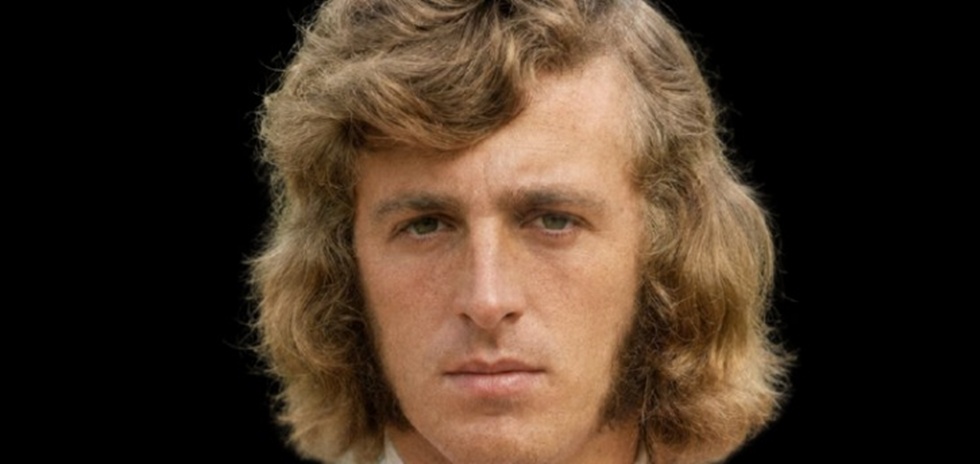
Terence Lees, born 30 June 1952, Stoke-on-Trent, England.
PART ONE
Terry Lees signed apprentice forms with his hometown club Stoke City in 1968, and he turned professional the following year, arriving at the Victoria Ground as a young forward with an eye for the back of the net, or so it initially seemed, until coach Harry Gregg, the great Manchester United goalkeeper of Munich renown who by then had swapped the gloves for the tracksuit, decided he had other ideas entirely. Gregg looked at the raw teenager and saw not a marksman but a defender, and he set about remoulding him accordingly, drilling into him the discipline of covering, tackling and reading the game from behind the ball rather than in front of it. It was not glamorous work, and it would rarely earn him headlines, but it would earn him a trade that carried him around the globe for the best part of two decades.
Lees´ first taste of first-team football came on 30 January 1971, when he was sent on as a substitute during a match against Southampton at The Dell that Stoke went on to lose 2–1, a chastening way to be introduced to senior competition but a starting point nonetheless. He had to wait until 24 April of that year for his first full appearance, and when it came it was a happy one, Stoke beating Manchester City by a 2–0 margin at the Victoria Ground with the young defender named from the off.
During the 1969–70 season he had already been given a taste of the fringes of the first-team picture, making five starts and four appearances from the bench, but that early promise did not translate into a regular berth, and it never really would, not at Stoke anyway. Stoke supremo Tony Waddington had built himself a settled and trusted back four in Jackie Marsh, Denis Smith, Alan Bloor and Mike Pejic, four players who barely gave him a reason to tinker, and so for six seasons Lees found himself circling that formidable unit rather than breaking into it, taking his chances where they arose but mostly watching from the substitutes´ bench or the stands as others wore the shirts that he coveted.
Even so, there were moments of proximity to glory that must have stung all the more for how close they came. Lees was an unused substitute in every single round of Stoke’s run to the 1972 League Cup final, watching Waddington’s side fight their way past the likes of West Ham United in a marathon semi-final before they took on Chelsea at Wembley Stadium, and yet when the big day itself arrived and Stoke won 2–1 to lift the trophy, Lees was not even named among the substitutes for the final itself. It is one thing to help carry a side to a Wembley showpiece and quite another to be left in the away dressing room when the medals are handed out, and that particular footnote says as much about the strength of competition he faced at the Victoria Ground as anything else in his early days.
Denied a regular route into Waddington’s side, Lees instead went looking for first-team football abroad, and in 1973 he was loaned out to Cape Town City in South Africa, where under the management of Roy Bailey he found himself playing alongside a rather more famous Englishman in Geoff Hurst, the hero of England’s 1966 World Cup triumph, who was similarly winding down in the South African sunshine. Bailey’s Cape Town City won the National Football League title that season, and Lees returned home with a winner’s medal from a competition that few of his Potteries neighbours could have named, a curious little chapter that nonetheless sharpened him against unfamiliar conditions and unfamiliar team-mates. Back on home soil he was loaned again, this time to Crewe Alexandra, gathering further senior minutes wherever Stoke would permit him to find them, because regular football, rather than reputation, was what a player in his position needed above all else.
Then, in 1975, Lees crossed an ocean rather than merely a county boundary, joining forces with the San Jose Earthquakes of the North American Soccer League, where he notched up sixteen appearances and registered a single goal in a competition still finding its feet in a country that had barely begun to fall for the sport. The money, if nothing else, was extraordinary by the standards he had grown used to: his American wages of £150 a week were more than double the £60 he had been picking up at Stoke, and it is not hard to imagine a young professional weighing up whether to stay in the sunshine altogether. But he did come home, and when he did, it was not back to the Victoria Ground.
PART TWO
In August 1975, Port Vale paid their local rivals Stoke City £3,000 to bring Terry Lees across the Potteries divide, a fee that would look laughably small within twelve months, though nobody at Vale Park could have known that at the time. He had been offered a route to Peterborough United as well, yet he chose the Valiants instead, largely because it kept him close to his father, who was by then unwell, and family, in the end, mattered more to him than ambition dressed up as opportunity. The early reception from Vale’s own supporters was not a warm one; some home fans spat at him in his first appearances, unable to separate the man from the badge on his previous shirt, but Lees set about winning them over with performances that spoke louder than any grudge, and in doing so he became one of the very few footballers to have turned out for all three of the local Potteries and south Cheshire clubs, Stoke, Vale and Crewe alike, a small distinction but a genuine one.
Founded in the late 1870s, Port Vale had grown into one of the more prominent football clubs in Staffordshire by the time they were invited to become founder members of the Football League Second Division in 1892, and over the decades that followed they experienced spells of real promise punctuated by financial calamity: thirteen non-consecutive seasons in the Second Division before resignation and liquidation in 1907, reinstatement in 1919 under the continuing name of Port Vale, sixteen further non-consecutive years in the second tier, a Third Division North title in 1929–30, and then a long stretch in the game’s lower reaches.
Freddie Steele’s Iron Curtain defence delivered a Third Division North title and an FA Cup semi-final place in 1953–54, and under Norman Low the club were champions of English football’s inaugural Fourth Division season in 1958–59, yet little of substance followed through the 1960s and into the early 1970s, even with the briefest of managerial reigns from the great Stanley Matthews, and the club had also been forced into re-election after breaking Football Association rules on illegal payments in 1968. It was a proud old club, in other words, but one that had grown accustomed to scraping by rather than soaring.
By the time Lees arrived, the 1975–76 campaign was about to become Port Vale’s sixth successive season in the Third Division, with Roy Sproson in the manager’s chair, a man whose own connection to the club ran deeper than almost anyone’s, having made 837 starts and five substitute appearances for the Valiants between 1950 and 1972, a run that included 128 consecutive appearances stretching from April 1954 to March 1957 and that stands as the all-time appearance record for the club to this day. Sproson had stayed loyal through the good years of the early 1950s and through the grim years at the foot of the Football League in the late 1960s, playing under eight different managers before finally becoming the manager himself in 1974, and by the summer of 1975 he was preparing for his second full season in the job with limited funds and even more limited margin for error.
Sproson’s pre-season plans were ambitious in theory, even if reality intervened rather quickly. He tried and failed to sign the Wales internationals Mike England and Wyn Davies, both of whom would have represented a considerable coup for a club of Vale’s modest means, and so instead he turned to more attainable targets, bringing back Mick Cullerton from Stafford Rangers for £4,000 after the striker had scored more than seventy goals for the Marston Road side across two seasons away from Burslem.
Another familiar face, Ken Hancock, returned as player-coach, though he would find himself unable to actually play, having already received a pay-out upon retiring back in 1973. Then, with the campaign barely two days from kicking off, Sproson moved quickly to sign the versatile Terry Lees from Stoke City for £3,000, adding winger Geoff Morris from Bangor City for a modest £200 in the same busy window, and between them Cullerton, Lees and Morris made up the entirety of Vale’s new arrivals that summer, a small squad reshaped on a shoestring rather than rebuilt from scratch.
The season opened tentatively, with five successive draws before Port Vale finally found the win column, and once they did, two victories in a row lifted them as high as second in the table. The first of those wins arrived on 20 September, a three-goal shutout of Swindon Town at Vale Park that one report of the time called a top-notch display, the sort of afternoon that briefly convinces supporters that this, at last, might be their season. But six winless games dragged the Valiants back down the division as Cullerton’s early scoring touch deserted him, though the loyal support did not desert the club even in the leaner weeks: on 21 October fans undertook a sponsored walk all the way to Shrewsbury Town that raised a useful £500 for club funds, even if the team itself could only lose the match by a single goal. Towards the end of October, Steve Taylor joined on loan from Bolton Wanderers and days later he marked his contribution by scoring a brace in a 3-0 triumph against Sheffield Wednesday at Hillsborough, only to return to Burnden Park almost as soon as he had arrived.
Vale’s unbeaten home record, modest as it was, finally came to an end on 3 November, when Aldershot won 1–0 at Vale Park, and the home crowd, never the most patient in such circumstances, turned on the players that afternoon; coach Reg Berks later admitted he had been appalled by some of the abuse hurled from the terraces. Discipline off the pitch proved just as troublesome as results on it, and the Football Association placed the club under constant review after Sproson himself turned up forty-five minutes late for a disciplinary hearing in London, having missed his train down.
Cullerton, though, rediscovered his scoring boots as December wore on, and Vale climbed the table again on the back of his goals, culminating in one of the most remarkable afternoons of the whole campaign: on 20 December, in front of a season-low crowd of just 2,789, Vale came back from 3–0 down against Grimsby Town to win the match 4–3, a comeback inspired, so the story goes, by coach Reg Berks telling his players at half-time that he was facing the sack himself if they failed to find a way back into the game.
PART THREE
The promotion-chasing pack pulled steadily away from Port Vale as the calendar turned into January, even as Mick Cullerton himself ended the month among the goals once more, lifting his side to as high as eighth in the table before a heavy 3–1 defeat at bottom club Mansfield Town on 3 January brought them back to earth. A rare and rather unusual event occurred on 17 January, when Port Vale’s directors permitted their fiercest rivals, Stoke City, to stage a home fixture against Middlesbrough at Vale Park, after a severe gale had left the Victoria Ground too badly damaged to host the game; the same storm had caused some £2,000 worth of damage at Vale Park too, though nothing like the destruction wrought at Stoke’s own ground. A crowd of 21,000, the highest seen at Vale Park in over a decade, turned out to watch Stoke win 1–0, a strange sight indeed for home supporters more used to watching their own team in far smaller numbers.
Injuries and misfortune peppered the middle months of the campaign in a way that reads almost comically in hindsight. On 9 February, John Brodie gashed his leg to the bone during a 1–1 draw at home to Southend United, and a week later, on 16 February, Vale beat Sheffield Wednesday 1–0 at Vale Park thanks to a Derek Brownbill goal scored eleven minutes from time, while goalkeeper John Connaughton somehow played out the closing stages in stitches, having taken a kick to the head earlier in the match. Seven days after that, Keith Chadwick lasted a mere seven minutes of a fixture against Chester before breaking his nose and damaging ligaments in the same unlucky passage of play, the kind of run of physical setbacks that would test the patience of any club with limited resources for replacements.
There was, at least, some late reward for perseverance. Ray Williams ended a barren run stretching back twenty-one games without a goal to earn Vale a valuable point at Cardiff City’s Ninian Park on 25 February, and eight further points collected across the following four fixtures briefly brought the Valiants to within three points of the promotion places, close enough to dream, however faintly. Then, in March, the club sold Brian Horton to Brighton & Hove Albion for £30,000, a fee the boardroom badly needed to balance its books even if the transfer itself unsettled the dressing room, and Sproson himself later admitted that letting Horton go had been an upsetting decision but a necessary one given the club’s persistently poor attendances.
Port Vale’s form promptly wobbled, and mid-table respectability rather than promotion became the realistic ceiling for the remainder of the campaign, though there was still time for one last flourish: on 5 April, Vale beat Wrexham 3–1, no small feat considering Wrexham were at that time quarter-finalists in the UEFA Cup Winners’ Cup. Five days later the mood soured again as Brighton beat Vale 3–0 at the Withdean Stadium, and John Brodie, so recently gashed to the bone against Southend, now suffered a broken leg following a challenge from Peter O’Sullivan, a cruel conclusion to a difficult individual season for the defender.
Port Vale eventually finished twelfth with 46 points from their 46 matches, a season summed up best by Mick Cullerton’s tally of 21 goals in all competitions, which made him comfortably the club’s leading scorer. There was a warm postscript to mark the club’s centenary, too, a friendly against Stoke finishing 1–1 in front of a crowd of almost 10,000 spectators at Vale Park, with City generously allowing the Burslem club to keep the entire £6,500 in gate receipts for themselves.
The cup competitions offered their own small dramas along the way. In the FA Cup, Roy Sproson´s troops progressed past Southern League opposition in Grantham by a 4–1 scoreline in the Burslem replay, having drawn 2–2 away in the first meeting, a lucky escape by most accounts, since Derek Brownbill’s equalising goal at Grantham was allowed to stand despite what looked to onlookers like an obvious handball, and Port Vale supporters at the ground swore afterwards that the linesman had raised his flag before lowering it again under pressure from irate travelling fans behind the goal.
In the second round, Vale were beaten 2–1 by Fourth Division Huddersfield Town at Leeds Road, Mick Cullerton missing a gaping open goal late on that chairman Mark Singer would never quite let him forget in the years that followed. In the League Cup, meanwhile, the newly introduced two-legged format produced high drama of its own: Vale led by four goals at half-time in the first leg only for the aggregate scoreline to finish level at 4–4, forcing a replay at Gay Meadow, Shrewsbury, which Hereford United won 1–0 after Terry Bailey had been sent off. Cullerton scored a hat-trick in that extraordinary first leg, completing something of a fairytale by striking three times on his first game back at Vale Park in a Vale shirt.
Off the pitch, the campaign was defined by pragmatism rather than romance. The sale of Brian Horton, combined with donations of £19,965 from the club’s Development Fund, ensured Vale finished with a profit of £24,819, and an increase in ticket prices helped offset the effect of a reduced average attendance, which stood at just 4,133 across the league season, with the highest gate of 6,121 recorded against Crystal Palace and the lowest, that 2,789 figure, against Grimsby Town on the night of the great comeback.
There was even a small and unusual income stream from renting out space to market traders around Vale Park, which brought in £2,775 before Stoke-on-Trent Council put a stop to the arrangement altogether. Geoff Morris, the summer’s other new arrival alongside Lees and Cullerton, left Vale Park on a free transfer that summer to join Kidderminster Harriers, while the wider Potteries footballing landscape did Vale few favours that season, with Stoke City’s continued presence at the top of the First Division and in European competition drawing attention and support away from Burslem and towards the more glamorous end of town.
For Lees himself, that solitary season at Vale Park proved to be a springboard rather than a destination. He managed to make 47 appearances across all competitions for the Valiants, and his performances did not go unnoticed beyond Staffordshire, because in August 1976 Port Vale sold him on to the Dutch club Sparta Rotterdam for £25,000, a transfer that represented a profit of some £22,000 in the space of barely twelve months and which helped fund Sproson’s rebuilding efforts for the following season. It was, by any measure, a thoroughly good piece of business for a club that badly needed every penny it could raise.
PART FOUR
In Rotterdam, Terry Lees found himself playing at a rather different level of the European game, appearing 30 times for Sparta in the Eredivisie, the top flight of Dutch football, and he marked his first-team debut against AZ Alkmaar by being handed the task of marking Willem van Hanegem, a World Cup finalist with the Netherlands and one of the finest midfield players of his generation, hardly a gentle introduction for an Englishman fresh out of the English Third Division.
Lees turned down the opportunity to join Feyenoord after the two clubs could not agree personal terms, a decision that must have taken some nerve given the size of the two Rotterdam institutions, and he later weighed up a possible return to England with Brighton & Hove Albion, only for the south coast club to sign Mark Lawrenson from Preston North End instead while Lees was still deciding whether to accept their offer. Rather than head home, he moved on within Dutch football instead, spending two seasons at fellow top-flight club Roda JC Kerkrade following a club record £100,000 transfer fee, a sum that underlines just how highly he was regarded on the continent by that point in his story.
There is something quietly remarkable about a defender from the Potteries turning down Feyenoord and then spending two years as a top-flight regular at Roda JC Kerkrade, a club that would go on to reach the UEFA Cup final barely a decade later, and it is a measure of how highly Dutch football rated him that the Kerkrade club record they broke to sign him stood at £100,000, a fee that dwarfed anything Stoke, Vale or even Sparta had paid for his services. He was, by this stage of his story, no longer simply a squad man scrapping for a fringe role, but a trusted performer at a genuinely competitive level of European football, and it says something for his own sense of perspective that none of it seems to have gone to his head.
By July 1979, though, the pull of home proved too strong to resist any longer, and he returned to the Midlands to sign for Birmingham City. Competition for places at St Andrew’s was every bit as stiff as it had once been at Stoke, with Mark Dennis, Colin Todd and Kevan Broadhurst all ahead of him in the pecking order, and as a result Lees managed only ten appearances during the 1979–80 season, contributing in his own limited way to Birmingham’s promotion to the First Division nonetheless. The following campaign brought even fewer opportunities: he understudied the ever-present Dave Langan at right-back and played just twice all season. After two years in the Midlands, in which he made 19 appearances across all competitions, Lees moved on to Newport County, where he played 25 league games before falling out with assistant manager Bobby Smith, a disagreement that effectively brought his time at Somerton Park to a premature end.
Falling out with a manager or his assistant was, by that point in the 1980s, a fairly familiar hazard of the lower divisions, where budgets were tight, tempers frayed easily, and a player without a long-term contract could find himself surplus to requirements almost overnight, and Newport County was simply the latest club to demonstrate as much. Yet where a less adaptable footballer might have drifted quietly out of the professional game altogether at that point, Lees instead did what he had always done whenever a door closed in England, which was to go looking for one that had opened somewhere else entirely.
What followed was one of the more unlikely detours of his story: an interlude playing for Morning Star in Hong Kong, a world away from the Third Division grounds of the English Midlands, before he resumed his footballing days in Dutch football once again, this time with DS’79, having been signed by his former Sparta Rotterdam team-mate Pim Verbeek, later to become a well-travelled manager in his own right. Lees made his debut for the club in October 1982, deployed on the left wing in a resounding 5–0 win away at Heracles, and in that first season he helped DS’79 win the Eerste Divisie title, forming a productive midfield partnership with the gifted Gerrie Mühren, brother of the more celebrated Arnold.
The following season told a very different story: although Lees himself remained a first-team regular, playing in 29 of the club’s 34 league matches, DS’79 finished bottom of the Eredivisie table, and their campaign ended in almost comic humiliation, a 7–2 thrashing away at Ajax in which a young Marco van Basten, still only a teenager but already announcing himself as one of the great talents of his generation, scored five of the seven goals himself. Rather than see out the final year of his contract in a struggling side, Lees chose to walk away from DS’79 and return to England once more, forfeiting a year of guaranteed wages in the process.
Back on home soil, he had a trial with Blackpool that did not lead to a contract, and instead he found himself turning out for Stafford Rangers before finishing his Football League days with Scunthorpe United, having joined the Iron from Altrincham in September 1984. It was Frank Barlow who talked him into choosing Scunthorpe ahead of a rival offer from Northampton Town, and after his time at Glanford Park he moved on once more to Macclesfield Town, bringing an end to a spell in the professional game that had taken in three continents, half a dozen English clubs, and three different Dutch sides.
Nobody who followed Lees’ path through Dutch football, English lower-league dressing rooms and one solitary Hong Kong club could ever accuse him of chasing comfort. He left DS’79 with a year still left on his contract rather than see out a doomed relegation fight for the sake of a guaranteed wage, a decision that cost him money but which fits the pattern of someone who, time and again across his years in the game, chose the harder and more honest road over the easier one, whether that meant staying loyal to a sick father in Staffordshire when a bigger move to Peterborough beckoned, or walking away from a struggling Eredivisie side rather than simply seeing out the calendar.
Retirement from playing did not mean retirement from the game altogether. Lees turned to management in non-League football around his native Staffordshire, taking charge first at Hanley Town and later at Kidsgrove Athletic, and he also served as assistant manager at Meir K.A. before eventually becoming manager of Ball Haye Green, guiding clubs that most supporters outside the county would never have heard of with the same quiet application he had once shown as a peripheral figure behind Stoke’s trusted back four.