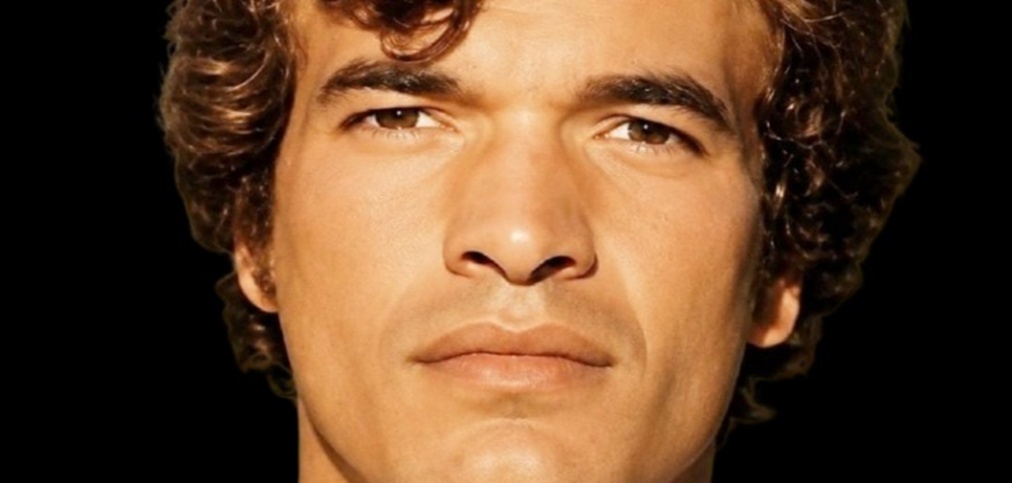
Sergio Gori, born 24 February 1946, Milan, Italy.
PART ONE
Sergio “Bobo” Gori started out at Internazionale in 1964 at an age when most young forwards are still finding their feet in the lower divisions, he was already pulling on the black-and-blue shirt of a club then in the full pomp of the Grande Inter side built by Helenio Herrera. Between 1964 and 1966 he made ten league appearances for the Nerazzurri, a modest tally on paper but a startling one in context, given that this was a dressing room stuffed with the likes of Sandro Mazzola, Giacinto Facchetti and Luis Suárez, and given too that Herrera’s Inter were sweeping all before them domestically and in Europe.
Indeed, during those two seasons at San Siro, Gori found himself collecting winners’ medals almost as a matter of course: the 1964–65 Scudetto arrived first, followed swiftly by the 1965–66 title, and layered on top of those were the 1964–65 European Cup and, that same year, the Intercontinental Cup against Independiente of Argentina. It was, by any measure, a rich apprenticeship for a teenager, and yet Herrera’s Inter was so deep in attacking talent that regular first-team football remained elusive, and something had to give.
What gave, in the summer of 1966, was Gori’s place on the Milan books, for Inter agreed to release him to Lanerossi Vicenza in a deal structured around the acquisition of Luis Vinicio, the veteran Brazilian-born centre-forward who had just finished the season as Serie A’s top scorer. It was, on the surface, a curious trade for a nineteen-year-old to be part of, swapping a place among European champions for the comparative obscurity of the Veneto, but Vicenza gave him precisely what Inter could not, namely a settled run in the side, and he repaid that faith handsomely. Across two seasons with Vicenza, between 1966 and 1968, Gori made 56 league appearances and scored 16 goals, numbers that told their own story of a young forward maturing fast, sharpening his finishing and, just as importantly, catching the eye of the very club that had let him go.
That eye-catching form persuaded Inter to bring him back to San Siro in 1968, and although his second spell with the Nerazzurri lasted only a single season, comprising 14 league games and one goal in the 1968–69 campaign, it proved to be the hinge on which the rest of his playing days would turn. For no sooner had he returned than the club decided to use him, together with the winger Angelo Domenghini, as makeweights in a deal that brought the young striker Roberto Boninsegna to Milan from Cagliari, and so it was that in 1969 Gori found himself heading south to Sardinia, an island club with grand ambitions but, as yet, no major honours to its name.
Cagliari in 1969 were assembling something special under the studious, pipe-smoking coach Manlio Scopigno, and at the heart of it stood Luigi “Gigi” Riva, already the most feared centre-forward in Italy and soon to be one of the most feared in the world. It was alongside Riva, rather than in direct competition with him, that Gori found his ideal role, operating as a supporting striker just behind the Sardinian totem, linking play, drawing markers away from the penalty area and, whenever the chance presented itself, adding goals of his own.
The partnership clicked immediately, and across the 1969–70 season Cagliari went unbeaten for long stretches, eventually finishing top of Serie A with 45 points from 30 matches, four clear of Internazionale, to claim the first and, to this day, the only Scudetto in the club’s history. Gori was a key member of that starting eleven, his understanding with Riva forming one of the defining attacking axes of the campaign, and the title, sealed with a memorable draw at Bari, turned the whole of Sardinia into a sea of red and blue.
PART TWO
Manlio Scopigno’s Cagliari side was no one-man show built simply around feeding a talisman, but rather a tightly organised unit in which Sergio Gori’s intelligent movement off the front line, his willingness to drop deep and drag defenders out of position, and his eye for the timed run into space all played their part, and Serie A opponents during the 1969-70 campaign quickly learned that stopping “Gigi” was only half the problem when “Bobo” was operating so effectively in the pockets behind him.
Such form could hardly go unnoticed by the national selectors, and consequently Gori earned his call-up to the Italy squad bound for the 1970 FIFA World Cup in Mexico, a tournament that would come to be remembered above all for the extraordinary semi-final between Italy and West Germany, settled 4–3 after extra time in what is still spoken of as one of the greatest matches in the competition’s history. Gori’s own involvement came in the quarter-final against the host nation, played in the searing heat and altitude of the Estadio Azteca, where he was introduced from the substitutes´ bench in place of none other than Angelo Domenghini as Italy went on to beat Mexico and advance toward that unforgettable meeting with the Germans. He won two further caps for the Azzurri later in 1970, once the World Cup had run its course, and although Italy fell to Pelé’s Brazil in the final in Mexico City, Gori returned home with a runners-up medal and the satisfaction of having represented the country of his birth on football’s largest stage.
Back in domestic football, Gori remained a fixture of the Cagliari side for several more seasons, and between 1969 and 1975 he amassed 166 league appearances and 33 goals in the rossoblù shirt, a run of service that made him one of the mainstays of the post-Scudetto years even as the team, inevitably, could not quite recapture the heights of 1969–70. Nonetheless, by the middle of the decade a new challenge beckoned, and in 1975 Gori was on the move once again, this time to Juventus, where he joined the Bianconeri alongside a promising young defender named Marco Tardelli as Carlo Parola’s side set out to defend the Serie A crown they had won the previous campaign.
His first year in Turin, 1975–76, brought mixed fortunes, for although Juventus narrowly missed out on retaining the title, finishing behind Torino on goal difference in one of the closest title races Italian football had seen, Gori settled well into a Bianconeri attack that used him both as an out-and-out striker and, on occasion, in a deeper midfield role, a versatility that had marked him out since his Vicenza days. Then, in 1976–77, Juventus put matters right emphatically, storming to their eighteenth Scudetto while simultaneously mounting a serious European campaign under the emerging management of Giovanni Trapattoni, even though Gori himself found first-team opportunities harder to come by that season, managing only around 15 league appearances as the team’s balance shifted toward greater physicality and dynamism.
Even so, it was in that same 1976–77 season that Gori claimed arguably the most significant European prize of his time in football, as Juventus reached the final of the UEFA Cup to face Athletic Bilbao of Spain. The first leg, played on 4 May 1977 at the Stadio Comunale in Turin before a crowd of nearly 55,000, saw Juventus edge ahead through a goal from the young Tardelli, and although Bilbao fought back in the return leg at San Mamés on 18 May, winning 2–1 on the night thanks to goals either side of an early Roberto Bettega strike for the visitors, the aggregate score finished level at 2–2 and Juventus were declared champions on the away goals rule. It remains, remarkably, the only occasion on which an Italian club has won an official European trophy fielding a first-team squad composed entirely of home-grown players, and Gori, as part of that squad, could count it among the finest achievements of a decorated spell in Italian football.
That UEFA Cup triumph, layered on top of the 1976–77 Scudetto, gave Gori his fourth Italian league title overall and completed an unusual distinction, for by winning Serie A with Inter, Cagliari and Juventus he joined an exceptionally small group of players to have lifted the championship with three different clubs, a company that otherwise includes Giovanni Ferrari, Pietro Fanna, Aldo Serena and Attilio Lombardo. Despite the club’s willingness to offer him a renewed contract, with club president Giampiero Boniperti keen to keep him at Juventus, Gori sensed that regular football would be easier to find elsewhere.
Gori eventually signed for Hellas Verona at the start of the 1977–78 campaign, adding a further 18 league appearances and three goals to his overall record as he wound down the top-flight portion of his playing days in the yellow and blue of the Veneto team. His final season in senior football came in 1978–79, when he dropped into Serie C2 with Sant’Angelo, making 26 outings and hitting five goals as he helped the club secure promotion to Serie C1. With that promotion achieved, Gori brought the playing side of his story to a close in 1979, having moved through six clubs and touched the very peak of both club and international football along the way.