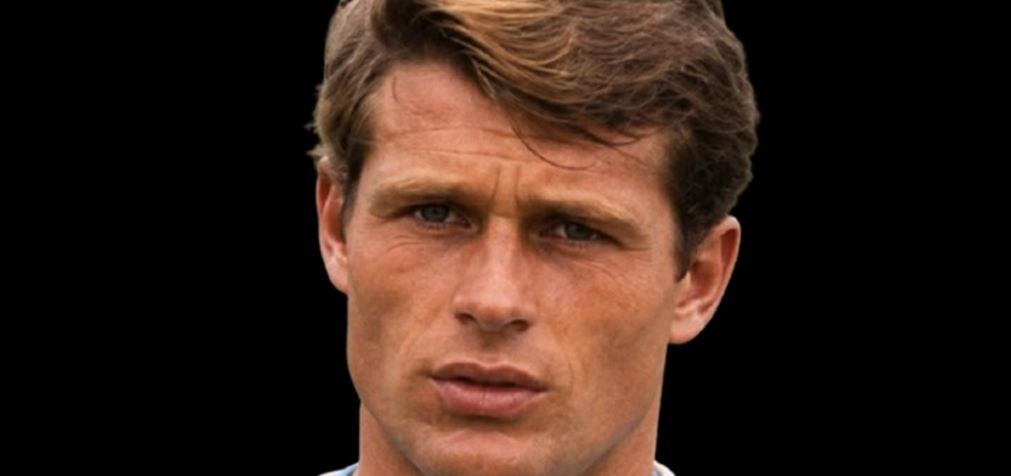
Dietmar Bruck, born 19 April 1944, Danzig, Germany.
PART ONE
Dietmar Bruck was born in Danzig in 1944, in a port city caught in the middle of a war and about to change hands and names, so it is no surprise that his family did not stay put, and by the age of four his mother had brought him to Coventry, a city still clearing the rubble from its own bombed streets and short of nearly everything except work. He picked up English at school and football on the street, and it was football that did most of the talking for him. He played for Coventry Boys from the under-13s up to the under-15s, and somebody at Highfield Road liked what they saw and he joined Coventry City as an apprentice in 1960.
His debut for the Sky Blues came on 28 April 1961, when Swindon Town visited Highfield Road with Coventry in the Third Division and went home with a 1–1 draw. The left-back in the home side was 17 years and nine days old, which made him one of the youngest players the club has ever sent out in a league match. Jimmy Hill had not yet arrived, because the former Fulham man and players’ union chairman did not take over until November 1961, but when he did he set about painting the whole club sky blue and dragging a sleepy Third Division outfit into the modern world, and the young defender was there to see it. Bruck played six league games in 1961–62 and then, in 1962–63, became a regular with 24 league appearances and four in the FA Cup, finding the net once in each competition. He played ten league games in 1963–64, as Coventry won the Third Division title, and the club was moving upwards fast enough that a young full-back who kept his head down and his tackling honest was always going to have a place in it.
Then came a small piece of history that has followed him ever since. Substitutes had only just been allowed in the Football League, and on 4 September 1965 Coventry City hosted Manchester City at Highfield Road in a 3–3 draw in which Ron Farmer was hurt, so at half-time Bruck trotted on in his place and became the first substitute the club ever used. It was hardly the glamour role, but it was a first, and it tells you something about how Hill and his staff saw him, as a utility man who could be trusted when the plan changed. Bruck was a full-back by trade and a steady one, who defended first and went forward only when the coast was clear, which is why his total of seven goals in 189 league games between 1961 and 1970 looks about right for a player whose job was to stop them at the other end. Yet when he did go forward, the results could be spectacular.
Take the start of the 1966–67 campaign. On 20 August 1966 Hull City came to Highfield Road, and Bruck hit a shot from 35 yards that settled the match 1–0, a goal people still describe with some awe and one that gave Coventry the confidence to go on and win the Second Division. It was his breakthrough year, with 40 league appearances, and he was part of a side that knew exactly how to play together. George Curtis marshalled the defence, Ernie Machin worked away in midfield, and the full-backs had the youth and legs to cover the ground in between. By the afternoon of 13 May 1967, Coventry needed only to beat Millwall at home to make sure of the title, and they did it 3–1 with Bruck in the side, finishing on 59 points, one clear of Wolverhampton Wanderers. A club that had been in the lower divisions not long before had reached the top flight for the first time in its history, and the boy from Danzig had played his part in getting them there.
The First Division did not hand out many presents. Coventry’s opening match at the top level came at Highfield Road on 26 August 1967 against Sheffield United, and the home side had to fight for a 2–2 draw, with Bruck popping up in the 90th minute to score the equaliser. That was the good news. On 9 September 1967, against Manchester City, he became the first Coventry player ever sent off in the top flight, and while nobody is going to put that on a plaque, it fits the sort of game full-backs played in the 1960s, when you were in the thick of things or you were no use to anybody. Hill left in November 1967 to go into television, but Bruck stayed and kept on defending through the lean seasons that followed. He scored in a League Cup tie in 1968–69, and when Coventry finished sixth in 1969–70 and earned a place in the Fairs Cup he got a game in Europe in September 1970, a long way from the apprentice who had once been told to sweep the dressing rooms.
By October 1970, though, the picture had changed. Bruck was 26, he had given Coventry nine years and over 200 appearances in all competitions, and the club saw no reason to stand in his way when Charlton Athletic came in for him. He went to The Valley for a fee reported at £11,100, though some sources say £15,000, and he signed on a three-year deal. Charlton were a Second Division side with plenty of history and not much luck, and Bruck made 56 league outings for them over two seasons, playing steadily at full-back without scoring, plus three FA Cup games and three League Cup games. Charlton survived in 1970–71, and a 4–1 home win over Bolton Wanderers in April 1971 is remembered as one of the afternoons that kept them up. But 1971–72 was much worse. They won only 12 of their 42 games, lost 21 and conceded 77 goals, and under Theo Foley they finished 21st on 33 points, which sent them down to Division Three along with Watford, even though Ray Treacy scored 18 times. A defender can only do so much when the goals against column runs that high, and Bruck left in June 1972.
He dropped down to Northampton Town, who paid £4,000 for him, and joined a Fourth Division club that needed someone who had seen it all before. His first season there, 1972–73, was a scrap, with the Cobblers ending in 21st place and winning only ten of their 46 games, and his experience helped to keep the back line together when the results kept going against them. Things picked up a lot in the 1973–74 campaigm, though. Under Bill Dodgin Jr. Northampton won 20 matches and drew 13, scored 63 and conceded 48, and finished fifth with 53 points, close to the promotion places without quite making them. Bruck played 41 league games in total for the club over the two seasons, none of them ending in a goal for him, but he was by now one of the most senior men in the dressing room and a calming voice for the younger players. He was thirty, he had no reason to rush, and he moved on in 1974.
Non-league football was next, and Nuneaton Borough took him in for 1974–75. The team went on a decent FA Cup run that autumn and reached the first round proper, where on 23 November 1974 they drew 2–2 with Maidstone United, which meant a replay three days later, and there Maidstone won 2–0 and ended the dream. That was as far as Nuneaton got, but for a defender who had once played in the top flight and in Europe, it was a solid season at a new level. It was also the last before something bigger came along. In the summer of 1975 Weymouth of the Southern League wanted a player-manager, and in July they appointed Bruck, who was 31 and had never run a team before.
PART TWO
Dietmar Bruck´s first big decision as player-manger made the papers. He signed Jeff Astle, the former West Bromwich Albion and England striker, from Dunstable Town for £5,000, a record fee for Weymouth and a very bold move for a non-league club, and one that Bruck must have enjoyed explaining to the directors. Astle was an old-fashioned centre-forward and an exceptional header of the ball, and he gave the Terras something to aim at, finishing the season with 20 league goals in 42 games, and 25 in 53 in all competitions on the club’s count.
Bruck himself played in midfield, and on a snow-covered pitch at Cambridge City in the winter of 1975–76 he did a good job of driving the side forward in a 3–1 win, with Derek Courtney finding the back of the net twice and Astle heading in the other, a result that lifted Weymouth into sixth place, three points behind leaders Wimbledon. It had been a hard week, too, because he had played through a painful inflamed left leg after a Floodlight Cup win at Bridgwater, which tells you something about how he went about things.
Not every week was like that, however. Weymouth could not keep up the pace, they had trouble at the back, and results went up and down, so that by the winter of 1976–77 the club were in the sort of position where the board began to lose patience. In January 1977 Bruck was dismissed, and Graham Carr, a former Northampton half-back who would later become the father of the comedian Alan Carr, was appointed in his place. Bruck played on for a short time but he had by then reached the end of his playing days, at the age of 32 or 33, and the rest of the story was about what came after.
It was a patchwork. Later in 1977 he took charge of Redditch United and managed them through 1977–78, and after that he took over at Racing Club Warwick, though for neither club is it easy to say exactly how long he stayed, because the records from that corner of the game are thin. In the late 1970s he also worked part-time as a PE teacher at Abbotsford School in Kenilworth, where he is remembered fondly for his coaching, and anyone who has ever stood on a freezing touchline with a group of schoolboys will know why that sounds like the right job for him. Then, in 1985, Leamington needed somebody to hold the fort during the 1985–86 season, and Bruck stepped in as caretaker manager for around a month. It was a short job and a typical one, in the sense that clubs in the West Midlands non-league scene knew that if they were stuck, he would help.
The rest of his working life took place away from the pitch. He became a financial consultant for the Co-op in Coventry, a job he did for 25 years before retiring around 2003, and then he took a community role at Tesco in Coventry, which he kept until about 2017. Dietmar Bruck was never a player who went looking for the limelight, but anybody who followed the Sky Blues in the sixties knows that when the club climbed from the Third Division to Division One, the left-back from Danzig was there at every step.