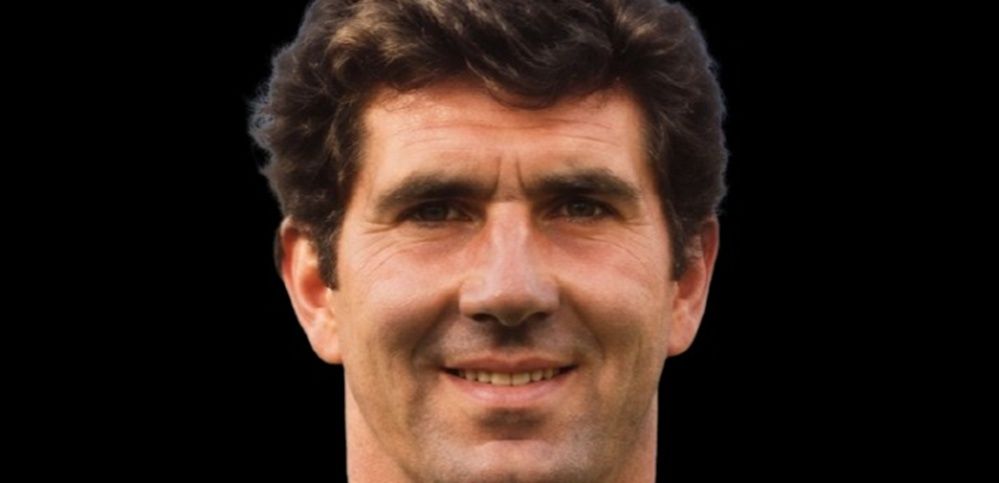
Kenneth Paul Hancock, born 25 November 1937, Milton, England.
PART ONE
A goalkeeper, Ken Hancock entered Stoke City’s youth set-up in 1953 and remained there for several years, but assistant manager Arthur Turner eventually considered him too small for the position and Stoke let him go, a decision that might have ended the ambitions of a less determined young man but instead sent the shot stopper down a harder and ultimately more rewarding route. He found employment as a bicycle courier for the city council, completed his National Service with the North Staffordshire Regiment and continued playing whenever the chance came, while time and physical development dealt with Stoke’s objection because he eventually grew to around six feet one inch.
Port Vale scout Lol Hamlett approached him in November 1958, and Hancock joined the club as an amateur before signing professional forms the following month, arriving at Vale Park when Norman Low’s side were attempting to escape the newly created Fourth Division at the first attempt. There was no long period of gentle preparation, because on 13 December 1958 he was selected against Millwall at The Den, one of the least forgiving grounds for an inexperienced netminder, and although Vale lost 4–2, Low kept faith with him and Hancock played the remaining 24 league fixtures as the side gathered momentum, secured the championship with 64 points and finished four points clear of Coventry City.
Having started the season outside League football altogether, Hancock ended it with a winner’s medal and 25 league appearances, and that swift change in fortune established a pattern that followed him for years, because his opportunities rarely arrived under comfortable circumstances but he was usually prepared when they did. Promotion placed different demands upon Port Vale in 1959–60, however, and Hancock began the Third Division campaign as first choice before an injury in November removed him from the team and allowed John Poole to take over, which created a contest that continued well into the spring.
The two goalkeepers finished with 23 league appearances each, and Hancock did not reclaim the position until April 1960, but the most painful absence came in the FA Cup when Aston Villa visited Vale Park and attracted a ground-record crowd of 49,768, only for injury to keep him on the touchline while Poole guarded the net in a 2–1 defeat. It was precisely the sort of afternoon every young local player wanted to experience, yet Hancock could do nothing except watch, and the disappointment sharpened his resolve during the following campaign as he fought off both Poole and John Cooke and made 45 appearances in all competitions during 1960–61, including 39 outings in the league.
Vale remained in the middle of the Third Division rather than mounting a sustained promotion challenge, but Hancock was becoming far more than the former Stoke youngster who had once been dismissed as undersized, because he commanded his area with increasing authority, dealt firmly with high balls and used his powerful kicking to turn defence into attack before opponents had time to reorganise. Roy Sproson, the great Vale defender who saw Hancock’s work from closer range than almost anybody, later described a keeper who was strong when crosses arrived, possessed fast reactions and could kick the ball exceptionally well, and those qualities mattered greatly in an age of heavy pitches, physical centre-forwards and shoulder challenges that offered goalkeepers considerably less protection than they receive today.
PART TWO
The 1961–62 campaign supplied the matches that fixed Ken Hancock’s name most firmly in Port Vale folklore, although the famous cup run emerged from an otherwise uneven campaign in which the team finished 12th in the Third Division. Vale negotiated ties against Bradford Park Avenue, Crewe Alexandra and Northampton Town before being drawn away to Sunderland in the FA Cup fourth round, and the task at Roker Park was formidable because the Second Division promotion contenders possessed Brian Clough, an unforgiving goalscorer who would finish his playing days with 251 league goals from only 274 appearances.
A crowd of 49,468 generated the celebrated Roker Roar, and the noise struck Hancock so forcefully before kick-off that he lost his footing, but instead of remaining sprawled on the turf and admitting what had happened, he converted the tumble into a forward roll and rose as though everything had been planned. Once the match began there was nothing comic about his work, for Sunderland pressed hard and Clough threatened repeatedly, yet Hancock and the Vale defence held firm, and late in the game he produced the save that Sproson would still call the finest he had ever seen years afterwards, twisting in mid-air and pushing the ball around the post when a goal appeared certain.
The goalless draw earned a replay at Vale Park, where 28,226 spectators gathered to see whether the Third Division side could complete the upset, but Hancock damaged his ankle during the opening minutes and, with substitutes not yet permitted, faced the choice of continuing in pain or leaving his team effectively beaten. Painkilling treatment allowed him to remain in goal, and Vale won 3–1 on a night of sustained noise and pressure before their run ended in the fifth round against top-flight Fulham, but the Sunderland performances had already shown the full measure of Hancock: agile when fit, uncomplaining when hurt and dependable when the occasion was at its loudest.
Hancock played 52 matches in all competitions during 1961–62 and then appeared in every one of Port Vale’s 51 first-team fixtures in 1962–63, by which time former England international Freddie Steele had replaced Norman Low as manager and built a side capable of pushing strongly towards promotion. Vale finished third with 52 points, one position and four points short of the two promotion places occupied by Northampton Town and Swindon Town, and the frustration was considerable because Hancock had supplied uninterrupted security from August to May, making all 46 league appearances as well as five more in the cups. Still, there was no decline in his personal standards during 1963–64, when he played 50 times and missed only two matches, and that campaign brought another demanding FA Cup assignment after Vale defeated top-flight Birmingham City and earned a fourth-round meeting with Liverpool.
Bill Shankly’s side were on their way to winning the First Division championship, with Roger Hunt, Ian St John, Peter Thompson and Willie Stevenson among their attacking threats, but Hancock kept a clean sheet in a goalless draw at Anfield on 25 January 1964 and forced the powerful Merseyside club into a replay. The Liverpudlians won 2–1 at Vale Park two days later, requiring extra time before finally settling the contest, yet Hancock had again demonstrated that he could meet leading First Division forwards without being overwhelmed by either their reputation or the size of the crowd. His consistency had made him one of the strongest goalkeepers outside the top two divisions, and although Port Vale could not quite carry him back towards the level at which his brother Ray had played for the club a decade earlier, other managers had begun to recognise that Hancock was ready to move upwards.
The opening months of 1964–65 altered the position, because the arrival of Reg Davies brought fresh competition and Ken Hancock played 22 times for Port Vale in all competitions before the club accepted a £10,000 offer from Ipswich Town in December 1964. Manchester United also made a bid, and Port Vale accepted it, but the timing turned into one of those maddening football incidents that could never be reversed, for Hancock had already signed for Ipswich before he learned that Matt Busby was trying to contact him.
Nobody could say where the Manchester United move might have led, especially as Busby was rebuilding a side that would win the First Division in 1964–65 and 1966–67 before lifting the European Cup in 1968, but Hancock was an Ipswich player and there was no point wasting energy on a transfer that had arrived a few hours too late. He left Port Vale after 269 appearances in all competitions, including 241 in the league, and entered Bill McGarry’s Second Division side with a fine reputation, only for his debut at Preston North End to end with four goals conceded and an angry response from his new manager.
McGarry was an exacting and often abrasive figure, and Hancock later acknowledged his manager’s football knowledge while finding him difficult to like, but the new goalkeeper recovered from that rough introduction and played 20 league games before the season ended. The move from a familiar local club to Portman Road demanded adjustment, though Hancock had already survived enough competition and disappointment to understand that one afternoon could not be allowed to define him, and Ipswich soon saw the goalkeeper they had believed was worth a substantial fee.
He became the regular choice during 1965–66 and played 48 matches in all competitions, with 41 of them coming in the Second Division, and he repeated that overall total in 1966–67 while appearing in all 42 league fixtures. Ipswich were attempting to recover the position they had lost after their extraordinary championship win under Alf Ramsey in 1961–62, and although McGarry could be demanding, his side became increasingly well organised, difficult to break down and capable of maintaining a challenge across the long winter months. Hancock gave that team stability from the back, and by 1967–68 the work brought its reward as Ipswich won the Second Division championship with 59 points, finishing one point above Queens Park Rangers and returning to the top flight. He played every league match and made 45 appearances in all competitions, so this was not a medal gained from the edge of the side but a championship built with Hancock in goal week after week, seven years after his first divisional title at Port Vale.
PART THREE
Promotion brought Ken Hancock into the First Division in 1968–69, but it also brought managerial change, for Bill McGarry departed for Wolverhampton Wanderers in November and Bobby Robson arrived at Portman Road in January 1969. Ipswich Town faced a hard struggle to remain in the division and Hancock played 18 league matches, plus one League Cup tie, before Robson decided to make a change, and the relationship between the two men never became warm. Hancock felt that the new manager had treated him without sufficient respect and did not properly understand goalkeeping, while Robson was beginning the reconstruction that would eventually transform Ipswich into one of the country’s outstanding sides, and in March 1969 the goalie was sold to Tottenham Hotspur for a transfer fee of £7,000.
The transfer placed Hancock under Bill Nicholson, one of the finest managers of the period, but it also placed him behind Pat Jennings, and there were few more difficult men to dislodge from any goal in Britain. Jennings was approaching his peak, missed matches only rarely and possessed the enormous hands, calm manner and athletic reach that would make him one of the defining goalkeepers of his generation, so Hancock’s task was less about forcing an immediate change than remaining prepared whenever Tottenham needed him, while younger keepers Barry Daines and Terry Lee continued learning their trade.
His first appearance for the White Hart Laners came during a North American tour against Aston Villa in Atlanta, two months after the transfer, but his competitive debut did not arrive until January 1970 against Sunderland at Roker Park, the very same ground where he had enjoyed his finest Port Vale afternoon eight years earlier. Although opportunities were scarce, he accepted the deputy’s position professionally and worked without allowing his frustration to damage the group.
Hancock’s Tottenham involvement extended across 1969–70 and 1970–71, and the surviving records are not completely uniform over how some matches were classified, although his Football League total was three appearances and the broader competitive records credit him with six league and cup outings. Among them was a North London derby against Arsenal at Highbury, while he also featured against Swansea City in the League Cup and Crystal Palace in September 1970, and three clean sheets from his six competitive appearances represented a respectable return for a goal custodian who was called into the side only intermittently. Yet there was no realistic route beyond Jennings, and when Tottenham won the League Cup in 1971 Hancock had remained outside the main side, so in July he left White Hart Lane and joined Fourth Division outfit Bury in search of regular football.
At 33 he was signed as the replacement for Neil Ramsbottom, and he played 24 league games during 1971–72 under Allan Brown, as well as five cup matches, but John Forrest eventually took control of the position and Hancock’s opportunities narrowed again after Tom McAnearney replaced Brown. He added 11 league appearances in 1972–73, giving him 35 for Bury and 40 in all competitions, before leaving Gigg Lane and stepping outside the Football League, first with Stafford Rangers during 1973–74 and then with Northwich Victoria in 1974–75. Roy Sproson explored the possibility of bringing him back to Port Vale as a player, but Hancock had already received his Football League provident-fund payment and could not re-register without creating complications, and so the hoped-for return to the Vale goal never took place.
Playing was only one part of Hancock’s service to the game, because in July 1975 he did return to Port Vale as a part-time coach under Sproson, passing on the practical knowledge he had collected through 495 senior appearances in all competitions, 442 of them in the Football League. In 1978 he became manager of Cheshire County League club Leek Town, and although his spell in charge was brief, his association with the club continued as chairman, while he also served on the Leek and Moorland League management committee and remained involved in the everyday administration that keeps local football alive.
Along with his old goalkeeping rival and friend John Poole, he helped establish the Port Vale Former Players’ Association, reconnecting men who had represented the club across different periods and strengthening the bond between Vale’s past players and supporters. Away from football he worked in the building and textile industries, took maintenance jobs and even appeared as a television extra, while his interests ranged from opera, painting and photography to bird-watching, natural history and playing the guitar, revealing a much broader man than the stern figure standing between two goalposts.