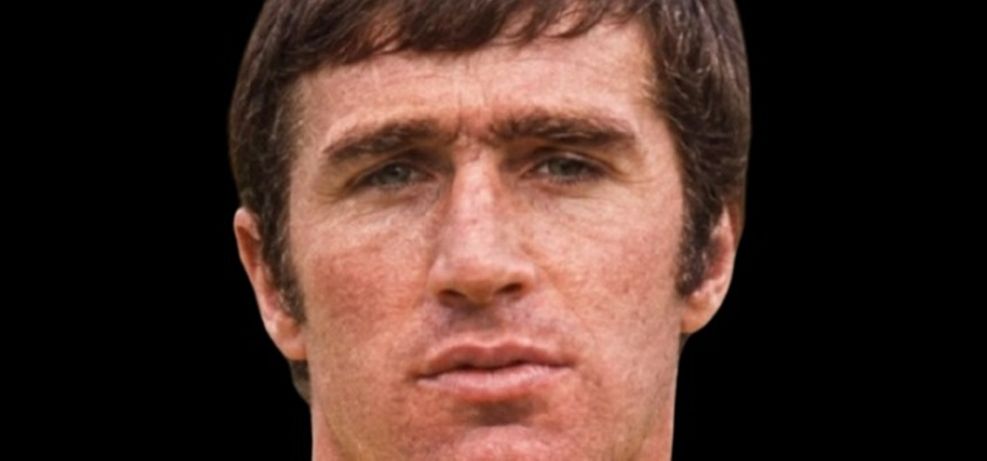
Duncan Scott Forbes, born 19 June 1941, Edinburgh, Scotland.
PART ONE
Duncan Forbes was playing for Musselburgh Athletic, a non-league outfit on the Firth of Forth, when Benny Fenton, the manager of Colchester United, took a chance on him in September 1961 for what amounted to a nominal fee. Nobody at Layer Road could have known what they were getting, and the deal made little noise in the papers, but Colchester had just been relegated to the Fourth Division for the first time in their history and were looking for men who would fight for their places rather than fret over them.
Forbes, aged twenty and fresh from the Scottish non-leagues, fitted that description well, and he spent the early weeks of the season learning the game at a new level while the first team got on with a promotion push in which Bobby Hunt was busy scoring goals at a frightening rate. His own turn came in the spring, when he made his league debut on 14 April 1962 in a 4-0 defeat at Crewe Alexandra, which was hardly the start he would have chosen, though it did him no lasting harm, because Colchester finished the season as runners-up, a single point behind Millwall, and that was enough to send them back up to the Third Division at the first attempt.
That was the first of two promotions that Forbes would help to win in Essex, and it set the pattern for the next six years, which brought plenty of movement and not much peace. The Edinburgh man settled quickly into the side and stayed there, a centre-half who read the play well and refused to give an inch to anybody, and Colchester held their own in the Third Division for a few seasons, finishing twelfth in the 1962-63 campaign before sliding in the years that followed.
By 1964-65 the slide had become a drop, and the U’s finished twenty-third out of twenty-four and went back down to the Fourth Division. It was a bruising season for a young defender, yet the club bounced straight back, finishing fourth in 1965-66 to win a second promotion under Neil Franklin, and Forbes was in the thick of it again. The Third Division proved a hard place to live, though, and in 1967-68 Colchester went down for the second time in three years after a wretched run of defeats towards the end of the season, at the close of which Franklin lost his job two days after a 5-1 home hammering by Peterborough United. So Forbes had now been in two promotion teams and two relegation sides, and he had done it all before his twenty-seventh birthday, which was a fair education for anybody.
His displays had not gone unnoticed higher up the ladder, and in September 1968, after 270 league games for Colchester and a couple of goals (he was never a striker’s idea of a colleague), Norwich City of the Second Division came in with an offer of £10,000. It was a sensible price for a man who had already played for years at a level where he was knocked about every Saturday, and Lol Morgan, the Norwich manager, had no doubts about the signing. Forbes made his debut on Wednesday 9 October 1968 against Crystal Palace, but the timing was awkward, as it was not a happy season at Carrow Road, and the supporters were losing patience with Morgan. Cushions rained onto the pitch during a home draw with Bristol City in March 1969, which tells you a good deal about the mood, and a 4-1 home defeat by Derby County with two games of the season left proved to be Morgan’s last match in charge before he was asked to resign.
The man who arrived to replace him was Ron Saunders, who came from Oxford United with a reputation for hard work, hard training and hard words, and for a player like Forbes the appointment could hardly have been better. The two of them hit it off straight away. Saunders wanted footballers who ran until they dropped and then ran some more, and Forbes, who actually enjoyed the draining fitness sessions that most players dreaded, was a natural for that regime. In 1969-70 he was ever-present, and so was his defensive partner Dave Stringer, a pairing that Saunders knew he was lucky to have inherited, since the two of them thought along the same lines and covered for each other without a word being said. When the incumbent captain Ken Mallender found himself out of the side in November, the armband went to Forbes, and he would wear it on 249 occasions across eight seasons. At the end of that first full campaign the supporters voted him the Barry Butler Memorial Trophy as their player of the year, the fourth man to win it.
There was a picture of what a centre-half ought to look like in those days, and Forbes did not quite match it. He was Norwich City’s own no-nonsense stopper, the sort who relished the challenge of taking on the nastiest striker in the division and beating him, and he certainly took no nonsense, certainly rattled a few bones, had several of his own broken in return and certainly frightened the life out of opponents. The difference was that he stood a shade under six feet and weighed under twelve stone, so that he had to make up for a lack of size with sheer determination and no little skill, and the Norwich fans, who liked a good chant, sang about him being six feet two anyway. The Times once observed, with some amusement, that the referee might save time by taking his name in the dressing room rather than on the pitch, though the truth, and it is worth stating plainly, is that he was never sent off in his time at Norwich and never seriously hurt another player.
PART TWO
Two mid-table finishes in 1969-70 and 1970-71 gave no hint of what was coming. In 1971-72 Norwich City started the season as if somebody had lit a fire under them, going unbeaten in their first thirteen league games and keeping seven clean sheets along the way, while Ken Foggo and Peter Silvester scored the goals at the other end. Suddenly the top of the Second Division table read Norwich City, and the idea of a first-ever season in the top flight, which had seemed fanciful in August, began to look like something the club might actually do. Then Forbes was injured in late October against Cardiff City and did not play again until March, missing fifteen matches, six of which Norwich still won to keep the push going, and he returned after a 4-0 defeat by Birmingham City, who were the main rivals for the title along with Millwall.
Norwich lost only twice in the twelve games that remained, and with five to play and the leading clubs separated by four points, Forbes, who was not at all a regular goalscorer, stepped forward to score the only goal in 1-0 wins over Sheffield Wednesday and then Swindon Town, each of them worth its weight in gold. Two days later Norwich went to Orient, followed by thousands of travelling Canaries, and won 2-1 to secure their first-ever promotion to the top tier of English football, and when the season closed they had not merely gone up but won the division, with 57 points to Birmingham’s 56 and Millwall’s 55.
Life among the elite was hard, and Norwich City stayed up in 1972-73 by the narrowest of margins, largely thanks to a collective spirit that Forbes seemed to embody. His importance was underlined when he missed eight matches through injury in November and December and City conceded seventeen goals, a number that speaks for itself. But there was a cup run as well, and Saunders’ side beat Arsenal 3-0 away in the quarter-final and Chelsea over two legs in the semi-final to reach Wembley, where Forbes had the honour of leading the team out against Tottenham Hotspur on 3 March 1973. It was a close, tight game which Norwich had every chance of drawing, until the substitute Ralph Coates scored the only goal in the seventy-second minute, and the Canaries came home beaten, though far from disgraced.
The following season, 1973-74, went badly, and Saunders left in November for Manchester City, with John Bond arriving to take his place, but the club did not stay down for long. Norwich were relegated at the end of that campaign and bounced back at once, finishing third in 1974-75 to return to the First Division, and along the way they made another trip to Wembley, on 1 March 1975, where Forbes again led the Canaries out for the League Cup final. It was one of football’s stranger coincidences, because the man in the opposing dugout was Ron Saunders, now in charge of Aston Villa, and Norwich lost to a solitary goal once more, this time scored by Ray Graydon, who tucked away the rebound after Kevin Keelan had pushed his penalty onto the post. Two finals and two 1-0 defeats might have broken lesser men, but Forbes shrugged it off and got on with the job.
He missed only three matches in 1975-76 as Norwich came tenth in the top tier, and it turned out to be his last full season for the club. In 1976-77 the Welsh international David Jones took his place in the side, and Forbes, now in his mid-thirties, went out on loan to Torquay United, where he played seven times and did what he had always done. Although he came back to Carrow Road, he was very much a bit-part player after that, and the supporters, who had not forgotten what he had done, waited for their moments. One arrived on the last day of the 1977-78 campaign, when he was recalled for the final game at home to West Bromwich Albion and there were wild celebrations as he scored a last-minute equaliser. Forbes´ final appearance came against Wolverhampton at Carrow Road in October 1981, at which point he had made 295 Football League appearances and scored ten goals for Norwich.