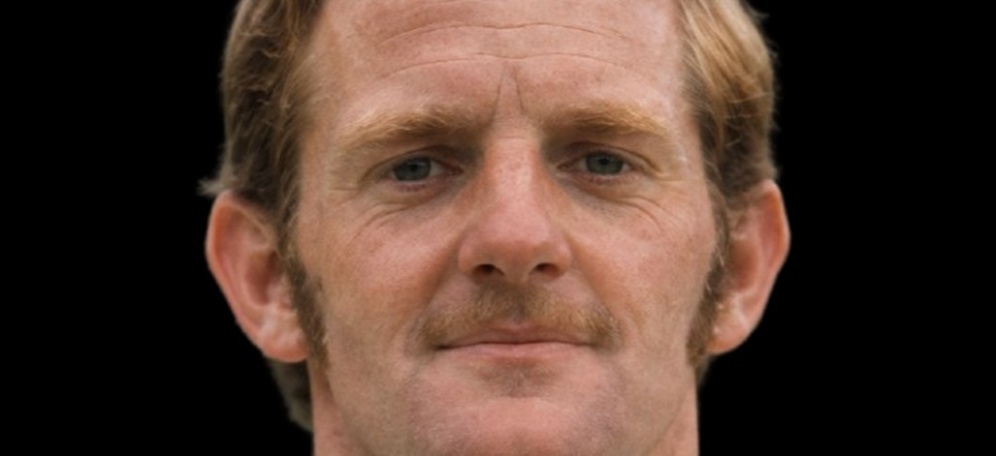
Alexander McFarlane Rae, born 23 August 1946, Glasgow, Scotland.
PART ONE
From the moment East Fife took Alex Rae from Renfrew Juniors in 1963, when he was only 17 and still learning the printing trade, he showed the willingness to work, listen and improve that would carry him through nearly two decades as a player and eventually into management, coaching and scouting. Jimmy Bonthrone, the East Fife manager who signed him, saw an outside-left with pace, balance and enough confidence to attack a full-back, but Rae was not yet a polished senior footballer and, like so many Scottish players of his generation, he had to combine training and matches with the ordinary demands of earning a living.
He initially remained part-time while serving his apprenticeship as a printer, and that meant long days, tired legs and none of the comfortable preparation enjoyed by later generations, yet it also hardened him and made him value every chance he received. When he eventually became a full-time player, the extra training sharpened his game and gave him an advantage that he never forgot, because he had already learned that progress came through work rather than talk. East Fife were in the Scottish Second Division and Bayview was a proper football ground where expectations remained high after the club’s successful post-war years, so Rae entered a side that wanted promotion and demanded honest performances, and although that promotion did not come during his first spell, he soon became a regular and began laying down the habits that later made him such a dependable captain.
East Fife finished fourth in 1963–64, Rae’s first season at senior level, and although a teenager coming out of junior football could easily have been overwhelmed by the harder tackling and quicker movement of the Scottish League, he adapted and learned when to stay wide, when to come inside and when to release the ball rather than attempting to beat another opponent. The following campaign brought a ninth-place finish, which was a disappointment for a club with ambitions beyond the Second Division, but there were still afternoons that showed what the side could do, and the most striking arrived in the League Cup in September 1964 when East Fife defeated Celtic 2–0.
Celtic were not yet the European champions they would become under Jock Stein in 1967, but they remained one of Scotland’s biggest clubs and beating them gave Rae and his team-mates a glimpse of the standard they were chasing. East Fife recovered to finish fourth again in 1965–66, then fifth in 1966–67, and by 1967–68 they had climbed to third, close enough to promotion to make the near miss hurt. Rae’s contribution across those five seasons amounted to 103 league appearances and 17 goals, solid figures for a player who had begun as an outside-left and was gradually becoming more adaptable, and his performances attracted interest beyond Scotland.
He had also formed a lasting connection with Fife away from the pitch after meeting the woman who became his wife, so the area was becoming home as much as a place of employment, but in 1968 Bury offered East Fife £10,000 for him and the chance to play in England was too important to ignore. It was a considerable fee for a Second Division Scottish player and clear evidence of the reputation he had built, but the move would test him in a way that his steady progress at Bayview had not.
PART TWO
Bury were playing in the English Third Division, where matches were physical, the travelling was demanding and newcomers were often given little time to settle, and Rae discovered that a transfer fee did not guarantee a settled place in the team. He made 11 league appearances without scoring, as well as three outings in other competitions, during the 1968–69 season, when the Shakers finished 20th in a 24-club division with 34 points from 46 matches, and his limited involvement made the move far less rewarding than either he or Bury had expected. There was no disgrace in finding English football difficult, because plenty of talented Scots had crossed the border and struggled to establish themselves, but Rae needed regular games and he was not getting them at Gigg Lane, while the experience also reminded him that a footballer could quickly slip from being an important member of one side to a fringe figure in another.
He left Bury and spent a period out of senior football before Davie McParland offered him a return to Scotland with Partick Thistle in the summer of 1970, and the timing could hardly have been more important for either man. Thistle had just been relegated from the First Division and McParland was rebuilding with a group of young players who possessed ability but required experience around them, while Rae, still only 23, had already played more than 100 league matches in Scotland and endured the disappointment of an unsuccessful move south. He therefore arrived at Firhill neither as an ageing player brought in to see out his days nor as a youngster requiring protection, but as a steady, sensible footballer who understood what it meant to fight for a place, and those qualities would soon matter as much as anything he did with the ball.
Rae made his competitive Thistle debut on 15 August 1970 in a League Cup match away to East Fife, of all clubs, and he marked the occasion by scoring in a 1–1 draw at Bayview, an opening that corrected any thought that his difficult period at Bury had blunted his confidence. Thistle’s main business that season was escaping the Second Division at the first attempt, and McParland’s young team played with an energy that Rae helped to control rather than restrain, because he understood that experience was not about slowing younger players down but giving their ability some direction. He could play in midfield or further forward, he was comfortable taking responsibility and he did not disappear when a match became difficult, while his team-mates responded to a man who demanded standards without making a performance of his authority.
Thistle won the 1970–71 Second Division championship, finishing ahead of Rae’s former club East Fife, and the title was secured through sustained consistency rather than one sudden burst, with Rae appearing in 36 matches and scoring six times across all competitions, including three league goals. Promotion restored the club to the top flight, but the greater consequence was the confidence it gave a side containing such promising footballers as Alan Rough, Alex Forsyth, Ronnie Glavin, Denis McQuade, Jimmy Bone and Bobby Lawrie, all of whom were developing quickly under McParland. Rae’s part in that success made him the obvious choice as captain for the return to the First Division, and although he could not have known what awaited him in the autumn of 1971, the decision placed him at the centre of the most famous day Partick Thistle have ever known.
The League Cup campaign began with a 4–0 victory over Arbroath at Firhill on 14 August 1971, and Thistle progressed from a sectional group that also contained East Fife and Raith Rovers before overcoming Alloa Athletic in the supplementary round, yet there was still little reason for anyone outside the club to regard them as likely winners. St Johnstone presented a serious obstacle in the quarter-finals and won the first leg 2–0 at Muirton Park on 20 September, leaving Thistle apparently close to elimination, but two nights later McParland’s side produced a magnificent response at Firhill, winning 5–1 to take the tie 5–3 on aggregate.
Falkirk were beaten 2–0 in the semi-final at Hampden Park on 4 October, with Lawrie and Bone scoring, and that result sent Thistle into a final against Celtic on 23 October. Celtic had won the European Cup four years earlier, had collected six successive Scottish league titles and fielded established international players throughout their side, so the widespread assumption was not merely that they would win but that they would win comfortably. Some bookmakers reportedly considered the outcome so certain that they offered odds on Celtic leading at half-time and winning at full-time, but Rae and his team-mates were not required to agree with the public judgement, and the captain’s responsibility in the dressing room was to make certain that a young side treated the occasion as a football match rather than a day out against famous opponents. Thistle had pace, movement and no reason to protect themselves, and once the ball began rolling they attacked Celtic with a freedom that turned expectation upside down.
Only 11 minutes had gone when Rae struck the opening goal, collecting the ball after a corner had not been properly cleared and curling his shot beyond Denis Connaghan, and from that instant Celtic were forced to deal with an opponent that had lost all fear. Bobby Lawrie made it 2–0 four minutes later, Jimmy Bone added the third in the 37th minute and Denis McQuade scored again four minutes before the interval, leaving Thistle 4–0 ahead at half-time and Hampden struggling to understand what it had witnessed. The score was extraordinary, but the performance was not a lucky flurry from a side hanging on for survival, because Thistle had played with speed and purpose and had repeatedly opened Celtic up, while Rae’s early goal gave everything that followed its starting point.
Jock Stein’s team pressed after the break and Kenny Dalglish reduced the deficit in the 57th minute, but Thistle refused to panic, and with Rae organising those around him they protected the advantage until the final whistle confirmed a 4–1 victory. The captain then climbed the Hampden steps and lifted the Scottish League Cup, becoming only the second man to lead Partick Thistle to a major national honour after Jimmy Davidson had captained the 1921 Scottish Cup-winning team. For Rae, the afternoon changed the way people regarded him for the rest of his life, because whatever else he achieved, he would always be the man who scored first and lifted the trophy when Thistle defeated Celtic. Yet his importance could not be reduced to those two visible moments, since the calm leadership he had supplied from the start of the season helped a young group believe that the impossible result was possible long before the scoreboard confirmed it.
There was still a league season to complete after the excitement of Hampden, and Thistle held their place in the First Division by finishing seventh in 1971–72, a highly respectable return for a newly promoted club, while Rae continued to set the tone as captain. The League Cup victory also took the club into European competition for the first time, and in September 1972 Thistle met Budapest Honvéd in the opening round of the UEFA Cup, facing opponents from a Hungarian football culture that remained technically strong and tactically clever. The first leg at Firhill on 13 September ended in a 3–0 defeat, which left Thistle with an almost impossible task before the return in Budapest two weeks later, and Honvéd won that match 1–0 to complete a 4–0 aggregate victory.
Rae played in both games, and although the adventure ended quickly, those evenings represented another remarkable step for a player who had begun at Renfrew Juniors, served his time as a printer and spent most of his early senior years in Scotland’s Second Division. His position at Firhill nonetheless changed during the 1972–73 season, because football relationships that once seemed solid could break down quickly, and a disagreement with McParland eventually brought his time at Thistle to a close in the autumn of 1973.
PART THREE
Alex Rae departed Partick Thistle after 151 competitive appearances and 13 goals, of which 98 appearances and nine goals came in the league, and those totals tell only part of his value. He had joined a relegated club, helped it win immediate promotion, captained it to a major trophy, played in its first European tie and provided experience to footballers who would go on to achieve far more in the game, but there was no grand farewell, just the hard reality that once a player and manager fell out, one of them generally had to leave.
Family ties and his affection for Fife drew Rae back to East Fife in January 1974, more than five years after his move to Bury, but this was not a return to the same circumstances he had left behind. He was older, had captained a top-flight club and possessed a League Cup winner’s medal, while East Fife were again trying to make progress outside Scotland’s leading division, and although his second spell was quieter than his first, he remained a useful and experienced presence. Rae made 29 league appearances and scored three goals before leaving in June 1975, when Cowdenbeath signed him on a free transfer, and the move kept him in Fife while offering another opportunity to play regularly.
Cowdenbeath were operating in the lower reaches of the Scottish game and there was little glamour attached to the work, but Rae had never required glamour to remain interested, because he liked playing, understood the value of reliability and knew that football below the top division still mattered greatly to the people who paid at the gate every Saturday. He spent two seasons with the Blue Brazil, making 44 league appearances and scoring three times, but by 1977 he was 30 and his value was increasingly measured in more than goals or bursts down the wing. Younger players could learn from the way he prepared, spoke and read a match, and Forfar Athletic recognised that when they brought him to Station Park, where the final and longest stretch of his playing days would gradually lead him towards coaching and management.
Rae spent roughly six seasons as a Forfar player and passed 100 league appearances for the club, scoring close to 30 goals, and although records differ slightly on the precise totals, the broader picture is clear: he remained productive well into his thirties and became a central figure at Station Park. His role changed with time, because the outside-left who had joined East Fife in 1963 was now a senior player capable of operating through midfield, supporting the attack and helping to organise the team, and he eventually combined playing with coaching duties.
When Archie Knox left Forfar in 1980, Rae stepped up as player-manager, taking charge in the Second Division and accepting the difficult balance of selecting the side, preparing the players and remaining available to play himself. Forfar finished fifth in 1980–81 and sixth in 1981–82, safe in mid-table rather than seriously threatening promotion, but Rae’s second season produced a Scottish Cup run that carried the club further than it had ever gone before. The Loons defeated Queen of the South, East Fife and Morton to reach the semi-final, where Rangers awaited them at Hampden Park on 3 April 1982, and few expected a part-time Second Division club to survive against opponents packed with international players. Forfar did far more than survive, holding Rangers to a 0–0 draw and earning a replay, while their disciplined performance reflected a manager who understood that organisation and belief could narrow a wide gap in resources.
The replay took place at Hampden three days later and Rangers eventually won 3–1, but the score did not tell the full story of a contest in which Forfar remained close enough to threaten another surprise. John MacDonald put Rangers ahead, but Ian McPhee equalised for Forfar, and Rae’s side continued to compete until late in the match, when a disputed incident became one of the lasting talking points of the tie. Forfar believed they should have received a penalty after Bobby Russell challenged Stuart Porter inside the area, but the appeal was rejected and Rangers subsequently pulled clear through goals from Derek Johnstone and Davie Cooper.
Rae never forgot the decision and remained convinced that it changed the direction of the replay, but disappointment could not erase what Forfar had accomplished, because taking Rangers to a second match in a Scottish Cup semi-final was a major feat for a club of their size. That run proved to be the high point of his period in charge, and later in 1982 he resigned because the demands of football could no longer be comfortably combined with his employment at the Mossmorran petrochemical plant. The decision was another reminder of the world in which Rae had spent most of his playing life, where even a manager capable of leading a club to Hampden often needed an outside job and had to measure footballing ambition against wages, shifts and family responsibilities. He stepped away from the game for four years, not because his interest had disappeared but because there were only so many hours in the week.
Archie Knox later drew Rae back into football by inviting him to coach Dundee’s reserve team, and Rae worked at Dens Park with young players who could benefit from the same plain advice and practical knowledge he had once brought to Partick Thistle. He continued after Jocky Scott succeeded Knox as Dundee manager and stayed until Scott left for Aberdeen in 1989, after which Rae moved increasingly towards scouting rather than daily coaching. Scott and Alex Smith used him to assess opponents for Aberdeen, while later connections brought work for Dunfermline Athletic and Arbroath, and Knox also employed his knowledge of the Fife football scene on behalf of Rangers.
Scouting suited Rae because it depended on judgement rather than noise, and a man who had played in every level from the Scottish lower divisions to the top flight, managed part-time players and coached promising youngsters could recognise qualities that were not always obvious from a goals total or a single good afternoon. He continued to combine football with outside employment, reducing his involvement gradually and eventually stepping away after helping with youth coaching into the early years of the new century.