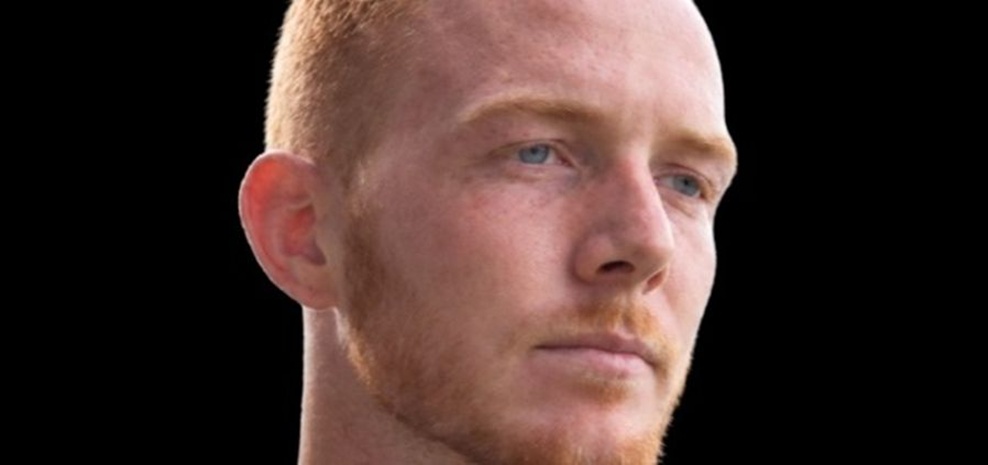
Ryan Anthony Taylor, born 19 August 1984, Liverpool, England.
PART ONE
Liverpudlian Ryan Taylor came up through the youth ranks at Tranmere Rovers across the Mersey in Birkenhead, and was handed his first-team debut on 10 September 2002 in a League Cup tie at Hartlepool United’s Victoria Park, a night when he did the one thing a teenage debutant dreams of and scored the winning goal in a 2-1 victory. Four days later, on 14 September, he made his league debut at Prenton Park in a 3-1 win over Brentford, and by 19 September the club had seen enough to tie him to a new long-term contract that would keep him there until June 2006, which tells you how quickly Tranmere realised that they had a good one on their hands.
He held his place in the side under both Ray Mathias and Brian Little, which is not a thing every youngster manages when a manager gets the sack and the next man wants his own ideas, and he finished the 2002-03 season with three goals in 32 appearances before scoring six in 39 the following year. Most of his work in those early seasons was done at right-back, where he took over from the veteran defender Steve Yates, and he learned the trade of defending against grown men in a division where nobody gave a teenager an inch.
The 2004-05 season was his best at Prenton Park, and by some distance, because he scored ten goals in 51 appearances from a position where ten goals is a bonus rather than an expectation, and he was voted into the League One PFA Team of the Year while the Tranmere players and supporters both named him their Player of the Year. That was the season that ended with a play-off semi-final against Hartlepool, the same club he had scored against on his debut, and he scored in the second leg to level the tie, but it was settled on penalties and Taylor missed one of his own as Tranmere lost the shoot-out 6-5, a heavy thing for a twenty-year-old to carry home.
The disappointment did not last long, since in July 2005 Wigan Athletic paid £750,000 for him, a sum that could rise to £1.3 million depending on his appearances, and he signed a four-year contract at a club that had just been promoted to the Premier League for the first time under Paul Jewell. A step like that is a big one for a lad from League One, and the early autumn of 2005 brought a second piece of news, as England called him into the under-21 side. He made his debut for them on 7 October 2005 at Elland Road in a 2-1 defeat to Austria in a qualifier for the 2006 European Under-21 Championship, and four days later he played in a 4-1 victory over Poland at Hillsborough. Eighteen days after the Poland game, on 25 October, he scored his first goal for Wigan, a penalty in a 3-0 home win over Watford in the League Cup, and then in November he featured in both legs of the play-off against France that ended with England beaten and out of the tournament.
The luck that had been kind to him at Tranmere turned sour in the new year. On 7 January 2006, in a 1-1 FA Cup third-round draw with Leeds United, he fractured his fifth metatarsal, a bone in the foot that every footballer’s mother learns the name of the hard way, and it ruled him out for three months. By the time he was ready to play again he was in a reserve game against Newcastle United’s second string in April, where he broke his leg, and that was the end of his 2005-06 season. He did get back to play for England under-21s one last time, in a 3-1 friendly win over Norway on 28 February 2006, which fell between the metatarsal and the broken leg, but that was to be his final appearance for them, and he finished with five caps and no goals.
Taylor´s first Premier League goal arrived on 25 February 2007, a well-placed free kick in a 1-0 home win over Newcastle United, and the club he had scored against that day was the one he would later join, though nobody in the stands knew it at the time. Wigan changed managers, and Chris Hutchings pushed him out of the first-team picture, which can be a lonely place to be when you are twenty-three and have missed a year’s football already. When Steve Bruce replaced Hutchings in November 2007, though, Taylor was brought back, and on Boxing Day he beat Shay Given from a dead ball at the JJB Stadium, scoring the only goal of the game in a 1-0 win over Newcastle once more. On 5 April 2008 he scored twice from close range in a 2-0 home victory against Birmingham City, a result that mattered a lot to Wigan in a relegation scrap, and in the 2008-09 season he scored against Newcastle at home and away, which gave him a habit that Magpies fans began to notice and perhaps resent a little.
That habit may well have helped to bring him to Tyneside, for in February 2009 Wigan traded him to Newcastle in a part-exchange deal that sent Charles N’Zogbia the other way, and Ryan Taylor signed a four-and-a-half-year contract. Joe Kinnear, who was in charge when the deal went through, said he was delighted to get a player of his versatility and experience, and Taylor had ten games left that season to help a team sliding toward trouble, but Newcastle finished one point short of safety and went down. He scored his first goal for the club on 22 August 2009 in a comfortable 2-0 triumph at Crystal Palace, and over the 2009-10 campaign he scored four goals in 36 appearances, most of them as a substitute, while Newcastle won the Championship and bounced straight back to the Premier League.
The following season was a hard one. Taylor lost his place when Chris Hughton took over the first team for the start of the 2010-11 campaign, though he did score two long-range goals in the League Cup, against Accrington Stanley and then against Chelsea, which showed that he could still make a manager sit up. An ankle ligament injury, picked up in training after a collision with Sol Campbell, kept him out for a long stretch, and when he returned against Bolton Wanderers on 26 February 2011 he was given the red card for a two-footed challenge on Johan Elmander, which is not the sort of comeback anyone ordering a script would choose. He finished that season with just five league appearances.
PART TWO
Ryan Taylor´s best days came under Alan Pardew. On 20 August 2011, in the opening weeks of the new season, Taylor scored from a free kick at the Stadium of Light to give Newcastle United a 1-0 win over Sunderland in the Tyne-Wear derby, and it was the kind of goal that turns a squad player into a name that supporters sing for years afterwards. Pardew was happy enough to say the player’s right foot was a fantastic weapon, and he was not exaggerating, because five days later Taylor scored a late equaliser from another free kick in a 2-1 win at Scunthorpe United in the second round of the League Cup.
Then came the afternoon of 5 November, at St James’ Park against Everton, when Newcastle were ahead through a John Heitinga own goal in the twelfth minute and Taylor, picking up a clearance from Jack Rodwell out on the left, let the ball bounce once and hit a dipping volley over Tim Howard and in off the underside of the crossbar in the 29th minute. Rodwell pulled one back on the stroke of half-time, but Newcastle held on for a 2-1 win, and Taylor’s goal won the BBC’s Match of the Day Goal of the Month competition. In March 2012 he signed a two-year contract extension that would keep him at St James’ Park until 2015, and he played 34 times that season as Newcastle finished fifth.
Then the knees started to go. On 23 August 2012 he scored a free kick in a Europa League tie against the Greek side Atromitos, and in the return leg a week later on 30 August he picked up a cruciate ligament injury. He was fit again, or near it, by the spring of 2013, but in April the injury came back, and a second spell on the sidelines began that would stretch over two years. In May 2013 he flew to the United States to be operated on by the specialist Dr Richard Steadman, who recommended two operations, six months apart, and so there were months of rehab and gym work that nobody saw. He did something useful in the meantime, helping Peter Beardsley to coach the club’s under-21 team, which was an early taste of what he would do for a living in later life.
He came back on 29 October 2014, after 26 months out, in a League Cup tie at Manchester City, and Newcastle won 2-0 with Taylor in the starting line-up. He said afterwards that it was a dream come true and thanked the staff and supporters who had stuck by him, and it is hard to find anyone in football who would have grudged him that night. Yet three weeks later, on 22 November, he left the field in tears after hurting his right knee again in a league match against Queens Park Rangers. He got back on the pitch in February 2015, and Newcastle stayed up, but he and Jonás Gutiérrez were released in May, and so a six-year stay that had given him a promotion, a derby winner and a Goal of the Month ended with a phone call.
In July 2015 he signed a one-year contract with newly relegated Hull City, managed by Steve Bruce, who had rescued him from the cold at Wigan eight years earlier. He made his debut on the opening day of the 2015-16 season in a 2-0 home win over Huddersfield Town, but it turned out to be his only league start, and he added just three substitute appearances in the league and eight in the cups before Hull let him go in June 2016. He spent that July on trial with Rotherham United and his old club Wigan Athletic, and then trained with Preston North End, which is the sort of stretch a thirty-one-year-old with a medical history like his might have taken as a hint, but he kept on going.
On 21 October 2016 he signed a short-term deal with League One club Port Vale. He made his debut the next day and scored from the penalty spot to earn Vale a point in a 2-2 draw with Oxford United at Vale Park, and manager Bruno Ribeiro played him at right-back, where he was named in the League One Team of the Day after a goal-saving interception in a 2-1 win over Fleetwood Town on 12 November. When caretaker manager Michael Brown, who said the pair were good friends, was hoping to keep him beyond the January expiry of his contract, there was interest from foreign and higher-level clubs, and Taylor had a trial with Chicago Fire in Major League Soccer but did not settle in the United States and came home. He signed another short-term deal at Port Vale on 17 March 2017, and that same night he set up one goal and scored another in a 2-1 home win over relegation rivals Shrewsbury Town, a result Vale badly needed.
The next move was a long way from Burslem. On 12 December 2017 he joined the reigning Indian Super League champions ATK to replace the injured Carl Baker, having been talked into it by Iain Hume, and five days later he made his debut and played the full ninety minutes of a 1-0 win over Mumbai City. His first goal for ATK came on 8 February 2018 in a 2-2 draw with FC Pune City. He was back in England by 23 September 2018, joining League One club Fleetwood Town as a free agent after a trial, and manager Joey Barton said how much hunger and desire the new man had shown to be part of the group. Taylor played 11 times in 2018-19 and left Highbury Stadium when he was released in May 2019.
The last chapter was in the non-league game. On 27 October 2020 he joined Colne of Northern Premier League Division One North West, though the 2020-21 season was cut short after only nine games, and in November 2021, when goalkeeper Joel Torrance was sent off five minutes before half-time in an FA Trophy victory over Buxton, Taylor took over the gloves and played in goal. Two months later, in January 2022, he joined Buxton in the Northern Premier League Premier Division, the very club he had kept goal against. He turned to coaching afterwards, and in September 2025 Preston North End appointed him as a Lead Development Phase Coach, a role that sendt him back into the youth game where he started at Tranmere.