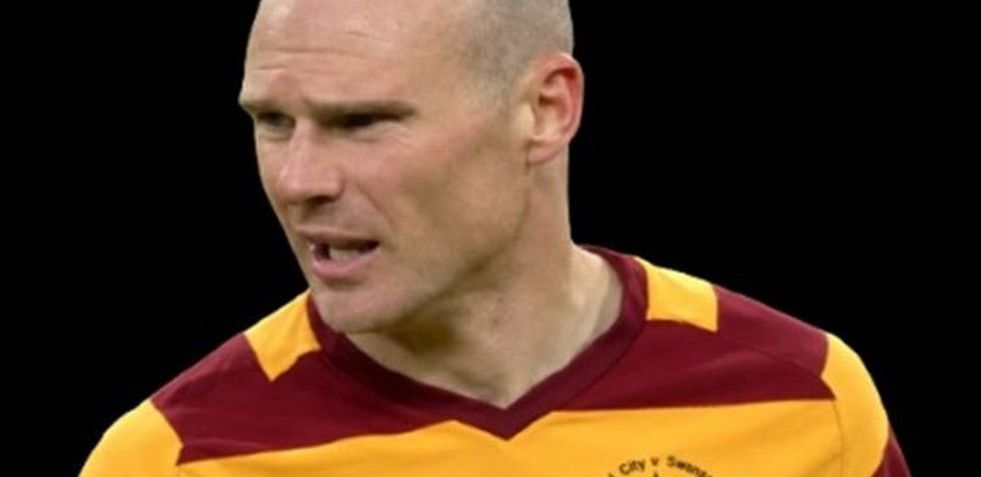
Gary Roy Jones, born 3 June 1977, Birkenhead, England.
PART ONE
Gary Jones kicked off his footballing career with non-league Caernarfon Town in the 1996–97 campaign. From there he went to Swansea City, who signed him on 11 July 1997, and he found himself in the old Third Division with a club that was happy to have him around but never quite sure where to put him. A single League Cup appearance and a handful of league games were all he managed before the winter came, which was no disgrace for a young midfielder arriving from non-league football, but was not enough to make a name either.
The move that changed everything was a short loan to Rochdale in January 1998. Jones made his debut for the Lancashire club on 17 January, a 3–1 defeat against Peterborough United that gave no hint of what was coming, and the loan turned into a permanent deal soon afterwards, with Swansea letting him go for nothing. Rochdale were scrapping around in the bottom division at the time, a club with a small ground, a smaller budget and a loyal band of supporters who liked their midfielders to run hard and tackle harder, and Jones was exactly that sort of player. He settled quickly, and across the three seasons that followed he became a regular, scoring seven goals in 1999–2000 and eight more in 2000–01, a season he began by serving a two-match suspension before settling in as a fixture in the middle of the park. His record for that first spell stands at 136 league games and 22 goals, which is a healthy return for a man whose main job was winning the ball rather than finishing off moves, and it caught the eye of his former manager Steve Parkin, who by then was at Barnsley.
Parkin got his man in November 2001, when Jones left Rochdale for Oakwell, and he debuted for Barnsley on 2 December in a 3–0 home win over Sheffield Wednesday. It should have been the next step up, but it never quite became that. Jones played 56 league games for the Tykes and scored twice and he drifted in and out of the side in a way that suited neither him nor the club. So when Rochdale asked in 2003 whether he fancied coming back on loan, he said yes without much hesitation, and he played ten games and scored twice before the move was made permanent in February 2004. It was one of the shrewdest bits of business the club ever did, although nobody at Spotland could have known it at the time, because what they had really signed was the man who would go on to wear the captain’s armband and break their appearance record.
The second spell, which ran from 2004 to 2012, is the one Rochdale supporters talk about when they talk about Gary Jones. He scored eight league goals in 39 games in 2004–05, played 42 league games in 2005–06, and carried on being the first name on the team sheet through a period when the club was drifting at the wrong end of League Two, until Keith Hill took over as caretaker in December 2006 after Parkin’s departure and was given the job for good. Hill built a side around hard work, quick passing and a spine of players who would run through a wall for him, and Jones was at the centre of it.
In 2007–08 he played 43 league games and scored seven times as Rochdale reached the League Two play-off final at Wembley, and although they did not get over the line that day, it was the first real sign that Hill’s team could mix it with the best in the division. The following season they finished sixth and lost the play-off semi-final to Gillingham, with Jones playing 28 league games without scoring, and by then there was a feeling around the town that the club had run out of excuses and was only a push away from something big.
That push came in 2009–10. Rochdale finished third in League Two behind Notts County and Bournemouth, securing the last automatic promotion place with a win over Northampton Town, and it was their first promotion since 1969 and the end of a run of 36 consecutive seasons in the bottom division. Jones played 32 league games and scored twice that season, modest numbers on paper, but anyone who watched the team knew that the captain’s work in the middle was a big part of why the whole thing held together. He was 32 by then, an age at which most midfielders in the lower leagues start looking for a quieter life, and yet he was about to play the best football of his time at Spotland. League One brought a new level of opposition and a different sort of test, and Jones opened the 2010–11 season with a point-saving double at Brighton on 14 August, converting a penalty and then lobbing the goalkeeper deep into stoppage time for a 2–2 draw. Three weeks later, on 4 September, he did something even better.
Southampton had just sacked Alan Pardew and were a club in turmoil, hot favourites for the title and playing in front of more than 18,000 people at St Mary’s, and Rochdale went there and won 2–0. Jones started the move for the first goal himself, driving forward from deep inside his own half before Chris O’Grady finished it off, and then he hit the second from 25 yards in the 68th minute, a shot that flew past Kelvin Davis and which he has since described as the best he ever struck. It was the sort of afternoon that makes a small club’s season. Rochdale finished the campaign ninth in League One, their highest league position since 1970, and Jones was the leading scorer with 17 league goals and 19 in all competitions, a remarkable total for a central midfielder at 33. Hill praised him publicly for his contribution, and rightly so, though Hill himself was gone to Barnsley by the summer and the team that had been so tightly knit began to loosen.
Jones played all 45 league games in 2011–12 and scored five goals, but the club went down and the season ended with the sort of quiet sadness that follows a relegation nobody really wanted. On 22 June 2012 it was announced that he would sign for Bradford City on a one-year contract. He left Rochdale with the all-time club record for appearances, 464 in the league, and with a standing among the supporters that has not faded in the years since. Few players earn that kind of loyalty, and fewer still are given the chance to build a second reputation somewhere else, but that is precisely what happened at Valley Parade.
PART TWO
Bradford City were in League Two, managed by Phil Parkinson, and nobody expected much, but the new captain made an impression straight away. He made his debut on 11 August 2012 in the League Cup, a 1–0 win away at Notts County, the club he would join two years later, and played his first league game a week afterwards against Gillingham. His home debut came on 21 August in a 1–0 win over Fleetwood Town, when he took the corner from which James Hanson scored the only goal, and four days later he was named man of the match in a 5–1 win against AFC Wimbledon. On 18 September he scored his first goal for the club, a free-kick in a 3–1 win over Morecambe that helped Bradford to their best start at home since 1957, and he added a second in a 1–0 win at Plymouth Argyle on 20 November. It was good, solid, unfussy stuff, the sort of thing that wins a manager’s trust and a crowd’s affection, and nobody could have guessed what was coming.
On 11 December 2012, Valley Parade hosted Arsenal in the League Cup quarter-final, and the Premier League side were beaten. It finished 1–1 after extra time, Bradford won the shoot-out 3–2 with Nathan Doyle, Jones and Alan Connell scoring and Matt Duke making the saves, and the captain stood in the middle of a sold-out ground watching a League Two side go through to the first League Cup semi-final in its history. Wigan Athletic had already gone out on penalties in an earlier round, and Aston Villa were next.
In the first leg at home on 8 January 2013 Bradford won 3–1, with Nahki Wells scoring the opener, Rory McArdle heading in Jones’s cross and Carl McHugh heading in his corner late on, and a fortnight later, on 22 January, they lost 2–1 at Villa Park with Hanson scoring the goal that mattered, which was enough to send them through 4–3 on aggregate. Somewhere in the middle of all this a photograph appeared of Jones hugging a young Bradford fan who was fighting cancer, and it became the image of the run, partly because it was so unplanned and partly because it showed what he meant to the place.
Wembley Stadium followed on 24 February 2013, and the day itself was a harsh one, a 5–0 defeat against Swansea City, the club Jones had left 15 years earlier, with the Welsh side winning the first major trophy of their history. Bradford were the first fourth-tier side to reach a major Wembley final and only the second to reach any major final, after Rochdale in 1962, and while the result hurt, Jones has since said that walking down the tunnel past pictures of the Bradford players on the wall was one of the strangest moments of his life. The hangover was real, because Bradford won only one of their next six matches, but they recovered in time to reach the League Two play-offs and, on 18 May 2013, went back to Wembley to beat Northampton Town 3–0 and win promotion to League One, with Jones lifting the trophy alongside Ricky Ravenhill. He was voted the club’s player of the year. Few people in the country would have quarrelled with that.
The 2013–14 season in League One brought a new challenge, and Jones, whose contract had been extended to June 2014 that summer, played 43 league games and scored twice, his experience helping Bradford to stay up. On 9 May 2014, however, it was announced that he would not be offered a new contract and would leave at the end of the season, a decision that did not go down well with many supporters. He had been at the club for two seasons and had given them as much as anyone could, and he has said himself that his only regret is that he did not arrive earlier or stay longer. It is a rare thing for a player to feel that about a club he left after only two years, but then Bradford had given him the biggest days of his playing life.
On 7 August 2014, Jones signed a one-year contract with Notts County, and two days later, on 9 August, he made his debut in a 1–1 draw against Preston North End. His home debut on 16 August was a 1–0 defeat against Fleetwood Town, and he scored his first goal for the club on 23 August 2014 in a 2–0 win away at Port Vale. A second followed on 18 October in a 5–3 win over Crawley Town. It was a tough campaign, and for all his effort Notts County finished 21st on 50 points, two behind Crewe Alexandra, and were relegated to League Two, with Jones playing 42 league games and scoring three times. That was the end of his time in the Football League, and when his contract ran out he did not hang around.
On 6 August 2015 Jones agreed to join Southport of the National League, where the midfield combatant enjoyed a successful first season and signed on for 2016–17, when manager Andy Bishop made him club captain. On 9 December 2016 he signed a month-long loan with Altrincham, and that was more or less the end of his playing days at senior level, a long way from Wembley but in keeping with a man who had always enjoyed the game for what it was. His total of 716 league appearances, 464 of them for Rochdale, speaks for itself, and it is the sort of record that nobody is likely to break at the club any time soon.
In August 2022 Gary Jones returned to Bradford City as a youth coach, and after a spell playing for Ashville he became the club’s manager in 2023 before resigning from the post the following year. He never won a major trophy, never played in the top flight, and never made much noise about either, but he is remembered in Rochdale as the captain who led the Dale to promotion and in Bradford as the man who led the Paraders to Wembley Stadium twice in a single season.