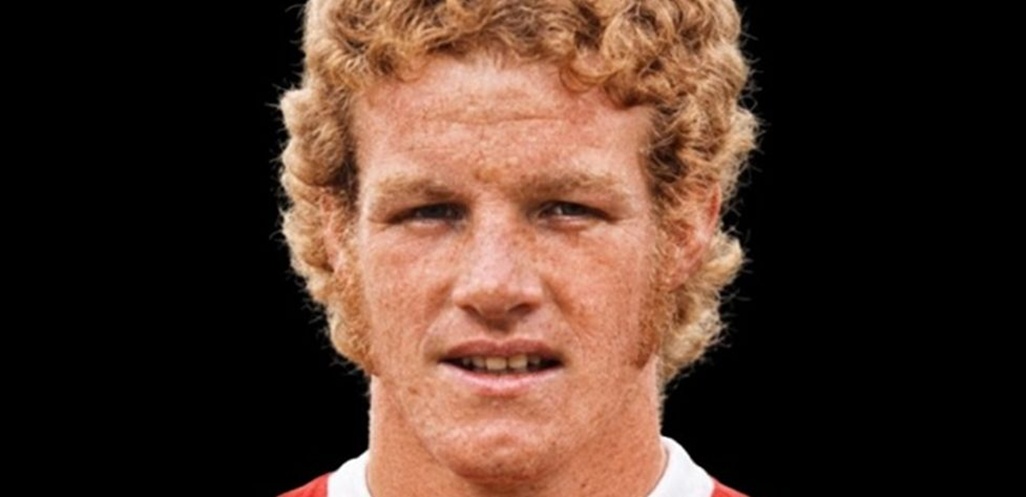
William Ashcroft, born 1 October 1952, Liverpool, England.
PART ONE
Billy Ashcroft joined Wrexham straight from school in 1968, and the club acquired a young footballer whose size, strength and appetite for a contest would eventually make him a difficult afternoon’s work for defenders. The Liverpool youngster was still learning when he arrived, but Wrexham gave him somewhere to develop and, on his eighteenth birthday, 1 October 1970, he signed professional terms before making his Football League debut two days later. John Neal was building a side capable of doing more than merely holding its place, and Ashcroft’s introduction came as Wrexham were adjusting to the Third Division after promotion from the fourth tier.
That was a useful setting for a young forward, because the club had room for improvement without requiring every new player to provide the finished answer immediately, and the teenager could learn among men who understood the demands of senior football. His red hair made him easy to recognise, but it was what happened when the ball reached him that would determine whether he stayed in the side, since a centre-forward’s appearance offers no help when a centre-half is leaning into his back. Ashcroft had to make himself available, withstand the challenge and turn possession into something useful, and the early seasons gave him repeated opportunities to learn how.
As he established himself during the early 1970s, Ashcroft became part of an attack that could trouble opponents without depending on one player to do all the work, and Wrexham’s ambitions began to extend beyond a respectable league position. Neal’s team included experienced footballers who could give the younger men a sound framework, with Arfon Griffiths supplying skill and judgement while others provided the running, defensive organisation and forward movement needed to make those qualities count.
For Ashcroft, the job involved more than waiting for a chance to shoot, because an effective centre-forward could help his team advance by competing for the first ball and making the next pass possible. His strength gave Wrexham an option when a move needed a direct route towards goal, while playing regularly against senior defenders helped him learn how to protect possession without stopping an attack altogether. The side’s results were not uniformly successful, and its league finishes varied, but it was developing the ability to make better-known opponents work for their victories. By 1973–74, Wrexham were close enough to the promotion places for their league football to carry real importance, and an FA Cup run gave the club another way to measure itself against teams from higher divisions.
That run reached the quarter-finals, where Wrexham travelled to Turf Moor on 9 March 1974 to face Jimmy Adamson’s Burnley, a First Division side with a considerably stronger position in the national game. Frank Casper scored the only goal in the fifty-eighth minute, and the 1–0 defeat ended Wrexham’s hopes of reaching the semi-finals, although the narrow result reflected a much more competitive tie than the difference in divisions might have suggested. Ashcroft did not play in that quarter-final, with Geoff Davies and Dave Smallman among the forwards selected, so the occasion belonged to his club’s progress rather than his own match record.
Wrexham also finished fourth in the Third Division that season, falling short of promotion but demonstrating that the cup results were not the only reason to take Neal’s side seriously. The league position required sustained work across the programme, and the cup run added evidence that the team could compete beyond its usual surroundings. Ashcroft continued developing within that demanding squad, where a young forward could not assume selection merely because he had shown promise, and the following seasons would bring him a more direct role in matches attracting attention outside Britain. Winning the Welsh Cup in 1975 opened the way into the European Cup Winners’ Cup, giving Wrexham another competition in which their domestic status would not decide the outcome in advance.
PART TWO
Wrexham began their 1975–76 European campaign against Sweden’s Djurgården, winning 2–1 at the Racecourse before drawing 1–1 away to advance 3–2 on aggregate, and the next round brought Stal Rzeszów from Poland. On 22 October 1975, Billy Ashcroft scored both goals in the 2–0 home victory over Stal, putting his own name firmly into the account of Wrexham’s progress rather than simply accompanying a successful team. The return ended 1–1, giving the Welsh side a 3–1 aggregate win and a place in the quarter-finals, where the opposition would be considerably more demanding. Those first two rounds showed the value of winning at home and then doing enough away to protect the advantage, a practical combination that mattered more than any assumption about how a Third Division club ought to fare in Europe.
Ashcroft’s two goals against Stal were central to that approach, because they supplied the margin Wrexham could carry into the second match, and his physical presence offered another problem for opponents who had already faced the team’s passing and movement. The reward was a meeting with Anderlecht, whose players included Rob Rensenbrink, Arie Haan and François Van der Elst, leaving Neal’s side to prepare for a test against some of the most accomplished footballers they had encountered.
The first leg in Brussels on 3 March 1976 ended 1–0 to Anderlecht, with Gilbert Van Binst scoring in the eleventh minute, but Wrexham prevented the home side from building the larger lead that would have made the return far less hopeful. Ashcroft started that match and retained his place for the second leg at the Racecourse on 17 March, when a crowd of 19,648 watched Wrexham attempt to overturn the deficit. Stuart Lee scored in the sixty-first minute to bring the aggregate scores level, creating a period in which the Welsh side had a genuine chance of reaching a European semi-final, before Rensenbrink equalised on the night in the seventy-seventh.
The match finished 1–1 and Anderlecht advanced 2–1 on aggregate, leaving Wrexham beaten by a narrow margin across two demanding games. Ashcroft had been part of both starting sides, and the quality of the opposition gave those appearances a particular weight within his development, because physical strength alone could not settle a contest against defenders and midfielders capable of using the ball so well. Anderlecht went on to win the competition, while Wrexham completed their league programme in sixth place, and Ashcroft returned to the next domestic campaign with direct experience of how close his club had come to eliminating a leading European side.
The 1976–77 season brought another opportunity to challenge First Division opposition, and on 22 September Wrexham went to White Hart Lane for a League Cup third-round tie against Tottenham Hotspur. Mickey Thomas scored twice before half-time, in the thirty-seventh and forty-second minutes, and Ashcroft added the third in the fiftieth, giving Neal’s side a 3–0 lead against a team containing Pat Jennings, Glenn Hoddle and Steve Perryman. Tottenham responded through Hoddle in the fifty-fifth minute and Ian Moores in the sixty-third, leaving Wrexham with a substantial stretch of the match to defend a much smaller advantage, but they held on to win 3–2.
Ashcroft’s goal therefore proved decisive, although the result also required the whole side to keep working after the match had become much less comfortable. It was another example of Wrexham taking their league football into a cup tie without allowing the opponent’s name to overwhelm them, and the forward was again doing more than watching established teammates create the occasion. By then he had grown into a player Neal could use in demanding matches, and the season also brought a strong league return from him, with twenty goals in forty appearances as Wrexham pursued the promotion that had repeatedly remained just beyond their reach.
Those twenty goals gave Wrexham a substantial contribution from Ashcroft, but the 1976–77 league campaign ended in fifth place, with the club again missing the three promotion positions despite scoring eighty times across the season. The final home matches were particularly costly, as defeats by Crystal Palace and Mansfield Town left a side with considerable attacking ability unable to take the step its supporters wanted. Ashcroft’s own scoring had nevertheless strengthened his standing, and Neal’s move to Middlesbrough in 1977 created the possibility that the forward could reach the First Division through a transfer.
Arfon Griffiths took charge at Wrexham, where Ashcroft began the new league season by scoring against Shrewsbury Town at Gay Meadow on 20 August, putting the visitors ahead before Graham Turner equalised and an own goal from Brian Lloyd gave Salop a 2–1 victory. It was an unhappy opening for a team still seeking promotion, but it also supplied the last of Ashcroft’s seventy-two league goals for Wrexham before Middlesbrough paid £135,000 to sign him. The fee was a club record for Boro, and the connection with Neal made the reasoning easy to understand, since the manager knew what the player could offer and was prepared to test those qualities in a more demanding division.
PART THREE
Billy Ashcroft was handed his Middlesbrough league debut on 3 September 1977 in a 2–1 defeat against West Bromwich Albion at The Hawthorns, exchanging Wrexham’s promotion challenge for the weekly demands of the First Division. He arrived as a centre-forward whose strength and scoring record had made him attractive to Neal, but the larger fee also brought greater expectations, and success against Third Division defenders did not guarantee the same return against opponents at the highest domestic level.
Boro finished fourteenth in 1977–78, while Wrexham won the Third Division championship under Griffiths, so Ashcroft’s former teammates secured the promotion they had pursued together after his departure. For the player now at Ayresome Park, the immediate problem was how to make himself useful within a different side, where stronger opposition could reduce both the space available and the number of clear scoring opportunities. His work increasingly drew upon his versatility, and Middlesbrough used him in central defence as well as attack, making a substantial change to the responsibilities attached to his selection. The physical contest remained important in either position, but the direction of the work changed: instead of trying to create room for a shot, he could be required to deny that room to another forward and ensure that the first challenge did not leave the defence exposed.
Middlesbrough finished twelfth in 1978–79 and ninth in 1979–80, remaining established in the First Division while Ashcroft continued adapting to the needs of the team. His use at centre-back made him valuable in a way that could not be measured solely through his goals, because a player signed to attack was now also taking responsibility for reading opponents’ movement and protecting his own penalty area. Knowledge of a striker’s intentions could help, but the conversion still required new habits, particularly when deciding whether to challenge immediately or keep the defensive line intact. Boro slipped to fourteenth in 1980–81, and the following campaign was considerably worse, ending with the club bottom of the twenty-two-team First Division and relegated in 1981-82.
Ashcroft’s five seasons there produced 159 league appearances when his twenty substitute outings are included, and twenty-one goals, figures that describe a substantial period of involvement even though the move had not produced the scoring return expected from his Wrexham form. With Middlesbrough facing Second Division football, he left for FC Twente in the summer of 1982, taking his experience of both ends of the pitch to the Netherlands and gaining another opportunity to play as a forward. The new surroundings offered a change, but they would not immediately offer relief from a difficult league campaign.
Ashcroft’s Twente debut came on 21 August 1982 in a 3–0 home loss to Roda JC, an unpromising introduction to a season that would expose serious problems within the Enschede side. Twente changed coaches during the campaign, with Rob Groener replaced by Spitz Kohn, but the improvement needed to preserve their Eredivisie place did not arrive. Relegation was confirmed in May 1983, leaving Ashcroft with a second successive season ending in his club dropping out of its top division, despite the change of country and playing environment.
The disappointment also altered the purpose of his Dutch move, because the next task would be helping Twente return rather than maintaining a comfortable position among the established Eredivisie clubs. Fritz Korbach took charge for 1983–84 and began rebuilding a side capable of winning promotion, with Ashcroft’s strength and experience offering something useful alongside the other players in the squad. A season in the Eerste Divisie required the team to earn its way back through results, and a forward could make a particularly direct contribution by converting opportunities often enough to turn promising performances into victories. Ashcroft now had that responsibility in a team seeking recovery, giving his next run of goals a clear importance beyond his own place in the scoring lists.
Under Korbach, Twente ended second behind MVV in 1983–84 and won promotion, with Ashcroft hitting twenty-one league goals to become the club’s leading scorer. That return belonged to the Dutch Second Division, where his contribution helped resolve an urgent club problem, and it gave him a productive season in attack after the positional changes that had occupied much of his time at Boro. Twente scored eighty-two league goals in thirty-two games, so the promotion effort had several contributors, but Ashcroft supplied more than a quarter of that total and gave the side a striker who could make his presence felt close to goal. Back in the top flight, Twente managed an eighth place in 1984–85, completing a much more satisfactory campaign than the relegation season that had begun Ashcroft’s stay, and his three years in the Netherlands ended with the club restored to a sounder league position. Across those seasons, he made seventy-seven league outings and hit twenty-nine goals, with the total covering both Dutch divisions rather than three uninterrupted years in the Eredivisie.
His strongest scoring contribution had come when promotion was the immediate objective, and the subsequent top-flight finish confirmed that Twente had been able to build on that success. In July 1985 he returned to English football with Tranmere Rovers, joining a Fourth Division side and bringing his experience much closer to the part of the country where he had grown up. The move placed him in another practical setting, where earlier achievements in Europe or the First Division could only help if they produced useful work in the current team. Tranmere needed players able to contribute through a long league programme, and Ashcroft’s experience in central defence as well as attack gave them more than one way to use him. He was thirty-two when he joined, old enough to have learned from several different managers and playing systems, but still required to meet the same demands for fitness, concentration and performance as the rest of the squad.
During 1985–86, Ashcroft made twenty-three league appearances for Tranmere and scored twice, spending his final professional season in a team that finished nineteenth in the Fourth Division. That position left Rovers well below the promotion contest, and his contribution was therefore part of the ordinary work of getting through a demanding campaign rather than another season ending with a major achievement. His ability to play in defence gave the club an experienced option, while the two goals added a small attacking return to the final set of figures from his professional playing years. He retired at the end of the season, aged thirty-three, bringing to a close a period that had begun with Wrexham’s offer of professional terms in 1970 and continued through Middlesbrough, Twente and Tranmere. Work away from football followed, including running a pub and later working as a driving instructor in Southport, replacing the fixture list with different daily responsibilities.