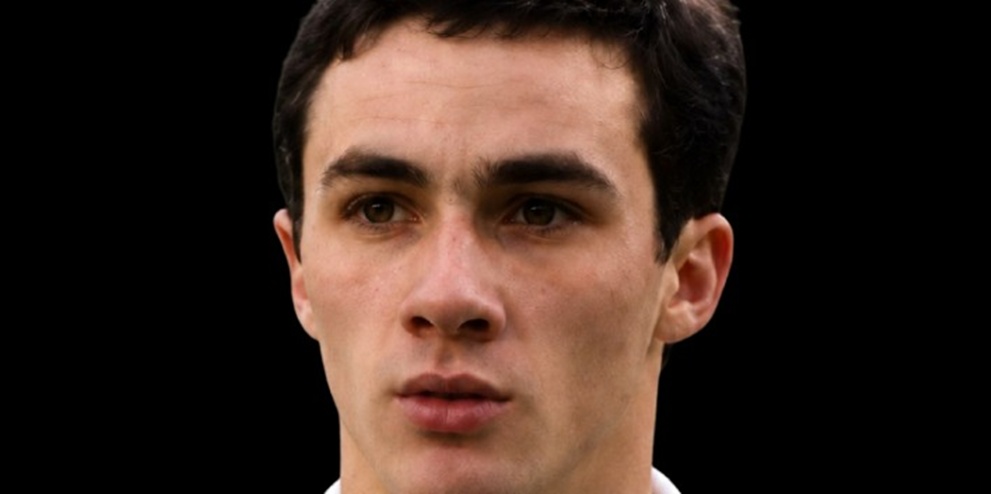
Terence Bradley Gibson, 23 December 1962, London, England.
PART ONE
Terry Gibson started his professional playing days with Tottenham Hotspur and was given his debut bu Keith Burkinshaw in a 1-0 Division One win over Stoke City at White Hart Lane on 29 December 1979, six days after his seventeenth birthday. The FA Cup then supplied a much larger examination, with Gibson playing against Manchester United in the third-round draw at Tottenham on 5 January 1980 before taking part in the replay at Old Trafford four days later. Spurs won that replay 1–0 after extra time, Osvaldo Ardiles scoring the decisive goal, despite goalkeeper Milija Aleksic having to leave the field injured and Glenn Hoddle taking over in goal.
Making that early entrance did not mean Gibson could expect uninterrupted football, and Tottenham’s growing strength under Burkinshaw made the task of establishing himself particularly demanding for a young striker. In 1981 he went on loan to GAIS in Sweden, where thirteen league appearances brought five goals in the second division and gave him senior matches away from the familiar surroundings of north London. A loan like that had a straightforward purpose: a forward who needed games could gain more from playing regularly than from training well and waiting for an occasional place among the substitutes.
On returning to Tottenham, he still had to compete for opportunities, and the sixteen league appearances he made in 1982–83 accounted for most of his eighteen league games for the club, with four league goals showing that he could contribute without proving that he had secured a permanent position. His seven competitive goals for Spurs also included one apiece in the FA Cup, League Cup and European Cup Winners’ Cup, an indication of the different competitions in which he had been used. By the summer of 1983, the practical question was whether remaining at the club he loved would give him enough football, and Coventry City offered a clear reason to leave.
Bobby Gould took Gibson to Highfield Road in 1983, and the move gave a twenty-year-old striker the chance to become a regular First Division player instead of a youngster whose next appearance depended on someone else being unavailable. Coventry were buying a player with relatively little league experience, yet they were also giving him something Tottenham had been unable to provide consistently, namely the room to build a run of matches and show what repeated selection could produce. For a forward, that difference matters because goals rarely arrive on demand simply to suit the timetable of a substitute’s appearance, whereas a run in the team allows movement, timing and understanding with other players to improve together.
Gibson’s Coventry record soon made the argument for the transfer more convincing than any explanation of his potential could have done, although the most striking early demonstration came against opposition who normally made life miserable for ambitious young attackers. Liverpool arrived at Highfield Road on 10 December 1983 as league leaders, with a defence containing Phil Neal, Alan Kennedy, Mark Lawrenson and Alan Hansen, and a goalkeeper in Bruce Grobbelaar who was accustomed to winning rather than collecting the ball from his net. Coventry proceeded to give them an afternoon they would have preferred to forget.
Nicky Platnauer opened the scoring in the first minute, Gibson added the second in the nineteenth and scored again just before the interval, leaving Coventry 3–0 ahead at half-time before he completed his hat-trick in the eighty-fourth minute to settle a 4–0 victory. The order of those goals tells the story of a match in which Liverpool were forced to chase almost from the start and then found the damage increasing, with Gibson supplying three of the four finishes against a side packed with players who knew how to control a difficult afternoon.
Coventry’s win was emphatic rather than a narrow success built around one fortunate break, and the striker’s contribution gave Gould a substantial return on the faith he had shown in bringing him from Tottenham. At twenty, Gibson had produced the sort of performance that gets discussed far beyond the home ground, because scoring three against Liverpool meant beating opponents whose names were familiar wherever English football was followed. That result did not remove the weekly work required of Coventry’s forwards, but it established that their small summer signing could do considerably more than fill a place, and it left supporters with a match they could recall in detail rather than a promise that might eventually come good.
Gibson finished his first Coventry season with seventeen league goals, followed by fifteen in 1984–85, and those figures were particularly valuable because the club needed goals to preserve its place in the First Division rather than simply improve a comfortable position. With Cyrille Regis arriving from West Bromwich Albion in 1984, Coventry could pair two forwards whose different physical qualities gave defenders different problems, Regis offering strength and Gibson providing the movement and finishing that had already made him an important member of the side.
It would be too simple to reduce their work to a big man and a small man, since successful attacking combinations depend on decisions and timing as much as height, but the contrast helped Coventry vary the way they threatened opponents. Gibson then scored eleven league goals during the portion of 1985–86 he spent at Highfield Road, taking his league return for the club to forty-three in ninety-eight appearances, while his total across competitions reached fifty-two.
PART TWO
Manchester United signed Terry Gibson in January 1986 under Ron Atkinson, placing him in a squad whose established attacking choices included Mark Hughes and Frank Stapleton, with Hughes due to leave for Barcelona at the end of the season. From outside, the move offered an attractive progression for a twenty-three-year-old who had proved himself in the same division, but the immediate difficulty was that the player expected to depart was still available and the new arrival could not simply take his place.
Gibson made his United debut as a substitute in the 2–1 defeat at West Ham on 2 February, and his seven league appearances over the remainder of that season produced no goals, a sharp change from the regular scoring that had prompted the transfer. Atkinson’s subsequent recruitment of Peter Davenport gave United another attacking option, which meant Hughes’s eventual departure did not automatically create a clear opening for Gibson. United finished fourth in 1985–86, and the disappointing start to the next season brought Atkinson’s dismissal in November 1986 and Alex Ferguson’s arrival from Aberdeen. The change of manager offered a different set of eyes assessing Gibson, although it could not instantly restore the match rhythm he had enjoyed at Coventry or guarantee that he would become Ferguson’s preferred forward.
A more encouraging afternoon came at Old Trafford on 24 January 1987, when Manchester United beat Arsenal 2–0 with Gordon Strachan scoring first and Gibson adding the second late in the match, giving him the goal that had eluded him throughout his first year at the club. The finish was useful because it secured the result, yet its personal importance was greater than its place in the scoreline, since a striker recruited for his scoring had finally put a goal beside his name in United colours.
There was still an opportunity to make the new arrangement work, and a goal against Arsenal was a better basis for that attempt than another afternoon spent waiting, but the improvement did not become a sustained run of scoring. Gibson’s United record eventually amounted to twenty-three league appearances and one goal, with four further outings in the domestic cups taking his competitive appearance total to twenty-seven. When Ferguson brought Brian McClair from Celtic in the summer of 1987, the competition for attacking places increased again, and Gibson moved to Wimbledon rather than remain hoping for a larger role. He was twenty-four and still had plenty of football ahead of him, although his next club would offer surroundings and expectations very different from those he had encountered in Manchester.
Wimbledon brought him back to London in 1987 and reunited him with Gould, the manager who had first given him a regular opportunity at Coventry, while the squad around him demanded a willingness to compete that was apparent in its football as well as its noisy reputation. The Crazy Gang label attached itself to a group that included John Fashanu, Alan Cork, Lawrie Sanchez, Dennis Wise and Vinnie Jones, yet Gibson’s place in that group was explained by football rather than by any obligation to become its loudest member.
The FA Cup run that began in January 1988 gave that team an opportunity to demonstrate its effectiveness over successive rounds, with a 4–1 home win over West Bromwich Albion on 9 January followed by a 2–1 victory at Mansfield Town on 30 January. Newcastle United were beaten 3–1 at St James’ Park on 20 February, and Watford went out after losing 2–1 at Plough Lane on 12 March, putting Wimbledon into a semi-final against Luton Town at White Hart Lane on 9 April.
For Gibson, returning to Tottenham’s ground in another club’s shirt added a familiar setting to a match with an unfamiliar reward, because victory would take Wimbledon to their first FA Cup final. Mick Harford gave Luton the lead after the interval, but goalkeeper Andy Dibble’s foul on Gibson brought the penalty from which Fashanu equalised, before Wise scored the winner to complete a 2–1 comeback. Gibson’s involvement in the equaliser is worth keeping beside the better-known names on the scoresheet, because the run that won the penalty helped change the match and gave his teammates the chance to recover. A Cup final place had been earned through five victories, including two away from home and a semi-final in which Wimbledon had needed to respond after falling behind.
Before Wembley, Gibson had another visit to Old Trafford on 9 May 1988, when he put Wimbledon ahead in the thirty-second minute against Manchester United before McClair scored twice after the interval, the second from a penalty, to give Ferguson’s side a 2–1 win. Wimbledon’s seventh-place finish in the First Division supplied a useful measure of their strength, because their Cup appearance belonged to a team that had also performed well across the league programme. Nevertheless, Liverpool entered the final as champions, with John Barnes, Peter Beardsley and John Aldridge among the attacking players available to Kenny Dalglish, and the expectation that they would add the Cup to the title was understandable. Gibson started alongside Cork and Fashanu on 14 May, facing the largest occasion of his playing days before an attendance of 98,203, while Gould’s side had to make its work without the ball as effective as its efforts going forward.
Wimbledon took the lead in the first half when Sanchez headed in Wise’s free-kick, giving Liverpool a problem that would become increasingly urgent as the afternoon continued, although the champions still had enough attacking quality to recover without needing Wimbledon to offer them anything cheaply. The decisive opportunity to equalise arrived after the interval when Liverpool were awarded a penalty, but Beasant saved Aldridge’s kick and preserved the advantage, producing the first penalty save in a Wembley FA Cup final.
Gibson was still on the field for that moment and was replaced by John Scales afterwards, leaving him to watch the remaining minutes as Wimbledon defended the lead that Sanchez had supplied. Liverpool could not find the equaliser, and the final whistle confirmed a 1–0 win for a club that had entered the Football League only eleven years earlier, with Beasant lifting the trophy as captain and Gibson collecting his winner’s medal. The striker had not scored the final’s goal, but he had started the match and helped win the semi-final penalty, concrete contributions that belong in any account of how he became a Cup winner. At twenty-five, he had gained the major honour that his move to Wimbledon had made possible within a single season.
PART THREE
There was more satisfaction against Manchester United in the 1988-89 campaign, when Terry Gibson scored both Wimbledon goals in a 2–1 League Cup win at Plough Lane on 2 November 1988, answering Bryan Robson’s opener with an equaliser and then the winner. Such performances gave his time at Wimbledon substance beyond the medal, although his remaining seasons there were not a continuous run of first-team football, and his eventual league record of eighty-six appearances and twenty-two goals shows the limits on his involvement over six seasons.
For a forward, intermittent football makes maintaining sharpness difficult even when experience has improved his understanding of the game, since knowing where to run and being ready to make the run are separate requirements. Wimbledon also changed around him, as players and managers moved on and the club continued trying to hold its place among opponents with greater resources, while Gibson had to keep finding opportunities to play. In 1992 he went on loan to Swindon Town, making nine league appearances and scoring once, an attempt to gain matches outside a Wimbledon side in which he was no longer assured of regular selection. The move kept him playing, but it did not develop into the settled run he had once enjoyed at Coventry.
After leaving Wimbledon, Gibson made a single league appearance for Peterborough United in 1993, before joining Barnet as a player and coach in 1994, combining his remaining football with work that required him to help other players rather than concentrate exclusively on his own selection. Barnet gave him thirty-two league appearances and five goals across 1994–95, alongside the opportunity to work with Ray Clemence, a former Tottenham teammate whose playing experience had come from the other end of the pitch. Gibson stopped playing in 1995, aged thirty-two, and continued in coaching at Barnet, including work with the youth team and a spell in caretaker charge.
The adjustment was substantial because coaching required him to turn the things he understood as a player into instructions others could use, while managing even temporarily involved choices about teammates, opponents and results that had previously belonged to someone else. His experience offered plenty of practical material, but it could not do the new job for him, and the work at Barnet gave him a place to develop those skills. By the time another former Wimbledon teammate offered him a role at Wycombe Wanderers, Gibson had already made the move from playing into the daily responsibilities of helping prepare a team.
Sanchez became Wycombe’s manager in February 1999 and Gibson worked alongside him as assistant, taking their partnership into the third tier and placing the emphasis on organising a side whose resources were much smaller than those available to the clubs they had faced as players. Their most remarkable success came in the 2000–01 FA Cup, when Wycombe reached the quarter-finals and beat Leicester City 2–1 at Filbert Street on 10 March 2001, Paul McCarthy scoring first, Muzzy Izzet equalising and Roy Essandoh heading the late winner.
That result brought Liverpool as semi-final opponents at Villa Park on 8 April, and Wycombe kept the game goalless until Emile Heskey headed Liverpool in front in the seventy-eighth minute, with Robbie Fowler’s free-kick extending the lead before Keith Ryan replied late on. The 2–1 defeat ended the run, but getting a third-tier team within one victory of the final was a substantial achievement for the players and the men preparing them. Gibson’s contribution came through the work of an assistant rather than a place on the teamsheet, requiring him to support decisions, preparation and organisation without having the direct control he once enjoyed when the ball arrived at his feet.
The Wycombe partnership ended when Sanchez was dismissed in September 2003, but the two worked together again after Sanchez took charge of Northern Ireland in January 2004, with Gibson joining the coaching staff as they set about improving a national side that had spent too long struggling for goals and wins. International coaching brought a different timetable from club work, because players gathered for limited periods and the staff had to make those sessions useful before sending them into matches with little opportunity to rehearse together. Gibson also developed his knowledge of Spanish football through scouting for Bolton Wanderers and Manchester City while based in Spain, work that sat alongside his international responsibilities and demanded close attention to players beyond the familiar English grounds.
Northern Ireland’s most celebrated breakthrough under Sanchez came at Windsor Park on 7 September 2005, when David Healy scored the only goal in a 1–0 World Cup qualifying victory over England. The result belonged first to the players who delivered it, yet it also gave the coaching staff a clear reward for their preparation, with Gibson involved in a performance that showed how a side with fewer celebrated names could make an opponent’s greater reputation count for less once the match began. Northern Ireland supplied another powerful demonstration at Windsor Park on 6 September 2006, when Healy scored a hat-trick in a 3–2 European Championship qualifying win over Spain, a result made more impressive by the need to recover twice after conceding. Xavi put Spain ahead in the fourteenth minute, Healy equalised in the twentieth and David Villa restored the visitors’ lead in the fifty-second, before Healy scored again in the sixty-fourth and completed his hat-trick in the eightieth.
The progress continued on 28 March 2007, when Sweden were beaten 2–1 at Windsor Park after Johan Elmander scored first and Healy replied twice, bringing Northern Ireland to the top of their European Championship qualifying group. That spring then brought Gibson back into Premier League club football, as Sanchez took over temporarily at Fulham following Chris Coleman’s dismissal in April and Gibson joined the coaching staff. Fulham’s immediate task was survival, with a 1–0 home win over Liverpool on 5 May, secured by Clint Dempsey’s goal, giving the club a crucial result as the season approached its end.
Sanchez subsequently received the permanent job, and Gibson continued working with him, although the following campaign proved much more difficult and the improvement needed to make the arrangement last did not arrive. On 21 December 2007 Sanchez was dismissed, with Gibson and goalkeeper coach Beasant also leaving, ending a spell that had begun with the successful effort to preserve Fulham’s Premier League place. The change was a reminder of how quickly a coaching position could disappear when results deteriorated, even after the same staff had helped a club achieve its immediate objective only months earlier. Gibson’s later work brought him into broadcasting, however, with his knowledge of Spanish football making him a useful analyst and co-commentator rather than simply a former player invited to talk about matches.