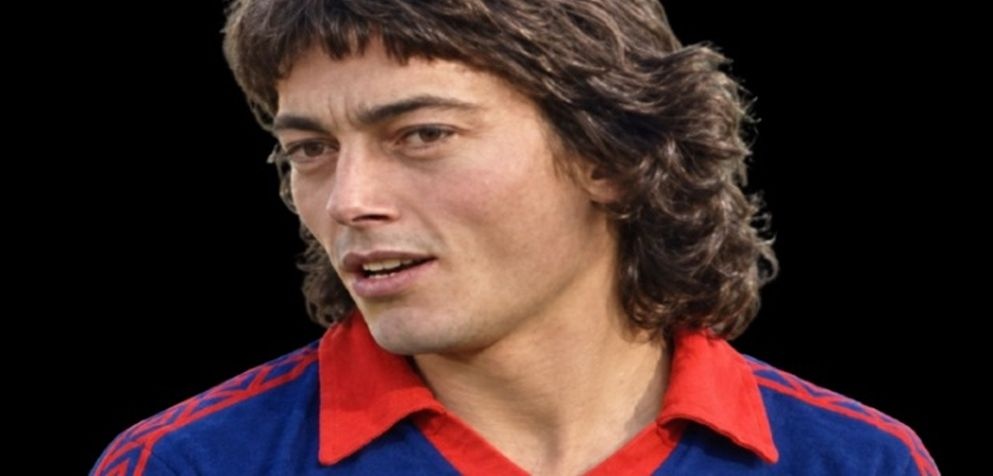
Erik Foss, born 29 April 1954, Oslo, Norway.
PART ONE
Erik Foss was born in Oslo, and the club that shaped him came from the east end of the same city, so the two were always going to find each other. Foss joined Norwegian First Division outfit VIF in 1975 and to understand why that mattered you have to know what sort of club he was walking into, because the club never behaved like the polite, buttoned-up institutions around it. The story starts with a club called Spark, founded in 1898, and with its successor Spring, which a group of factory workers put together on 29 July 1913. A year later the name changed to VIF, and the club drew its players and supporters from the working families of the neighbourhood, in a society where hardly anybody moved between social classes.
During those first campaigns VIF rubbed shoulders with the big names of Oslo football, Lyn, Mercantile and Frigg, and even though the early results were patchy, things looked up in the 1920s and the club managed to win promotion to the Oslo Championships in 1921. VIF went on to win that title four times before a national league eventually arrived in 1937, and the charismatic Helmuth Steffens became the man who built the club’s culture after the Second World War.
Then, at the beginning of the 1960s, a new batch of talented local players broke into the first team, and VIF became known as the Bohemians. The club won the First Division in 1965, but unfortunately the good times did not last, and the boys in royal blues shirts found themselves relegated to the Second Division in 1968 and dropped into the Third Division two years later, before climbing back to the top flight in 1974. Foss arrived a year after that, just as the club was finding its feet again.
His first season brought European football, because VIF played in the 1975–76 UEFA Cup, and while the tie did not end in a glorious run, it told Foss and his team-mates that Oslo’s east end could stand on the continental stage. He was a forward, and a most unusual one at that. Supporters remembered the swaggering step, the unpredictable way he played, and the socks rolled down around his ankles, which made him look like a man heading to a kickabout in the park rather than a professional about to take on a defence. Nobody could quite tell what he would do next, and that was exactly why people paid to watch him.
The reward for those years arrived on 26 October 1980 at Ullevaal Stadium in Oslo, where VIF met bitter rivals LSK in the final of the Norwegian Cup, the 75th edition of the competition. VIF had never won the trophy, and LSK, the Canaries, were the team Oslo’s east side most enjoyed beating. A crowd of almost 25,000 spectators watched VIF win the match by a resounding 4–1 score and take the cup for the first time in the club’s history, and for Foss, who had spent five seasons becoming a favourite of the terraces, it was the high point of his time at the club. Many people later argued that the Bohemian spirit of the side died after that final, which may be true in spirit, but the results kept coming anyway, because VIF went on to win the First Division the following year.
PART TWO
The league title in the 1981 campaign brought more European football, and here Erik Foss’s story has a slightly sour note, since VIF never got beyond the first round in any of the three tournaments he played in. The cup win sent the club into the 1981–82 European Cup Winners’ Cup, and the league title took them into the 1982–83 European Cup, so he had now been in the UEFA Cup, the Cup Winners’ Cup and the European Cup. The 1980s were filling up with sharp suits and flashy money, and Foss, with his low socks and his easy swagger, started to look like something from an earlier era. People called him the last Bohemian, and the name stuck, and eventually he was a cult hero to the supporters who had watched him play. His time at VIF ended after the 1982 season.
Foss did not drift away from football, though, because in 1983 Kolbotn, a club south-east of Oslo, hired him as player-manager. It was a long way down from European Cup football, but he took the job seriously and led Kolbotn to promotion to the Third Division in 1984. The club was relegated to the Fourth Division again, and Foss left after the 1985 season to take an administrative role. Even so, he was not ready to hang up his boots, and he made a comeback as a player at VIF in 1986, although it was no more than a short return to his old club.
In the autumn of 1986 he took over as manager of Frigg, one of the old Oslo clubs VIF had faced regularly in their early days, where the chairman had already sacked two coaches. Foss steered Frigg to promotion to the Third Division, and you might have expected him to stay and enjoy it, but after only two league matches in 1987 he resigned. His complaint was that the chairman meddled too much in how the team should be coached, and anybody who knew the man’s independent streak could see that coming.
Foss did not stay out of the game for long, because in the summer of 1987 he re-joined Kolbotn as a player, and when that campaign was over, he agreed to manage Mercantile, who had just been promoted to the Fourth Division. Mercantile were another of the old Oslo names from VIF’s early years, and under the guidance of Foss they won a second promotion in a row in 1988. He left at the end of the season, however, and at that point the managing seemed to have gone as far as it would go.
It had not, because in the summer of 2004 Foss went back to Kolbotn once more, this time as the manager of the women’s team in the top flight, a place he had never worked before. He also became a commentator for TV 2 in Norway, and anyone who remembered the swaggering forward with the rolled-down socks could picture him in the studio talking about the game with the same casual confidence. Foss never played for a bigger club than VIF, never won a trophy with anybody else, and spent most of the second half of his footballing life at small clubs, yet nobody who stood on the terraces in 1980 would think of him as a minor figure.